Showing posts with label London. Show all posts

Friday, 3 July 2015

Ancestors in the Rookery

My time clock is a little out of kilter this month so please accept my apologies for this late and short post that once again focuses on Where. This week I have been researching my convict ancestors Elizabeth Phipps and James Westbrook who were transported to Australia two hundred odd years ago.

I had an address (the scene of their crime) for this pair, Angel and Porter Court, Golden Lane, London which I discovered was in the Parish of St Luke, Old Street. Although I found a contemporary map for the area I was not able to pinpoint the exact location of their domicile. The 19th century buildings in the area have long since disappeared; many were destroyed in The Blitz.

"The reputation of St Luke’s as a ‘rookery’ – a zone of criminality – reached a peak in the first half of the 19th century. ‘Flash houses’ – drinking dens and lodging houses where criminal plans were laid and stolen goods fenced – were more numerous here than anywhere else in London." (source:http://hidden-london.com/gazetteer/st-lukes/)

After a visit to The Society of Genealogists in London I was strolling back to the underground station when I saw some daggy apartment buildings that were signposted "The Golden Lane Estate". These "Council Flats" aren't too attractive but they are Heritage Liated! I wonder how they measure against the original rookery?


The Golden Lane Estate


Monday, 15 June 2015

Finding vanished houses

How often have you spent time looking at old maps and documents, tracking down places your ancestors lived in... but which don’t exist any more? Recently I’ve been doing a lot of that. So this month I’m going to share some of my ancestor-mapping with you.

Because the people and places I’ve been hunting for have been in London, I’ve been very lucky to be time-travelling in a place which has been regularly mapped over centuries.

Many members of the Worldwide Genealogy community will be much more experienced at this kind of research. Perhaps you’re part of a one place study? I’d love to read your comments and suggestions.


Reading Mercury report of the murder of Celestina Christmas
The houses I was looking for were 16 and 17 Murray Street, near the New North Road in the Finsbury/Islington/Hoxton area of north London in 1856. Confession time: the people who lived there weren’t ancestors, but they were part of the story of a horrible child murder which dragged my 3x great grandmother, Julia Harrington, into the newspapers - and of another child murder at the house next door to where the victim's aunt lived. You can read about them here.

At first, I couldn’t find a Murray Street in the right area. So either it had changed its name since the 1850s or it didn’t exist any more. The next step could’ve been a lot of searching, but luckily there are two useful sources for older London street names: the Survey of London and Pubs History.

The Survey of London was published in the 1890s and is now easily available through British History Online, which is a wonderful resource for anyone researching 19th century Britain. Pubs History is surprisingly helpful because it lists old and new names for streets in England. I’d come across it while writing about one of my criminal ancestors, who was transported to New South Wales for stealing a pub till. And Pubs History came up trumps: Murray Street was renamed as Murray Grove some time after 1938.

Leeds Intelligencer report of the McNeil murders
Now to find numbers 16 and 17. The newspaper report described them as ‘adjoining’, or next to each other. Usually odd and even numbers are on opposite sides of a street, but a quick session on Google Streetview showed that in Murray Grove the numbers run 1,2,3, not 1,3,5. Another problem solved. So where were 16 and 17? Streetview also showed me that none of the buildings in Murray Grove looked as if they dated back to the 1850s. And very few of them had house numbers. Luckily a search came up with a flat for sale in a tower block, no 13, which gave me a reference point to calculate roughly where 16 and 17 might be.

It was time to hit the old maps. There are so many online now, and London’s especially well documented at Mapco, a wonderful site (which also has a lot of historical Australian images). I’ve often found that the place I’m looking for is right on the edge of two different maps, and Murray Grove is no different. But I found some great ones for the right period.


Cross's 1861 map, with 16 Murray Street in green and 17 in red
Kelly's map of 1867, showing nos 16 and 17
Weller's map of 1868, the most detailed of the three maps

The part of the street where 16 and 17 used to be is unrecognisable now. Instead of houses and small streets behind them there’s a block of housing set back from the road. I've posted about what the houses might have looked like here.

I wondered why this area had changed so much. Had it been bombed during the Second World War? Again, there’s a brilliant website to go to: Bomb Sight, which maps the London Blitz of 1940-1941. And it shows that a bomb had dropped in roughly the same place as my two houses once stood.

Bomb Sight map. The two blue spots show nos 13 and 24 Murray Grove

I wanted to get a feeling of Murray Grove on the ground. I was in the area a few days ago and that gave me the chance to get an idea of real space, which even the best maps can’t give you. I even found another numbered tower block, no 24, so I had better co-ordinates to work out where 16 and 17 might’ve been – though after the bombing, there’d be less need to keep to the older layout of the street. Still, I pinned 16 and 17 down to a short stretch, just past the area where the orange-topped bins are now.

Murray Grove in 2015. The block at no 13 is at the extreme left of the photo. © Frances Owen 2015

Back at home I went back to the maps. I’d been puzzled by not finding nos 16 and 17 in the 1861 and 1871 censuses (had they been pulled down?), but they were there in the 1881 census. Phew. I headed for another website which had often come up with great results, the National Library of Scotland’s georeferenced map images, where you can see old Ordnance Survey maps overlaid on modern maps or satellite images. Counting the houses from the end of the southern side of the street, I thought I’d miscalculated by two. Nos 16 and 17 seemed to be a bit further on.

Murray Street, OS 25 inch, 1890s-1920s
But then I looked at a slightly newer, post-war map. The first two houses were marked 1a and 2a, then the numbers started again at 1 and 2. Who’d have guessed? And even handier, the two tower blocks I’d used for reference were built on the sites of two pubs, which were clearly marked. I’ve shown them with blue spots on the maps here. So my hunch had been about right, and I’d got 16 and 17 Murray Street.

Murray Grove, London/TQ, 1:1,250/1:2,500 1947-1964
I don’t know if this kind of research throws any huge light on the historical facts, but it gives me a bigger picture of the world these people lived in over 150 years ago. It brings genealogy to life. And though it was hard work, I do enjoy tracking down the places where my ancestors and their families and neighbours were. Do you?

Maps I used for this project:

Kelly’s Post Office Directory 1857: http://mapco.net/kelly1857/kelly05.htm
Cross’s New Plan 1861: http://mapco.net/cross1861/cross18b.htm


Newspaper reports: via findmypast.co.uk

Monday, 22 December 2014

Telling Tales - The Shoemaker's Son and the One-legged Marquis

It is the season to tell tales. Following the tradition, here is a story that mixes a little of my family history with some well-known fairy tales. The real people featured in a post on my personal blog, The Housekeeper, the Valet and Grand Connections.

The Shoemaker's Son and the One-legged Marquis

Walter Crane [Public domain], via Wikimedia Commons

Once upon a time there was an old shoemaker, or cordwainer, who though he was highly skilled at making very fine boots, had fallen on hard times. He lived with his wife, a wise woman, and young son, Robert, who was just old enough to be apprenticed. The old shoemaker despaired that the young lad would ever learn his trade because he did not listen.

One dark and stormy night there was a loud knock at the door.On opening it the shoemaker found a imposing man who had a wooden leg.The one-legged man, who was well dressed but wet and muddy, introduced himself as the Marquis and explained that his horse was lame having lost a shoe. The shoemaker arranged a room at the inn and stabled the horse while his wife took the Marquis' cloak to wash and dry, and young Robert cleaned the Marquis' boot. Curious about the wooden leg Robert asked why the Marquis only wore one boot. "I left the other boot with my leg on the battle field at Waterloo", said the Marquis, "And have never found another boot to fit". Even though the one boot was old and very worn, Robert had polished it until it shone. The Marquis was pleased and tossed Robert a silver shilling. Robert handed the coin to his mother for safe keeping.

Robert asked his father if he could make a new pair of boots for the Marquis. The shoemaker pondered awhile and took out the leather he had. "There is only enough for one pair of boots", he said "And if they do not fit, we will be ruined". So saying, the shoemaker went to bed.

Two elves who lived under the floorboards had heard and seen all. In those days, shoemakers learned their trade from elves who whispered instructions while apprentices slept. The elves whispered in the shoemaker's ear all night for making the Marquis' boots needed great skill. The following morning the shoemaker was inspired and set to work. When his horse had recovered from its lameness and the Marquis came to collect his cloak, the boots were ready. He was so pleased that he paid handsomely and was so impressed that Robert persuaded the shoemaker to make them that he said, "There is plenty of work in my great London house for such a thoughtful young man. Send him there if you please." Robert was very excited by the prospect as everyone knew the streets of London were paved with gold, the shoemaker thought it an excellent idea, but his wife said nothing. She had been born within the sound of Bow bells, so knew otherwise.

Late at night after everyone else had gone to bed the shoemaker's wife tapped the floor for she wished to receive council from the elves. After listening to her concerns they agreed to help in return for new clothes. They blessed the silver shilling Robert had earned and made a tiny pair of boots from the scraps of leather left over from the Marquis' pair. "He who spends a blessed shilling wisely will prosper if he keeps the boots clean", said the elves. The following morning the shoemaker's wife gave Robert the coin and miniature boots telling him to always keep them clean and to spend the shilling only if he were in dire need.

So prepared, Robert went to London. The butler of the Marquis' great house set Robert to work and all should have been well. But young Robert did not listen to the butler's instructions, so was frequently chastised for not doing his work properly. To make things worse, Robert's attic room was infested with rats and mice, so he could not sleep a wink. That made Robert sleepy and forgetful, which made his work even more sloppy. The other servants did not like such a poor worker, so when they were not telling him off, they shunned him. Poor Robert was very lonely and unhappy!

One day he resolved to run away, so packed his meagre belongings and was creeping past the kitchen when he heard a sweet voice singing. For the first time he truly listened and was enchanted. Instead of running away Robert entered the kitchen and introduced himself to the maid whose voice he had heard. The maid, Mary, had just arrived in London so was pleased to make a friend. When she heard of Robert's woes, she suggested he spend his shilling on a cat and knew that kittens had recently been born at a nearby mill.

Robert brought home a kitten that day. Some say that miller's cats are special, others say anything bought with a blessed shilling is magical. From that day on, rats and mice no longer kept Robert awake. Once he was well rested, Robert paid attention to the butler and other servants, so did his work well. Soon he worked so well and quickly that he had time to see Mary. Both Robert and Mary worked hard and learned everything about running a big house.After some years, Robert became the Marquis' personal valet and Mary became the housekeeper.

When the old Marquis died, Robert and Mary set up a luxurious hotel in Mayfair. We do not know how they raised the money, but some fanciful people say the cat dressed up in boots had something to do with it.


Wednesday, 14 May 2014

Hunting ancestors using old maps

I love old maps! Do you? They're such a good genealogy tool. They can help make sense of the census, correct wonky transcriptions and show how a great-grandparent's village became a suburb of a big city. If you're lucky, they may lead you to a place your ancestors lived.

And they can guide us in our travels into another dimension - back in time. Old maps can help put flesh on the genealogy skeleton of names and dates. They can confirm or challenge our ideas about how our ancestors lived. They can make our forefathers and mothers come to life. And for me that's one of the most fascinating parts of my genealogy journey.


I’ve used an old map before to try to make sense of the movements of one of my convict ancestors, James Thomas Richards, on the evening in 1835 when he stole a pub till and earned himself a free one-way ticket to Australia.

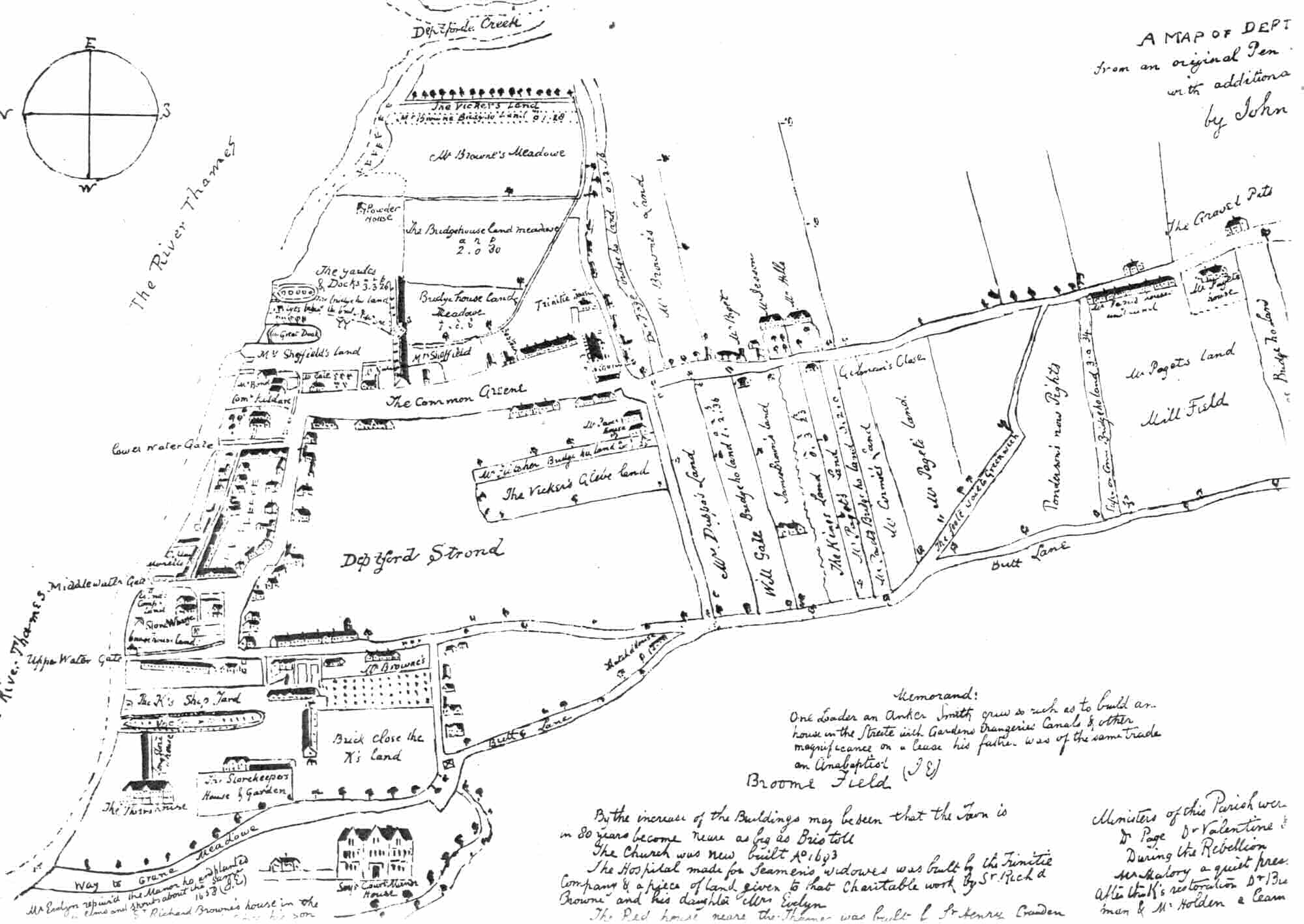
Hand-drawn map of Deptford. Creative Commons via http://www.ideal-homes.org.uk/lewisham/deptford/1623-map-01.htm
Map of Deptford, 1623, with John Evelyn's notes, late C17th
James was a Thames waterman, and lived in Grove Street, Deptford – then part of Kent, but now definitely in London. His father and he had both been born in that street, perhaps in the same house. So I thought it might be interesting to look at this small part of Deptford through maps.

Deptford is an interesting place from a worldwide perspective, too. In the Deptford dockyards ships were built and fitted up to sail to North America, Australia and many other far-off places.

It was from the wet dock in Deptford that Captain Cook set off in 1768 on board the Endeavour to ‘discover’ Australia. Convict hulks (prison ships) were moored in the Thames off Deptford. It was at Deptford that the prison reformer, Elizabeth Fry, waved goodbye to the Maria, a ship full of women convicts who she had helped. And two of Australia’s earliest convicts of African descent, Billy Blue and John Caesar, lived in Deptford before they, too, were transported to New South Wales.

Grove St, Deptford http://www.openstreetmap.org/copyright
I started my time-travelling with a map of modern London, because it’s easier to search. Of course, some streets have been re-named and others no longer exist, but I was lucky with Grove St. There it was, a longish street going almost north to south, close to the Thames. I wondered where James and his family might have lived. Had it always been this shape and length? Were there any old houses left?

A quick virtual trip via Google Street View squashed my dreams. Two Victorian pubs, a car breaker’s yard and a lot of post-war housing.

I wasn't really surprised. I hadn’t expected much to be there, thanks to the Blitz, which targeted London’s docks with great dedication . To give you some idea, have a look at this map, from the excellent Bomb Sight project. Some 650 people were killed in crowded Deptford during the Second World War, including 168 in Britain’s worst single V2 rocket attack on 25 December, 1944. Also killed that year were 13 US naval officers and ratings at an amphibious base supporting the D-Day landings. Such was the war in London’s East End.

It was time to look at old maps. My great-great grandfather, James the till-nicking waterman, was born in 1815 and convicted 20 years later. I wanted to find Grove St as it was in his lifetime.

Grove St in 1827. Website © Mark Annand
Now I'm not asking for much, am I? Only a 200-year-old map with enough detail to be able to make sense. And which reaches beyond the edges of what was then London.

Luckily, there is one. Greenwood's 1827 map, which can be seen online at the brilliant Motco and also at Bath Spa University's site.

So here it is - Grove St when my 2x great grandfather lived there. It looks very different. In fact I only recognised it because it starts at a T-junction just south of the larger dockyards.

It's much shorter, too. Only the northern part is called Grove St. To the south it's Victualling Office Row and skirts the huge warehouses where ships' stores were stocked, ready for the voyage.

Deptford in Mogg's map, http://www.geographicus.com/mm5/cartographers/
1806. Image via http://www.geographicus.com
What thrilled me was seeing that there are only a few houses in the 1820s Grove St, right at the top end. So my Richards ancestors will have lived in one of those. Now that's a bit better than the long snaky road in the modern map!
And there are open fields to the east side of the street. 

It's surprising to see just how much it was still in the countryside. I went to another favourite map to get a better idea of how rural Upper Deptford was. 

Mogg's Pocket Map of London was published in 1806. Here's a view of the area just before James was born. It's hard to square that country  with the overcrowded slums of 1944.

It doesn't look as if it had changed much even in the years since the 'Evelyn' map, right at the top, was drawn. Incidentally, if you'd like a proper look at that one,try here. And yes, it does look upside down.


http://www.mernick.org.uk/elhs/mapgallery.htm
1861. Thanks to the The East London History Society
In fact not a lot happened to the Grove St area for a while. Cross's New Plan of London, published in 1861, shows the new railway line terminating in Mr Dudman's Yard, just to the right of the street.

The dockyard closed in 1869. Sailing ships were superceded by steam, the same steam which drove the other new, fast form of transport - the train.

And with the docks no longer employing people, Deptford lost its purpose and began to slide into
poverty, and the grand shipbuilders' houses became overcrowded. There were hard times on the way.

Irritatingly, I haven't found any maps from the middle of the century which are detailed enough to show buildings apart from Cross's.


Charles Booth Online Archive http://booth.lse.ac.uk
So I'll have to shift my time machine up a gear and zoom forwards to 1889 and Charles Booth's famous 'poverty maps'. The Descriptive Map of London Poverty concentrated on the East End - the poorest part of London, it was generally agreed.

Booth based his classification of Londoners' economic status on visiting each area and talking to local people as well as looking around.

This snippet of his map shows how Upper Deptford was then, with better-off streets (in red or pink) to the south-west, poverty (dark blue) in the south-east and Grove St (a muddy-looking purple) described as 'Mixed. Some comfortable, others poor.'

You'll see that Grove St is now the same length as it is today, stretching all the way from the Wet Dock down to Evelyn St, where the red shading begins. It's built up along its entire length. And there are terraces of houses where the fields had been.

I've learned a lot writing this blog post, and I've enjoyed it, too. I'd add a lot of links, but this post is long enough anyway. So I'll be coming back to old maps on my own genealogy blog, A Rebel Hand, before too long.

And I'd love to hear what old maps you like, and if they've helped you in your genealogy journeys.

Unfortunately I am unable to respond to comments at the moment. I have attempted to credit all illustrations correctly and to use only images which are out of copyright when possible. If you would like to make any amendments, please email me and I will correct them.

Saturday, 15 March 2014

A maid's work is never done

If you’ve got ancestors from England, Scotland, Wales or Ireland, the chances are at least one of your foremothers was a domestic servant.

Even after the Industrial Revolution, in fact until the First World War, more women worked in domestic service than in any other job. It was often the only kind of employment open to poor young girls. And, as well as the obvious help with running a household, having one or more servants was a sign of social rank. They were a visible signal that you had money, like a flash car or exotic holiday might be today.

http://commons.wikimedia.org/wiki/File:Giuseppe_Maria_Crespi_-_La_cuoca,_the_kitchenmaid.jpg
La Cuoca, Guiseppe Cresci, after 1712
In the houses of the wealthy (think Downton Abbey or Upstairs, Downstairs), positions ranged from the prestigious housekeeper or lady’s maid down to the despised scullery or laundry maid. Spending your time with your hands in water seemed to be especially looked down on.

But to stop this post turning into a mini-ebook, I’m going to look at the servant any household with enough cash to hire the most basic domestic help would employ – the maid of all work – in the period between the start of the eighteenth century, when servant girls poured into London and women outnumbered men as a result, to the middle of the nineteenth century.

She was a young girl, maybe only 12 or 13 years old, away from home for probably the first time. Town employers preferred country girls as they were thought stronger and more moral. This wasn’t necessarily so. My own 3xgreat grandmother, Sarah Marshall, was a country ‘family servant’, and she was transported to Australia for theft.

In her 16-hour working day the maid-of-all-work did all the jobs needed to run a house, with some help from her mistress or the daughters of the house if she was lucky. When she got up at six o’clock the first thing she did was rake out last night’s cinders and ashes and light the kitchen fire or stove. No fire? No warmth, no hot water, no cooking. (Thank goodness for electricity and gas!)

She put a kettle on to boil. This wasn’t only for tea or coffee, but warm water for washing, too. Then she cleaned the grate and hearth and lit the fire in the room the family was going to have breakfast in. After sweeping the carpet and dusting the furniture, she laid the table. Before the family came down, she swept and dusted the staircase and hall. She scrubbed the soot from her hands and face and put on a clean apron, ready to cook and serve the meal.

While they were eating she grabbed a bite to eat for herself in the kitchen, then rushed upstairs to strip and air the beds, empty the chamber pots into the slop bucket and give the rooms a quick dust and tidy. Then it was time to clear the breakfast things and wash up, clean the kitchen and wait for her mistress to give her instructions for the day. Are you tired yet, just reading this? The work’s hardly begun.

Jean-Baptiste Siméon Chardin, The Scullery Maid http://commons.wikimedia.org/wiki/File:Jean-Baptiste_Sim%C3%A9on_Chardin_020.jpg
The Scullery Maid, Jean-Baptiste Chardin, c1736
If the family had dinner (the main meal) in the early afternoon, our skivvy spent the morning shopping, preparing the food and cooking it. If they ate fashionably late, in the early evening, she did her other household jobs before preparing lunch.

Every room needed to be swept and dusted daily, but thoroughly cleaned once a week. This involved taking rugs and carpets outside to beat them, changing the bedlinen and scrubbing, rinsing and drying the floors. A good mistress lent a hand with the cooking on very busy days, and usually dusted the precious knick-knacks in the drawing room herself.

And then there was washday. I’ve written about this most hated of days here, but to give you an idea, it would take the whole day to wash, rinse, wring and hang up the household linens and clothes by hand and it was probably more than one overworked teenager could manage by herself. The mistress might hire help for the day, or send the laundry out to a washerwoman or laundry.

You’ll have noticed how much dusting, sweeping and washing the maid of all work did. There was one main reason for this – the ash, and even more the greasy soot, from the coal fires. So the thing which the skivvy needed to do so much of her work was the thing which caused a lot of her work, too. And if the house was in a city or large town, more dust and smut would fly in every time she opened the door or windows – also given a weekly once-over.

Sleeping Kitchen Maid http://commons.wikimedia.org/wiki/File:Peeters,_Clara_-_Schlafendes_K%C3%BCchenm%C3%A4dchen_-_1765.jpg
Sleeping [drunk?] Kitchen Maid, Clara Peeters, 1765
In quieter moments or in the evening she cleaned the silver or plate and the lamps, polished shoes, mended the linen and perhaps even did a little sewing for herself after the last meal of the day had been cooked, served, cleared away and washed up after. Then, once the family had gone to bed, she made sure the fires were safe, checked the windows were shut, locked the door and at last headed to the attic or, more likely, kitchen, where she had a bedroll or, if she was lucky, a small bed. It was 10 or 11 o’clock. First up, last to bed and precious little rest in between; that was the life of a maid of all work.

Of course, there were perks. She got the tea leaves after the family had used them, to make her own brew or to sell. She had bed and board and often clothes (these were the days before maids wore those black and white uniforms). She got a half day off a week, and perhaps a whole day once a month. No walking out with the handsome baker’s boy or butcher’s son, though; she wasn’t allowed sweethearts. Though that didn’t stop many a master or his son from trying his luck with the maid.

No wonder Mrs Beeton wrote: ‘The general servant, or maid-of-all-work, is perhaps the only one of her class deserving of commiseration; her life is a solitary one, and, in some places, her work is never done.’

This post is written to mark Women's History Month, which takes place every March.

Further reading:

Inside the Smart Home, Richard Harper (2003, and online). Page 65 is especially interesting
The Book of Household Management, Isabella Beeton (1969, and online). From page 1001 on

All images via Wikimedia Commons - click on the captions for full details.


Friday, 31 January 2014

A Genealogy Indexing Addict in Australia

Hello. My name is Judy Webster, I live in south-east Queensland (Australia), and I am an indexing addict!

I grew up on a sheep and cattle grazing property in outback Queensland, and I have been doing family history since the 1970s. My mother's grandparents came to Queensland from Germany and Prussia, but at the moment I am concentrating on my father's ancestors and their siblings in England and Scotland, plus a recently discovered Irish ancestor.

Headstone of Mary Agar, 1794, Gillamoor, Yorkshire
Agar headstone, 1794, Yorkshire
Most of my Scottish ancestors were in Argyllshire, and I suspect that siblings may have gone from Tiree to Canada. My English research mainly involves Yorkshire and the Greater London area (Surrey/Middlesex), but a few families were in Somerset, Durham, Lancashire, Kent and elsewhere. Others emigrated to Australia and settled in Queensland, New South Wales and Victoria. One of my ancestors may have been a Lancashire convict who was sent to Tasmania, but as yet that is only a theory.

I have started using DNA testing for genealogy, and I have already contacted one 'new' relative whose relationship we can confirm by traditional research. I hope my success rate will increase as more British family historians are tested.

After graduating from university in Brisbane, I worked for thirty-four years as a medical scientist in a hospital's Haematology and Transfusion Medicine departments. In the 1980s I switched from full-time to part-time work, did a Graduate Diploma in Local and Applied History by external study (University of New England, Armidale NSW), and established my own part-time business as a professional genealogical researcher and indexer.
Brisbane Prison Hospital register
Prison hospital register
I love working with unusual sources that overcome dead ends in family history. My Web site, www.judywebster.com.au, has about 130 pages with advice on sources and techniques for family history, and more than 53,000 names from my indexes to local, interstate and overseas folk mentioned in archival records. I also allowed FindMyPast to publish three of those indexes. As I said, I am an indexing addict!

Apart from my main Web site, I also write about my family and share research tips in... (links open in a new window)
I am the founder and coordinator of the Genealogists for Families Project, which is a magnificent example of international teamwork. In 2011 we received an award for 'Best New Community Project'. After only two years we have more than 270 members in 13 countries (Australia, Canada, Czech Republic, Denmark, England, Germany, Netherlands, NZ, Northern Ireland, Scotland, Spain, USA and Wales). Many contributors to this blog are already part of the team, and I hope more of you will join us. Please take a moment to read about 'Genealogists for Families'. Together we can make a difference!

In my next post here I will talk about ways in which (perhaps unexpectedly) Australian records can help family historians in other countries. In the meantime you will find many research tips in my genealogy blogs.

I look forward to learning from you all as the year unfolds. It will be interesting to see what thirty-one people can accomplish by contributing to an international collaborative blog.
~ ~ ~
You might also like:

Tuesday, 14 January 2014

Hello from London!

Hi, I’m Frances Owen. We might have met when I’ve been blogging, tweeting, Facebooking or Google+ing under my online name, (A) Rebel Hand.

It’s exciting to be part of this new worldwide genealogy collaboration, and I’m very honoured to have been asked by the wonderful Julie Goucher to contribute. A big thank you for organising it to Julie and everyone involved.

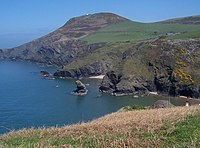
Welsh coast: Llangranog, Ceredigion, by Jayne Toyne, geograph.org.uk (Creative Commons)
Llangranog, Ceredigion (Jayne Toyne, geograph.org.uk)
I first became aware of family history as a child, when my father drove us around his native West Wales talking about who used to live in this place, or how we’re related to that distant aunt. It sounded like storytelling, wonderful tales about semi-legendary characters. I wish I’d asked him to write it all down. Still, a spark had been lit.

In 1994, my mother came back from a visit to her relatives in Australia with the thrilling news that we were descended from an Irish rebel and transported convict. Zap! That spark turned into a blazing flame and I was hooked on genealogy. She and I went to Ireland to do more research and started swapping emails with helpful Aussie rellies. Eventually we had so much family information that we published it as a book, A Rebel Hand: Nicholas Delaney of 1798.

Most of my research until late in 2011 was into Australian and Irish genealogy, history and local history. Then I found out that one Aussie 3x great grandmother was supposed to be a famous New South Wales ghost. Well, I had to know more. She and her husband/partner were both convicts, too, and I was inspired to look at other branches of my family tree.

Another convict ancestor came from Deptford, on the Thames, and my research broadened into London history and genealogy. And now I’m starting to look at the Welsh side of my family. Dad would have been pleased.

A side effect of my genealogy sleuthing has been learning about the history of the late eighteenth and early nineteenth centuries in the UK, Ireland and Australia, and of the places my ancestors came from. I’m fascinated by the social history, the day-to-day lives of people, the conventions of those times.

It was in November 2010 that I started blogging as a way to share my family history interests and discoveries. I soon found that there was a big world of geneabloggers out there, commenting, helping, sharing joys and sorrows and joining in challenges and memes. It was a wonderful discovery. There’s so much collaboration in the history, local history and genealogy and this new blog is a great example. If you’re not taking part already, why not join in? Here’s how.

I’ll finish by sharing some of my favourite blogs and websites for research, all free to view:
  • Claire Santry’s Irish Genealogy News is just what it says, all the latest information about genealogy for Ireland north and south.
  • Old Bailey Online, a collaboration between historians, has not only digitised the proceedings of London’s Central Criminal Court but gives lots of information about London life from 1674 to 1913.
  • Trove, where you can search Australian newspapers, books, manuscripts, images and much more dating from 1803. A lot of people using the digitised newspapers also collaborate by correcting the optical character recognition (OCR) transcriptions.
  • Welsh Newspapers Online, a new project from the National Library of Wales (Llyfrgell Genedlaethol Cymru).

Working together is so rewarding. Please join us in this new worldwide adventure by commenting, asking questions or even writing a post!