Genealogy Research Identifies Easter Traditions from Relatives and Ancestors Worldwide
In my genealogical research, I have learned that my family is a typical American melting pot of ethnic origins! My ancestors hail from Denmark, England, France, Germany, Ireland, Italy, Netherlands, Norway, Scotland, Sweden, and Switzerland—at least. As we are preparing for our own Easter celebration, I was wondering how similar or how different some of my ancestor’s traditions might have been.
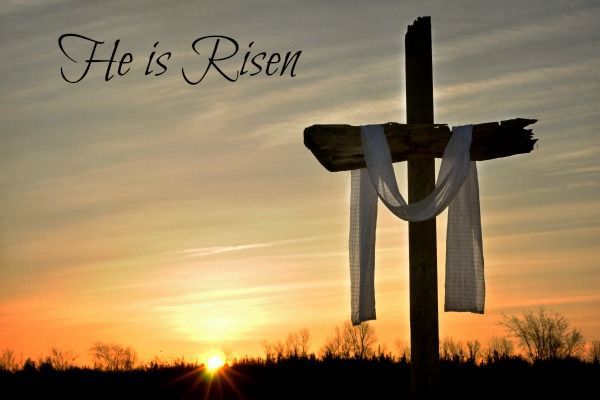
Our own traditions include attending church as we were raised Protestant and believe that Easter represents the death and the rising of Jesus Christ, Son of God, to save us all from our sins and to give us eternal life. It is basically, the basis of our Faith, and, is such an important time in the life of Christians. We celebrate Easter with a long season of Lent. However, the highlights of Holy Week include Maundy Thursday Communion in church on the Thursday before Easter Sunday. This communion celebrates the Lord’s last supper with his disciples. On Good Friday, we gather at the church to mourn the death of Christ upon the cross. Our own church holds a “Tenebrae service of Shadows”. One of our daughters will sing special music with the choir, “One Sacrifice”. The service itself begins with 14 lighted candles in the sanctuary, and as Christ walks his final passion, each candle is extinguished to signify his abandonment. Easter Sunday, we gather to celebrate the joy of Christ’s resurrection and His salvation for each of us individually throughout the whole world. This is an astounding day for many of us faith wise!
Part of the joy of Easter at our house is gathering with family and friends for dinner. Many in the United States serve ham for this dinner with other spring vegetables especially like asparagus and carrots for the Easter bunny. Surely you see turkey and beef as well. My own sister, however, serves a Crown Roast of Lamb every Easter without fail! Bunny rabbit salads made of half pears are a treat for our family.
Since our family includes young grandchildren, an Easter egg hunt is in order for the day! Of course, we give the children Easter baskets full of trinkets, chocolate, and other candy. We hard boil and decorate Easter eggs as well. In our own family, we often hide the baskets and the children have to follow clues to find them!

This is one way to hunt eggs! -grandchildren of author, personal library, HY Holshouser.
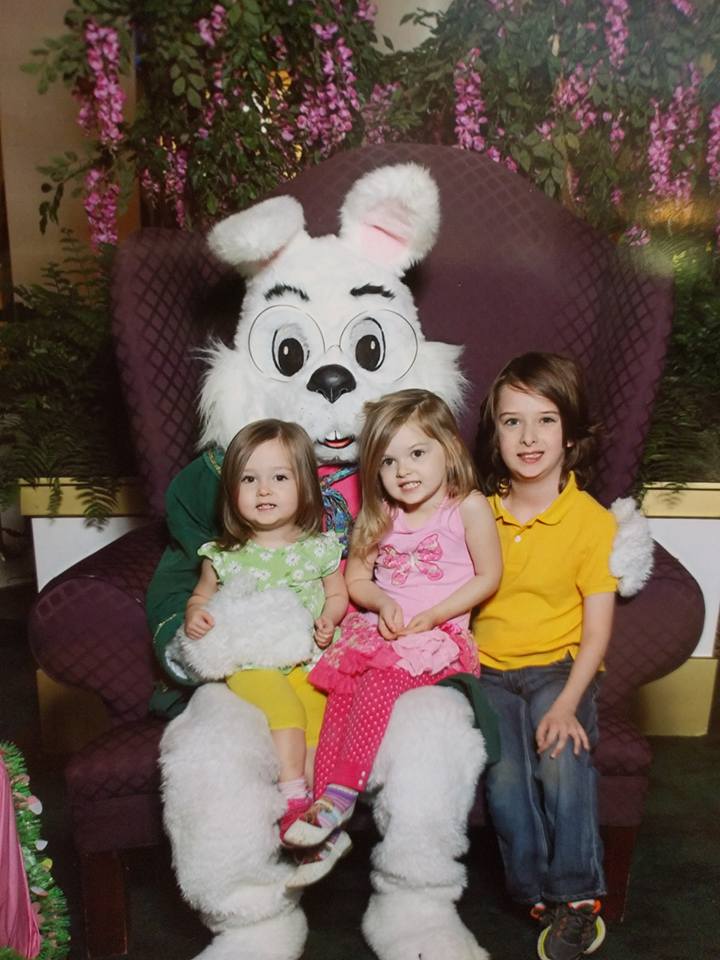
Grandchildren visiting the Easter Bunny—from the personal library of this author, H Y Holshouser.
What about our Hogue ancestors from Scotland? I understand that they especially were sheepherders and that their and most Scottish Easter dinners include roasted lamb! As with us in America, chocolate is the taste of the day! Dessert might be chocolate cake and coffee! Chocolate eggs and bunnies are ever present for both! Easter egg hunts, horse displays, and battle reenactments make for fun and festive occasions. Of course, churches throughout Scotland hold special Easter services like ours, to celebrate Christ’s rising from death and giving us the grace of salvation. We had many ministers, mainly Presbyterian, in our Hogue family. In fact, we are told that our first immigrant from Scotland was a Covenanter. A covenanter was one of the many Scottish people who fought against the Catholics for the right to have their own personal covenant with God. In fact, his persecution by the Catholics apparently led to his flight to America.
Our Kearse family from Ireland and the same ancient family, the Des Cearsais of France, how did they celebrate Easter? The French word for Easter is Pâques. To say Happy Easter, you can say “Joyeuses Pâques“ or “Bonnes Pâques.” According to my general research, Easter is an important holiday in France also. It is a religious one, and a lively, fun time with Easter egg hunts to honor the coming of Spring. Like Ireland, roast lamb is the choice for a large family meal. In Ireland, it is also an important religious holiday as well, with many traditions. Confession on Good Friday, silence on the Saturday before Easter lends to a meditative state. Eggs take center stage on Easter as they are given up for the forty days of lent by many. Chocolate eggs, decorated eggs—all symbolizing Spring, new beginnings, renewal, and joy!
What about the Langhornes and others from England? Among many lovely and fun Easter traditions, Easter parades are one of the greatest. Children and adults don new clothes for good luck, and often children make elaborate paper hats to wear as they march in their local town parades! Fun! Egg rolling, hot cross buns, Simnel cake, Morris dancing, and so much more contradicts the vision of the staid Englishmen and women!
Our marvelous Italian ancestors and relatives add so much spirit to our family. The Bottos, Raffos, Rivaros, Costas, DeSantos, and more, mostly originate in the coastal area of northwestern Italy, near Genoa. Italy of course, is home to the Vatican, and the place for the pilgrimage of so many Catholics on Easter. My mother’s Italian ancestors were Catholic as well. Mass on Good Friday in St. Peter’s Basilica is followed by the Pope leading a candlelight procession on a walk symbolizing Christ’s walk to the cross. Our own church reenacts this walk to the cross, and we are Protestants.
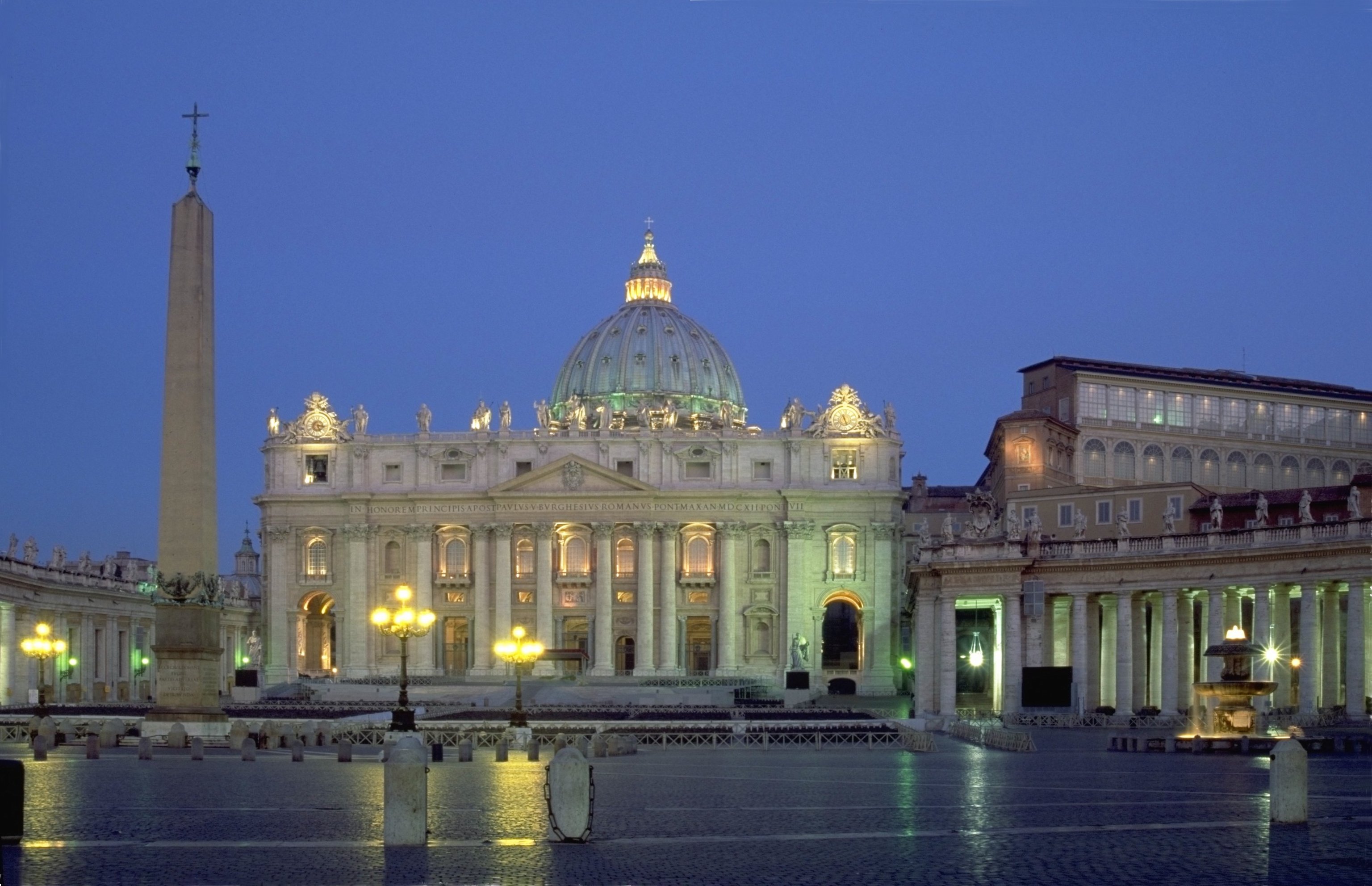
St. Peter’s Square, Vatican City, – Own work, Permission details Quote of http://fam-tille.de/italien/rom/2004_030.html – Permission is granted to copy, distribute and/or modify this images under the terms of the GNU Free Documentation License, Version 1.1 or any later version published
As I understand it from relatives, northern Italian Easter feasts often feature ham, like us! Interesting. Of course, salami is a big choice as well. Colomba, a dove-shaped cake, made of almonds, egg whites, and sugar, is probably the most famous cake and available worldwide these days.
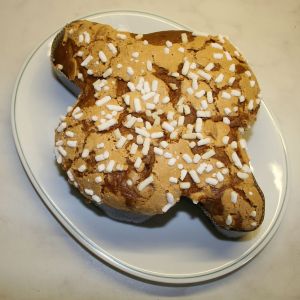
Colomba Pasquale, An Italian Sweet bread J.P.Lon~commonswiki
What about our German Jungbluts—Youngbloods? And my husband’s Haulzhausen—Holshouser family? According to a wonderful article from DW –Deutsche Welle — http://www.dw.com/en/german-easter-traditions/a-1520904 — the Germans of course, also celebrate a religious holiday like most Christians.
“Although mainly a Christian holiday commemorating the crucifixion and resurrection of Jesus, Easter also marks the beginning of spring. The Germans, of course, have a whole range of customs and traditions to celebrate the change of seasons in proper fashion.
A time for eggs and bunnies
Eggs and bunnies are two of the oldest symbols of Easter in Germany and every spring shops boom with eggs and bunnies made of chocolate, cardboard or flowers in different sizes and wrappings.
The tradition for using eggs and bunnies for Easter originates from pagan worshipping where they were symbols of fertility and new birth and traditionally used for celebrations of the coming of the spring.
The Germans have a number of egg games which the children play over the holidays. One tradition is to blow eggs and paint them in multiple colours and patterns on Good Friday. The eggs are then put in a basket for the Easter bunny — Osterhase— to hide around the house on the night leading up to Easter Sunday. On the morning of Easter Sunday, the children go hunting for the eggs and often find that the Easter bunny has also left chocolate eggs and Easter presents for them to find.
It is also a custom that friends exchange the painted eggs as gifts or that young people in love paint eggs for their sweetheart.” Now that is a different tradition, which I find so special and romantic!
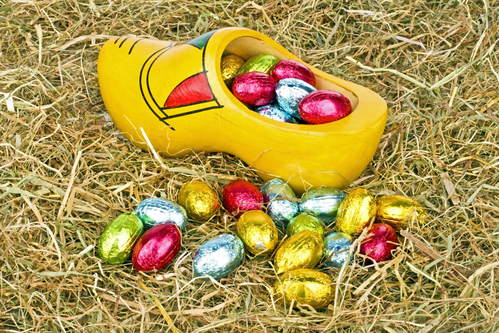
For the Netherlands and our Van Vreeland, Van Swol, Voorhees, and Banta families, what was Easter like for them? According to many articles, they celebrate much the way we do…. or we celebrate much the way they do! One of our favorite meals is a festive brunch and apparently it is theirs as well: eggs, cheese, ham, rolls…and did I say eggs? The Dutch also take great pride in providing the thousands of tulips to decorate St. Peter’s in Rome for the Pope’s Easter service. Wow! Back home, they are also known for their beautiful painted eggs. However, they do not have the Easter bunny, but the “Paashaas“, the Easter hare!
Our ancestors represent many more countries and traditions from around the world, but as you and I can readily see, we are more alike than different. This Easter, as I pray, and as I play, I will have a keener sense of connectedness due to my genealogical research, and our worldwide collaboration.
Until we meet again, Helen Youngblood Holshouser


