Showing posts with label Choctaw. Show all posts

Tuesday, 27 May 2014

DNA Projects -- What Genealogical Help Can We Expect?

During the past few weeks, I have been trying to understand what genealogical information we can ascertain from DNA testing.  We have had over thirty family members tested so far using Family Tree DNA.  The company provides us with exciting charts and lists of "matches" and it is easy to get carried away and jump to conclusions.  So far, we have found new cousins whose family trees match with ours and we have confirmed other cousin relationships.  But, we have not filled in ANY of the holes in our family tree.  I want to formulate questions that the DNA tests can help us answer.

I have decided to focus on three DNA missions:

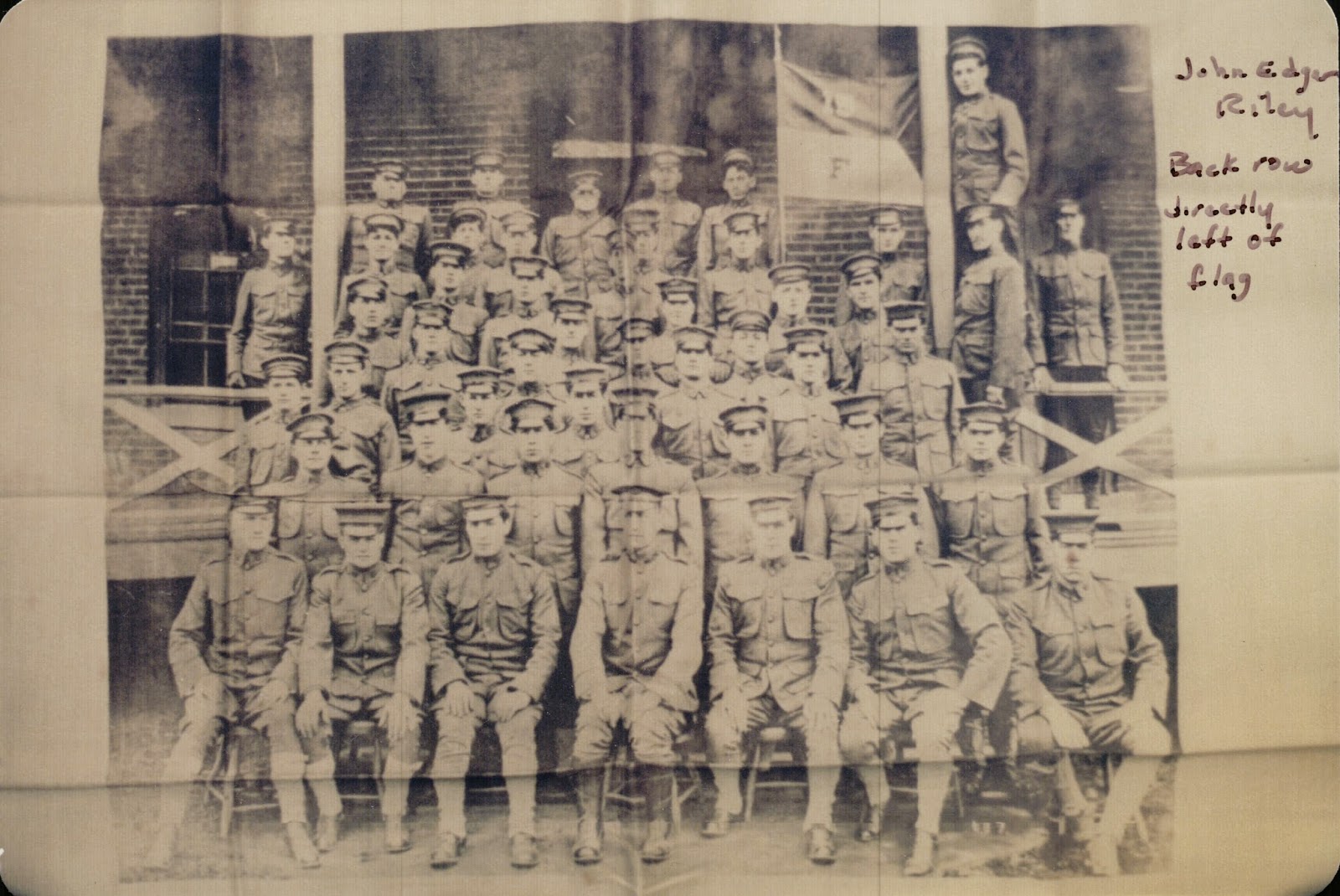
1. Find information about the ancestry of my great-grandfather, John Edgar Riley.

2. Try to find the name of my missing great- great-grandmother, Atinahona (Austin's woman).

3. "Map" my parents' chromosomes as much as possible to help categorize their autosomal DNA matches into ancestry lines.

Mission #1: John Edgar Riley, why can't we find you?

One of the most stubborn lines in my family tree is that of my great-grandfather, John Edgar Riley.  He supplied his third wife with detailed facts from his early life:

He was born in Broad Brook, Connecticut on April 21, 1892.
His parents were Timothy O'Riley and Elizabeth Brennan.
He had three older sisters, Rose, Julia and Maude, who were born in Ireland before the family immigrated to the USA.
The family spent time living in Manhattan at 350 E. 88th Street.
His father owned a pub in Manhattan.
His father worked for the railroad.
He was Catholic and served as an altar boy and one of his sisters was a nun.
Before he turned 20, his whole family was dead.  His father and two sisters died in two separate railroad accidents.  His mother fell down the back steps and hit her head.  His other sister drowned.
He had a paternal uncle, Michael O'Riley, who moved to Texas, but returned to Ireland.

John Edgar Riley - Union Pacific Railroad
My mother spent years on this line (it's my dad's side) and so have I, but we have not been able to verify even one of these clues.  There are no records on John Edgar Riley until his army files in Kansas when he was about 20.  We have found nothing on his family of origin.

So, I hope that eventually, my father's Y-DNA will show a match with another man who shares the same male lineage.  For this, I depend on some unknown relative doing a DNA test.  I hold out hope.

My father, his aunt (John Edgar Riley's youngest daughter) and cousin have also had the autosomal DNA test.  So there is a possibility that we may be able to tease out a member of that line through those matches.  So far, though, the people who match do not mention Rileys or O'Rileys in their ancestral surnames or in recent generations of family trees.

So my John Edgar Riley DNA strategy is to wait and hope for Y-DNA matches while recruiting some of my dad's second cousins and second cousins once removed to get the autosomal DNA test done.  The more second cousins we can get, the better we can group his close matches into family lines.


John Edgar Riley in his later years with his wife, Frances

Mission #2: Atinahona, who are you?


Another very frustrating stumbling block we have is on my mother's side.  My great- great- great-grandmother is listed with her husband, Samuel Austin, as "Atinahona".  This is seems to be a transliteration of the Choctaw words for "Austin's woman."  We would like to find out Atinahona's real name. 

Through DNA testing, we have found that our male Austin line goes back to a Choctaw man.  Originally, we thought a man of European ancestry might have married into the line, but apparently Samuel Austin or his ancestor adopted the name.   

My strategy to find Mrs. Austin, or at least narrow down the possibilities, is to analyze DNA results and family trees of cousins known to share common ancestors as well as Choctaw tribal members who come from the same community and are likely to be distant cousins.  We have started to do this. The community members (2) who have been tested match my mother and her relatives.  The problem is that matches could be from other than the Austin line, and the matches could be from multiple lines.  This DNA analysis is to be done along with studying historical documents and rolls which is mostly done by my mom.  She is an expert on Choctaw genealogies from the time of removal to the Dawes rolls.  

Mission #3: Mom and Dad, what genes were you dealt?

My mother and grandmother

My dad's parents and relatives

I have started to read about DNA genealogists who map their chromosomes so that when they get a new match, they can make a good guess about which line it is on.  Also, it may be possible to identify missing surnames from branches.  One website I've used as a reference is: Chromosome Mapping.

I am just getting started with this process.  It looks like a lot of work, but I hope it will be useful, especially for my other two missions!  To fill in the chromosome map well (it will never be totally filled in), I need to have more cousin data.  I will update in a future post.


Wednesday, 26 February 2014

Pioneer Papers


I should have been writing this month's post about organizing genealogical photographs.  I have been visiting my mother for the past several days.  We were planning to work through some of the family photos, but didn't end up getting to that.


Last time I was here, we started sorting the photos into separate boxes for individuals and families.  We will then scan them.  We have hours worth of photos to organize and scan, so I am already planning my next trip.

Instead of organization, Pioneer Papers...
One fascinating set of records that my mom has spent a lot of time researching is the Indian Pioneer Papers.  Many details of the lives of people in what is now Oklahoma are found in these files. When she did her original research, my mother found the papers on microfiche at the Family History Center at the LDS church in my home town.  Now, all of these interviews are available online at University of Oklahoma Western History Collections.  As I was  looking through the Pioneer Papers, with my mom, we found an interesting example about Mrs. Joe LeFlore.  Not only does the interview provide us with the names of Joe's parents (David McCurtain and Rebecka Krebbs McCurtain) and her husband (Felix LeFlore), it gives insight to the educational system of the Choctaw tribe from the time of removal (Trail of Tears, 1830s), through the Civil War and to the turn of the 20th century.

A Woman Named Joe


I was able to find a picture online of New Hope Female Academy with some of the students and staff.


And just for fun, here is a picture of Wheelock Academy, another Choctaw girls school that my great- grandmother and grandmother attended.  Although these Choctaw tribal/missionary schools were not perfect -- for example, they forbid students to speak Choctaw-- many former students have recounted positive academic memories, in contrast to some of the horror stories that young students of other tribes experienced at government schools.


Sunday, 26 January 2014

Hello from Connecticut

I'm Margaret and I live in Connecticut, USA, fairly close to New York City with my husband and our dog, Windy.  Our children don't live here most of the time -- the eldest is off on his own and the other two are at universities in western states.  I was raised in California and Arizona, but for the past 15 years we've been here in Connecticut about 35 miles from where my ancestor, John Beers, died about 330 years ago.  In the 10 generation span from John Beers down to me, only one person died in the town where he was born.  Many of my family lines tend to be filled with wanderers.  My Choctaw and Chickasaw ancestors were already living in what is now Mississippi when most of my European  ancestors immigrated to the USA from England, Germany and France in the 1600s and 1700s.  My Irish ancestors came a little later in the mid- to late- 1800s.

I'm excited to meet all of you and learn more about genealogy through this collaboration.  I am also using this as a jumping off point to revive my abandoned genealogy blog, Hummingbird on Her Hand, so named because hummingbirds landed on the outstretched hand of my great grandmother, Ida Austin.

Although I enjoy genealogy, much of the information I write about was and is collected by my mother, Sandra. She has been doing family history research as long as I can remember.  When I was a child, Mom occasionally gave me a paid challenge -- 5 cents for each correct name or date I could write in a blank family tree.  I got pretty good at it and eventually she lowered the rate to 1 cent per fact.


Me with my mother visiting my paternal grandparents in Kansas City c1970.

My mother has spent countless hours researching her lines and my father's, but in the past few decades, she has concentrated on Choctaw Tribal history and is extremely well versed on the Dawes Rolls, many Oklahoma Choctaw family lines and other tribal records.  I have learned a lot from her and this spring I will accompany her again to the National Archives in Washington, DC where I will serve as her copy assistant.  We try to copy records as efficiently as possible when we are there and we read them more carefully later.

In the past few years we have been making genealogical connections through DNA.  This has been pretty slow going, but I now manage the DNA accounts for about twenty family members. We continue recruiting relatives to give samples so that we can try to pinpoint which lines matches fall on.  Although we have good documentation for many family lines, we are missing three of my mother's great- great- grandparents and four of my father's great- great- grandparents.  Our DNA match-ups will be more successful when we fill in those missing surnames.

I look forward to getting to know you all as time goes on.

Margaret