Showing posts with label Australia. Show all posts

Sunday, 15 May 2016

Genealogy centenaries

Isn't it always the way? You wait years for a significant genealogy anniversary and then three come along at once. That's how it is in 2016 for my ancestors - three significant bicentenaries for three of my convict forbears, Nicholas Delaney, Sarah Marshall and John Simpson.

So I thought I'd share a bit of information about them. A lot of Australians are descended from this trio of law-breakers and maybe one of them will find this post and get in touch. We genealogists love hearing from cousins...

The first genealogy centenary is 13 June, 2016, the 200th anniversary of the official founding of the Royal Botanic Garden in Sydney.

Drawing of the Domain and Mrs Macquarie's Point, Sydney, Australia1830
The Domain and Mrs Macquarie's Point, 1830, Creative Commons by Paul K

On 13 June, 1816, Nicholas Delaney, my 3x great grandfather, and his gang of convict workers finished building Mrs Macquarie's Drive, the road that runs round what was then the Government Domain. It's now part of the Botanic Garden.
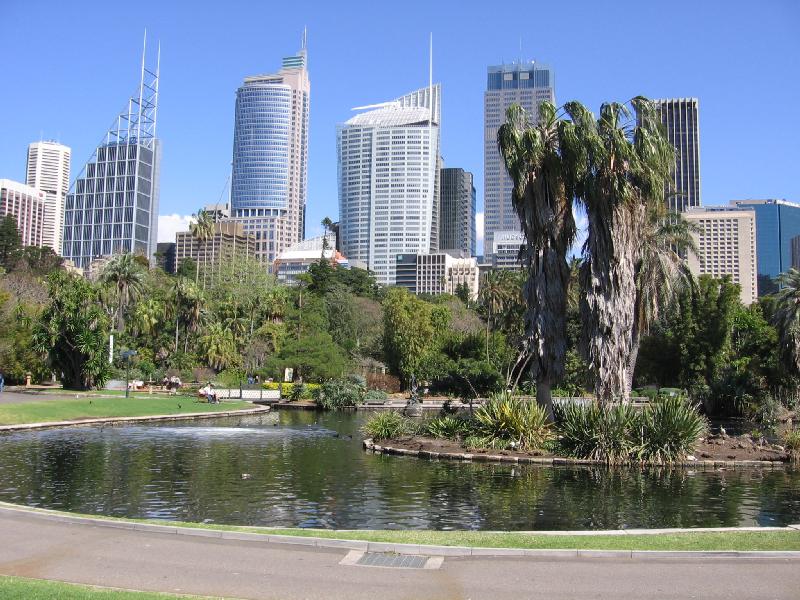
Photo of the Botanic Gardens, Sydney, with skyscrapers in the distance
The Botanic Gardens in the 21st century CC via Wikipedia

Cleverly, Nicholas arranged to finish the work on the birthday of Governor Lachlan Macquarie's wife, Elizabeth. The delighted Governor awarded Nicholas and his 10-man gang five gallons of spirits as a reward. There would have been sore heads as well as muscles the next morning.

Inscription on Mrs Macquarie's Chair, also called Mrs Macquarie's Seat, Royal Botanic Gardens.
Inscription on Mrs Macquarie's Chair, celebrating the day Nicholas finished the road CC by Graeme Churchyard

I've already written about building Mrs Macquarie's Drive as well as the only part of the original road which now survives, the Macquarie Culvert. As the 200th anniversary comes even nearer I hope to post more over on the A Rebel Hand blog.

Update: here's the first of those posts on Nicholas Delaney, Mrs Macquarie's Drive and the Botanic Garden's 200th anniversary.

The oldest bridge in Australia, built by Nicholas Delaney: the Macquarie Culvert, Mrs Macquarie's Drive, Royal Botanic Gardens, Sydney
The Macquarie Culvert, Mrs Macquarie's Drive, Royal Botanic Gardens, Sydney CC via Wikipedia

There's going to be a big party in the Botanic Gardens on the 13th and I've heard from some fellow Delaney descendants that they'll be going. If only I weren't half the world away I'd be there celebrating my ancestor's achievement. But I can't get to Australia this year. You can bet I'll be keeping up via social media and other channels, though.

The next bicentenary of this year is of the trial and sentencing of Sarah Marshall, my 3x great grandmother, on 24 July, 1816, at the Lancaster Assizes. 

Written record of Sarah Marshall's sentence at the Lancaster Assizes, July 1816
Sarah Marshall's sentence via Ancestry

Sarah was convicted of 'stealing a petticoat valued at one penny, a bed gown valued at one penny, two caps valued at one penny, a pair of silk stockings valued at one penny and a sheet valued at one penny, being of the Goods and Chattels of John Oldham.'

And for fivepence-worth of clothes, she was to be 'transported to some part beyond the seas.' To New South Wales, in fact, like all my convict ancestors.

Australian Convict Transportation Records for Friendship II via Ancestry

Sarah's story - or what I can find out about it, because there are plenty of strong Lancashire brick walls surrounding her life before she half-inched the goods and chattels - includes two particularly dramatic episodes after her trial. She was sent out on a notorious convict ship, the Friendship, famous for the licentious behaviour on board during the voyage. Again, I'm planning to write more about that.

And she's popularly believed to be the 'Sarah's Ghost' who is said to haunt Castlereagh General Cemetery, having been murdered by a group of  lust-driven men. But the story's inaccurate. I'm glad about that. Poor Sarah, as if she hadn't suffered enough.

Sarah went on to marry, or live as if married to, John Simpson, a tailor, and his is the last of my trio of bicentenaries.

John was born in Yarm, in the North Riding of Yorkshire. On 8 November, 1816, he was charged with 'feloniously taking and carrying away two bales of goods, consisting of muslin and shawls' at Hope in the Derbyshire Peak District and committed to Derby county gaol. The Derby Mercury reported the facts on 21 November.

Derby Mercury newspaper masthead, 21 November 1816
 
John Simpson charged with theft and imprisoned in Derby County Gaol: newspaper report in the Derby Mercury
Derby Mercury report via FindMyPast

He was to stay in Derby Gaol until the Lent Assizes in March, 1817, when he was tried and sentenced to seven years' transportation.

John and Sarah's daughter Lucy Simpson married Thomas Delaney, the son of Nicholas and his wife Elizabeth Bayly, which ties up my three bicentenary ancestors neatly.

Monday, 2 November 2015

Where there's a Will....

...there's a way to get to the Truth.

A new found elderly cousin related the story of  her Grandmother's will last week, she was rather bitter that her mother and siblings were only left a pittance while one brother and a man who had befriended the old lady got the bulk of the estate.

State Records NSW (our State Archives) is situated in Kingswood which is 50 kilometres to the west of Sydney CBD. While it is good that there is plenty of parking (once you get there) and lots of room for expansion but getting to the archives is a pain. It just so happened that I was going to have lunch in our Blue Mountains last Wednesday, a trip that took me along the Motorway past Kingswood.
State Records is out amongst the gum trees on the edge of Sydney

State Records NSW do a great job and, with the help of an army of volunteers, they have a number of Online Indexes to their holdings available.

State Records Online Indexes.
Remembering that they have indexed many Probate Files so I did a search for the Grandmother's file and was lucky to find that it was available. While I was at it I also found a Land Title file for the Grandmother's property. One can pay to have the files copied and sent but at $AU30 each I could think of other ways to spend my geneabudget.

The Reading Room at State Records
As I have a Reader's Ticket for State Records NSW I was able to order the files to be ready in the Reading Room when I visited. After spending time with my friends over lunch I set off for Kingswood arriving about 3:15pm. As the files were waiting for me I was able to get straight to work. It only took me around 45 minutes to read and digest their contents and to photograph the contents on both my camera and mobile phone (Back ups are important especially when Kingswood is so far away).

The File contained affadavits, receipts, a copy of the will, details of properties owned and an inventory of household goods and personal effects.

So what did the Probate Packet reveal? The one brother and the man who had befriended the old lady got a few extra bits and pieces like a piano and some furniture  and some of the grandchildren got odds and ends but the bulk of the estate was divided equally in five shares between the four living children of the grandmother with the fifth share going to the children of her fifth (deceased) child.

Since the Grandmother died in 1944 the story of her bequests to family members has become slightly twisted. The lesson here is that while elderly relatives can be great sources of information it is wise to check the facts via other available sources.

Part of the Inventory in the Probate Packet.


Saturday, 15 August 2015

My earliest Australian ancestors

We’re halfway through National Family History Month for genealogists researching in Australia and New Zealand. I’m based in the UK, so the only way I can join in is online. But that’s OK – we’re Worldwide Genealogists here!

Tree growing over an old brick wall, Arminghall, © Copyright Evelyn Simak and licensed for reuse under the Creative Commons Licence.
© Evelyn Simak and licensed for reuse under this Creative Commons Licence.
So I decided to do something I haven’t yet done. It's about time! 

I’m going to mark NFHM by putting together a list of the first of each branch of my ancestors who arrived in Australia. They all came from the British Isles. Well, as far as I know – there are brick walls in my tree, of course. In fact sometimes I think my family tree grows out of an old brick wall, like the one in this photo.

I’m going to do this by starting with the earliest, first on my grandfather’s side, then on my grandmother’s.

Grandfather’s side:

Nicholas DELANEY (Ahnentafel no 48), arrived 30.10.1802 on Atlas II. Convict and Irish rebel, from Carnew, Co Wicklow in Ireland. Married to:
Elizabeth BAYLY (A49), arrived 3.4.1807 on Brothers. Came free. May have been from Kent. A brick wall. Their son Thomas married Lucy, the daughter of:
John SIMPSON (A50), arrived 10.1.1818 on Ocean II. Convict, born in Yarm, Yorkshire, arrested in Derbyshire. A tailor. Married/lived as married with:
Sarah MARSHALL (A51), arrived 14.1.1818 on Friendship II. Convict, from Salford or Manchester.

(Thomas) Robert Sandon WILSON (A26), called ‘the Man of Mystery’ because we know nothing much about him. English, possibly a bigamist. Certainly a brick wall. Married to:
Sarah Emma HENLEY (or DICKS?) (A27). Arrived before 1854. From Sussex. Their daughter Mary Maude married Lucy and Thomas’s son Tom.

Grandmother’s side:

James Thomas RICHARDS (A30), arrived 12.12.1835 on Royal Sovereign. Convict, from Deptford, Kent. A Thames waterman. Married to:
Rebecca HARRINGTON (A31), arrived between 1857 and 1873. Probably assisted immigrant (meaning that she didn’t pay for her own voyage). May have come with her father, Thomas Harrington (A62), a dock labourer, or he may’ve joined her later with his wife Julia (A63), nee Gamin, or Cannell, or even Gemmell, from somewhere in Ireland. Yes, Julia’s a brick wall. Rebecca and Thomas were from Hackney in East London.
James and Rebecca’s daughter Eleanor Ann Edith (Minnie) married Thomas Henry, the son of:

John WINTER (A28), arrived 9.2.1857 on Parsee. Assisted immigrant from Tebay, Westmorland (Tebay’s now best known as a service station on the M6 motorway). Married to:
Ann GRAHAM (A29), arrived 23.7.1857 on Alfred. Assisted immigrant from Butterknowle, Co Durham. She came with her parents:
Thomas Rume, Rumneys or Ramneys GRAHAM (A58), a quarryman born in Gaitsgill, Cumberland, and his wife:
Elizabeth BELL (A59), from Bishop Middleham, Co Durham.

Convicts


Looking back over my earliest Australians, I can see three big brick walls. Interestingly, none of them are convicts. OK, so three of my naughty ancestors have so far resisted my attempts to track down their parents, but at least because the legal system kept tracks on them they’re fairly well documented. That’s one reason I like having convict ancestors – they leave traces. And they’re cool.

Two of my branches are from Ireland and the rest are from what’s now London or from the north of England. A nice mixed bag. No Scots yet – but who knows where those Grahams came from before they turned up in Cumberland? All my Welsh ancestors are on the other side of my family.

As far as I know. And that’s one of the reasons I love genealogy. There’s always something new to discover. It’s a bit like being a time-travelling sleuth. I’ve got quite fond of some of them. Others I could spank for being so secretive. But in the end, they give me hours of fun, days of frustration, and a lifetime’s work. 

If you recognise any of the names or other information - places, ships and so on - that I've mentioned, please get in touch. I'd love to hear from you.

NFHM 2015 logo
Thanks to everyone involved in NFHM, get well soon Shauna Hicks, and a big G'day to my Aussie geniemates!


Sunday, 2 August 2015

National Family History Month

Each August in Australia and New Zealand we celebrate National Family History Month.


My Genimate, Shauna Hicks is the voluntary coordinator for this event (in Australia) which is an initiative of AFFHO. All around Australia family history societies and groups, libraries, commercial organisations and individuals host events that promote our hobby/passion. Shauna enters these all these onto an online calendar so that we can see what is on offer in our local area.

In addition Shauna has created challenges for both individual and family history groups: 31 Activities for Researchers and 31 Activities for Genealogy/Family History Societies during NFHM. These are useful exercises not just for Australians but for all family historians.
And what about me?  I am attending a few events during the month and I have organised two events for my local family history group.

In addition I am hosting a Geneagala series of Google Hangouts on Air on Sunday 30th August. Because the Geneagala is an online activity it is open to genealogists all around the world. As a Worldwide Genealogist you are invited to join me and your friends downunder for this event.


Friday, 3 July 2015

Ancestors in the Rookery

My time clock is a little out of kilter this month so please accept my apologies for this late and short post that once again focuses on Where. This week I have been researching my convict ancestors Elizabeth Phipps and James Westbrook who were transported to Australia two hundred odd years ago.

I had an address (the scene of their crime) for this pair, Angel and Porter Court, Golden Lane, London which I discovered was in the Parish of St Luke, Old Street. Although I found a contemporary map for the area I was not able to pinpoint the exact location of their domicile. The 19th century buildings in the area have long since disappeared; many were destroyed in The Blitz.

"The reputation of St Luke’s as a ‘rookery’ – a zone of criminality – reached a peak in the first half of the 19th century. ‘Flash houses’ – drinking dens and lodging houses where criminal plans were laid and stolen goods fenced – were more numerous here than anywhere else in London." (source:http://hidden-london.com/gazetteer/st-lukes/)

After a visit to The Society of Genealogists in London I was strolling back to the underground station when I saw some daggy apartment buildings that were signposted "The Golden Lane Estate". These "Council Flats" aren't too attractive but they are Heritage Liated! I wonder how they measure against the original rookery?


The Golden Lane Estate


Sunday, 3 May 2015

Capital Capers


This short post comes to you from Canberra, Australia's capital.

When I was here for Congress last month I was sorry that I didn't have enough time to do some research in our National Library and National Archives. A wedding invitation for this weekend gave me such an opportunity.

We arrived a day early on Friday and went straight to The National Library of Australia where a pile of books I had pre-ordered from the stacks was waiting for me. Michelle Nichols, one of my genimates, asked me on Facebook "Did you find interesting things?"  I certainly did but I didn't break down any brick walls.

Inside the National Library of Australia


I had ordered in a variety of resources. I got a few old books on Father Therry, a pioneer priest in Australia and some histories of the Catholic Church. I have an interesting priestly relative, Michael Harrington Ryan, who is my great (x2) great-uncle. I was hoping to find some references to Father Ryan in those books but I drew a blank. On my last visit to the library I did find a few snippets and I will continue to seek out more books to fill out his stories.

Hitting the books at the NLA
A few printed cemetery registers were also on my list. These were for towns in Australia (mainly NSW) where ancestors had lived. I was able to confirm several dates and places of death for second and third cousins from these so that was a successful exercise.As I go through these resources I take a copy of pages that mention the Curry surname for my CurryAus surname study.  I will continue this exercise when next I have a chance to visit the library.

There have been many Pioneer Registers produced for towns in rural and regional Australia. For this visit I ordered in a few I hadn't consulted. While I didn't find anything new on my family I found a few new Curry references.

Waiting for me when the library opens this afternoon are three files of biographical clippings that will hopefully give me some new info on one of Mr GeniAus' living cousins, an ancestral town and an in-laws ancestor.  Also waiting is a CD of cemetery inscriptions that has a few of my Pusells listed.

All of the items I consult at the library are given little red hearts and relevant notes in my library account.

Tomorrow I'll be at The National Archives of Australia when it opens. Hopefully waiting there for me will be some immigrations files and some World War Two service records. Having consulted these I will go back to the library to chase up a few references in microfilmed newspapers.

Reading Room at The National Archives of Australia

The National Archives of Australia


Friday, 3 April 2015

Better Late then Never

Dear Teacher,

I am sorry that I am late with my post this month but I have a good excuse reason.

I have been very busy playing learning with more than 500 of my friends at a party educational activity called "The 14th Australasian Congress on Genealogy and Heraldry" that was held in Canberra Australia from 26-30 March 2015 . My friends and I just call it Congress.

You may even know some of my Geneablogger friends in this photo below:

GeniAus (Blue shirt right front) and Geneabloggers at Congress
We learnt lots at Congress and also got to visit The Australian War Memorial and Australia's Parliament House. Because I am a good student I went early and spent time working in the National Library of Australia. Some people like Roger Kershaw, David Holman and Simon Fowler came all the way from England and David Rencher, Paul Milner and Colleen Fitzpatrick came from America to share in the fun learning.

I even had to talk to the group twice and that was rather scary. My friend Michelle took this photo of me talking.

GeniAus on Blogging
If you want to see what my friends learnt at Congress you can take a look at this page and see that I have a really good excuse for being late.

It was such good fun that I am going to the next Congress in Sydney in 2018. It would be a good idea for everyone to have an excursion to Sydney for this event as they will learn heaps and have fun too. (http://www.congress2018.org.au/)


Yours Faithfully,
GeniAus
.
PS That link is http://geniaus.blogspot.com.au/2015/04/geneabloggers-at-congress-reflections.html

Saturday, 14 February 2015

What can your great-great-grandparents predict about you?

There’s been a lot of interest lately in a study looking at wealthy families in England, which shows that people with ‘posh’ surnames are just as likely to be well-off as their ancestors in 1850 were. Social mobility’s a myth, it suggests. You're more likely to inherit your great-great-grandparents' jobs than their height.

And you may think that’s not surprising. England’s just as divided by class now, you might say, as it was in the days of Downton Abbey – or Wolf Hall.

But wait a minute – there are similar results in the USA. And in Japan, India, South Korea, Chile, and (surprisingly) Sweden and even China.

So here's the question for genealogists and family historians: do the jobs your great-great-grandparents did predict what you do today?

And before anyone says: "What? I’m a web designer, my partner’s a radiologist, my sister works in TV and my brother’s an air traffic controller," let’s stop and think about what those jobs really mean.

No, Ug, you can't be a farmer. Our family's always been hunter-gatherers.
Why do people do the work they do? For money, of course, or because they love it (if they’re lucky), but also for status. That’s what people are really asking when they say: "And what do you do?" They mean: "What sort of person are you?" and "Are you like me?" And if the answer’s "I’m the CEO of a finance company and my husband’s a rat-catcher" there would be a few startled people wondering what people with such different status (and incomes) are doing together. Even in 2015.

I’ve taken a look back at my own great-great-grandparents. On my Welsh grandmother’s side there were farmers. John Lloyd and his wife Elizabeth Jones farmed, just as their parents had done (and, I’m willing to bet, their own great-great-grandparents did). So did Thomas Davies and Sarah, his wife. They had middle-sized farms and employed help, so they would’ve been comfortably off, neither poor nor rich.

My Welsh grandfather’s family isn’t so easy to track down. Griffith Owen, my great-grandfather, was a mariner and it’s possible that his wife Elizabeth’s father was involved in the same trade. But I haven’t been able to track them down any further, partly because pinning down a Griffith Owen from Anglesey has turned out to be tough – there were a lot of them, and the records aren’t consistent. Still, my research shows that his father was a probably a farmer, an agricultural labourer, a slate-splitter, a brewer, or worked for the railway.

Moyne, where Lucy and Thomas Delaney lived © Patricia Owen
On the Australian side, Thomas Delaney and Lucy Simpson were farmers, again neither poor nor rich. Thomas’s father, Nicholas Delaney, my first convict, settled down as a farmer after being a roadbuilder. Lucy’s parents, both convicts, were a tailor and a farm servant.

Robert Sandon Wilson worked in the New South Wales goldfields but disappeared a few years after marrying my great-great-grandmother, Sarah Emma Henley (or Dicks). A photo of Sarah and their children shows them as respectably dressed, but I don’t know what she did for money after Robert vanished.

On my Aussie grandmother’s side, James Thomas Richards, a convict, became a top waterman and I’ve no evidence of his wife Rebecca Harrington working. John Winter, a rail labourer, was poor enough to take an ‘assisted passage’ to Australia – in other words, his fare was paid by a sponsor – and took up his father’s trade of quarryman. I haven’t found out what his wife, Ann Graham, another assisted immigrant and a blind pauper’s daughter, did to bring in money.

It’s a mixture of poor and comfortably-off people, all hard-working. Mostly they carried on doing what their parents had done. For some, going to Australia meant they had better lives, but they didn’t all end up with higher status – to be a convict, even a well-off one, left you with a ‘stain’ in respectable society. It was my grandparents who broke away from the family trades and moved to white-collar jobs in cities, though my Lloyd grandmother kept the family farm going. All still working hard.

And that’s what I do today – tapping away at my keyboard in a city. Job status-wise, what does that make me? Not high, not low, somewhere in the middle, like most people living in the UK. Despite our obsession with class – and the fact that the income gap is widening.

I’d love to know what you think about this five-generation theory, and if your great-great-grandparents’ jobs have any relation to you today.

Are you working in the same sort of trade or craft? Or have you broken away?

Sunday, 14 December 2014

Cousins, calculations and Christmas

I've been spending the day adding people to my Lost Cousins Ancestors page. If you haven't heard of this genealogy tool, do have a look at the link. I subscribe to the newsletter, which editor and founder Peter Calver fills with useful genealogy tips and the occasional offer or competition.

This month's contest involves entering as many ancestors or blood relatives as you can, based on selected England and Wales, Scotland, Ireland, US and Canada censuses. The earliest is the 1841 England & Wales census, which is too late for most of my Aussie ancestors, and finding my early emigrants' and convicts' families is a tough job, full of brick walls.

Still, I'm a genealogist, and we're a stubborn persistent lot, so I keep chipping at those ancient walls. No-one ever said family history was easy, did they? Or if they did... well, don't listen.

And fossicking out direct ancestors' brothers and sisters often gives surprisingly useful clues, as well as filling up my Lost Cousins list and increasing my chances of contacting my living rellies. It hasn't happened yet, but I'm hopeful (another genealogists' characteristic).

I was pleased to find my 4xgreat grandmother, Margaret Richardson (born around 1789 in Hamsterley, Co Durham), in the 1841 census. Off I hurried to add her to my ancestors' list, when I came up  against a problem. I had to enter her Ahnentafel number. You know, those numbers you see on family tree charts and other genea-tools.

When I've needed an Ahnentafel number before, I've gone to my trusty battered paper family tree chart, which goes back to my 3xgreats. I know, not very tech, but it weighs nothing and I can slip in my bag when there's even a slight chance of fitting in some genealogy action that day.

But Margaret's off the scale. She's a 4xgreat. And I know it's a shocking thing to say, but I had no idea how to calculate the numbers, short of counting all the way up from 63 (my Irish 3xg, Julia Harrington).

A quick search came up with the answer, which is so simple that I had to share it, in case there are any other Ahnen-newbies in the Worldwide Genealogy community.

Here's how: to find out the number for someone's parents, take their number and multiply it by 2. That gives the father. Add 1 and you have their mother.

It really works! Though if you're going back a few centuries you may need a calculator.

For example:my parents. I'm the person I'm calculating from on my family tree, so my number's 1. 1x2+2. So my father's number is 2. 2+1=3. So my mother's is 3.

Oh, no! Margaret's off the chart.
Getting more complicated, to calculate 4xgreat granny Margaret, I take her daughter Elizabeth Bell (1810-1876). Elizabeth has Ahnentafel number 59, which will always mean the number 1 person's mother's mother's father's mother's mother. On any Ahnentafel you see. Clever, eh?

59x2=118. And I'm looking for the mother, so add 1. 118+1=119. And that's Margaret's number.

You can also work out Ahnentafel numbers using the binary system, but I'm going to stick to what I know.

And there's a clever site that does all the work for you, set up by Stephen P Morse.

But that's enough hard work, it's nearly Christmas! I've got two weeks off work so I'm going to get down to searching for my earliest female Australian, Elizabeth Bayly, wife of Nicholas Delaney. Anhentafel 49, in case you wondered. Ohh, but, she's hard work. And over on my A Rebel Hand blog there's a scary Christmas story to write for later in the month.

Have you got any genea-projects for the holiday season?

Wishing you a very merry Christmas, a happy Yuletide, Nadolig Llawen, Nollaig Shona dhaoibh, Nollaig Chridheil, Joyeux Noel, Feliz Navidad und Fröhliche Weihnachten!

Saturday, 29 November 2014

On the Eureka rebellion and elections

160 years ago today the Eureka flag was hoisted above Ballarat. Gold miners were unhappy with the laws that required them to pay an onerous license fee. Miners received few services for the fee. They had no vote. The miners burnt their licenses and built a stockade.The Eureka rebels adopted the language of the American revolution - there should be no taxation without representation. There were other issues: a young miner, James Scobie, had been killed by a hotel owner, Bentley. The miners felt that Bentley was acquitted inappropriately by the judge - a similar grievance to the contemporary protests at Ferguson, Missouri.

A replica of the Eureka flag flying near the site of the stockade photographed by me in 2007


On 3 December the Government forces attacked the stockade built by the miners at the Eureka lead. The miners lost the skirmish. 22 miners were killed and 5 of the Government troops. However, after the rebellion changes were introduced. The license fee was reduced. Miners could own land. Miners also got the vote.

A gold license issued in 1853 by my great great great grandfather, Philip Champion de Crespigny (1817-1889),  who was a gold warden in Victoria (image from the State Library of Victoria). He was not at Ballarat at the time of the rebellion.
160 years later the citizens of Victoria went to the polls to elect the State Government. There are debates as to how significant the riots were in progressing Australian democracy. It seems to me that the miners included lack of representation amongst their grievances and that grievance was addressed not long after the riot. The path to our present political system is not dependent on one event but in my mind certainly the protests by the miners progressed our system of democracy and thus our vote today has roots in the raising of the Eureka flag 160 years ago.

In the 1850s more than half a million immigrants arrived in Australia and 60% of these came to Victoria for Gold. At the time of the Eureka rebellion there were about 25,000 living on the Ballarat goldfields including some of my husband's forebears.  I don't know if they played any part in the rebellion, they are certainly not among those named, any part they played must have been small. I would love to know what they thought about it.


Further reading:

Tuesday, 14 October 2014

Rear view mirror

Flickr: photo Big Grey Mare, Icky Pic
A light-hearted post this month. I’ve been reading an article about ‘mirror years’ on the History Today website. "To put your lifespan into historical perspective," it says, "start with the year you were born, then subtract your age. The result is your 'mirror year'." Or just double your age and take it away from 2014, if you like.

For instance, if you’re 40 years old now, your mirror year is 1934. That means the start of your life – 1974 – is as close to the middle of the 30s as it is to today. Your birth is as near to the US dust bowl drought, the shooting of Bonnie and Clyde, Hitler declaring himself Fuhrer, the Flying Scotsman reaching a record-breaking 100 miles an hour, the first-ever photo of Nessie and Donald Duck’s first film as it is to what you had for breakfast today. Eek. As the article says, your date of birth is "often closer to events that seem in the distant past than to the present day."

Baby's behaving herself today
What’s this got to do with genealogy? Well, for me, one of the pleasures of researching my ancestors is finding out how they lived – family social history, if you like. And looking though my own rear-view mirror makes me think how much life has changed since I first gave my parents a sleepless night.

Not everyone had a telephone (and I mean a round-dialled, wall-connected one, kids, not a smartphone). You could park in the centre of town. Washing was done by hand or sent to a laundry. The only pasta dish most people knew was macaroni cheese. TVs were black and white. And playing on the street was normal, not dangerous, for us children. How much more would be different in my mirror year?

And of course the older we get the further back our mirror year stretches. If you’re 50 this year, it’s 1914, the start of the First World War. 60? Welcome to 1894, when The Jungle Book was published, the Manchester Ship Canal opened, Coca-Cola was sold in bottles, Nicholas II became Tsar of Russia, women in South Australia gained the vote and Coxey's Army, the first significant US protest march, arrived in Washington, DC.

A (very) small part of the spreadsheet...
If I could go back through time the other way, to my mirror year, I’d love to meet my ancestors and ask them a few questions. Well, I’d like to ask a lot of questions, but I’m thinking about battering at those brick walls. I’d like to ask my paternal great-grandfather just exactly which of the 13 or so Griffith Owens born on Anglesey around 1847 was him. Then I could delete the spreadsheet I’m using to try and track him down. (Argh!)

I’d like to sit down with my maternal great-grandmother Mary Maude and tease out of her everything she knew about her father, Thomas Robert Sandon Wilson. We don’t know when or where he was born, or died, or even where he disappeared to when she was a girl.

Then I’d like to move on to the social history. Ask another paternal grandfather, Rhys Lloyd, what life was like as a saddler in rural Wales. Find out how Minnie Richards and Thomas Winter, who lived in the Rocks, a notorious area of Sydney, got by and what it was like to be so poor they sent their daughter, my gran, to live with another family. Get Griffith to tell me yarns about his life as a mariner. Those questions might be answered by research, but... how much better it would be to hear their stories in their own words.

If you could go back to your mirror year, who would you like to meet? What would you ask them?

Thursday, 2 October 2014

Considering a Trip Downunder?

Have I got a date for you!

Every three years family historians from Australia, New Zealand and a few of their international mates gather for The Australasian Congress on Genealogy and Heraldry. This year the 14th Australasian Congress on Genealogy and Heraldry, Congress 2015 Canberra,  will be held in our nation's capital, Canberra. 


Whenever  I am travelling and someone expresses an interest in visiting Australia I suggest that they should visit Canberra, a place that is not on most organised tours downunder. Canberra is a beautiful planned city that houses most of Australia's national institutions, our new Parliament House is stunning, our War Memorial is exceptional and the central lake, trees and gardens provide a wonderful environment. March is a good time to visit Canberra when the weather is pleasant, not to cold, not too hot but just right.

Canberra is situated just three hours drive from Sydney and around seven hours from Melbourne.It has a new modern airport terminal and a range of accommodation options. 


Source: http://www.freeworldmaps.net/australia/australia-map-political.png
It just so happens that March 2015 has been set for the next Congress downunder. As well as having some super social events that include a reception at The Australian War Memorial and the Congress Dinner in Parliament House.

There is an impressive list of speakers from Australia and overseas. Those travelling downunder include Colleen FitzpatrickSimon FowlerDavid HolmanRoger KershawPaul MilnerDavid Rencher and Joshua Taylor. The beaut thing about a conference in Australia is that it is much smaller than most conferences overseas that attract thousands of delegates so the opportunities to meet and chat with the speakers are greater.

If you are into family history and Australia is on your travel bucket list then March 2015 should be a date you consider. It would be great to meet up with you at Congress.

I am honoured to have been invited to be an Official Blogger for the event.