Showing posts with label 2016. Show all posts

Sunday, 15 May 2016

Genealogy centenaries

Isn't it always the way? You wait years for a significant genealogy anniversary and then three come along at once. That's how it is in 2016 for my ancestors - three significant bicentenaries for three of my convict forbears, Nicholas Delaney, Sarah Marshall and John Simpson.

So I thought I'd share a bit of information about them. A lot of Australians are descended from this trio of law-breakers and maybe one of them will find this post and get in touch. We genealogists love hearing from cousins...

The first genealogy centenary is 13 June, 2016, the 200th anniversary of the official founding of the Royal Botanic Garden in Sydney.

Drawing of the Domain and Mrs Macquarie's Point, Sydney, Australia1830
The Domain and Mrs Macquarie's Point, 1830, Creative Commons by Paul K

On 13 June, 1816, Nicholas Delaney, my 3x great grandfather, and his gang of convict workers finished building Mrs Macquarie's Drive, the road that runs round what was then the Government Domain. It's now part of the Botanic Garden.
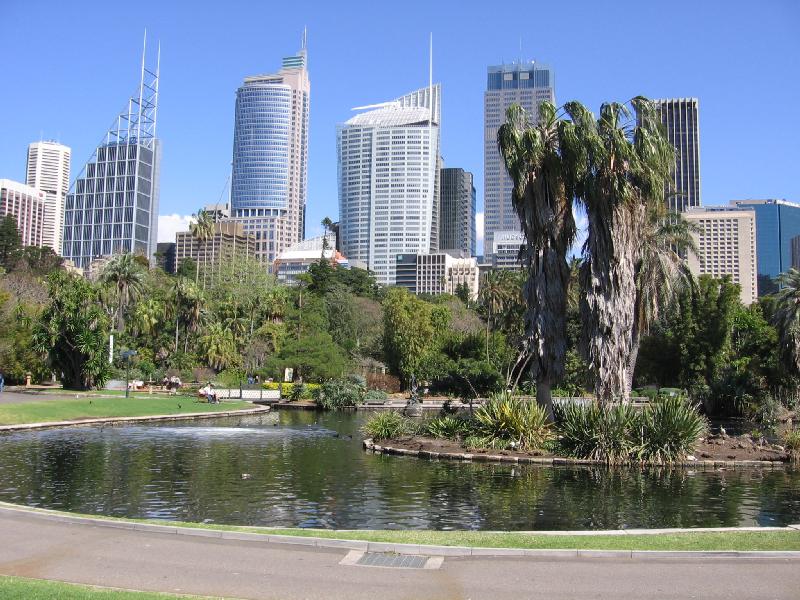
Photo of the Botanic Gardens, Sydney, with skyscrapers in the distance
The Botanic Gardens in the 21st century CC via Wikipedia

Cleverly, Nicholas arranged to finish the work on the birthday of Governor Lachlan Macquarie's wife, Elizabeth. The delighted Governor awarded Nicholas and his 10-man gang five gallons of spirits as a reward. There would have been sore heads as well as muscles the next morning.

Inscription on Mrs Macquarie's Chair, also called Mrs Macquarie's Seat, Royal Botanic Gardens.
Inscription on Mrs Macquarie's Chair, celebrating the day Nicholas finished the road CC by Graeme Churchyard

I've already written about building Mrs Macquarie's Drive as well as the only part of the original road which now survives, the Macquarie Culvert. As the 200th anniversary comes even nearer I hope to post more over on the A Rebel Hand blog.

Update: here's the first of those posts on Nicholas Delaney, Mrs Macquarie's Drive and the Botanic Garden's 200th anniversary.

The oldest bridge in Australia, built by Nicholas Delaney: the Macquarie Culvert, Mrs Macquarie's Drive, Royal Botanic Gardens, Sydney
The Macquarie Culvert, Mrs Macquarie's Drive, Royal Botanic Gardens, Sydney CC via Wikipedia

There's going to be a big party in the Botanic Gardens on the 13th and I've heard from some fellow Delaney descendants that they'll be going. If only I weren't half the world away I'd be there celebrating my ancestor's achievement. But I can't get to Australia this year. You can bet I'll be keeping up via social media and other channels, though.

The next bicentenary of this year is of the trial and sentencing of Sarah Marshall, my 3x great grandmother, on 24 July, 1816, at the Lancaster Assizes. 

Written record of Sarah Marshall's sentence at the Lancaster Assizes, July 1816
Sarah Marshall's sentence via Ancestry

Sarah was convicted of 'stealing a petticoat valued at one penny, a bed gown valued at one penny, two caps valued at one penny, a pair of silk stockings valued at one penny and a sheet valued at one penny, being of the Goods and Chattels of John Oldham.'

And for fivepence-worth of clothes, she was to be 'transported to some part beyond the seas.' To New South Wales, in fact, like all my convict ancestors.

Australian Convict Transportation Records for Friendship II via Ancestry

Sarah's story - or what I can find out about it, because there are plenty of strong Lancashire brick walls surrounding her life before she half-inched the goods and chattels - includes two particularly dramatic episodes after her trial. She was sent out on a notorious convict ship, the Friendship, famous for the licentious behaviour on board during the voyage. Again, I'm planning to write more about that.

And she's popularly believed to be the 'Sarah's Ghost' who is said to haunt Castlereagh General Cemetery, having been murdered by a group of  lust-driven men. But the story's inaccurate. I'm glad about that. Poor Sarah, as if she hadn't suffered enough.

Sarah went on to marry, or live as if married to, John Simpson, a tailor, and his is the last of my trio of bicentenaries.

John was born in Yarm, in the North Riding of Yorkshire. On 8 November, 1816, he was charged with 'feloniously taking and carrying away two bales of goods, consisting of muslin and shawls' at Hope in the Derbyshire Peak District and committed to Derby county gaol. The Derby Mercury reported the facts on 21 November.

Derby Mercury newspaper masthead, 21 November 1816
 
John Simpson charged with theft and imprisoned in Derby County Gaol: newspaper report in the Derby Mercury
Derby Mercury report via FindMyPast

He was to stay in Derby Gaol until the Lent Assizes in March, 1817, when he was tried and sentenced to seven years' transportation.

John and Sarah's daughter Lucy Simpson married Thomas Delaney, the son of Nicholas and his wife Elizabeth Bayly, which ties up my three bicentenary ancestors neatly.

Thursday, 31 December 2015

And Who Might You Be?


Are you planning on going to Germany in 2016? And are you looking for the graves to visit and for cousins to say hello? Things might turn out to be a bit difficult for both.

I wrote about the difficulties of finding your German ancestor’s grave on August 31, 2015 in my blogpost “Finding your Ancestor’s Grave (Or Not)” which you can find here http://bit.ly/1O2Lyi2. But finding relatives actually isn’t that easy either.

The main reason for the difficulty of finding German relatives simply is privacy. Not only are the privacy laws in German very strict and it is complicated, time consuming and sometimes simply impossible to find information on living people. But even when you manage to find them, you might not be able to get in touch with them or even be invited to their house. The reason for this is that Germans like to keep their privacy. They like to stick with their own family and friends and are rather reserved with getting in touch with people they do not know. And most of them simply aren’t looking for new found cousins, be it first, second or third.

Another reason is that in Germany genealogy is a more or less exotic thing to do. Remember, Germans usually stayed put and think they know where they come from. There simply doesn’t seem to be a need to know more and dig deeper. Therefore, most Germans aren’t even aware that they have relatives abroad. It happens quite often that I find relatives but they simply are unfriendly and hang up, making it very clear that they aren’t interested.

Often, there are no relatives in that area, their ancestors simply moved and their descendants are impossible to trace. The earlier emigration took place, the harder it is to find relatives.


But there still is hope and it is in fact possible to find relatives that know about the emigration and welcome you to Germany (which does not mean to their house). These are some examples where I found family members:

The emigrating ancestors had come from a small village close to the Dutch border with a very active Historical Society. They had information on everything a genealogist could ask for and knew directly which family member had emigrated and what became of the siblings. And as it was a Historical Society of a small village, many of its members were related. It only took one phone call and the research was more or less completed. And within 2 months about 200 family members from all over Germany met and welcomed their new found family member from America!

The emigrating ancestors came from a small village in Baden. I found out that there was a journalist living in the village, who also wrote about the old houses in this area. He agreed to meet my client and it turned out that they were distant cousins.

The family moved overseas in the 20th century; therefore the memory of them simply was alive and the remaining cousins knew about them and wanted to meet (but not in their home). I was only able to find them, because I turned every (and I mean EVERY!) stone around.

Once, I found the name in an online family tree; a sibling had married into this family. The researcher had more information and put me in touch with the lady who had provided him with that part of information. It turned out that she not only was a distant cousin of my client, but also a genealogist and archivist who had actually wondered what had happened to the cousin who all of the sudden vanished.

So, you see, it is possible to find relatives, but you really need time, know your way around, be creative, and, most of all, you need luck! Without luck you will not be able to get there!

But even without meeting your relatives, you will meet a lot of kind and friendly people in Germany. And who knows, maybe it turns out that you are related?
Enjoy your trip!