Showing posts with label World War I. Show all posts

Friday, 25 September 2015

Writing about World War I Soldiers

As I am writing my book about my great great great grandfather, Robert Muir (1800-1869), and his descendants, I discovered many Scottish young men who served in World War I. As I went to explore  the available records, I quickly became confused. I realized I needed to back up and stop researching specific ancestors and focus instead on the War itself and what records were kept by the British military and why.

I stopped writing and researching and started reading. That reading confirmed what I've vaguely remembered about World War I. It was a war that started almost by accident, seemingly by unwilling participants. It was supposed to be over by Christmas; it lasted four years. Generals fought with outmoded tactics against new weapons and technology wreaked destruction on a scale never seen before. No war is good, but World War I was a particularly bad war.

Nine European monarchs at King Edward VII's funeral in 1910; photograph
courtesy of Wikipedia

As the war drug on into early 1915, Britain discovered itself woefully unprepared and scrambled to keep up. The available records reflect that. The Military Service Act of 1916 was tweaked more than once so that more young men would be available to be drafted. When the war began, the British Army numbered about 730,000 men. By standards of the day, it was a small, professional force. By the end of the war more than seven million men and women had experienced service in the British Army.

Unfortunately, records about their service are spotty at best. German bombers struck the War Ministry repository in 1940. More than half of the military service records pertaining to World War I were destroyed.

Damage caused during September 1940 German bombing raid of London;
photograph courtesy of Wikipedia

Unlike researching U.S. military personnel, there was no concept of a serial number, which stayed with the soldier when transferred to different units. Instead, soldiers in the British Army were assigned regimental numbers. If they changed regiments, they were assigned a new number. At first I thought these regimental numbers were next to worthless. But I learned you could search soldiers with numbers close in range to your ancestor's and learn something of their service, such as when they were likely transferred into a theater of war and to what regiment.

On the rare occasions when I could find service records, I didn't understand them. The abbreviations and military jargon were indecipherable. I hired an expert, Chris Baker, of The Long, Long Trail: The British Army in the Great War, 1914-1918. I had been using his website to understand when regiments were formed, where they saw service, and when they were disbanded. I used his forums to ask questions. I learned from Chris how to work around the lack of a military service record by using operational unit war diaries. These are official day-by-day accounts kept by individual British units within the Army. Though they rarely mention a soldier by name, they often describe the action in vivid, though understated detail.

Oswald Dykes Riddell Dick Statement of Services record for a period of military
service before World War I; image courtesy of the UK National Archives

Chris Baker's report included the results of his searches through each available record, including newspapers. If service records didn't exist, he reviewed the regimental numbers before and after my ancestor's and described their service. It is likely my ancestor had similar experiences. Two of the ancestors he researched for me were killed during the war. He provided maps of the action and described it in ways I could understand. He also provided contact information for the museum most relevant to specific regiments. His deliverable also included unit war diaries and written regimental histories.

Cover page of Chris Baker's report on Oswald Dykes Riddell
Dick's military service; personal collection

As a result of his help, I believe I was properly able to honor Private William Lively (1899-1918) and  Lance Corporal Oswald Dykes Riddell Dick (1888-1918).

Both men's lives were filled with tragedy before the war. William Lively had lost his father in a fatal wagon accident in 1906 and his mother to tuberculosis in 1910. He was an orphan at age 11. By 1917 he lived in Darwen, England. He served with the 1/4 Battalion, East Yorkshire Regiment and was killed in action on 27 May 1918 during the Third Battle of Aisne when his unit was completely overrun by the enemy and decimated. William's body was never recovered but he was memorialized on the Soissons Memorial in the town of Soissons.

Oswald Riddell Dykes Dick lost his first wife in August 1914 to pneumonia and three months later a son died of tuberculosis. He was left a widower with three young children. He married his first cousin in 1917. During the war he served with the 1/5 Battalion of the Seaforth Highlanders and was killed on 21 July 1918 during a British counterattack near Champagne, France. He was interred at the Terlinchtun British Cemetery in Wimville, France.

Once I learned how navigate the National Archives website, I ordered many documents. The Lives of the First World War website has also come a long way since I began. When I first started using it, I found only two record sets. Many, many more are now available -- some free and some not. For paid subscription websites, I discovered FindMyPast.com to be the best for British military records. I also spend a lot of time communicating with the regimental museums.

_______________
Writing a Family History
He Died on a Flanders Field
Killed in Action During the Spring Offensive

Thursday, 21 August 2014

World War I and the Wellington Quarries

The town of Arras was on the Front Line.
Large areas were destroyed including this historic square.
It was rebuilt after the war.
On our recent travels we visited Arras and did a tour of the Western Front battlefields in northern France and Belgium, a very moving experience. We based ourselves in Arras and one of the completely unexpected places we visited was the Wellington Quarry Museum, or Carriere Wellington, in the town of Arras, a place that was massively affected during World War I, with many areas destroyed. It was also "home" to many of the British and Dominion troops. 

We had known nothing at all about the Wellington Quarries before our visit so were all the more surprised by what we learned. They were pre-existing tunnels under Arras which had once been used to excavate chalk. The British army took advantage of this opportunity to use them in the lead-up to the Battle of Arras. Over a few months they were progressively expanded by the New Zealand Tunnelling Company and the Royal Engineers Tunnelling Companies.  Many of the tunnellers had prior experience in quarries or as miners. 

The tunnels were intended to quarter over 20,000 men under the town of Arras, in a labyrinth which required street names and, I imagine, a good sense of direction. We were the only people on our tour with the Museum's English-speaking guide and it was hard to imagine the noise and busyness of a small town-beneath-a-town.
From a tracing, map of the Western Front showing the German advance.
Arras is circled.
http://www.awm.gov.au/collection/J00147/
Copyright expired.


The in situ memorial retains many of the artefacts that the men left behind including touching drawings by some long-gone soldier, and the usual detritus like rusty cans. At one place, near Junction 5E, the priest said Mass before the men went into battle. As the time for engagement drew near, and the tunnels crept closer to the German lines above, it would have been necessary for the men to be pretty quiet in that vicinity.


Another astonishing thing is that when the allies went into battle they erupted from the ground en masse just metres from the German lines…they must have hardly believed their eyes. Mines had also been laid under the German trenches and exploded near the commencement of the battle. What a shock too, for the troops who emerged at 5:30am from the relative quiet and darkness into the noise and pre-dawn light of the battlefield. 


We were surprised to learn, too, that the very existence of the tunnels disappeared from the public memory between the wars, and then for a long time after World War II. We also learned one frivolous thing we’d not known before….the New Zealander hats were called Lemon Squeezers because that’s what they looked like.

During a chat with the staff after the tour I mentioned I’d be writing about it on my blog and so they asked if I could also bring to your attention, their proposed activities for the centenary of the Battle of Arras in April 1917.  The Museum is preparing an exhibition about the soldiers who were in Arras, and especially any of the New Zealand tunnellers who were in the Quarries.

In particular they are looking for:
  • Photos of the soldiers -not necessarily of the men in uniform – they could be of them before or after the war. 
  • Letters to/from the soldiers while they were overseas or stories of their lives.
  • Relatives of the men who may wish/be able to attend the dawn service on 9th April 2017, the centenary of the Battle of Arras.

If your family had any involvement with the Battle of Arras they would love to hear from you.

Please contact
The contact information for the Museum is wellington@explorearras.com or isabelle@explorearras.com. They have fluent English speakers working there so you can happily write in English if you don’t speak French.


Of course, it would be great to hear from relatives on this website as well. I’ve found this news story from the Waikato Times and will also email the contact to bring the Museum’s request to their attention. There’s also a Facebook page for the Kiwi Tunnellers. There is an excellent site on the NZ Tunnellers and more pictures on this website

The Australian Divisions remembered on the wall outside the Museum.

Tuesday, 5 August 2014

World War I photographs

I live in the Netherlands, one of the few Western European countries that remained neutral during World War I. Still, the effects of the war were felt here too. Many refugees fled to the Netherlands and people were eager for news about what was going on at the front.

World War I was one of the first wars that was covered by newspapers that not only told stories, but also showed images. Some of these photos have found their way to the National Archives of the Netherlands. In this blog post, I would like to share some of the pictures that made the biggest impression on me.

All pictures are available on the National Archives Flickr account with 'No known copyrights.' Click the images for the description on Flickr.


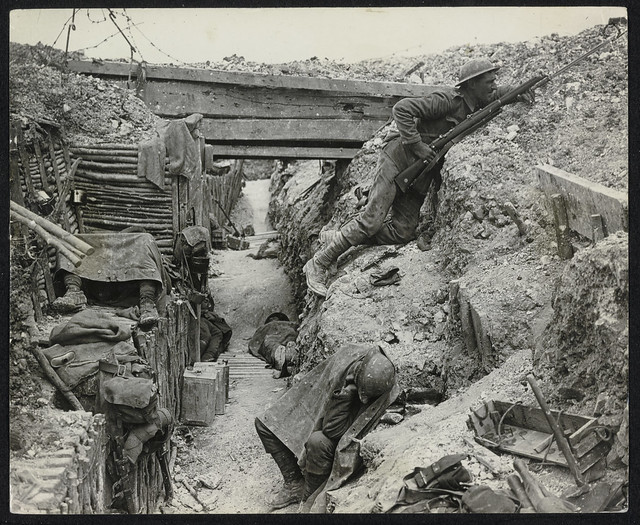
Leven in een loopgraaf
Life in the trenches

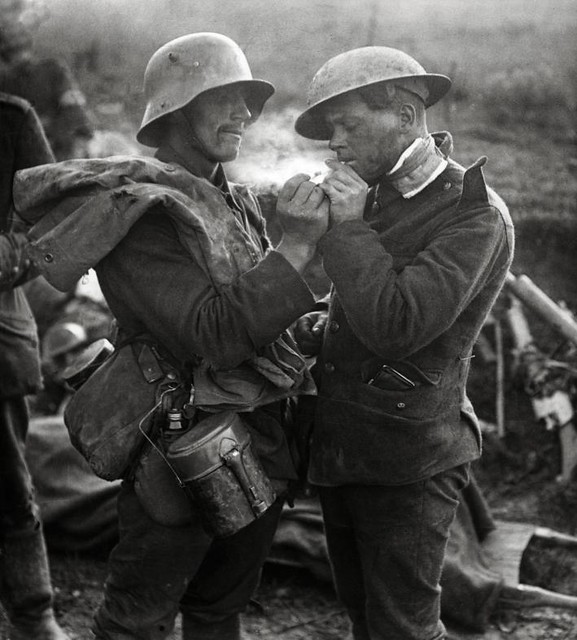
Eerste Wereldoorlog, krijgsgevangenen
Prisoner of war getting a light from his captor.

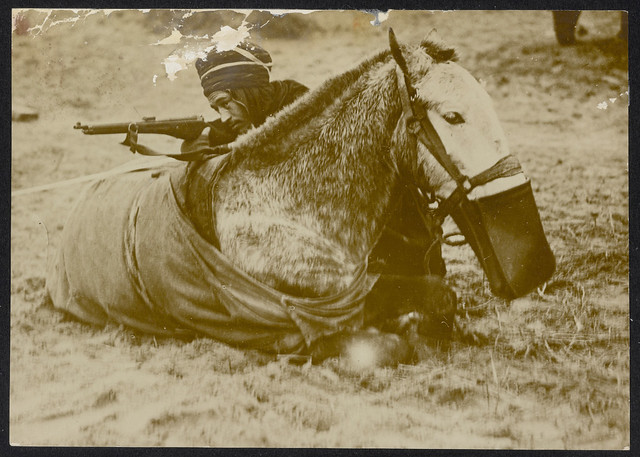
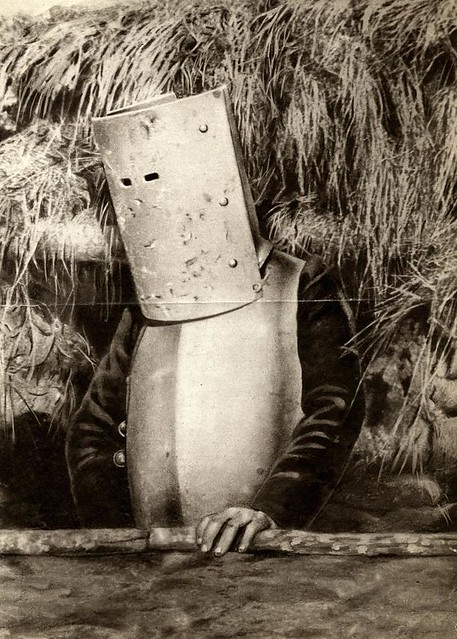
Soldaat met geweer die zich verschanst achter een liggend paard
Soldier using a horse as a shield

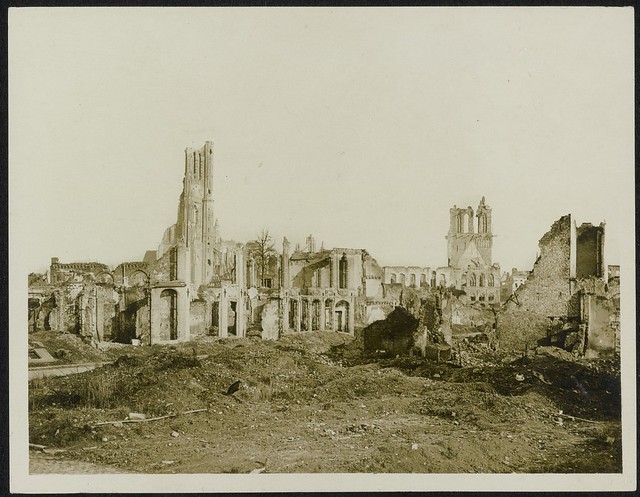
THE FRONT IN FRANCE. THE RESULTS OF GERMAN VANDALISM
Ruins at Ypres

Eerste Wereldoorlog, loopgraven
French soldier in improvised harness to protect himself from the bullets

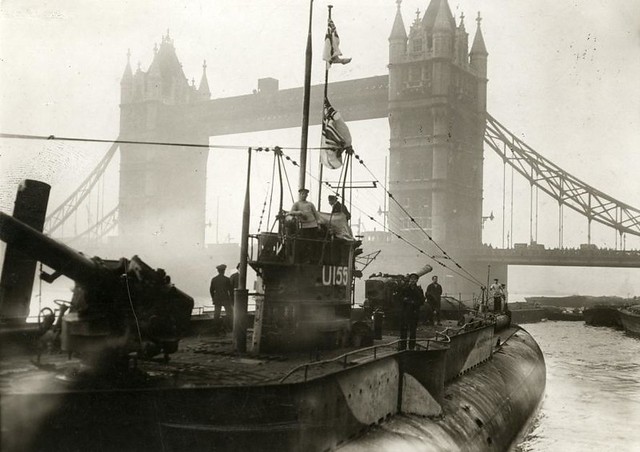
Eerste Wereldoorlog, zeeoorlog
Surrender of the German fleet to England

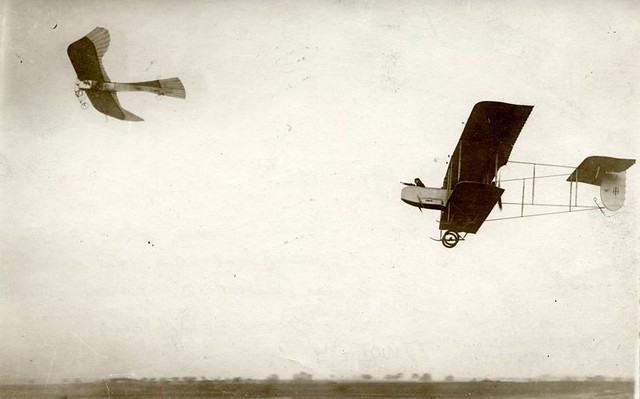
Eerste Wereldoorlog, luchtoorlog
Aerial combat

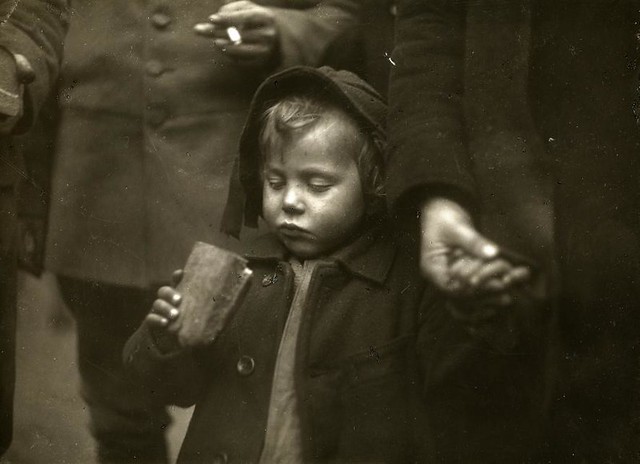
Eerste Wereldoorlog, vluchtelingen
Refugees

Monday, 4 August 2014

Lights Out - As The World Remembers


Lights Out - Remembering with a Candle in the Darkness
Image courtesy of FreeDigitalPhotos.net ID-100158085

At 11:00 pm on August 4, 1914 (100 years ago today) Britain declared war on Germany. Today from 10:00 - 11:00 pm the United Kingdom (and much of world) will remember the start of what is often called "the Great War"or "the war to end all wars." For those who had family members who served, who have read their history and understand what took place for four long years as battles stretched out over much of Europe, World War I was neither great nor unfortunately did it end all wars. It is fitting that we remember this terrible tragedy and realize that when countries overreach, when leaders refuse to talk, and when parties to a conflict choose to fight rather than attempt to resolve their issues, lives are lost, individuals are harmed, families are shattered, and communities and countries are decimated. War is sometimes necessary, but it should always be a last resort, not a first impulse.

The point of remembrance is to appreciate individual sacrifice and learn lessons from our shared history. Unfortunately, it seems that our world and many people in it refuse to learn these lessons. Today we will have a visual reminder with the Lights Out project, a cultural program taking place across the United Kingdom to mark the centenary of World War I. In addition, at the Tower of London, there is a display of a sea of poppies to honor the fallen. When completed, it will include 888,246 ceramic poppies.

Today the countries that were on opposing sides in World War I are allies and friends. Would that today's enemies and combatants learn those hard fought lessons of respect and tolerance. Would that we all hold life more dear than power, land, or being right and demand that our leaders are thoughtful and circumspect in international dealings.

Have you been to to the Tower of London to see the "sea of poppies?"
Did you participate in the Lights Out project?
Are you remembering the men and women who served in World War I through any of the special projects?
If you are engaged in a one-name study, have you included those who served in your study?
If you are engaged in a one-place study, have you found those who served from your place?

Take some time to remember how the world changed as a result of World War I and how those changes have affected your family and your family history (on the local and global scale).

Poppies for Remembrance - WWI
Image courtesy of FreeDigitalPhotos.net ID1006691

Tessa Keough

Tuesday, 29 July 2014

Digitisation projects for World War I commemoration

I recently attended a consultative forum at the National Archives of Australia's Victorian office on behalf of AAGRA (Australasian Association of Genealogists and Record Agents).

I was interested to hear project updates on two major digitisation projects.

The National Archives of Australia (NAA) are working on their World War I Repatriation personal case files. They are digitising the files of all those who were on the Albany convoy. They are also adding metadata to their catalogue so that the files of all other men and women who served and claimed repatriation will be available for retrieval. The files have data in addition to that found in series B2455, the First Australian Imperial Forces personnel dossiers, that are already available through the NAA. For example if somebody was wounded, the details of the event where the wound was incurred might be described in more detail on the repatriation file. Also you may be able to learn more about life after the war.

Not all those who returned claimed repatriation. A few did not need to. Others were too proud.

The digitised files and the meta data will be released in November to coincide with the commemoration of the departure of Australian and New Zealand troop in convoy from King George Sound, Albany, initially bound for Europe. The convoy ended up in Egypt and in April 1915 the majority of soldiers landed at Gallipoli.

The Public Records Office of Victoria (PROV) are digitising the land files associated with soldier settlement after the war. There were around 10,000 Soldier Settlers after World War I and the Settlement files will be digitised and available on line in 2015. The scheme had mixed success. Some soldiers were successful farmers, others failed. A case study on the PROV's website at http://prov.vic.gov.au/whats-on/exhibitions/soldier-settlement gives the story of the challenges faced by one returned soldier.

A group of returned soldiers who had settled on farms in the Mallee. They rode horses to Melbourne to place wreaths on the Shrine of Remembrance. They have stopped for a meal. There is a truck loaded with sacks of chaff in the background (probably to provide feed for the horses). Photograph from Museum Victoria: Negative - Returned Soldier Settlers from the Mallee Having Roadside Meal, Wemen, Victoria, circa 1930 Reg. No: MM 002568 Copied from Mrs Jim Ryan, 1985 The Biggest Family Album of Australia, Museum Victoria.


I know my family tree contains soldiers who were totally and permanently incapacitated after World War I, including my husband's grandfather. We also have family members who were soldier settlers in the Mallee.  Both sets of files will contain family history information for me.

Friday, 25 July 2014

Lives of the First World War Website

The Imperial War Museum (IWM), in partnership with DC Thomson Family History, has launched a new website: Lives of the First World War: https://livesofthefirstworldwar.org/

Lives of the First World War home page

The IWM is a British museum founded in 1917 with the aim of recording the civil and military war effort and sacrifice of Britain and its empire during World War I. As part of the museum’s centennial commemoration of the war, the new website was launched.  The objective is to create a permanent digital memorial of the 8 million people who participated in the war effort by crowd-sourcing the data gathering and recording of information about individual soldiers.

The website launched with only soldiers from the United Kingdom, who served in the British Army and was “seeded” with the Medal Index Cards, 1914-1920 dataset. The Army Medal Office created these cards, during the late part of the war in an effort to record every person’s entitlement to campaign and gallantry medals. The cards may include:
  • Individual’s name
  • Service number
  • Rank
  • Unit(s)
  • Date of enlistment
  • Medal(s) received
  • Whether the individual was killed or discharged
  • Remarks
  • Address
  • First theater of war in which they served (usually only provided after 1916)

I think the website has a noble purpose and could become over time a wonderful genealogical source. Like everything in life there are pros and cons:

Pros
  • The website is crowd-sourced, but you must enter your source citation first, which can be a personal memory, a website, a document, etc. Bibliographic information is required. After the citation is created then they can begin adding facts to the individual.
  • Even though it's crowd-sourced, other people cannot merely change a fact that has already been entered; they may only dispute the fact by providing alternate information and their source. Exactly how the resolution process works, I've yet to discover.
  • The website allows users to add a multitude a facts about a soldier, including his parents, spouse, children, occupation, residence, religion, etc., which I believe is why this may become a valuable genealogical tool.
  • It is co-sponsored by a well-respected museum so users won’t be doing all the hard work to enter information about their soldier ancestor only to have it disappear later.

Cons
  • The website is not intuitive to use, especially the order which users must perform certain steps when adding information. There are good “how to” videos available on the site.
  • It does not seem to be compatible with all browsers and I am still finding little glitches such as drop downs that don’t scroll.
  • The initial record set doesn’t always provide enough information to determine which soldier is your ancestor, especially if they have a common name.
  • No soldiers from countries other than England, Scotland, and Northern Ireland are currently included. Nor can they be added at this time. 
Registering to use the site is free. With free access you have the ability to view the Medal Index Card record set, but to have access to other records, you must be a friend. That costs 6 British pounds a month or 50 pounds per year. This provides access to the information from FindMyPast.com and other DC Thomson Family History products. You also have access to special "friend-only" features, such as the ability to group your digital memorials together. I have chosen not to be a friend at this time, so that is all I can report about Friend-only content and features.

I’d be very interested in your thoughts about the Lives of the First World War website and whether you have started memorializing your soldier ancestors or plan to do so.

_______________
You may read my occasional posts about my ancestors who were soldiers and fought in World War I as well as my civilian ancestors whose lives were impacted by the war here.

Tuesday, 22 July 2014

On the Brink of War

One hundred years ago today, the 22nd July 1914, could be considered the last day peace remained possible.  Austria-Hungary delivered an ultimatum  to Servia, now called Serbia, the next day.

On the 22nd and 23rd July 1914, Servia only appeared in United States newspapers as references to financial markets reactions to the uncertainty caused by the assassination of Archduke Franz Ferdinand of Austria in Sarajevo on the 28 June.  On the 24th July the ultimatum made the front page of many US newspapers, including the Washington Times.

The Washington times. (Washington [D.C.]), 24 July 1914. Chronicling America: Historic American Newspapers. Lib. of Congress.

The Sarajevo assassination is very famous, but the reasons for it are less well known.  The Balkan region was squeezed between three world powers, the Austro-Hungarian, Russian and Ottoman (also known as Turkish) empires, with substantial parts of the region under foreign control.  In 1909, Austria-Hungary annexed Ottoman territories Bosnia and Herzegovina, and Bulgaria declared independence from the Ottoman Empire (see Bosnian crisis).  In 1912, Servia, Rumania, Bulgaria and Greece all had territorial aspirations beyond their borders.  Servia’s aspirations included Bosnia, the province in which Sarajevo was located.

Report of the International Commission To Inquire into the Causes and Conduct of the Balkan Wars. 1914. Carnegie Endowment for International Peace: Washington D.C., p.38. Internet Archive (https://archive.org/details/reportofinternat00inteuoft : accessed 22 July 2014)

The Balkan Wars of 1912-1913 re-drew the political map.  The Ottoman Empire fared badly and lost territory, shown in darker shades on this map.

Bartholomew J.G. The Balkan States with New Frontiers according to the Treaties of London, Constantinople & Bukharest. In Report of the International Commission To Inquire into the Causes and Conduct of the Balkan Wars. 1914. Carnegie Endowment for International Peace: Washington D.C. digital image no 432, Internet Archive (https://archive.org/details/reportofinternat00inteuoft : accessed 22 July 2014)


By 1914, the Austro-Hungarian Empire faced rising nationalist sentiment in its ethnically diverse territories.  Servian nationalists were emboldened, leading to the attack in Sarajevo.  Had no other country interfered, Austria-Hungary could have crushed Servia.  Perhaps the Austro-Hungarian government thought war could be limited or they could obtain a diplomatic victory as in 1909.

Austria-Hungary declared war on Servia on 28 July 1914.

Russia supported Servia.  Russia, France and Britain had diplomatic agreements with each other.  Austria-Hungary was allied with Germany.

Germany declared war on Russia on 1 August 1914, in response to Russian military mobilization on its border.  On the 3rd August Germany declared war on France and invaded neutral Belgium.  Britain declared war on Germany and Austria-Hungary on the 4th August.  The Ottoman Empire entered the war on the 29th October, siding with Germany against Russia.


Sunday, 29 June 2014

One hundred years ago

I was alerted by a blog post at Dr. Bill Tells Ancestor Stories that one hundred years ago was the assassination of Archduke Franz Ferdinand of Austria, heir presumptive to the Austro-Hungarian throne, and his wife, Sophie. The assassination is widely acknowledged to be a trigger for World War I. Bill Smith states
What seemed as a minor event in Central Europe, 100 years ago today, was not even reported in many American newspapers in the US until two days later. An assassination in what is now Bosnia and Herzegovina was the event.

DC-1914-27-d-Sarajevo
The assassination as illustrated by Achille Beltrame of the Italian newspaper Domenica del Corriere, 12 July 1914.


The news made page 3 of the Ballarat Courier on 30 June and was widely reported throughout Australia.
CABLEGRAMS. (1914, June 30). The Ballarat Courier (Vic. : 1914 - 1918), p. 3 Edition: DAILY.. Retrieved June 29, 2014, from http://nla.gov.au/nla.news-article73308399
 Some Australian newspapers, such as Perth's Daily News, reported the assassination on Monday 29 June.

From now for the next five years there will be a significant focus on World War I.

Many families, including both mine and my husband's, had young men who served in the war who were killed, and others who were injured.

As a family historian, if I come across a young man born in the 1890s, the first thing I do is check for a military record.

While the military records are useful for family historians it seems worthwhile to pause and remember the suffering represented by those records.

I am sure that as our forebears read the newspapers on 29 and 30 June 1914 they would have no idea of what that assassination might mean for them and their families.