Showing posts with label Frances Owen. Show all posts

Sunday, 15 May 2016

Genealogy centenaries

Isn't it always the way? You wait years for a significant genealogy anniversary and then three come along at once. That's how it is in 2016 for my ancestors - three significant bicentenaries for three of my convict forbears, Nicholas Delaney, Sarah Marshall and John Simpson.

So I thought I'd share a bit of information about them. A lot of Australians are descended from this trio of law-breakers and maybe one of them will find this post and get in touch. We genealogists love hearing from cousins...

The first genealogy centenary is 13 June, 2016, the 200th anniversary of the official founding of the Royal Botanic Garden in Sydney.

Drawing of the Domain and Mrs Macquarie's Point, Sydney, Australia1830
The Domain and Mrs Macquarie's Point, 1830, Creative Commons by Paul K

On 13 June, 1816, Nicholas Delaney, my 3x great grandfather, and his gang of convict workers finished building Mrs Macquarie's Drive, the road that runs round what was then the Government Domain. It's now part of the Botanic Garden.

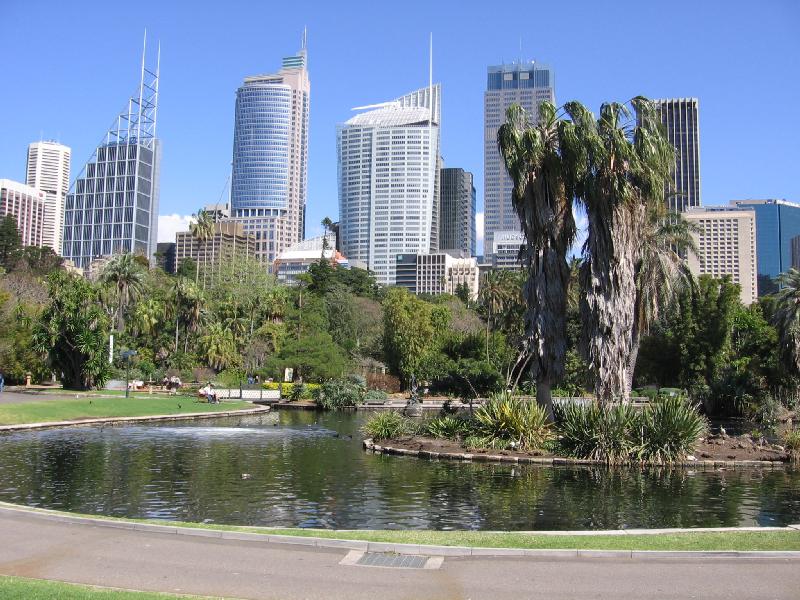
Photo of the Botanic Gardens, Sydney, with skyscrapers in the distance
The Botanic Gardens in the 21st century CC via Wikipedia

Cleverly, Nicholas arranged to finish the work on the birthday of Governor Lachlan Macquarie's wife, Elizabeth. The delighted Governor awarded Nicholas and his 10-man gang five gallons of spirits as a reward. There would have been sore heads as well as muscles the next morning.

Inscription on Mrs Macquarie's Chair, also called Mrs Macquarie's Seat, Royal Botanic Gardens.
Inscription on Mrs Macquarie's Chair, celebrating the day Nicholas finished the road CC by Graeme Churchyard

I've already written about building Mrs Macquarie's Drive as well as the only part of the original road which now survives, the Macquarie Culvert. As the 200th anniversary comes even nearer I hope to post more over on the A Rebel Hand blog.

Update: here's the first of those posts on Nicholas Delaney, Mrs Macquarie's Drive and the Botanic Garden's 200th anniversary.

The oldest bridge in Australia, built by Nicholas Delaney: the Macquarie Culvert, Mrs Macquarie's Drive, Royal Botanic Gardens, Sydney
The Macquarie Culvert, Mrs Macquarie's Drive, Royal Botanic Gardens, Sydney CC via Wikipedia

There's going to be a big party in the Botanic Gardens on the 13th and I've heard from some fellow Delaney descendants that they'll be going. If only I weren't half the world away I'd be there celebrating my ancestor's achievement. But I can't get to Australia this year. You can bet I'll be keeping up via social media and other channels, though.

The next bicentenary of this year is of the trial and sentencing of Sarah Marshall, my 3x great grandmother, on 24 July, 1816, at the Lancaster Assizes. 

Written record of Sarah Marshall's sentence at the Lancaster Assizes, July 1816
Sarah Marshall's sentence via Ancestry

Sarah was convicted of 'stealing a petticoat valued at one penny, a bed gown valued at one penny, two caps valued at one penny, a pair of silk stockings valued at one penny and a sheet valued at one penny, being of the Goods and Chattels of John Oldham.'

And for fivepence-worth of clothes, she was to be 'transported to some part beyond the seas.' To New South Wales, in fact, like all my convict ancestors.

Australian Convict Transportation Records for Friendship II via Ancestry

Sarah's story - or what I can find out about it, because there are plenty of strong Lancashire brick walls surrounding her life before she half-inched the goods and chattels - includes two particularly dramatic episodes after her trial. She was sent out on a notorious convict ship, the Friendship, famous for the licentious behaviour on board during the voyage. Again, I'm planning to write more about that.

And she's popularly believed to be the 'Sarah's Ghost' who is said to haunt Castlereagh General Cemetery, having been murdered by a group of  lust-driven men. But the story's inaccurate. I'm glad about that. Poor Sarah, as if she hadn't suffered enough.

Sarah went on to marry, or live as if married to, John Simpson, a tailor, and his is the last of my trio of bicentenaries.

John was born in Yarm, in the North Riding of Yorkshire. On 8 November, 1816, he was charged with 'feloniously taking and carrying away two bales of goods, consisting of muslin and shawls' at Hope in the Derbyshire Peak District and committed to Derby county gaol. The Derby Mercury reported the facts on 21 November.

Derby Mercury newspaper masthead, 21 November 1816
 
John Simpson charged with theft and imprisoned in Derby County Gaol: newspaper report in the Derby Mercury
Derby Mercury report via FindMyPast

He was to stay in Derby Gaol until the Lent Assizes in March, 1817, when he was tried and sentenced to seven years' transportation.

John and Sarah's daughter Lucy Simpson married Thomas Delaney, the son of Nicholas and his wife Elizabeth Bayly, which ties up my three bicentenary ancestors neatly.

Monday, 18 April 2016

Finding ancestors in the 'wrong' year in records

If you're fortunate (or dedicated) enough to trace any ancestors back to before the 1750s, and they were from Britain or its colonies, you may come across some odd-looking dates in documents from the early months of each year. They might be in letters, books, newspapers or parish records.

Here's an example, from the parish records for Merioneth/Meirionnedd in north-west Wales:


It looks as if nobody was baptised, married or buried between March 21, 1748, and March 25, 1749 - which isn't very likely. But not understanding this record could cause problems.

Suppose you're looking for Hugh Ellis and all the evidence points to him being born in Cae Gwernog in 1749 - and you found this record. You might think your other information was wrong, because it looks as if he was baptised on 21 April, 1748.

You might find a parish record which is even more puzzling (but gives a clue to the solution), like this one for the baptism of Mary Roberts of Tarporley, from the Diocese of Chester parish records:


She was baptised on 1 January, 1744. But wait a minute - just above her in the baptism of Thomas Garnett, on 30 December... 1744. Couldn't these people keep their records in order?

And yes, of course, they could. It's just that the calendar was organised in a slightly different way until 1752 in Britain and its colonies.

Old Style

From the late 12th century until 1751, the legal year began on Lady Day, the Feast of the Annunciation, celebrated on 25 March (exactly nine months before Christmas Day). So the year changed on that day: 24 March, 1750, would be followed by 25 March, 1751, and the year's length was calculated according to the Julian calendar. It seems odd to us, but since it was the way things had been for centuries, it was easy to understand.

Except...

New Style

Except that in October 1582, Pope Gregory XIII introduced a new calendar. By then, because the length of a year under the Julian calendar had been slightly over-calculated as being 365 days and six hours, with the six hours being added together every fourth year to make a leap year, the date of Easter had drifted too far away from the Spring equinox.

This also resulted in 'removing' 10 days from the calendar to make up for the drift. The new calendar, known as the Gregorian, was adopted by Catholic countries. But the English-speaking world was officially Protestant, and Protestant states weren't having anything to do with a change decided by the Pope. They stayed with the Julian calendar.

This caused confusion in dating letters, reports and documents which crossed the time zone between Protestant and Catholic countries.

To avoid this confusion, people often dated their papers using OS (Old Style) and NS (New Style), or gave two alternative years for those awkward days from 1 January to 24 March, like 1700-01, or 1700/1.

Here's how one newspaper, the Newcastle Courant, coped with the date problem:


You'll notice that in the latest edition the paper is dated 1744, but the first article mentions a date as being in OS - it's a report from (Gregorian, NS) France.

Just to add a little more confusion, the legal year in Scotland was changed to begin on 1 January in 1600, and after the Union of Parliaments in 1707, this caused more legislative problems.

Parliament wasn't happy. In 1750, it stated that the use of the Julian calendar was 'attended with divers inconveniences, not only as it differs from the usage of neighbouring nations, but also from the legal method of computation in Scotland, and from the common usage throughout the whole kingdom, and thereby frequent mistakes are occasioned in the dates of deeds and other writings, and disputes arise therefrom.'

And so the Calendar (New Style) Act 1750 was passed. It ruled that the English-speaking world would make two changes in 1752: that year would start on 1 January everywhere; and there would be 11 days removed from the calendar, since the drift had widened another year since 1582, when the Gregorian calendar came into force.


Still with me? Phew! I think we both deserve a picture to help explain the effect this had on record-keeping.


These are burials from the parish records of St Stephen's Church in Norwich. You'll see that 1750 burials go from 31 March to 14 March; 1751 burials are from 25 March to 24 December; and 1752 burial start on 2 January.

The other part of the changes brought about by the Calendar (New Style) Act 1750 was the removal of 11 days. Here's the law:


So you went to bed in the evening of September 2 and woke up on the morning of September 14. Which was not much fun if your birthday or other special day fell into the 'lost' time.


The Whitehall and General Evening Posts tried to explain the whole muddle on the morning of 14 September, NS:


Until recently I believed the story that the loss of 11 days caused widespread riots, with people furiously demanding: 'Give us back our eleven days!'

Unfortunately, it seems that this is an urban, and rural, myth, though the phrase was well enough known at the time. It appears, as 'give us our Eleven Days', on a placard at the bottom of William Hogarth's satirical painting An Election Entertainment:


But the missing 11 days isn't just a story about how daft the uneducated people were. A very recent blog post has pointed out that, though poorer people's wages, which were often paid by the day, fell by a third in September 1752, their rents did not. A good reason to be angry.

The taxes still had to be brought in, and so (rather than lose 11 days' tax) the government ruled that the new fiscal year should start 11 days later than Lady Day. And an extra day was added in 1800. That's why the UK tax year begins on 6 April - it's the old Lady Day, plus the (now) 12 days' drift.

Finally, as everyone's going Shakespeare mad, with the 400th anniversary of his death on 23 April, here's a brain teaser:
Shakespeare and Miguel de Cervantes died on the same date - but not on the same day. How can that be?

Notes:

Believe it or not, I've simplified things a lot here. The original Calendar (New Style) Act 1750 can be read online, if you really want to
All images are from FindMyPast, except for the Hogarth painting, An Election Entertainment, which is CC via Wikimedia, and the extract from the Calendar Act
If working out OS/NS dates is too much of a time-waster, there's a handy online date converter to do the work for you

Monday, 14 March 2016

Irish Catholic parish registers - which is the best site to search?

It's St Patrick's Day on the 17th, so it's probably not surprising that FindMyPast Ireland chose this month to release its collection of Irish Catholic parish registers. With the same records available on Ancestry, that brings the number of sites - and ways - to search these records to three, which is a giant bonus to those of us researching Catholic ancestors from Ireland.

Free Irish records

In July last year, the National Library of Ireland first released these records, which were warmly welcomed by genealogists all round the world. It's not just that they help us trace our Irish ancestors, a notoriously tricky thing to do (but not as hard as I thought when I started out). The other wonderful thing is that they're free to access.

At the time, I posted on Worldwide Genealogy about my first impressions of using this wonderful resource, which the NLI provided without an index. I wasn't going to look such a ground-breaking gift horse in the gob. But now, with FMP and Ancestry both providing access to the parish registers, it's possible to search them using the methods that many genealogists are used to on these two sites.

So this month I'm going to conduct a genexperiment and try all three out, looking for the same person, and see if any of them will become my favourite for Irish Catholic parish register research. I also want to know if I can search all three for free.

Catholic parish register search

I'll start with the first publishers of the Irish Catholic parish registers, the NLI's own website. Because you need to know which parish you want to search, I'm going to look for Daniel Delaney of the parish of Tomacork (Carnew). He may be related to my ancestor Nicholas Delaney, who was from the same parish. It's a fairly unusual surname in the area.

Shane Wilson has a useful tool on his excellent website for finding RC parishes.

NLI

Going to the home page, I entered the parish name (Tomacork, in this case). This took me to a page offering three microfilms. I needed the earliest:


Selecting any of the categories or the image all took me to the same page, the first image in this collection:


And from then on it was a case of scrolling through the records, looking out for the name Carnew (usually at the right-hand side of the page).

This took a while, and I found Daniel only as a father, here with his wife Mary as parents to Anne in February 1794:


The display's fairly small and I recommend switching to full screen view using the button on the top right. You can also adjust brightness using the buttons, but here I'm just giving you the image as is, for comparison.

Daniel's baptism and marriage must have taken place before these records were compiled, or else he moved to Carnew from another parish.

Ancestry

Next I searched for Daniel in the Catholic parish registers on Ancestry. I've got a subscription, but I wanted to see whether I could find Daniel without logging in. From the Birth, Marriage & Death, including Parish screen I selected Ireland as my collection focus and opened the card catalogue. Ireland, Catholic Parish Registers 1655-1915 is the last collection on the second page, so I hope I've saved you some time!


If you want to just browse, you'll need to know which diocese you're searching for to use Ancestry. I'm looking for Ferns. You then have the option to enter the parish name and year range - for me, it's Tomacork and 1785-1845. However if you just hit the year range it takes you to a page asking you to sign up for a free trial, which I don't need. I still wanted to see how far I could go in searching records which are available free elsewhere. So don't browse if you haven't got an Ancestry sub, you need to actively search.

So going back to the screen above I entered my search. I found that entering the exact diocese brought up a few results but not the one I wanted - but if I didn't enter the diocese I got 240 results and none of them were the one I wanted. That told me that I couldn't search baptisms by parents. So if I hadn't known that I was looking for the father of Anne, I'd have had to browse, just as with the NLI records. So I searched for Anne, and...


The first record! But to check, I hovered over View Record, and...


The right record (though Mary's name in the original is Costolough, not Cossolough). And that's as far as you can go without signing in. I don't know if you can go further by opening a free account because I don't need one. But I wanted to check the quality of the image, so I signed in, and here it is:
It's a slightly lighter image that the NLI's, but (peering at the screen) I think it's not quite such good quality. While using Ancestry, I found it fairly easy to navigate around the record set, so that will save me time researching these records in the future. If I hadn't got an Ancestry sub, I could use it as an index and get the images from the NLI. Or is there an easier way?

FindMyPast

FMP offers its Irish Catholic parish registers for free. Again without signing in, I went to the Ireland Birth, Marriage, Death & Parish Records screen. But when selecting the record set, I found that FMP has separated the baptisms, marriages and deaths into three different record sets, so unlike with the other two sites, I had to choose.
Luckily, I knew I was looking for a baptism. But this time I got zero results. Once again, it was lucky I knew Daniel and Mary's daughter's name. Searching for Anne, I got zero results again. Was this because I'd gone straight to the record set, which is a method of searching FMP recommended by several genealogists with much more experience than me?
Back to the Search screen, and selecting only Births & Baptisms as a subcategory, no record set:


And there was Anne, the first record.


Clicking on the image icon brought me to a register/sign in dialogue box. I know that FMP Ireland has promised that the registers will be 'free to search, forever', but there's no mention of whether the images are free to view. Again, I don't want to open a new account just to check this because I already have a subscription to FMP. (How do I afford these subs, you may ask? I grab the special offers.) So I signed in, and here's the image:


It looks very similar to the NLI one. You can navigate using the < and > arrows, but there's no jumping to a page as there is with Ancestry.

So there you have it - three ways of accessing the NLI's Irish Catholic parish registers. Which will I use in the future? Obviously, it's a huge help to be able to search, though you need to know who you're looking for first (eg the daughter's name, not the mother's or father's, in this case).

I think I prefer the NLI site for scrolling through the images, though, as I said, I'll be using full screen. But for jumping around the records, Ancestry's the easiest. I suppose, in the end, it's a very personal choice.

And I'm hugely grateful to all three providers for making these superb records accessible.

It's a long post, so thanks for staying with me. There's so much more to say about these records! 


I'd love to know your thoughts if you've used the Irish Catholic parish registers via any of these sites. Have you got any favourites, or tips? Is there a clever shortcut I've missed?


Irish genealogy webinars

PS: There are some free Irish genealogy webinars taking place this week:

Family Search is hosting two sessions a day on Thursday 17th and Friday 18th. Full details over at Claire Santry's unmissable Irish Genealogy News blog.

FMP is holding its webinar tomorrow (Tuesday 15th) at 1600 GMT and the link is available here (this works for the UK; please check for your own area).
Thursday 17 March: Where is That? Finding and Understanding Places in Ireland. Starts 11am MST; 6pm GMT.

Thursday 17 March:
Ireland & Census and Census Substitutes. Starts 1pm MST; 8pm GMT.


Friday 18 March: Ireland Catholic Church Records. Starts 11am MST; 6pm GMT.

Friday 18 March: Irish Protestant Records. Starts 1pm MST; 8pm GMT. - See more at: http://www.irishgenealogynews.com/2016/03/family-search-four-irish-genealogy.html#sthash.f3itwe7R.dpuf
Thursday 17 March: Where is That? Finding and Understanding Places in Ireland. Starts 11am MST; 6pm GMT.

Thursday 17 March:
Ireland & Census and Census Substitutes. Starts 1pm MST; 8pm GMT.


Friday 18 March: Ireland Catholic Church Records. Starts 11am MST; 6pm GMT.

Friday 18 March: Irish Protestant Records. Starts 1pm MST; 8pm GMT. - See more at: http://www.irishgenealogynews.com/2016/03/family-search-four-irish-genealogy.html#sthash.f3itwe7R.dpuf

Sunday, 14 February 2016

A Valentine's Day post: ancestors in love


Valentine poem to Miss C, Bath Chronicle, 24 February 1763
Bath Chronicle, 24 February 1763

It's St Valentine's Day, so I'm going to look at a few love stories from my family tree. Happy, sad, or awkward, they remind me that my ancestors and relatives weren't just dates and names on a GEDCOM, they were living, loving, real people with all the ups and downs that go with being human.

Rwgan, Ceredigion, the old farmhouse
Rwgan, our family home in Wales
My father's parents met when my grandfather, Richard Owen, came to board at Rwgan, a Cardiganshire (now Ceredigion) farmhouse our family built in the early 19th century. Richard, the son of Griffith Owen of Anglesey and Elizabeth Richard/s, got a job in Lloyds Bank in the county town, Cardigan, and stayed at Rwgan with Rhys Lloyd and his wife Sarah Davies. Their daughter, Elizabeth Jane (Lizzie) lived there, too, and she was a beauty, small, with a heart-shaped face and long, luscious hair.

Richard was smitten... but Lizzie was choosy, and had turned down previous offers for her hand. One of her unlucky suitors had described her as 'frozen perfume' - I love that phrase! But something about young Mr Owen melted her... and they married and had two sons, my father and uncle.

My other grandfather was Laurence Thomas Delaney, known as Pop. He was the son of Mary Maude Wilson and Thomas Delaney (Tom). This story is about one of Pop's sisters, Florence (Flo) and also involves a paying guest.

Flo at the races, © Frances Owen
Flo was living with her parents at the family farm, Moyne, near Little Hartley in New South Wales. A trader, Robert Reinerts, from Hamburg, stayed at Moyne as a boarder when on leave from his work in New Guinea (presumably the north-eastern part, then under German control).

He and Flo fell in love. But international politics were cruel to them. The First World War broke out and Robert was interned as an enemy alien. After the war ended, Robert was repatriated to Germany.

He asked Flo to marry him, but she couldn't bear the thought of going to live on the other side of the world. So they parted, and she never married.

Her life wasn't empty, though; she loved going to dances with the other young Delaneys and, when the family moved to Sydney, she enjoyed days at the races and evenings at the opera.

One of my convict ancestors, James Thomas Richards (no relation, as far as I know, to the Elizabeth mentioned above), went on being a rogue into his fifties. At some time before May 1870, in Sydney, New South Wales, he met Rebecca Harrington, a free settler from Hackney in East London. You may have read about Rebecca's mother, Julia, in the Celestina Christmas story over on the A Rebel Hand blog.

James was about 25 years older than Rebecca. Who knows what drew them together? Did he represent security? He was a well-known figure on the quayside, and a prizewinning waterman. Maybe she was pretty, vivacious or charming. It could have been their East End backgrounds which gave them something in common.

But all we have are the facts - that on 28 February, 1871, when she was about 30 years old, Rebecca gave birth to James's daughter, Eleanor Ann Edith. The only problem was that James wasn't in a position to marry her - he already had a wife, Elizabeth Beadman.

I haven't got much evidence about how James, Rebecca and Elizabeth dealt with this uncomfortable situation. I do know that when Rebecca's father, Thomas Harrington, died in 1874, he was buried from James's house in Cumberland St, Sydney. Had he, or Rebecca, or both, been living there?

Burial notice of Thomas Harrington, 22 July 1874
Thomas Harrington's burial notice, Sydney Morning Herald, 22 July, 1874
Elizabeth was still alive, though whether she was living at that address I don't know. Maybe she stayed at her grown-up son James's house. She died later that year, and James Thomas and Rebecca married on 14 October 1874.

Most of my ancestors just met and married (or didn't) without leaving a boy-meets-girl story behind them. I've written about how my earliest Australian ancestors may have got together, and I'll mention them again because 2016 is a bi-centenary year for three of them: Nicholas Delaney, who married Elizabeth Bayly (Bayley, Bailey), and Sarah Marshall and John Simpson, who probably didn't go through a ceremony but were 'married' as far as they were concerned.


Do you know any love stories which bring your ancestors to life?


I'm going to finish with a few Valentine notices I found in the British Newspaper Archive. I hope you enjoy them!

Plymouth Gazette, 15 February 1845. A cynical view...

Worcester Journal, 4 February 1854


Burnley Gazette, 19 February 1876. Sale of unwanted cards?


Burnley Gazette, 26 March 1881. A bit desperate?


'Offensive vulgarity' in 1926. Who knew they'd gone out of fashion?


Surrey Advertiser, 10 February 1940. The war can't stop love (or commerce). Take that, Hitler!

Tuesday, 15 December 2015

Twelfth night, or what they ate at Christmas

With Christmas just over a week away, I'm going to write about a custom most of my UK ancestors were familiar with – but which has died out here in Britain.

It's not about a Christmas Day custom, though, but one which occurred during the festive season. Janet Few's already written a lovely post on Worldwide Genealogy about her own family Christmas tree tradition, so I thought I'd branch (sorry!) out a bit.


Dividing the Twelfth Night Cake
These days, the Christmas season seems to start in November (and in September in the shops). But go back in time and it really started on Christmas Day, or the night before, and continued for 12 days until Epiphany, also known as Twelfth Night. For many people this day was an even bigger one for parties, feasting and present-giving.

So today I'm looking at something which started out as part of the celebrations of Epiphany, when the three Magi, or Wise Men, or Kings, arrived in Bethlehem. Twelfth Cake, also known as Twelfth Night Cake, Bean Cake or King Cake.

It was a rich fruit cake in which a dried bean and pea were baked. When the family, friends and neighbours were gathered round the table, the cake would be divided up and whoever found the bean in their slice would be king for the night, while the person who got the pea would be queen.

Misrule: The King Drinks, David Teniers the Younger

Most accounts skip over what happened if a woman got the bean, or a man the pea, but it seems that whoever got a 'wrong' legume would then choose a king or queen, as appropriate.

The monarchs for the night then ruled over all the others until midnight and were in charge of the feasting.

This seems to be a distant echo of the Roman Saturnalia, a midwinter festival which was partly assimilated by Christmas festivities, when a Lord of Misrule oversaw the upturning of social norms and a wild time was had by all.

By the end of the 18th century the King and Queen were joined by others, such as Sir Tunbelly Clumsy and Miss Fanny Fanciful, caricature characters picked out of a hat or bag. They acted as the merry monarchs' courtiers.

Plain Twelfth Cake (plum cake)

Twelfth Cake probably started out as a delicious fruit, nut and spice cake, but, as sugar became more available, would be dusted with icing sugar or covered in white icing. A paper crown, or one or two made of sugar paste, was often put on top.

During the 18th century decorations increased until the cake ended up covered in paste mouldings as elaborate as a Robert Adam ceiling, while usually keeping the crown or crowns. Sometimes the other Twelfth Night characters were also added to the decorations.


And with the cake, and the feasting, and the fun, and present-giving, Twelfth Night was 'probably the most popular day throughout the [sic] Christmas' when William Sandys published his book Christmastide in 1852.

So why don't we eat Twelfth Cake these days? What happened to it?

The Victorians did. In particular, Victoria herself. As Christmas Day became more of a family celebration, thanks to Dickens, Prince Albert and all the rest - because many of our 'traditional' Christmas customs are fairly recent in historical terms - it began to rival Twelfth Night.

Then in the 1870s Victoria banned Twelfth Night. Boo! Hiss!

To be more specific, she thought it was too pagan, too un-Christian, with its boozy celebrations and dangerous misrule, and too disruptive to hard work, so she had it removed as an official holiday. No day off work; no feasting or upsetting the social order.

The cake, with its decorations modified, and without its pea and bean, moved to Christmas Day.
Well, my ancestors weren't going to lose a delicious treat as well as a holiday, were they?
Black Bun

And it seems that Twelfth Cake was also the ancestor of a Scottish cake/pie called Black Bun, which I've eaten on Hogmanay.

Another Twelfth Night tradition was drinking a wassail - spiced cider, or wine or ale. With the flesh of baked apples floating in it, it was known as Lamb's Wool. It would go very well with a slice of cake or Black Bun.

The inspiration for this post came from my friend Lesley, who asked me if I knew anything about Twelfth Cake. I said I did, a bit, and dashed off to do some research. Any excuse! It was so interesting I wanted to share it with you.

So thanks to her, and to you for being a wonderful Worldwide Genealogy community. I'll end by wishing you a very Merry Christmas, if you celebrate it, and a happy holiday season to all. In the words of a favourite of mine, the Wassail Song:

Love and joy come to you,
And to you your wassail too!
Twelfth Night Feast by Jan Steen


All illustrations are in the public domain