Sunday, 10 August 2014

World War I Relic of Some Significance

As always the 9th of the month has caught me by surprise again, where has that month gone.  I was wondering what I should write about when I saw Yvettes wonderful pictures of WWI on her post "World War I Photos". Such powerful photos!! 

I was reminded of an amazing WWI family relic that I was privileged to see earlier this year.  One of my second cousins contacted me last May, after he had read a post I had written about my grandfather Malcolm Michael Shepherd.  His grandfather, Angus Shepherd, was my grandfather's older brother and they both enlisted in the Army and fought in Africa and Europe during the first world war. The following week, I met with my cousin at the 175 year celebration of the small town of Braidwood, the town that our great grandfathers had grown up in and was delighted that he had bought with him a wonderful collection of family photos and memorabilia to share with me.

Angus John Shepherd


Malcolm Michael Shepherd (Angus's brother)

Among my cousins collection of photos, cards and memorabilia, there was one item that really caught my attention. It was a menu hand drawn by Angus Shepherd for the 7th platoon, 33 Battalion's Christmas Celebration in France. The menu is drawn up on a target practice card, and the back the men from the 7 platoon have all signed across the target.  I was very excited that he let me take a copy of this  valuable piece of Australian World I history.

Christmas Menu - Celebration of the 7th Platoon of the 33 Battalion  25.12. 1918

Back of Menu and Target Practice - Signtures of the men of the 7th Platoon, 33 Battalion

I can't begin to imagine how these men felt at this time.  They had fought and survived through some of the most horrific battles and living conditions.  They had seen unimaginable horrors, witnessed the death and wounding of their comrades in a country so far from their home and families.  You would think that their first Christmas celebration after the end of WWI would have been very bittersweet. 

Friday, 8 August 2014

The "WHY'S" of Family History,


Jill of GeniAus in her  World Genealogy posts has posed the perennial questions of family history research  - Who,  What, Where, How and Why. 

Here I am focusing solely  on the "WHY"

For we can find out:
  • When our ancestors were born, married, died.
  • Where the events took place  
  • What they did for a living
  • How they  (or at least their contemporaries)  lived their lives.

But "WHY" is much more problematical and we can only make a reasonable guess at what motivated people to take the actions they did. Here are some puzzles that I have come across in the course of my research. 

WHY was 6 year old John Robert Donaldson (my husband's great grandfather)  left behind when his parents moved 350 miles south from South Shields in north east England to Portsmouth on the south coast?

John was born in 1854, the son of Robert Donaldson, a shipwright,  and Isabella Walton of South Shields, a town  on the north east coast of England, dominated  by the sea and maritime activity.  An obvious next step in research  was to find the family in the 1861 Census, but frustratingly, in the days before online records, this proved impossible to trace.   Yet all the indications were that direct Donaldson descendants had remained in South Shields down the generations.

It was only much later  with the opportunity  to do national searches online that I discovered that in 1861 Robert and Isabella were at  Portsea in Portsmouth on the south coast of England. With them were two young sons Thomas, aged 4, born South Shields and one year old Frederick W. (Walton perhaps after Isabella's maiden name?) born at Portsea, indicating a move c.1857-1860.  But there was no mention of their eldest son, John  who would have been 6 years old. 

How had the family travelled 350 miles from South Shields to Portsea, by rail or more likely by sea?  Work presumably was the reason,  with Robert now employed at Her Majesty's Dockyard as a shipwright.   Why was John not with them? Was the journey regarded as too much for a young child?

Back in South Shields, I returned to the 1861 census and  found John's maternal grandparents, John and Hannah Walton, with the household also including their grandson John Robert Walton aged 6.  This must be "my" John Robert Donaldson, mistakenly recorded in the census with the wrong surname.     An entry in the 1871 census gave further confirmation - a John Donaldson, aged 16, born c.1855 was living at the home of his maternal uncle Robert Walton. Death records showed that John  must have lost his maternal grandparents (and his home)  in 1868.

Eight year later John married Jane Elizabeth Rushton. and they had five sons - John Robert, Henry, Thomas, Frederick and one daughter Isabella.  Interestingly these names echoed those of his siblings in Portsmouth.  For John's parents Robert and Isabella had more children, making a family of Thomas, Fredrick, Henry, Robert, Charles, Isabella and Alfred.   The fact that John retained the name of his father and mother  for his eldest son and daughter suggests that the split had been amicable.  One cannot help wonder did the two families ever meet?

But why John was left behind remains a mystery and we shall never know.


WHY did my great grandmother Maria Rawlicffe later adopt the name of her baby sister, Martha,  who had died in infancy? 

Family hearsay always gave my great grandmother's name as  Maria Rawcliffe of Hambleton, near Poulton-le-Fylde,  Lancashire.    There was just this single Christian  name on her birth certificate.  But there was a puzzle in that many official records, such as her 1877 marriage certificate, the 1881 census entry, burial record and my grandfather's  1907 birth certificate  gave her name as Martha Maria.   I sent away  for Maria's  birth certificate c.1859 and outlined my confusion over her Christian name.

To my great surprise the result was two certificates - for Maria, daughter of Robert Rawliffe and Jane Carr, born 15th January 1859 and another daughter Martha, born to Robert and Jane on  20th January 1863. 

Four months later Martha had died.  Maria would only have been four years old then, so could hardly have remembered  her youngest sister.

"Martha Septima Rawcliffe" was the full name I found on Family Search - one of  those titbits of family history research  which I find  so intriguing - 7th daughter after Anne, Jane,  Margaret, Alice, Jennet and Maria.   But how did her Ag. Lab. father and mother  who in 1846  only could make their marks on their marriage certificate, come to know this Latin tag?    The submitter was American (I suspect a descendant of Maria's sister Alice who emigrated to USA).  I did write to the address given, but the letter came back "unknown", so very frustrating.  Much later I traced the American connection, but no-one has come up with any clue to the "Septima" name and the IGI entry is the only record I have of it.  
 

The puzzle does not end there, as Lancashire Online Parish Clerk Project (OPC) and the IGI record a Peggy Rawliffe, born 1861 to Robert and Jane, which means Martha would not be the 7th child but the 8th.  Sadly Peggy only survived 16 days. 

The question "Why" besets the emigration of our  ancestors.

WHY did the Spowarts a mining family from Dunfermline, Fife in East Scotland travel 5000 mile across the Atlantic and the USA to settle in Utah?

Life expectancy at the end of the 19th century was only 50 for men, yet Thomas Spowart (c.1819-1899) must  have been in his early 50's   when he left Scotland with his wife Catherine.  Sons William and George chose to stay in Scotland.  

Their first destination was a mining community in Wyoming, with Thomas moving to adjacent Utah after the death of his wife. This pinpointed to the couple emigrating between 1871 (when there were in Scotland for the census) and 1874 (the death of  Catherine). 

In Scotland in 1871, Thomas and his two sons William (15)  and George (19) were all miners, whilst daughter Jean, aged 17  was described as a "coal labourer".  But tragedy struck the family of eight children -   youngest daughter Elizabeth died in 1869 at the age of only twelve; two years later in 1871 daughter Catherine died aged twenty one, with Margaret passing away in 1873 aged nineteen. 


A Spowart Internet contact noted that the Church of Latter Day Saints began its missionary work in Britain around 1837. By 1851 there were over 3000 members in Scotland, with the missionary work concentrated on the industrial areas. "The Perpetual Emigrating Fund" helped those who wanted to emigrate.  The online accounts of the Spowart family in America revealed that they had in fact joined the Church of Latter Day Saints as recorded in the Dunfermline Archives, with Thomas baptized 10 July 1848.

Am article in The  Scotsman"  newspaper  of 2 March 1868 reported:
Dunfermline - Emigration of Miners To America
On account of the great depression, which still exists in the mining and iron trade, a considerable number of miners in the Dunfermline district left last week for America acting on the suggestion of Mr McDonald, president of the Miners' Association. The mining trade is giving no evidence of improvement, and many men are still unemployed. The markets are dull, and coal continues to accumulate at the pitheads. One colliery in the district has a stock on hand of about 36,000 tons.”

Later research revealed that daughters Jean, Christina and Helen also emigrated, at different times, with a suggestion that some local organization was sending out brides or potential brides. 

Presumably Thomas left Scotland for what he hoped would be  a better life, though online accounts suggest that living and working conditions in Utah were very harsh. 


WHY did Alice Mason, nee Rawcliffe (my great grandmother's sister)  sail from Liverpool to New York in 1886 with six children under 11 years old (including a baby) - plus "two pieces of baggage":

Entry for Alice & family on the New York Passenger Lists 1820-1957 on Ancestry.co.uk
 The short answer was to join her husband John Mason who had sailed a year earlier. but what had prompted the decision to leave their home and extended family in the fishing town of Fleetwood, Lancashire to live in the  teeming tenements  of Brooklyn?  In the 1881 British census, John was described as a general labourer, but by the time of the 1900 USA Census he was an insurance agent.  Five more children were born to the family, but sadly three died in early infancy. 

A public tree on Ancestry.co.uk made me wonder if James had family connections in the USA, so more research is called for here to try to answer this particular "WHY".    

                    It is scenarios like this that make family history so absorbing a hobby.  

What ~"WHY" questions do you have in your family history? 

******

Copyright © 2014 · Susan Donaldson.  All Rights Reserved


Thursday, 7 August 2014

Genealogy Research in Spain

I’m a thirteenth generation American married to a first generation American.  My husband’s family is from Spain.  He was born in New York City while his father was working at the United Nations.  Not another member of his family was born in the USA, except for our daughter. Learning how to research his genealogy was something completely new to me! 

My husband grinning after finding an ancestor
in the church record books of Sinovas, Burgos, Spain
Working on my husband’s family tree doesn't necessarily mean that we have to physically be in Spain.  Here are several hints for working on Spanish genealogy. 

1.        All family research starts with YOU and then you work your way backwards.  Start with interviewing family members.  We’ve used snail mail (the US Postal service), email, and Skype to ask questions.  This can work with relatives in any foreign country.

A typical Libro de la Familia from Spain


2.     In Spain all families must register their births, marriages, and deaths in a “Libro de la Familia”.  Every family has a copy of this book.  These were started by the Ministerio de Justicia under Francisco Franco, and the practice continues today.  Each book shows the heads of households, marriages, children, etc. It is an invaluable resource.   There are additional pages for other civil registrations, orphans, widows, places of employment, residence changes.  It’s a treasure chest!

3.     From the oral history and the “Libro de la Familia” you will be able to discern where each family unit lived in order to search for church records.  The Catholic Church was the official church for most of Spain’s history, although you might find that some family members belonged to other religions.  Most churches have uninterrupted records back to the 1600s except in cases of wars, such as the Napoleonic Wars in Spain (The Peninsular War 1807 – 1814).  During this time period many church records were lost.

4.       In the case of lost records, don’t despair.  One of my husband’s paternal lines came from the village of Sinovas in the province of Burgos, where the records were destroyed during the Peninsular War.  The Catholic church records after 1814 name the parents and grandparents on the births, marriages and deaths so I was able to still go back another two or three generations to the mid-1700s with these families.

The marriage of Celestino Garcia and Joaquina Munoz, in the village of
Barba de Puerco, Salamanca, Spain 1 December 1877


5.   Many Spanish church records have been microfilmed by the LDS church.  You can find these films online at familysearch.org   If you are lucky these images have been digitized, such as the villages for my husband’s maternal grandmother’s side of the family in Salamanca province.  If not, you can view these films at your local LDS church’s family history library.

6.     After searching church records, other records to use include town histories, tax records, military records and other documents from Spain.  These are sometimes available through Family Search, and also online at the Spanish National Archives website  http://en.www.mcu.es/archivos/MC/AHN/   or the National Library of Spain http://www.bne.es/en/LaBNE/ArchivoWeb/    where you can search by surname, village or topic.


Good luck!  Buena Suerte!


Tuesday, 5 August 2014

World War I photographs

I live in the Netherlands, one of the few Western European countries that remained neutral during World War I. Still, the effects of the war were felt here too. Many refugees fled to the Netherlands and people were eager for news about what was going on at the front.

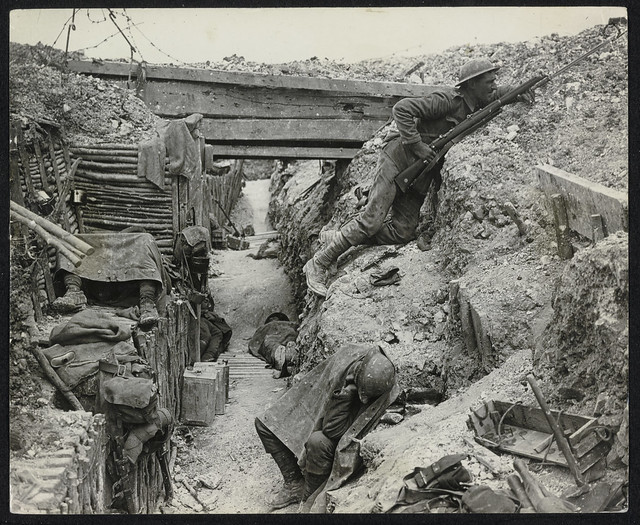
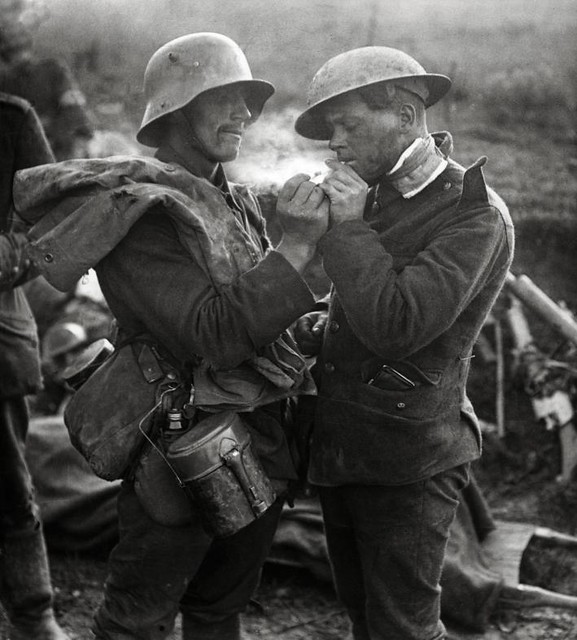
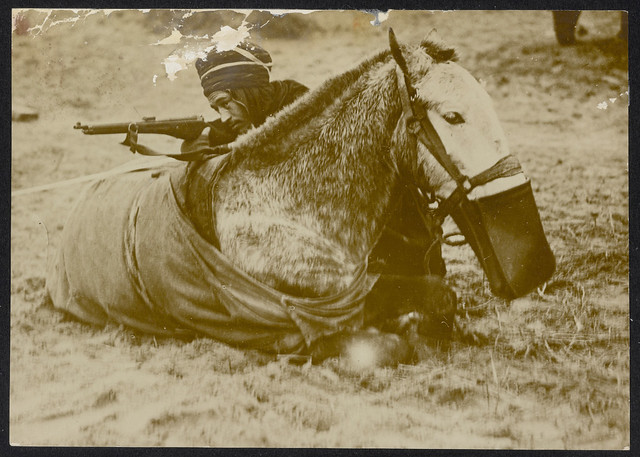
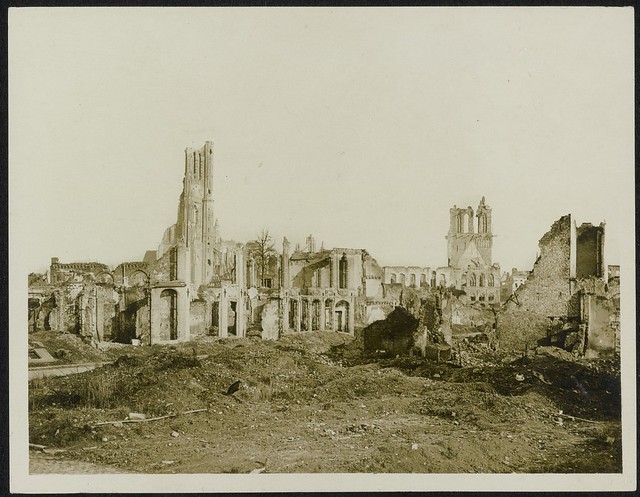
World War I was one of the first wars that was covered by newspapers that not only told stories, but also showed images. Some of these photos have found their way to the National Archives of the Netherlands. In this blog post, I would like to share some of the pictures that made the biggest impression on me.

All pictures are available on the National Archives Flickr account with 'No known copyrights.' Click the images for the description on Flickr.


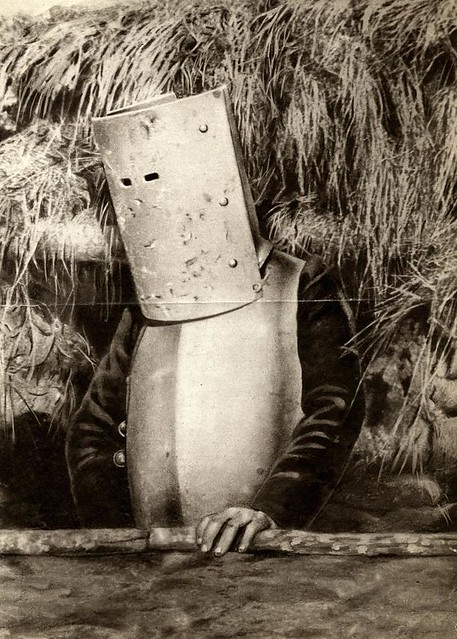
Leven in een loopgraaf
Life in the trenches

Eerste Wereldoorlog, krijgsgevangenen
Prisoner of war getting a light from his captor.

Soldaat met geweer die zich verschanst achter een liggend paard
Soldier using a horse as a shield

THE FRONT IN FRANCE. THE RESULTS OF GERMAN VANDALISM
Ruins at Ypres

Eerste Wereldoorlog, loopgraven
French soldier in improvised harness to protect himself from the bullets

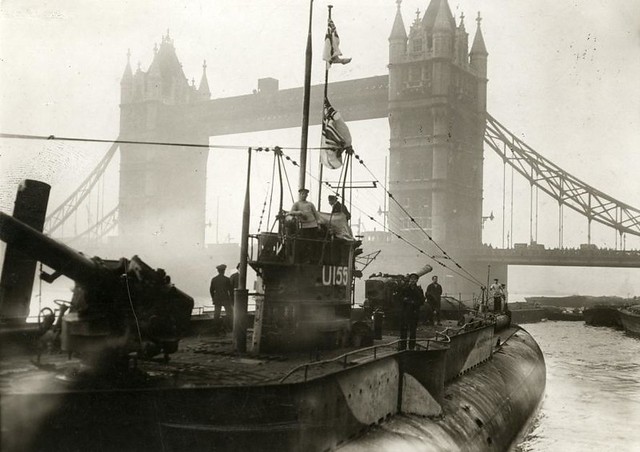
Eerste Wereldoorlog, zeeoorlog
Surrender of the German fleet to England

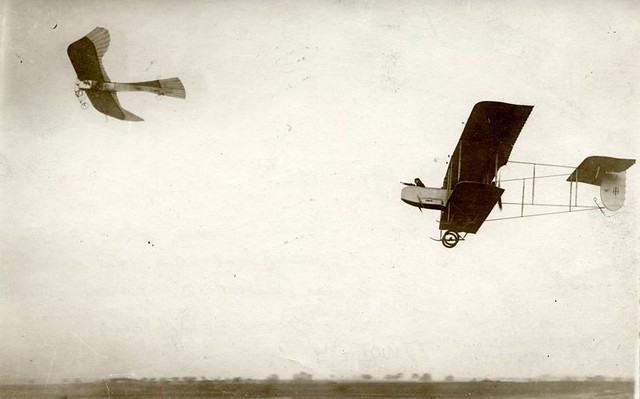
Eerste Wereldoorlog, luchtoorlog
Aerial combat

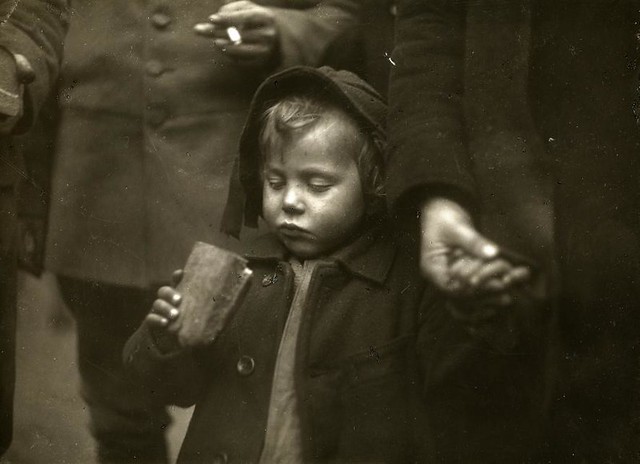
Eerste Wereldoorlog, vluchtelingen
Refugees

Monday, 4 August 2014

Lights Out - As The World Remembers


Lights Out - Remembering with a Candle in the Darkness
Image courtesy of FreeDigitalPhotos.net ID-100158085

At 11:00 pm on August 4, 1914 (100 years ago today) Britain declared war on Germany. Today from 10:00 - 11:00 pm the United Kingdom (and much of world) will remember the start of what is often called "the Great War"or "the war to end all wars." For those who had family members who served, who have read their history and understand what took place for four long years as battles stretched out over much of Europe, World War I was neither great nor unfortunately did it end all wars. It is fitting that we remember this terrible tragedy and realize that when countries overreach, when leaders refuse to talk, and when parties to a conflict choose to fight rather than attempt to resolve their issues, lives are lost, individuals are harmed, families are shattered, and communities and countries are decimated. War is sometimes necessary, but it should always be a last resort, not a first impulse.

The point of remembrance is to appreciate individual sacrifice and learn lessons from our shared history. Unfortunately, it seems that our world and many people in it refuse to learn these lessons. Today we will have a visual reminder with the Lights Out project, a cultural program taking place across the United Kingdom to mark the centenary of World War I. In addition, at the Tower of London, there is a display of a sea of poppies to honor the fallen. When completed, it will include 888,246 ceramic poppies.

Today the countries that were on opposing sides in World War I are allies and friends. Would that today's enemies and combatants learn those hard fought lessons of respect and tolerance. Would that we all hold life more dear than power, land, or being right and demand that our leaders are thoughtful and circumspect in international dealings.

Have you been to to the Tower of London to see the "sea of poppies?"
Did you participate in the Lights Out project?
Are you remembering the men and women who served in World War I through any of the special projects?
If you are engaged in a one-name study, have you included those who served in your study?
If you are engaged in a one-place study, have you found those who served from your place?

Take some time to remember how the world changed as a result of World War I and how those changes have affected your family and your family history (on the local and global scale).

Poppies for Remembrance - WWI
Image courtesy of FreeDigitalPhotos.net ID1006691

Tessa Keough

Sunday, 3 August 2014

Genealogy Conferencing, You have to do it!

Having just come off the 5th Unlock the Past Genealogy and History conference aboard the Marco Polo I am still living in buzzing world of things found out, new potential areas of research, lots of addresses of new friends and so much more. 

5th Unlock the Past cruisers aboard the Marco Polo 2014
Being with a whole group of people who enjoy researching family history, who talk about new resources, who get excited for you when you tell them about your record finds and who suggest ways of breaking down your brick walls is a fantastic experience. Being part of this atmosphere gives a lasting buzz better than any drug, even better than chocolate!

There are many conferences and seminars from the big conferences lasting four days to ones all the weekend to one day meetings to single lecture offerings.  Many family history societies have a talk at their monthly meetings, quite a lot of libraries now also have a seminar program (and if yours doesn't why not suggest it to them?) and the bigger conferences are often advertised in family history magazines such as the UK Family Tree magazine and online at GenEvA (Genealogical Events and activities).  In the USA there is Dick Eastman's calendar  among other.

In Australia there is the Unlock the Past site which lists events. August is Family History Month in Australia and New Zealand and there are many events listed there by state and an online category.

If you haven't attended a genealogy/family history conference because you feel a little unsure there is no reason for this as family historians are a friendly bunch but if you don't want to go on your own to an event why not bring a friend?

If you are on Facebook (and there are many, many genealogy groups there) ask about what conferences are occurring. Or once you have picked one ask if anyone else is going so you already have a friend there you can meet in person or even travel together.

It is one of my joys in going to conferences in meeting in person my online friends. Also for the big conferences such as RootsTech in Salt Lake City in the USA there is often a Facebook group of people and bloggers who go and we talk about our preparations for the conference, what we are packing and any new tech toys we have found, the best restaurants at which to eat and any tips we have found.

Joining your local society (even if none of your ancestors lived in the area) means you would always have friends interested in going and even more important interested in your genealogy wins throughout the year! Many societies go as a group sharing a car or coach.

Once you decide to go there is generally an Early Bird registration which will save you some money. Booking early for hotels can also be beneficial if you want to stay close to the venue. Sometimes the conference organisers can get special deals for the hotels but these do tend to book out quickly.

You will be able to get a program of what is on, with synopses of the presentations so you can plan your days. We are seeing more of the big conferences with apps so you able to have it on your phone or tablet and which can even give you reminders about the lecture starting in ten minutes with the synopsis and presenter bio information.

Exhibition Hall Who Do Think You Are? Live Feb 2014 London
Another great reason for going to conferences apart from the actual lectures and being with all the like-minded people is the exhibition hall. You will usually find genealogically related items for sale, family history group tables where they often have look-ups available in their databases (often free) and items such as indexes for sale. You will often also find experts in an area of research that may be able to help you break down that brick wall.


Unfortunately I have to go home before Who Do You Think You Are? Live in Glasgow in August but I will be at RootsTech and FGS in Salt Lake City in February 2015 and at the Australasian Congress in Canberra in March 2015 along with a range of other seminars.

I hope to see you at some of these events and do please say hello!


Saturday, 2 August 2014

International Collaboration


Last month I wrote of my intention to join the Familysearch Worldwide Indexing Eventthis is a followup post. 

“Alone we can do so little; together we can do so much” - Helen Keller. 


I am rather proud of the new badge (right) that my personal blog is wearing. Although I am pleased to have made a small contribution to the Familysearch Worldwide Indexing Event I am proud because the Worldwide event highlighted the benefits of collaboration in the genealogy and family history sphere. Just as our blog Worldwide Genealogy brings together genealogists from around the world whose individual contributions combine to produce this blog as a resource for the Worldwide genealogy community the Worldwide Indexing Event brought together genealogists from around the workd to index digital resources from Familysearch.


The Familysearch blog reports that 66,511 indexers collaborated in this event and "While the focus for this challenge was on the total number of participants, a tremendous amount of indexing and arbitration work was accomplished as well. Here are the results for the number of records indexed and arbitrated.

Indexed: 4,682,746
Arbitrated: 941,932
Total Records Processed: 5.7 million"
If you have ever trawled through pages of unindexed Familysearch digital images you will appreciate the value of having more than 5 million new records indexed.

What made this event even more special for me was another collaborative effort, a Google Hangout on Air - GeneaSleepOver: Worldwide Indexing Event,  spearheaded by DearMyrtle and her Cousin Russ Worthington. (I will add links to the four Youtube videos from this event to the bottom of this post.)
I listened to and chatted to the hosts Myrt and Russ and other panelists from the US and UK while I indexed my few batches, at one stage the camera was directed to my computer screen as I worked on indexing one of my batches. That was quite a challenge for a newbie indexer. Myrt had also asked me to join and talk aboout a topic of my choosing, I elected to chat about Australian Royalty - those people who have and are proud of their convict ancestry. 

I watched and listened to the Hangout for around 8 hours of the 24, I was on the panel at the beginning and rejoined for the end. I was thrilled to chat with fellow Worldwide Genealogy bloggers, young Australian genealogist and new indexing volunteer Caitlin Gow and Hilary Gadsby from Wales who has blogged about her indexing experience.


 In Australia we talk about the Tyranny of Distance, being able to participate in the Hangout while participating in the Worldwide Indexing Event broke down the barrier of isolation we sometimes feel in Australia. Thanks to Myrt and Russ for organising this event.


Thursday, 31 July 2014

CuriousFox: a gazetteer and message system

Logo on www.curiousfox.com
CuriousFox is a gazetteer and message system that connects genealogists and local historians. Collaboration between these two groups is immensely beneficial.

In CuriousFox, every town and village in the United Kingdom and Ireland has its own page. There is also a USA version, which I have not personally used.

Things I like about CuriousFox include:
  • Exact map locations and historic maps.
  • Free to join, add entries, and search by village or surname.
  • With surname searches, finding relevant entries is easier because you can work at town / village level.
  • You can search for 'nearby' entries.
  • It is easy to edit or delete your entries.
  • Google searches will find your entries (so 'new relatives' can contact you).
  • No spam (your email address is not visible).
  • Privacy (the system sends messages between members, and you decide whether to give a particular member your address).
  • Advantages of being a paying member (about five pounds per year) include:
    • Contact and be contacted by all other members (free or paying).
    • Receive email alerts when people add entries for towns of interest to you.
    • Publicise your Web page or blog.

Entry screen for my ASHTON message
HINTS:
  • Give some thought to the wording of your entries. They should be concise, with surnames (and only surnames) in capital letters. Specify dates, and use appropriate punctuation.

  • For large towns with many entries and multiple pages, delete your entry every year and immediately resubmit it (updated if necessary) so that it reappears near the top of the list for that town. I did this recently, and within 24 hours a local historian contacted me and offered to send transcriptions of land records for that surname/town!

I hope you will try Curious Fox and share your success stories in a comment here. You might also like:

Wednesday, 30 July 2014

The Enjoyment of Washington, DC

By:  Tina Marie

I recently returned from a trip to Washington, DC where I attended the National Institute on Genealogical Research (NIGR).  It was a jam-packed trip filled with daily lectures on federal records, and research visits to three of the top ten libraries with genealogical resources.  In addition to the course work, I had my own personal plan for researching and sightseeing.  That plan proved to be very helpful in providing new clues in my family research.


NARA Constitution Avenue Entrance
My first stop in DC was the National Archives and Records Administration (NARA).  Most of the course lectures were held at NARA at 700 Pennsylvania Avenue NW.  The National Archives was established in 1934 to preserve and care for the records of the U.S. government.  There are two entrances to the building.  The museum entry is on Pennsylvania Avenue and the library entry is on Constitution Avenue.

Elijah B. Johnson Civil War Pension File
The focus of my research at NARA was to review the original military pension file for Elijah B. Johnson.  He is my ex-husband's 3 x's great-grandfather.  He was born circa 1837 in Delaware (so I thought) and he served in Company B, 30th Regiment Connecticut Colored Volunteers during the Civil War.  After examining the pension file, I learned that Elijah was from Delaware County, Pennsylvania and not Delaware State like most of his records had documented.  Learning his correct birth place helped me to find him on both the 1850 and 1860 census which provided a wealth of new information.


            Obituary Thomas Buckley

My next stop in DC was the Library of Congress (LOC).  The LOC was established by an Act of Congress in 1800.  It is the nation’s library and holds 158 million items and 38 million books.  The library has three buildings, the Madison, Adams, and Jefferson.  Each building holds a different collection of records.  The main reading room including the genealogy collection is in the Thomas Jefferson Building and it is a beautiful sight to see.  I spent most of my time in the James Madison Building in the Newspaper & Periodical Reading Room.  I located on microfilm an obituary for Thomas Buckley in the New Haven Evening Register on November 20, 1880.  Thomas is my ex-husband's 4 x's great-grandfather.    The obituary was filled with new information that helped me to distinguish between two Thomas Buckley’s who lived in the same area and were about the same age.      

DAR Library

My next DC stop was the Daughters of the American Revolution (DAR) Library.  I am a member of the DAR Chicago Chapter and my Revolutionary War ancestor is Edgeconb Guilliams.  The DAR Library is located at 1776 D Street NW and was founded in 1896 by DAR staff who were verifying the application papers to the National Society DAR.  I was able to look at membership applications and the supporting documentation at the DAR Library.  I found land records for Edgecomb Guilliams that I am still attempting to transcribe due to the handwriting and poor copying.  I am looking forward to where this 1763 document will lead me.

March on Washington, August 1963, NARA photograph

My last stop was Archives II in College Park, Maryland.  This facility was built in 1993 and holds a separate collection of records from Archives I in Washington, DC.  I spent the day in Photographs reviewing the original still photos of the 1963 March on Washington.  Although there were photographs of Dr. King, there were many more pictures of the people in the audience.  I thoroughly enjoyed delicately delving through these still photos and even felt goose bumps as I looked at them.  Here is a view of the Archive's Digital Vaults.


Tuesday, 29 July 2014

Digitisation projects for World War I commemoration

I recently attended a consultative forum at the National Archives of Australia's Victorian office on behalf of AAGRA (Australasian Association of Genealogists and Record Agents).

I was interested to hear project updates on two major digitisation projects.

The National Archives of Australia (NAA) are working on their World War I Repatriation personal case files. They are digitising the files of all those who were on the Albany convoy. They are also adding metadata to their catalogue so that the files of all other men and women who served and claimed repatriation will be available for retrieval. The files have data in addition to that found in series B2455, the First Australian Imperial Forces personnel dossiers, that are already available through the NAA. For example if somebody was wounded, the details of the event where the wound was incurred might be described in more detail on the repatriation file. Also you may be able to learn more about life after the war.

Not all those who returned claimed repatriation. A few did not need to. Others were too proud.

The digitised files and the meta data will be released in November to coincide with the commemoration of the departure of Australian and New Zealand troop in convoy from King George Sound, Albany, initially bound for Europe. The convoy ended up in Egypt and in April 1915 the majority of soldiers landed at Gallipoli.

The Public Records Office of Victoria (PROV) are digitising the land files associated with soldier settlement after the war. There were around 10,000 Soldier Settlers after World War I and the Settlement files will be digitised and available on line in 2015. The scheme had mixed success. Some soldiers were successful farmers, others failed. A case study on the PROV's website at http://prov.vic.gov.au/whats-on/exhibitions/soldier-settlement gives the story of the challenges faced by one returned soldier.

A group of returned soldiers who had settled on farms in the Mallee. They rode horses to Melbourne to place wreaths on the Shrine of Remembrance. They have stopped for a meal. There is a truck loaded with sacks of chaff in the background (probably to provide feed for the horses). Photograph from Museum Victoria: Negative - Returned Soldier Settlers from the Mallee Having Roadside Meal, Wemen, Victoria, circa 1930 Reg. No: MM 002568 Copied from Mrs Jim Ryan, 1985 The Biggest Family Album of Australia, Museum Victoria.


I know my family tree contains soldiers who were totally and permanently incapacitated after World War I, including my husband's grandfather. We also have family members who were soldier settlers in the Mallee.  Both sets of files will contain family history information for me.

Monday, 28 July 2014

A Little Town Called Berrima.

During my recent holiday in Sydney, my Aunt and I drove to Canberra for a couple of days. On the way there, we stopped for lunch at a beautiful historical town called Berrima. Berrima is recognised as the best preserved example of a Georgian village in Australia. The town, founded in 1831, is 125km south-west (80 minutes) of Sydney and 162km north-east (100 minutes) of Canberra. 


Between 1831 and the 1860s, Berrima prospered and had a population of 400. There were hopes that it would continue to grow with the construction of the Southern Railway Line from Sydney in 1867, however, it ended up bypassing the town. As a consequence, the population decreased to less than 80. Since 1867, there has been little development in the town (Source: Historic Berrima Village).

I must say that I was surprised by its quaintness and history, and fell in love with the town instantly. When we first entered the town, I noticed a very old sign that said 'Berrima Cemetery.' The sign was in the shape of an arrow, and looked like one of those wooden signs with the letters carved into it. We did not have time to go to the cemetery on the way to Canberra, but we made it a must on the drive back, and that we did! 


Because Berrima was founded in 1831, I knew there would have to be some very old graves. Here are some of the interesting ones I discovered -

Thomas Westbury died on December 16, 1883
whilst trying to save two drowning men.
John Mulligan died on June 28, 1886.
He was an officer at the Berrima Gaol.
Edward Armfield died on September 15, 1866. According
to his grave, he was a very old colonist and arrived in 1800.
The oldest grave I found!
Mary Hancock died December 28, 1842, aged 25.
William White died in the 1860's. His stone was erected
by his employers.
Berrima Cemetery

I definitely want to go back to Berrima one day and explore more of its history. It's a beautiful little town and I wish we had more time, but alas, we did not. Apparently Berrima is an ideal wedding location too, but somehow, I do not think my boyfriend will allow that. It's worth a shot though right? I can say we're going on a historical/genealogy trip, and secretly scout wedding locations at the same time! 

Until next time genea-friends!

Friday, 25 July 2014

Lives of the First World War Website

The Imperial War Museum (IWM), in partnership with DC Thomson Family History, has launched a new website: Lives of the First World War: https://livesofthefirstworldwar.org/

Lives of the First World War home page

The IWM is a British museum founded in 1917 with the aim of recording the civil and military war effort and sacrifice of Britain and its empire during World War I. As part of the museum’s centennial commemoration of the war, the new website was launched.  The objective is to create a permanent digital memorial of the 8 million people who participated in the war effort by crowd-sourcing the data gathering and recording of information about individual soldiers.

The website launched with only soldiers from the United Kingdom, who served in the British Army and was “seeded” with the Medal Index Cards, 1914-1920 dataset. The Army Medal Office created these cards, during the late part of the war in an effort to record every person’s entitlement to campaign and gallantry medals. The cards may include:
  • Individual’s name
  • Service number
  • Rank
  • Unit(s)
  • Date of enlistment
  • Medal(s) received
  • Whether the individual was killed or discharged
  • Remarks
  • Address
  • First theater of war in which they served (usually only provided after 1916)

I think the website has a noble purpose and could become over time a wonderful genealogical source. Like everything in life there are pros and cons:

Pros
  • The website is crowd-sourced, but you must enter your source citation first, which can be a personal memory, a website, a document, etc. Bibliographic information is required. After the citation is created then they can begin adding facts to the individual.
  • Even though it's crowd-sourced, other people cannot merely change a fact that has already been entered; they may only dispute the fact by providing alternate information and their source. Exactly how the resolution process works, I've yet to discover.
  • The website allows users to add a multitude a facts about a soldier, including his parents, spouse, children, occupation, residence, religion, etc., which I believe is why this may become a valuable genealogical tool.
  • It is co-sponsored by a well-respected museum so users won’t be doing all the hard work to enter information about their soldier ancestor only to have it disappear later.

Cons
  • The website is not intuitive to use, especially the order which users must perform certain steps when adding information. There are good “how to” videos available on the site.
  • It does not seem to be compatible with all browsers and I am still finding little glitches such as drop downs that don’t scroll.
  • The initial record set doesn’t always provide enough information to determine which soldier is your ancestor, especially if they have a common name.
  • No soldiers from countries other than England, Scotland, and Northern Ireland are currently included. Nor can they be added at this time. 
Registering to use the site is free. With free access you have the ability to view the Medal Index Card record set, but to have access to other records, you must be a friend. That costs 6 British pounds a month or 50 pounds per year. This provides access to the information from FindMyPast.com and other DC Thomson Family History products. You also have access to special "friend-only" features, such as the ability to group your digital memorials together. I have chosen not to be a friend at this time, so that is all I can report about Friend-only content and features.

I’d be very interested in your thoughts about the Lives of the First World War website and whether you have started memorializing your soldier ancestors or plan to do so.

_______________
You may read my occasional posts about my ancestors who were soldiers and fought in World War I as well as my civilian ancestors whose lives were impacted by the war here.