Showing posts with label photos. Show all posts

Friday, 12 February 2016

My First Impressions of Twile - Winner of The Peoples Choice Award at Rootstech 2016

File 06-02-2016, 19 03 42

This photograph is from the Twile Blog to find out more see the link below.

What is Twile?

Twile is a website which creates a timeline of your family memories that you can share with those in your family who may not be the avid genealogist that you are. 
Only the people you allow can see what you share but it allows us to share all those moments that we forget to record in our software programs.
Here is a link to why it was created and I shall leave you to explore their blog to find out more.

How I found the site

I first found out about this website when the semi finalists for the Innovator Showdown at Rootstech 2016 were announced and decided to sign up for the trial to see what it was all about. 

The Demonstration at Rootstech 2016

Life got in the way and I saw the video of the Innovator Showdown Semi-Final and decided I needed to get my GEDCOM file uploaded to the site so that I can start adding memories and sharing with my family. I know that many others are interested in this site as it won the vote from the audience including those watching online. Here is a link to the Innovator Showdown Finals 2016 if you have not had a chance to see it.


Exploring the website

I am only just starting to use this but I am impressed by the feedback from the team who run the website. They will be inundated with people wanting to join and try out the website. They are still managing to get back to answer individual queries and provide a solution in a timely manner.
Customer service is so important if you want the users to keep coming back.

Gedcom is up and working and I am adding profile pictures to my ancestors and adding living members. You can invite your family by email, and as the website can be accessed by tablets and smartphones, I expect it to be popular with the younger generations of the family.

The comment from my son after I sent an email invite  was " I received an email saying you added me to your family tree, I thought I was already a member! ". This sparked a conversation and I showed him the family timeline I am building which currently has only my side of the family and my husband. He looked at the date his grandfather died, knowing it was the same day that his cousin was born and the date the following week when we had the cremation, these are things that he remembers. 
He also asked if it was private so I told him that only the family could see this if I invite them. 
The more of them that join, even just the free part of the site, the better it will be for everyone. 
I love the timeline as it really helps to put things together in relation to each other in a way that those in the family, not "doing genealogy", can interact with and add contributions.
I like that you can add more than just the usual things like births, marriages and deaths. 
I have uploaded a few photographs from a couple of family get togethers today as milestone events.

From what I have seen so far I am almost certain I will sign up to be a premier member. 

We should all share in the mission to get the younger generations engaged, to ensure that the stories and memories we are creating today and have created or had passed on to us are saved, in a way that our families will want to share in the future. 
Photographs and stories are what inspire us to find out more. 
We have so many ways to record and store them but the best thing we can do is to share.

Just as I finish writing this there is more good news for Twile in this announcement
I already have an ongoing subscription with find my past so hopefully this will lead to integration between the sites.

Friday, 22 August 2014

Snappers and Shutterbugs – Who Took Your Family Photos?

I have inherited 3 collections of family photographs.  The collections were assembled by Mary Fleming, nee Lamb (1812-1901), my maternal 3 x great-grand-aunt; Raymond Walter Coulson (1922-1997), a paternal 1st cousin twice removed; and Mabel Adams, nee Coulson (1910-1991), my paternal grandmother.

Mary’s is the oldest collection, which dates to between the late 1850s to the 1870s.  It consists of an album of pictures measuring about 9cm X 6cm mounted on card, a format called carte de visite.   Examples from this collection have been the subject of my Family Folklore Blog series on the identities of people portrayed, inspired by Diane Hewson’s post Genealogy CSI Style - Facial Recognition. These photos were all taken by professional photographers in formal studios at a time when photography was in its infancy. Cameras were little more than a light-tight box with a lens. Negative images were captured by a wet film of light sensitive chemicals (silver nitrate) that adhered to sheet of glass coated with collodion.  Glass negatives had to be processed immediately. Prints, the positive images, were made on albumen (egg white) coated paper sensitized to light with a solution of silver nitrate. The negative was placed in direct contact with the paper producing a print the same size as the negative, known as a contact print. This video demonstrates the processes:


Albumen prints characteristically gain a yellow cast with age. The degree of yellowing may be influenced by the quality of the chemical processing and conditions of storage. This example, taken by leading London photographer, Camille Silvy, is the least yellowed in Mary’s collection.
Silvy, Camille (photographer). 13 July 1862. Portrait of B & A Lambert taken at 38 Porchester Terrace, Bayswater W. Carte-de-visite album compiled by Mary Fleming, nee Lamb (1812-1901). Personal collection of Sue Adams.

Raymond’s collection includes the World War I photo collection he inherited from his father, photos that mark his progression through childhood, and an eclectic selection from unknown family and friends. His cousin Percy Peckett, the family snapper, took a substantial proportion of the collection. Photos taken while Raymond served in India in World War II went missing from the collection around the time his estate was settled in 1997. Only 1 roll of film can be attributed to Raymond himself.
Coulson, Raymond (photographer). 23 May 1959. Interior scene of 322 Aston Hall Road featuring a radio. Negative, contact print and annotated reverse of contact print.  Negative image size 59 mm x 84 mm.  Kodak Wallet containing 7 prints and 8 negatives. Photograph collection of Raymond Walter Coulson (1922-1997). Personal collection of Sue Adams.

Verichrome nearly 3 yrs
outdated
1/25th 12 secs
fr ladder by french window
3pm May 23rd 1959
at 322 Aston Hall Rd

The detailed annotation on the reverse is a treasure, as it reveals much about the equipment at Raymond’s disposal, and reminds me of the data now automatically collected by digital cameras. Verichrome was a type of roll film. The sensitivity film to light, called film speed, is now measured by the ISO standard. ‘Slow’ film is less sensitive, so it needs either a longer time exposed to light or more light allowed to enter through the lens through a larger aperture.  Verichrome equates to 125 ISO, which is slow by today’s standards. In Raymond’s annotation, the numbers “1/25th 12 secs” relate to the camera’s exposure settings. The manual exposure time, 12 seconds, is a long time to hold a camera still, so the note “fr [om] ladder by French window” suggests Raymond used a portable free-standing ladder as a makeshift tripod.  1/25th is a shutter speed, a pre-determined exposure time, which is still too long a time to hold a camera still. For any shutter speed 1/30th of a second or greater, use of a flash is recommended for hand held shooting.  My guess is that Raymond recorded both possible shutter settings.  As Raymond recorded no aperture setting, denoted by “f” numbers, I think his camera lens may have had only one size of hole that let the light into the camera, a fixed aperture. As I have the negative for this photo, I know the format of the film was 120 or 620, which was very commonly used in box cameras.

Mabel’s collection, the largest numbering over 1000 photographs, includes photos from the 1920s up to the early 1990s. The main family shutterbug was Mabel’s daughter, Barbara.

Adams, Barbara (photographer). ca. 1957-1960s. Self portrait. Photograph collection of Mabel Adams, nee Coulson (1910-1991). Personal collection of Sue Adams.

This ‘selfie’ reveals a camera that Barbara used.  I can tell that it is a Kodak Brownie Model 1 or one of the Kodak Brownie Flash models, by comparing it to examples at Kodak Box Brownie.  These camera models were produced from 1957 and took 620 roll film, so we can be confident that the photo was taken in or after that year and know the size of the negatives. The size of the images produced were 2 ¼ in x 3 ¼ in or 57 mm x 82 mm. This print image measures 80 mm x 117 mm, so it is an enlargement, likely of the whole image as it maintains the same aspect ratio. Other photos in the collection from the same batch, identified by the stamped no 23 on the reverse, were taken in the garden of the family home in Olton Road, Birmingham. Barbara took advantage of outdoor light and a mirror to achieve this thoughtful image. She later progressed to a single lens reflex (SLR), but has not made the transition to digital.

Mabel’s negatives are the tiny (13 mm x 17 mm) 110 cartridge format used in Pocket Instamatic cameras. Such small negatives are always enlarged to produce a usable print. Despite owing a simple point-and-shoot camera, Mabel often blamed it for the classic snapper’s errors: cut-off heads, out-of-focus and under exposed (too dark) or over exposed (too bright) images.

An Interview with a Family Shutterbug

My brother, Stephen, was the family shutterbug from my teenage years onwards.

This photo, published in the school magazine is very apt.
"The Snapper snapped". Candid Camera. Alberton High School magazine 1979. p. 11. [Photograph depicts Stephen Adams at Alberton High School, 35 Phantom Street, Randhart, Alberton, Transvaal, South Africa]

I asked him about the cameras he has owned.

What was your first camera and when did you get it?
My first camera was a Halina 200.  It was a birthday present in the year I went to Germiston High School before we moved to Raceview [1977]. It had no light meter so you had to guess exposure; and shutter speed, aperture and focus were all manual so you had to remember to pay attention to all three!

What camera were you using in 'The Snapper snapped'? Was your first SLR and when
did you get it?
I think the camera in the picture of me was a Praktica Super TL or just maybe Praktica Super TL-2 or  "TL-1". Dad bought the SLR when he went back to England for granddad's funeral [Thomas Adams, husband to Mabel, died 1979] so it was second-hand then.

This was my first SLR. I had a standard lens and a third-party zoom. The standard lens was the better of the two; the zoom had poor contrast and slowly fell apart. A manual SLR at least makes you pay attention to focus.
[This camera had a built-in light meter, making shutter speed and aperture setting easier.]

As an avid birdwatcher I vividly remember the theft of my first binoculars and Stephen’s camera. My bird watching notes pin the date down to 3 January 1985 and the location to the beach car park near at Imhoff Caravan Park. After confirming that the Praktica was stolen, Stephen described its replacement and a subsequent film camera:

I bought an Olympus OM30 after moving to Southampton.  I still have the OM30. I also have my last film camera, a Ricoh GR1. It is about as small as you can make a 35mm camera, something you could carry discretely and with a 28mm lens was great indoors.

When did you go digital?
I bought a Canon G3 just after my trip to Brazil, 2004. I have had several digital cameras, including a Panasonic Lumix LX3 and a waterproof camera, but I use my phone more, since I always have it with me.

Of course the instant feedback of digital makes it easier and inexpensive to learn. But I don't take good pictures because I'm not paying attention.

This has been quite a romp through photographic history with a fair bit of technical detail. Although almost everyone now takes digital photographs, it is possible to explore the limitations of older cameras.  If your camera has manual settings, try using the same settings as Raymond did. Turn off light meter facilities and auto focus and see what using Stephen’s first camera was like.

Ask your family snapper or shutterbug about their cameras. Even those disinterested I family history like to talk about their tech toys. You may turn up snippets of information useful to genealogy. Did you notice Stephen’s references to places and events, and the interaction between our memories?

The more I organise and catalogue the photo collections in my custody, the more I discover. Can you identify which photos were taken with the same film, the same type of camera, or by the same person? The collection level information is often overlooked, but can be very revealing.

Tuesday, 5 August 2014

World War I photographs

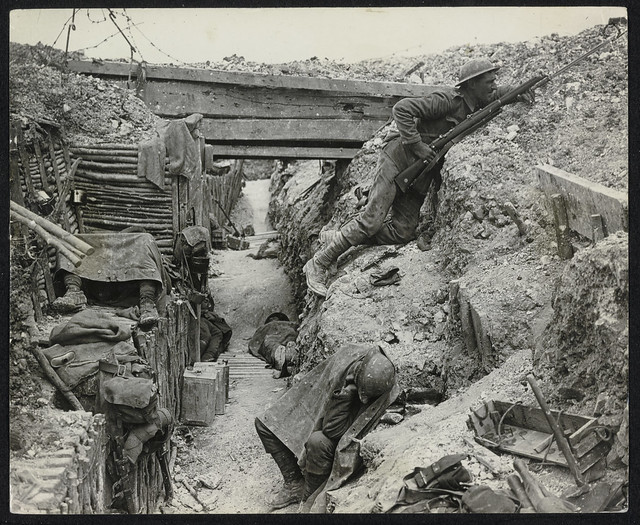
I live in the Netherlands, one of the few Western European countries that remained neutral during World War I. Still, the effects of the war were felt here too. Many refugees fled to the Netherlands and people were eager for news about what was going on at the front.

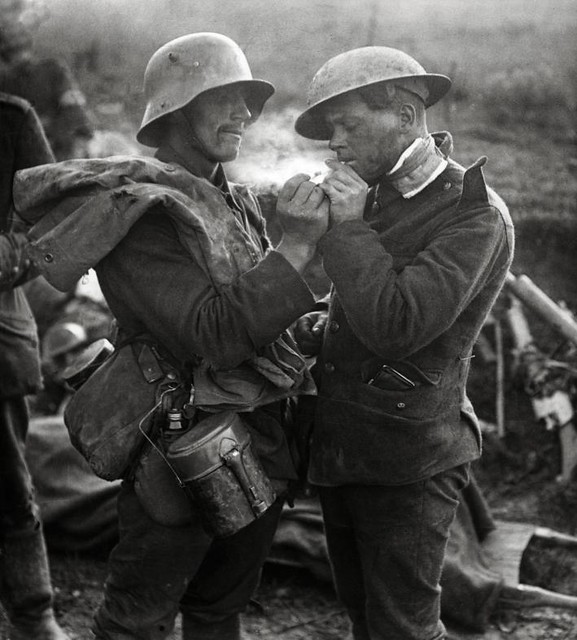
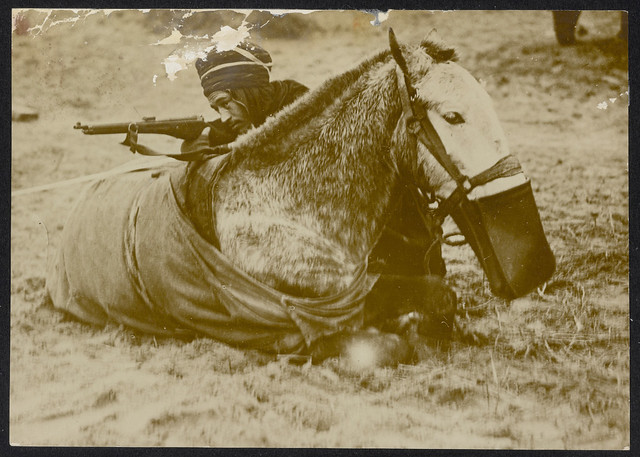
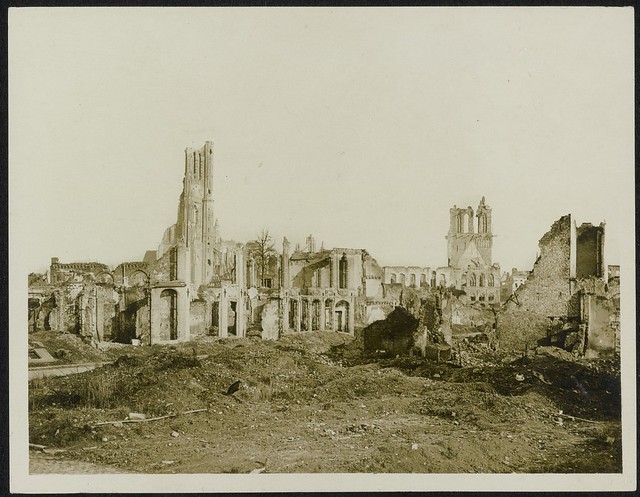
World War I was one of the first wars that was covered by newspapers that not only told stories, but also showed images. Some of these photos have found their way to the National Archives of the Netherlands. In this blog post, I would like to share some of the pictures that made the biggest impression on me.

All pictures are available on the National Archives Flickr account with 'No known copyrights.' Click the images for the description on Flickr.


Leven in een loopgraaf
Life in the trenches

Eerste Wereldoorlog, krijgsgevangenen
Prisoner of war getting a light from his captor.

Soldaat met geweer die zich verschanst achter een liggend paard
Soldier using a horse as a shield

THE FRONT IN FRANCE. THE RESULTS OF GERMAN VANDALISM
Ruins at Ypres

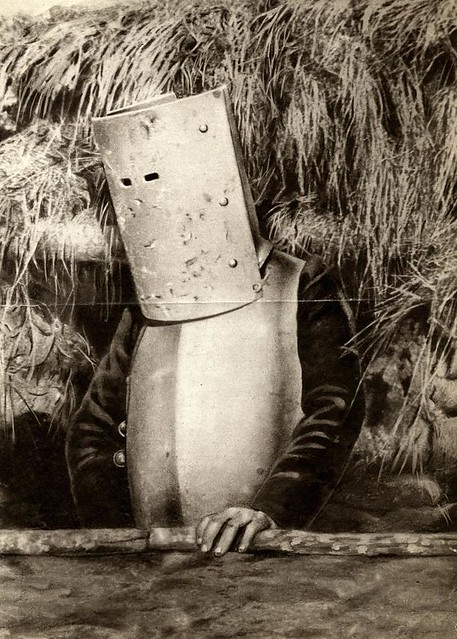
Eerste Wereldoorlog, loopgraven
French soldier in improvised harness to protect himself from the bullets

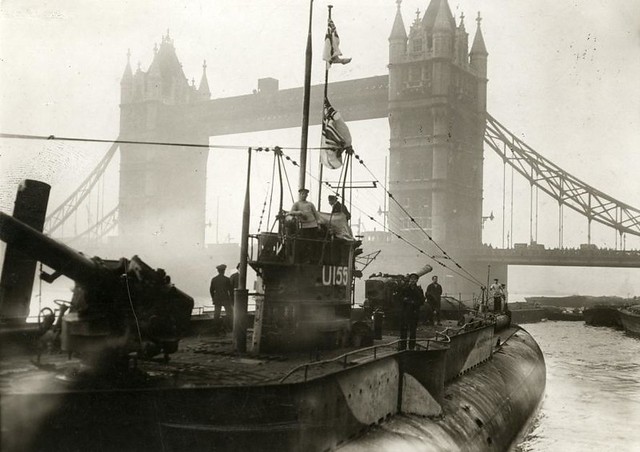
Eerste Wereldoorlog, zeeoorlog
Surrender of the German fleet to England

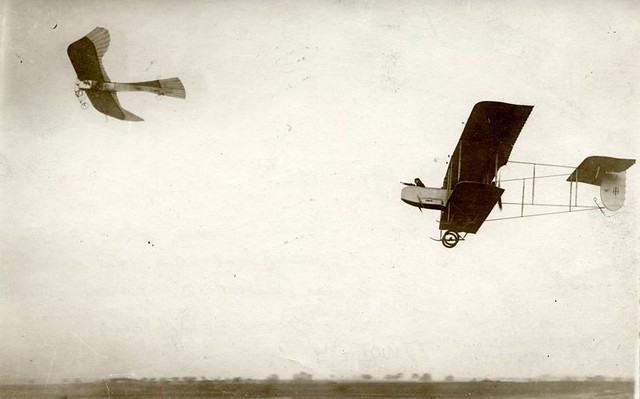
Eerste Wereldoorlog, luchtoorlog
Aerial combat

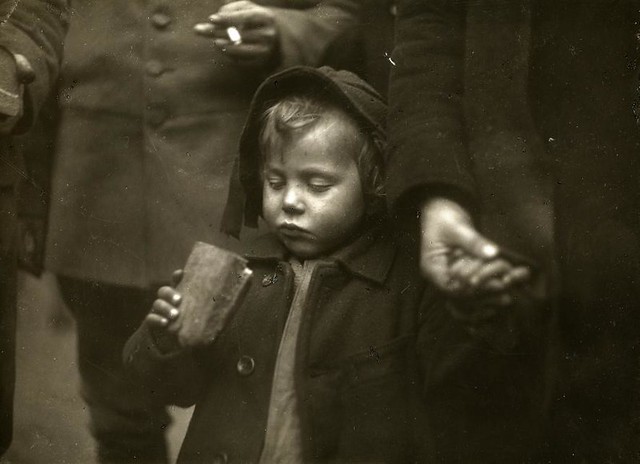
Eerste Wereldoorlog, vluchtelingen
Refugees

Saturday, 7 June 2014

Planning a long distance research trip

Several years ago I was lucky enough to plan and carry out a successful research genealogy research trip to Honolulu, Hawaii.  We live on the East Coast of the United States, and it is a long, long distance to Hawaii.  It was also my first trip to Honolulu, so I knew that I would have to plan some fun time for my husband and I.  It can be difficult to balance work and play during a genealogy trip, and an exotic locale like Honolulu makes the balancing act even more difficult.  I hope these tips help you plan a similar trip!  They worked so well for me that we repeated our Hawaii genealogy trip again last year.

I had been writing, emailing and using online resources for a long time to research my extended family in Hawaii.  My 4x great aunt had removed to Honolulu from Boston in the 1830s.  I had spent 20 years researching our connection to these Hawaiian pioneers.  By this time I had exhausted all the snail mail and email contacts I had made.  It was time for personal research time in the Hawaii State Archives, the Bishop Museum Library, and the cemeteries.  It was also time to walk in the footsteps of my great aunt and cousins, and I was looking forward to seeing their homes, churches, and (of course!) the island where they all decided to stay instead of returning to Massachusetts.

My recommendations...

#1- Appointments- don't leave anything up to chance

When planning a long distance research trip to a new place, it is important to schedule all your research day and to make specific appointments.  I made appointments to meet in person with all the people who had been helping me via email, including librarians, archivists, curators and cousins.  We made one major appointment for each morning, and decided that the rest of the day would be used for additional research or for just relaxing.  We had only one week, so cousins were scheduled for weekends when libraries and archives would be closed.  This worked out well.

Scheduling appointments also meant that I could ask "Will your archive be open until noon that day?" or "May I search your files until 5pm?".  Even if the website for a repository says it will be open, you never know about local holidays, staff vacations, or budgetary closures until you ask the staff right up front if their place will be open on the exact day you wish to be there.

#2-  Don't bring too much stuff!

Extra suitcases can cost from $50 to more than $150 depending where you are going, and paper can weigh a lot.  Nowadays your suitcase is limited to 50 pounds, or less if you are overseas.  I had to digitize as much as possible and download everything to my mobile devices, Evernote or flash drives.

If you collect things (papers, brochures, books, documents) along the way, consider mailing or shipping them home.  There was a US Post Office right across the street from the Hawaii State Archives in Honolulu.  I bought several "If it fits, It ships" boxes (for $10 they will mail whatever you can cram into the box).  Fortunately for me, Hawaii is part of the United States, so this was a real bargain.  Shipping can be expensive, but not as expensive as an overweight suitcase, or the price of an additional suitcase on the plane.

#3 - Involve the family.

We had a research plan that involved both my husband and I at the Hawaii State Archives.  I was in charge of getting the documents from the archivist, and he was in charge of photographing as much as possible from each file or box.  I decided I wouldn't sit and read, I would look at the digitized images later.  We were able to photograph nearly a thousand personal letters in one afternoon.  I placed them on the table and he photographed each one, and then I'd pick them up and repeat the process.  After I was home I found that nearly 2/3 of these letters were of genealogical interest to my family, written from Boston and New England to the Hawaiian islands between the 1850s and 1910.

Other than making a family member your personal photographer (not just for documents, but for scenes inside and out), consider a "personal assistant" who can not only navigate maps to each archive and library, but who can find a good place nearby for lunch, and a great beach on the way back to the hotel.  My daughter was our navigator during a different research trip to Nova Scotia, and she found at least two great side trips for each day that were always on our way between scheduled appointments, and she was great at finding a fantastic restaurant for the end of each busy day.

#4- Use your contacts!

It was great to meet "in person" with archivists and curators I had only met virtually online before the trip.  They were also very useful in helping me to get appointments with other people once I was on the ground in Honolulu.  I met several new genealogists, and also visited several other historic homes that I did not know about until I was there.  Don't be shy about asking about taking photos where they usually aren't permitted if this is a home from your own family tree!  The worst they can say is "no."

#5- Remember the climate and geography

Hawaii is a lot more humid and hot than where I live in New Hampshire.  Remember that items you bring home may be moldy or mildewed.  (We had this experience bringing home old family photos from Puerto Rico).  If a family member gives you an artifact, how will you get it home? We had a family member give us an old cast iron pot in Spain. Luckily it fit in the suitcase in the days before they instituted the 50 pound weight limit on planes! This would definitely take some different planning to get home today.

 Even though Hawaii looks like a small island, crossing to the other side might take a lot longer than you think due to mountain roads or small town traffic.  It is good to ask your contacts ahead of time how long they think it will take to get to their museum/house/library from your hotel.

#6 - Bring gifts

It is nice to present those who helped you in the past, or those who are about to help you, with a small gift from home.  Try to think of something from your hometown that is part of your local culture.  We usually bring small bottles of locally made maple syrup for librarians and archivists. This goes a long way towards breaking the ice in case you need to contact them again after you get home.  You never know if you will need more documentation in the future.

For meeting up with "new" cousins, something from your own family is nice- photos or a family tree chart showing your kinship are usually highly appreciated.  Don't forget to follow up with thank you cards and letters.  At Christmas and New Years I send back group photos of our cousins or our trip to the archives and museums, which is a nice way to stay in touch.


Friday, 28 March 2014

The Gow Siblings.

The 28th of March has appeared on my doorstep out of nowhere. I've become quite busy with Uni that I haven't had much time to sit down and do the post I would like to. I will have time for that next month as mid-semester break is a couple of weeks away.

Late last year I received some photos from a distant cousin in New Zealand of each of the Gow Siblings. When I refer to the Gow Siblings, I'm talking about my Great Grandfather William & his older siblings John, Robert, Isabella & Jeannie. They were the children of William Gow & Jean Drummond, and were all born in Muthill, Perthshire, Scotland. Up until last year, I only had photos of William & John. You can imagine the genea-happy-dancing I was doing when I received photos of ALL FIVE SIBLINGS!

One of my favorite happy dances is Hugh Grant in Love Actually. 

May I present to you, the Gow Siblings...

John Gow

Birth: 9th of December, 1855 in Muthill, Perthshire, Scotland.
1st Marriage: 1891, to Betsy Ireland Syme Gow in Perthshire.
Number of Children: 1
2nd Marriage: 1896, to Annie Wilson in Perthshire.
Number of Children: 3
Death: 14th of January, 1929 in Glenstal, Ireland.

John Gow
Robert Gow

Birth: 14th of September, 1857 in Muthill, Perthshire, Scotland.
Marriage: 1886, to Mary Agnes Ryan in Sydney, New South Wales, Australia.
Number of Children: 8
Death: 8th of December, 1927 in Sydney.

Robert Gow

Isabella Gow

Birth: 9th of April, 1859 in Muthill, Perthshire, Scotland.
Marriage: 1878, to John Reddoch in Perthshire, Scotland.
Number of Children: 9, and 2 stillborn.
Death: 13th of October, 1897 in Kinross, Scotland.

Isabella Gow

Jeannie Gow

Birth: 6th of July, 1864 in Muthill, Perthshire, Scotland.
Marriage: None.
Number of Children: 1 with an unknown male. 2 with Tom Donaldson. 1 with Allan McFarlane. 
Death: 31st of March, 1912 in Stirling, Scotland.

Jeannie Gow

William Gow

Birth: 21st of May, 1868 in Muthill, Perthshire, Scotland.
Marriage: 4th of December, 1904 to Elizabeth Croal in Sydney, New South Wales, Australia.
Number of Children: 2. 
Death: 28th of November, 1943 in Macksville, New South Wales.

William Gow
 
Sidenote: Y'all are the first people to see photos of all five siblings in one post from me. I'm yet to post them in a single post on my own blog. Lucky ducks! :-D

Until next time genea-friends.