My year is off to a great start, as I will be flying to Salt Lake City the day after tomorrow to attend the Salt Lake Institute of Genealogy next week. What a wonderful way to start the year! It will be my first genealogy institute. If you're there too, please come and introduce yourself.
I will be participating in the Advanced Evidence Practicum, where a different genealogist will throw a case at us every day, which we will attempt to solve. The next day, we will discuss and compare our methods and outcomes, and learn how the original researcher solved the problem. The practicum is unlike any type of education I can get in Europe, so I'm really looking forward to it.
Unfortunately, educational opportunities in the Netherlands are limited. Most genealogical lectures and workshops are aimed at the beginner or intermediate level. There are online courses from overseas institutes like Boston University in the US or the University of Strathclyde, but they are intensive, expensive and are not specialized in the Netherlands, where I do most of my research. Still, good methodology is pretty universal, so that would be a good choice, but I can't afford to spend that much time and money while building my business.
So I'm relying mostly on self-study. I attend webinars, read lots of books and have several dozens of subscriptions to journals and magazines. I don't limit myself to pure genealogical literature but am also a member of several historical societies which have nice journals that explain the local circumstances.
View of New Amsterdam (now: New York City), by Johannes Vingboons, about 1674
This year, I will focus on learning more about New Netherland research, researching Dutch immigrants who settled in North America in the 17th century with a focus of finding their place of origin and parents in Dutch records. I love doing these projects; the puzzles are so interesting! Unlike British Colonial lines, often there hasn't been much original research done in records in the country of origin, so there are great opportunities for discoveries. For the dozen or so New Netherland projects I did for clients so far, I managed to find the immigrant ancestor in Dutch records in each case. It's wonderful to see how the skills that I built doing other types of projects translate so well to New Netherland projects.
My intention is to learn more about New Netherland research by:
Reading the books about New Netherland and the Dutch West India Company in my own library. I purchased several books over the couple of years that I haven't read cover-to-cover yet. Mostly, I've just searched the index for specific names.
Reading the old issues of "New Netherland Connections," a magazine that existed between 1996 and 2010. These are available online at the American Ancestors website, which I can access as a member of the NEHGS.
Reading case studies involving New Netherland families in the New York Genealogical & Biographical Record.
Doing more New Netherland projects for clients.
Creating my own research guide for New Netherland research. I think systematically going through all the sources will help me with my own understanding, and might help others too.
How do you educate yourself? Any plans to visit institutes?
As worldwide genealogists, most of us have ancestors from other countries. For those of us who live in 'countries of origin,' we often get asked for help by people from the 'countries of destination.'
For example, most of my clients are Americans of Dutch descent, who need help tracing their ancestors from the Netherlands. Many of them come to me too soon; before they have enough information about their immigrant ancestor to identify them in Dutch records.
Departure of an emigrant ship, 1949. Credits: Steenkamp, collection Nationaal Archief, the Netherlands (CC-BY-SA)
The most important thing to remember when trying to find an immigrant ancestor in the country of origin is identity. In other words: You must know enough about the person to tell him or her apart from all the other people who ever lived on this earth.
Identity has several aspects:
Name. Keep in mind that names change, especially if people move to another country where a different language is spoken. First names get translated (Jan/Johann/John/Jean/Juan) and last names get spelled differently or get translated too (Konings -> King, De Jong -> DeYoung).
Date and place of birth. Often, the records in the country of destination do not include an exact date or place, or the date is off by a few days or even years. A large city may be given as the place of birth rather than the small village where the birth actually took place.
Place of residence. Knowing where a person lived at a certain time will help to pinpoint the person. Finding out where other people in that place came from may point to a possible place of origin.
Parents. The names of the parents may not be spelled correctly in records in the country of destination, especially if the parents themselves did not emigrate.
Occupation. Most people would have been laborers or farmers, which does not help much in identifying an ancestor. But if your ancestor was a skilled laborer like a blacksmith or baker, he may have had the same occupation in the old country.
Religion. For most people, their religion would not change upon emigration, although they might attend a different church if the specific denomination wasn't available in the new location.
Associates. People often traveled in groups, so a neighbor in the new country may well have lived close by in the old country as well. Pay special attention to the people whom the immigrant ancestor associated with when they first arrived, since they are most likely to be connected back home.
Unless you know enough aspects about the identity of your immigrant ancestor, it is no use to go searching for him or her in the old country. If you try anyway, you may find a candidate, but without enough identifying information there is no way to tell if it is your ancestor or a person by the same name. In my experience, an immigrant ancestor whose identity is well established in the country of destination can often be found in the place of origin as well. The best place to start researching your immigrant ancestor is in the place where you know they lived, in the country of destination.
The strategies for finding records in the country of origin will differ from place to place. I wrote an article about how to find your immigrant ancestor from the Netherlandson my blog. If you have any tips for finding immigrant ancestors in other countries, please leave a comment, or write your own blog post and post a link in the comments.
Seventy years ago today, the Germans capitulated in hotel De Wereld [The World] in Wageningen and the Netherlands became free after five years of occupation. I thought I would dedicate this post to all the people who made that possible. Our country was liberated by allied forces from the UK, US, Poland, Canada, Australia and many other countries around the world.
They cared.
They cared enough about their fellow human beings in Europe risk their own lives.
In the Netherlands, we were liberated. Had we lived today, had the color of our skin been different, had we lived south of the Sahara, would anyone have cared enough to liberate us? We don't have any oil, so would the world have bothered?
Still, five years was too long for the hundreds of thousands of Jews, gypsies, gays, resistance workers and citizens who were killed: murdered, bombed or starved to death. Most of my friend Chawwa's relatives were murdered. Finding her a cousin who survived the Holocaust, when she thought everyone had been killed, will always be my proudest moment as a genealogist. Her other cousin, too young to get his picture taken, was old enough to be put on the train to the extermination camps.
Many soldiers gave their lives for our freedom. My great-aunt Riet fell in love with a Polish soldier, who promised to come back for her but never did. My aunt never knew that he had been killed in action. So many lives, cut short.
Yesterday, we commemorated the victims. Today, we celebrate our liberty.
Digital preservation ensures that the digital information we
have today can still be accessed in the future. Before becoming a professional genealogist, I worked in the IT department of the National Archives in the Netherlands where I picked up
some knowledge about digital preservation that I hope will be useful to you.
Most people think that all you need to do is make back-ups, but there is a lot
more to it than that.
Four issues with digital preservation
There are four main issues with digital preservation:
Files
get corrupted when hardware fails. Think crashed hard drives or
demagnetized floppy disks. Or your house burning with your backups
inside.
Files
stored on obsolete media. Who still has a 5 1/4" floppy
drive? Many new computers don't even come with a CD/DVD player
anymore.
Files
are in obsolete file formats. For example, a WordStar 1.0 or
WordPerfect 4.2 document.
Files
get lost because of human behavior. For example, files on hard
drives that nobody bothered to copy before recycling the computer or
emails and document that get deleted when you loose access to your account
because you change jobs or providers. People also use files because they
don't understand how their cloud storage solution (Dropbox, Google Drive)
works and don't realize that deleting a file from their hard drive may
also delete it from the cloud.
With paper information, you have to actively do something to
make it go away (throw it out). If you don't do anything, it will get preserved
in your attic or wherever you saw it last.
With digital information, you have to actively make sure
that it gets preserved, otherwise it will be lost.
Back-ups only help so much...
Back-ups can help combat issues number 1, 2 and
4 (corrupt files, obsolete media and human error). A good backup strategy is the 3-2-1
rule: have 3 copies of each file, on 2 different types of media, 1 of which is
stored in a different geographical location. By actively making backups of
things you want to preserve, you ensure that this information is not lost
accidentally.
A good backup strategy will give you access to your files.
But whether they are in a format that you can use is another matter.
Different types of file formats
The way a file is stored on the computer is called a file
format. A file format tells the software how to open the file. Examples of
file formats are .jpg (JPEG image file), .docx (Microsoft Word) and
.pdf (Portable Document File).
Digital preservation problems start when you have a file
that is stored in a file format that you cannot open anymore. You may have a
WordPerfect 4.2 file, but you may not have WordPerfect anymore. Perhaps you can
convert the file, but information may be lost along the way. Or you may use an
old computer (or emulate one) and run your old software.
The type of file format determines how hard it will be to
open in the future. Some file formats are proprietary and
require that vendor's software to open them. .FTM files are a good example, the
file format that Family Tree Maker uses. You can't open an FTM file in another
program.
Other file formats use open standards. An open
standard means that the specification of the standard is published and
everybody is allowed to use it to create their own programs. Gedcom is an
example of an open standard: dozens of tools can read a Gedcom file, which is
why it is still being used to exchange information between different genealogy
programs.
Most software offer a way to save files in a different file
format, which often includes open standards, like the Gedcom export function in
genealogical software. You have that option as long as you can use the
software. But you may not be able to run that software after your next
operating systems upgrade, if your license expires or if the vendor goes out of
business.
The problem with programs like Evernote
Cloud-based solutions (like Evernote) give people a false
sense of security because they think everything is "backed up" in the
cloud. That is not really true though: Evernote synchronizes, which
is different than a backup. If you delete a note in Evernote, it will be gone
from all your devices, because Evernote synchronizes your information. That is
different from information that is backed up, because then you will be able to
restore the backup.
Another problem with programs like Evernote is that you are
totally dependent on the vendor. I have no idea if I will be able to access my
Evernote files if Evernote goes out of business ten years from now and the software stops
working. I use the web version as well as the Windows version. If Evernote goes
out of business, I won't be able to use the web version but will probably still
have access to the Windows version, at least for a while. But the information
are all stored in Evernote-specific .EXB files on my hard drive. As far as I
know, there are no other programs than Evernote to get my stuff out except
copy-paste it.
[BTW, I'm using Evernote as an example because it's very popular among genealogists but most software, especially cloud-based software has the same issues]
My advice: combine solid backups with migration to open
file formats
For information that is important to you, that you want
generations from now to be able to open, my advice is to make sure to save them
in a file format that has an open standard. For example, I save scans of my
family photos as TIFF, not PSD (the Photoshop file format). A hundred years from now, any programmer can
take the TIFF scans and create a viewer for the amazing devices that they will
have then. But Photoshop might not be around anymore.
This does not mean I don't use other files as well. I use
Family Tree Maker and RootsMagic for my research. That is no problem since I am
aware of the issues and will periodically create a GEDCOM and put that in my
backup locations using the 3-2-1 rule. I also keep the FTM files, because conversion often loses some of the information. But if for some reason I don't have FTM anymore, or the old program doesn't work on my shiny new operating system, I will still be able to access at least a large part of the information.
As Julie Goucher wrote in her post New Year - New Opportunity, many people have joined the Genealogy Do-Over, where you commit to starting your genealogy all over again and apply all the knowledge that you've gained over the years.
This challenge is not for me. Let me explain what my reasons are for not joining the Genealogy Do-Over.
Reason 1 - Starting over is inefficient
I think starting from scratch is very time-consuming. My biggest 'tree' is almost 60,000 people large and contains not just my own ancestors, but also my one-region-study for the area of the Achterhoek in the Netherlands, including the 6,000 emigrants from that area who emigrated to the United States of whom I've found 4,000 in US records. A conservative estimate is that I've spent over 15,000 hours of original research compiling that information. It's not something I can just 'do over.' Besides, if I had to do it all again, for the most part I would use exactly the same sources and come to the exact same conclusions.
Redoing everything is not the best use of my time, I would much rather focus on the parts that I know need work.
Reason 2 - I would end up with multiple trees
If I start over, I would end up with two trees: one with my old research and one with my 'new and improved' research. If a DNA match contacts me, I would have to consult both trees, especially if I haven't gotten far yet with the re-researching. Again, not very efficient.
But what would I do with these two trees after I have re-researched a large part of my ancestors? Integrate them? Would that not miss the point and add a whole other layer of work? Or should I toss the old tree? But what if there are branches in there that I haven't gotten around to re-researching yet? Will I put my new, far more incomplete tree online and miss out on all the potential cousins who could have found the tree and connected with me? That seems very impractical to me. Or would I put both trees online, even though the old one may have information that I now know to be incorrect?
And what if in ten years time, after I've done more research and educated myself even more, I feel my current work is less than it could be? Would I start over again and end up with tree trees? Four? A whole forest?
Reason 3 - My tree isn't that bad
On one of my first trips to the archives, when I was 15, I met an experienced genealogist who advised me to always cite my sources, because there would come a day that I wouldn't recall where I had found everything. My early citations are far from perfect, but I have never had any problems relocating the source based on them. They may not always be understandable to an outsider though, so there is definitely room for improvement.
Almost all of the information in my database is based on original research which I've done myself. I have never just copied information from other people's trees without assessing the quality of the underlying research and verifying the underlying sources. Even as a teenager, I enjoyed doing the research myself so much that I never just accepted what someone else had written.
So although my database is far from perfect, it's not garbage either and does not deserve to be discarded. And I do not have the illusion that it would be perfect if I redid it today, my skills haven't grown *that* much :-)
My need: A process that embraces my growing skills
Instead of starting over when I arbitrarily feel that my skills have grown enough to warrant a do-over, I want to do genealogy in a way that will embrace my growing skills over time. I need a process that will allow me to revisit previous research periodically, not just once, to use my newly developed skills and experience to keep improving the quality of my conclusions.
Research reports to the rescue
The way I use my growing skills to revisit and improve previous research is by creating a research report for my ancestors, one per couple. I use the following format, which I also use for my professional clients:
Background information Here I will lay out what I know about the couple based on the research into their child(ren). For example, if I have found a birth, marriage and death record of their child that lists its parents, I will include the information about the parents that I found in these records.
Research questions I will state my research questions, which will include:
When and where were [husband] and [wife] born, baptized, married, died, buried?
What children did [husband] and [wife] have? When and where were they born, baptized, married, died, buried? Whom did they marry?
Who were the parents of [husband] and [wife]?
Did [husband] or [wife] marry more than once? If so, when and where did they marry and who was their spouse?
Other questions might ask about the property they owned, addresses where they lived, occupations or military service of the husband, etc.
Limitations on research Any limitations on the research, such as missing records or privacy laws restricting access. Since this is my own research, there generally aren't any time limits, except in special cases where I want to share it with a relative during a family gathering.
Summary Narrative summary of the findings of the research.
List of sources A biography of the sources I consulted during the research.
Research notes Notes about my research, starting with an analysis of the background information. I will then create a research plan (put in the 'suggestions for further research') and start the research. For each source that I consult, I will write down any abstracts or transcripts as necessary, analyze the information and correlate it with information from other sources. When there is conflicting evidence, I will analyze the information and explain if and how the conflict can be resolved. If the evidence is sufficient to prove a relationship or event, I will write a proof statement or a proof argument (depending on the circumstances).
Suggestions for further research List of other sources I intend to consult. I actually fill in this part as I'm doing the analysis of the background information and throughout the research process. Every time I think of a source I need to consult, I will add it to the list. Then when I do consult it, I will cut and paste it into the research notes and describe what I've found there.
Appendix In the appendix, I will include digital images of the original sources I consulted and longer transcripts.
Until I've answered all of the research questions, this report is a living document where I'll add to the research notes when I work on it; updating the suggestions for further research, summary and source list as I finish each research stint.
Since my starting point for each research report is very basic, it's like a miniature do-over, for one family only. That keeps it very tidy and doable. I can often do a one-family "do-over" in one evening. See my column (Re)searcher to read how creating research reports has helped me with my research.
If I come to new conclusions or find additional information, I will then add it to my database. I will also update any source citations that weren't clear yet.
Best of both worlds
For me, creating a research report for my ancestors gives me all of the advantages of a genealogy do-over without any of the drawbacks. It allows me to analyze the information with fresh eyes, utilizing my growing skills. At any point in time, I have one database that shows my current understanding of my family, which I can share with the world.
Why do a do-over?
To the people who are doing a do-over, I would like to ask the following questions:
What do you hope to achieve by doing a do-over that you couldn't achieve with a less drastic and time-consuming process, like creating research reports?
How do you intend to handle the multiple trees that will result from the do-over? Are you going to toss your old tree, take it offline but keep it for reference or integrate it with the new tree?
Do you intend to repeat this every couple of years if your skills improve again?
How will you handle the period when you've only re-researched a part of your tree? Will you not use your old tree? How will you deal with requests from (DNA) cousins?
I know that my point of view is probably not a popular one so I look forward to reading your comments and exchanging our views. In the end, I think we all want to improve the quality of our work; there are just different ways to go about it. Discussing the various ways will be interesting!
I loved reading Sue Adam's post about Going Dutch, starting with Civil Registration. Thank you for taking me up on my challenge! One of the commenters, ScotSue, remarked how she "was struck by how early civil registration was introduced compared with countries in the UK."
We have Napoleon to thank for that. The French invaded the Netherlands in 1794/95. In some southern parts of the Netherlands, the civil registration of births, marriages and deaths was introduced at that time, but in most of the country it was introduced in 1811.
At that time, everyone who did not have a surname was required to take one. This includes people in the north who still went by their patronymics, people in the east who called themselves after the farm they lived on and most Jews. This forced taking of names gave rise to the myth that people in the Netherlands did not have surnames before Napoleon, which is untrue for most of the country. A casual comment to dis-spell that myth on a blog article introduced me to a wonderful client.
Name taking record of Jelmer Sipkes Sipma.1 Image credit: Tresoar
When the civil registration started, the French confiscated all the church records of baptisms, marriages and deaths so that they would have a solid starting point and could verify the identity and ages of prospective brides and grooms. To this day, church records from before 1811 can be found in government-run archives.
Napoleon also made a start with the introduction of a nation-wide property registration system, the Kadaster. It wasn't fully implemented until 1828, well after the French occupation, when the Dutch government realized the merits of knowing all (taxable!) lands. The first maps and ledgers are available online at the WatWasWaar website.
The great thing about understanding these registrations is that it's easy to do research in France, because the system is very similar. That is how I was able to help several visitors to Who Do You Think You Are? Live! find their French ancestors, despite not having much experience with French research myself.
I live in the Netherlands, one of the few Western European countries that remained neutral during World War I. Still, the effects of the war were felt here too. Many refugees fled to the Netherlands and people were eager for news about what was going on at the front.
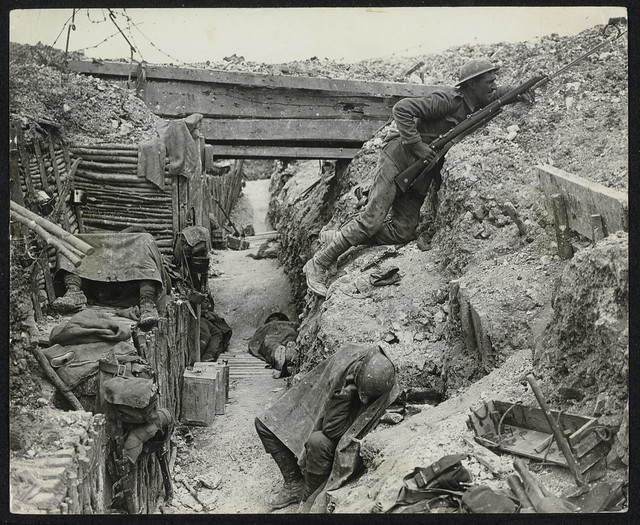
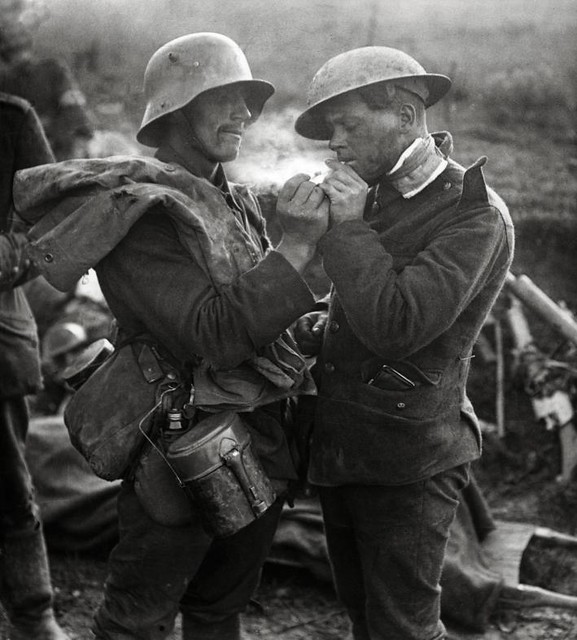
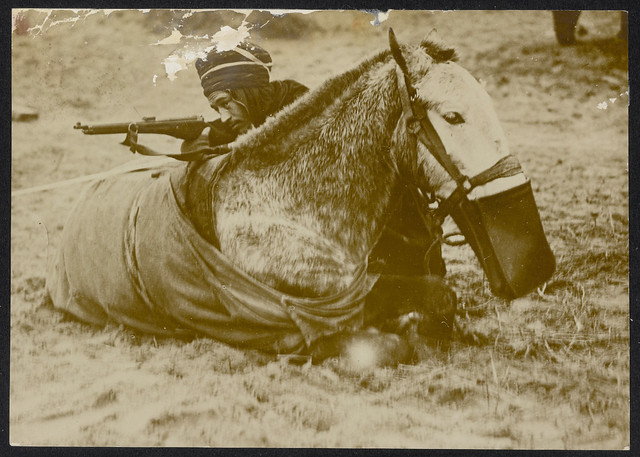
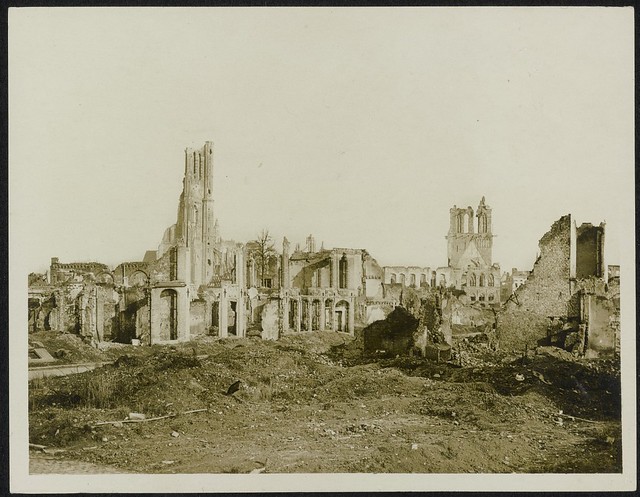
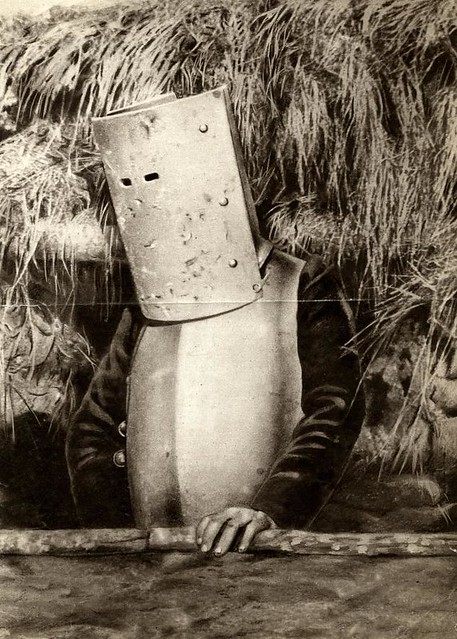
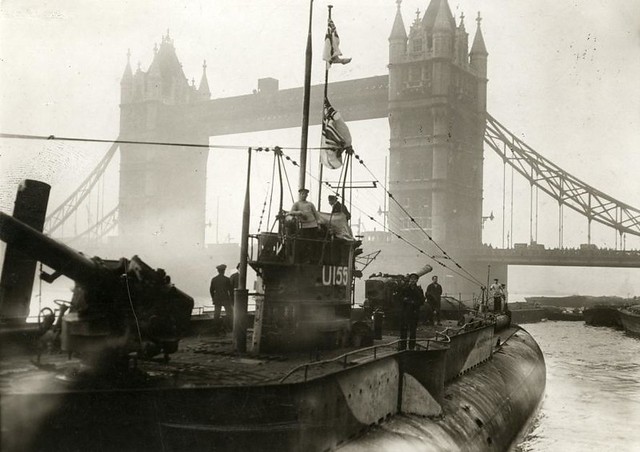
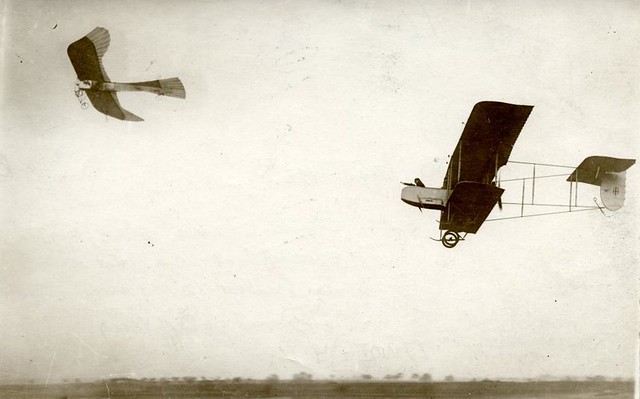
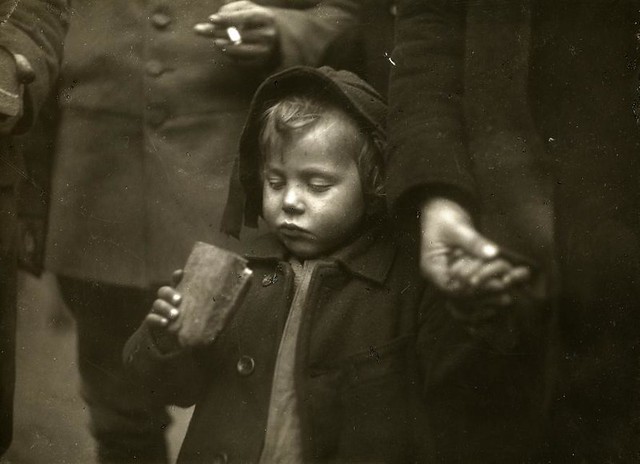
World War I was one of the first wars that was covered by newspapers that not only told stories, but also showed images. Some of these photos have found their way to the National Archives of the Netherlands. In this blog post, I would like to share some of the pictures that made the biggest impression on me.
All pictures are available on the National Archives Flickr account with 'No known copyrights.' Click the images for the description on Flickr.
Life in the trenches
Prisoner of war getting a light from his captor.
Soldier using a horse as a shield
Ruins at Ypres
French soldier in improvised harness to protect himself from the bullets
As I am watching the quarter finals of the World Cup Soccer, where the Netherlands is fighting to stay in the competition, I am wondering if sports played a part in the life of my ancestors. For most of them, sports would have been a luxury that they could not afford.
However, I think a lot of our ancestors were involved in activities like archery, skating and clay pigeon shooting. Those activities were like sports in the sense that they exercised the body and had a competition element. But unlike sports, the goal wasn't simply recreation, but to develop skills necessary to work well and protect yourself.
Where to find evidence of your ancestors sports
Most of our ancestors' athletic achievements, if any, would have gone unreported. Towards the end of the 19th century, sports become organized, especially in the higher levels of society. You may be able to find archives of organizations like soccer clubs, archery societies and tennis clubs. Newspaper begin to report about matches in the 19th century as well.
For earlier periods, you may be lucky and find evidence in court records. Like today, competitions can lead to tension among the competitors and their fans, which may lead to injuries and court cases.
The closest thing I've found was an ancestor who testified about a quarrel between German and Dutch farmers after a friendly clay pigeon shooting match turned less friendly. They got into a fight. In the end, the Dutch had to promise to bring a keg of beer next year and that was the end of the story.
Your own ancestors
Do you have ancestors that played sports? Where did you find that evidence?
Apparently, my Ancestor Swap Challenge I proposed last month was a bit too daunting, as nobody has taken me up to the challenge yet. So instead, I will talk about an aspect of the worldwide genealogy industry that I find fascinating: roots tourism.
Living in a country from where many people emigrated over the centuries (the Netherlands), we get a lot of tourists looking for their roots. I have several clients for whom I have prepared visits, doing research beforehand to find out exactly where their ancestors lived. In some cases, they went there themselves and in other cases I doubled as their tour guide.
I always learn a lot from these trips, especially about my own preconceptions about what is 'normal' :-) Like the time I said "your ancestor lived in the third house" and the client responded "what do you mean, I only see one house?" She had never seen houses that don't have yards between them and did not realize that those houses shared a wall. She saw one house, where I saw twelve!
Roberta Estes and Cheryl Ferverda looking for their ancestors' graves in Baard, Friesland
I am currently working with the archives in Friesland, one of the northern provinces of the Netherlands, to promote roots tourism. The Frisian archives are creating a 'roots package' for people of Frisian descent. They will research their immigrant ancestor's family tree back several generations and create a custom itinerary to show them where their ancestors lived. I participated in the trial last week, which was wonderful. An American client of mine, Roberta Estes, came over to see all the places I had found for her, together with her cousin Cheryl Ferverda. I wrote an impression about the first day of that trip on my blog.
Promoting roots tourism is pretty new in the Netherlands, but I think it has great potential. I know there are similar projects going on in Scotland and Ireland (the Homecoming, the Gathering). In Ireland, local historical societies were asked to reach out to the descendants of the people who left that area and to invite them to come back for a visit. It was a tremendous success. I think such a 'grassroots' approach would work very well in other countries of origin too.
Do you know of any other projects where people visited their places of origin? Do you know of any successful business models or marketing efforts? I would love to exchange ideas so please leave a comment or contact me via my website.
Last month, in my blog post "Sources - source of pride and envy" Tessa replied how she wished she could research someone from the Netherlands. She talked about the beautiful census and farm books that she gets to use in her Swedish and Norwegian research. Those sound very interesting and I would love to see them. Pauleen mentioned German Familienbücher that are just superb. So I came up with an idea:
Let's research each other's ancestors to get a taste of records in other countries.
I will give you the first challenge and post details about an ancestor of mine, with some clues about sources you can use. If you're up to the challenge, please leave a comment and describe an ancestor of your own. I will myself pick out one of these other ancestors as well. Next month, I will write about my experiences researching this ancestor. Everybody who claimed an ancestor is invited to place a comment to share her/his experiences.
Rules of the challenge
Research another person's ancestor:
Leave a comment at the bottom of this page, specifying which ancestor you are picking. This need not be the last one. Please pick a country where you do not have any ancestors yourself.
Research this person using the sources suggested or other sources.
Write a comment about your experiences at the bottom of my blog post next month (5 May), describing for example:
What did you find?
What resources did you use?
What challenges did you face?
What was different from the area where you usually do research?
Alternatively, you can write a blog post about it and place a comment with a link back to your post at next month's article.
Give another researcher a challenge:
In the same comment where you claim an ancestor, share one of your own.
Give the name and identifying details about this ancestor.
Suggest some research questions.
Suggest some online sources to start with. If the ancestor is impossible to research online, please pick another one. The records need not be available in English although if an English website is available, please say so.
Map of Made en Drimmelen, 1868
First challenge: Johannes Marijnissen
My challenge to you is to research my great-great-grandfather Johannes Marijnissen. He was born in Made en Drimmelen, Noord-Brabant, Netherlands on 6 July 1864 and died in Eindhoven, Noord-Brabant on 26 December 1943.
Suggested research questions:
Who were his parents?
Who was his wife?
What was Johannes' occupation? Looking at the map above, what does that tell you?
Where did Johannes live on 1 January 1900?
Who was the informant on his death record? What does that suggest about the place where he died?
Two weeks ago, I flew to London to attend Who Do You Think You Are? Live! Although most genealogists I met were from the British Isles, I also got to meet genealogists from Belgium, Bulgaria, Canada, United States, Australia, South Africa and India. Worldwide Genealogists In Real Live.
Me with my Dutchgenealogy.nl bag
(easier to spot than a rose in my lapel when meeting new people)
There was one thing I noticed while talking to this range of genealogists: how much we identify ourselves with our sources. Two genealogists from the UK independently told me, a bit smug, how their birth, marriage and death records go all the way back to 1837. Only to be surprised when I told them that in the Netherlands these records start in 1811, when the civil registration was introduced by Napoleon. Comparing our sources almost felt like a 'mine is bigger than yours' competition.
I must admit I take pride in the excellent records we keep in the Netherlands. I often work with genealogists from the US, where records typically start later or are less informative than their Dutch counterparts. Take US census records, for example. These only record families every 10 years (or 5 years if you are lucky and the state held a census in between the federal censuses). In the Netherlands, since 1850 we have had population registers that describe whole households, but they were kept up-to-date. Families were required to report their departure and arrival so the municipality could make sure the registers accurately reflected its residents. These records are so useful for genealogy and I love educating Dutch Americans about the possibilities for research in the Netherlands.
Example of a population register (Breda, 1917-1938)
It wasn't until I talked to these UK genealogists that I realized that pride in our sources can come across as snobbery. I'm used to being at the 'high end' of these comparisons, where my sources 'trump' those of my discussion partner. These UK genealogists were obviously used to that as well. The way we talked about our sources was almost like we felt superior to the other, which is strange since none of us have any influence on the hand we are dealt.
Genealogy Standards1
In fact, I think there is an upside to having fewer sources available. Over the last two years, I have been emerging myself in genealogical methods and standards as they are taught in the US, to prepare myself to become a Certified Genealogist. The Americans are light years ahead in terms of methodology, compared to genealogical education in the Netherlands. When you have fewer and less informative sources to work with, you must learn how to make the most of them.
In the Netherlands, the solution to almost any brick wall is always "find more sources." Building a case using indirect evidence even seen as sloppy genealogy by some, because you did not put in the effort to make another trip to the archives to find real evidence. In the US, genealogists need to learn how to combine indirect evidence from a range of sources to prove their case.
Reading about their techniques has been an epiphany for me and has helped me to solve several of my own brick walls. Techniques that work for finding enslaved ancestors have helped me trace serf ancestors. Lesson learned: no matter how wonderful our sources are, we can all learn from each other.
Notes
Board for Certification of Genealogists. Genealogy Standards, 50th-anniversary edition. Nashville, Tenn.: Ancestry, 2014. 100 pp., paper, ISBN 978-1-63026-018-7.
As this is my first post, I will start by introducing myself. My name is Yvette Hoitink and I'm a professional genealogist from the Netherlands. I'll be blogging every fifth day of the month.
I decided to become a professional genealogist because I love solving complex family puzzles and don't care whether they are my own family or not. By charging for my services, I can afford to do genealogy several days per week instead of just in my spare time. Besides my genealogy business, I also work as a project manager in the IT department at the National Archives in The Hague and am a wife and mother of a three-year-old son.
I've been doing genealogy since I was 14 years old (I'll tell you how it all started in a future blog post). I've been researching a group of 6,000 emigrants from my father's home town of Winterswijk in Gelderland and the surrounding area, most of them distant cousins of mine one way or another. They left between 1840 and 1920 and settled mostly in the US, primarily in upstate New York, Wisconsin, Michigan, Minnesota and Iowa. I've been able to find over 4,000 of them in US records and have been able to help many of their descendants make the connection between their immigrant ancestor and records in Europe. Several of them asked me if I took on paying clients. And one day, about two years ago, I decided to do just that. It's been an amazing adventure that allowed me to do research on Dutch ancestors of people from all over the world: United States, Canada, Australia, United Kingdom, Sweden and South Africa.
Graves of Winterswijk people in Clymer, New York
My main platform is my website, Dutch Genealogy. It started out over 20 years ago, as "Yvette's Dutch Genealogy Homepage," a collection of links to other websites that had information relevant to people researching their Dutch heritage. There weren't many websites out there at all so mine was the first genealogical website in the country. Soon afterwards, I was asked to give lectures about internet genealogy. Since I was just 18 years old at the time, this was pretty daunting but a great opportunity. It was funny too, to be a young girl in a scene dominated by retired men. "What do you mean you're the speaker? We invited an expert!" I also wrote a book about internet genealogy together with a friend, that has been reprinted several times. So you could say I've been a genealogy hustler for about 20 years, but now I've finally gone pro.
Groninger Archieven
There are not that many professional genealogists in the Netherlands. The other day, when I introduced myself as a professional genealogist to a staff member at an archive, he asked "people actually pay for that?" with genuine surprise in his voice. I can see where he came from, as most people in the Netherlands live pretty close to where their ancestors are from. If they are interested enough to hire someone, they are usually interested enough to do the research themselves. But my specialty is doing research for people who don't live in the Netherlands and don't speak Dutch. As there are way more non-Dutch speaking people looking for a genealogist to help them find their Dutch ancestors than Dutch genealogists willing and able to report in English, I've definitely found my niche.
I provide a range of services. Besides the 'classic' services like research, translation, lecturing and writing, I also help prepare clients' trips to the Netherlands. This usually involves researching the families to see where they lived and worshiped. I will then use that information to create an itinerary. The client can either visit all those places himself, or he can hire me as a tour guide. I've also accompanied clients to the archives, to present them with the original documents that include information about their ancestors. That is always a very special moment. I love all the information that is available online, but nothing beats the historical sensation of original manuscripts.
As one of the few professional genealogists in the country, it can get lonely sometimes. That's why I love meeting genealogists from other countries and sharing ideas. I am proud to be a member of this new worldwide community and hope to learn a lot from you. I also look forward to meeting some of you later this month at Who Do You Think You Are Live in London. If you see a woman that looks like that picture in the first paragraph, and who is carrying a "Dutch Genealogy" tote bag, please introduce yourself!
 My year is off to a great start, as I will be flying to Salt Lake City the day after tomorrow to attend the Salt Lake Institute of Genealogy next week. What a wonderful way to start the year! It will be my first genealogy institute. If you're there too, please come and introduce yourself.