Showing posts with label Convicts. Show all posts

Sunday, 15 May 2016

Genealogy centenaries

Isn't it always the way? You wait years for a significant genealogy anniversary and then three come along at once. That's how it is in 2016 for my ancestors - three significant bicentenaries for three of my convict forbears, Nicholas Delaney, Sarah Marshall and John Simpson.

So I thought I'd share a bit of information about them. A lot of Australians are descended from this trio of law-breakers and maybe one of them will find this post and get in touch. We genealogists love hearing from cousins...

The first genealogy centenary is 13 June, 2016, the 200th anniversary of the official founding of the Royal Botanic Garden in Sydney.

Drawing of the Domain and Mrs Macquarie's Point, Sydney, Australia1830
The Domain and Mrs Macquarie's Point, 1830, Creative Commons by Paul K

On 13 June, 1816, Nicholas Delaney, my 3x great grandfather, and his gang of convict workers finished building Mrs Macquarie's Drive, the road that runs round what was then the Government Domain. It's now part of the Botanic Garden.
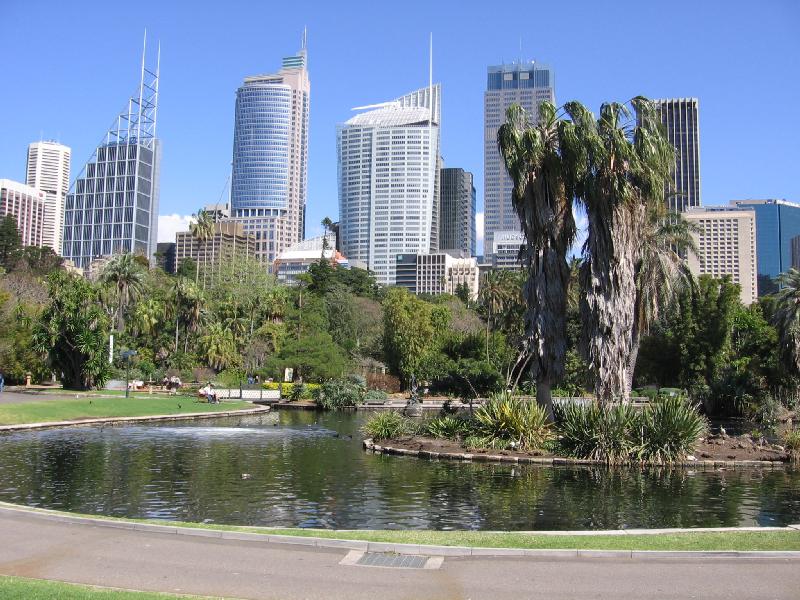
Photo of the Botanic Gardens, Sydney, with skyscrapers in the distance
The Botanic Gardens in the 21st century CC via Wikipedia

Cleverly, Nicholas arranged to finish the work on the birthday of Governor Lachlan Macquarie's wife, Elizabeth. The delighted Governor awarded Nicholas and his 10-man gang five gallons of spirits as a reward. There would have been sore heads as well as muscles the next morning.

Inscription on Mrs Macquarie's Chair, also called Mrs Macquarie's Seat, Royal Botanic Gardens.
Inscription on Mrs Macquarie's Chair, celebrating the day Nicholas finished the road CC by Graeme Churchyard

I've already written about building Mrs Macquarie's Drive as well as the only part of the original road which now survives, the Macquarie Culvert. As the 200th anniversary comes even nearer I hope to post more over on the A Rebel Hand blog.

Update: here's the first of those posts on Nicholas Delaney, Mrs Macquarie's Drive and the Botanic Garden's 200th anniversary.

The oldest bridge in Australia, built by Nicholas Delaney: the Macquarie Culvert, Mrs Macquarie's Drive, Royal Botanic Gardens, Sydney
The Macquarie Culvert, Mrs Macquarie's Drive, Royal Botanic Gardens, Sydney CC via Wikipedia

There's going to be a big party in the Botanic Gardens on the 13th and I've heard from some fellow Delaney descendants that they'll be going. If only I weren't half the world away I'd be there celebrating my ancestor's achievement. But I can't get to Australia this year. You can bet I'll be keeping up via social media and other channels, though.

The next bicentenary of this year is of the trial and sentencing of Sarah Marshall, my 3x great grandmother, on 24 July, 1816, at the Lancaster Assizes. 

Written record of Sarah Marshall's sentence at the Lancaster Assizes, July 1816
Sarah Marshall's sentence via Ancestry

Sarah was convicted of 'stealing a petticoat valued at one penny, a bed gown valued at one penny, two caps valued at one penny, a pair of silk stockings valued at one penny and a sheet valued at one penny, being of the Goods and Chattels of John Oldham.'

And for fivepence-worth of clothes, she was to be 'transported to some part beyond the seas.' To New South Wales, in fact, like all my convict ancestors.

Australian Convict Transportation Records for Friendship II via Ancestry

Sarah's story - or what I can find out about it, because there are plenty of strong Lancashire brick walls surrounding her life before she half-inched the goods and chattels - includes two particularly dramatic episodes after her trial. She was sent out on a notorious convict ship, the Friendship, famous for the licentious behaviour on board during the voyage. Again, I'm planning to write more about that.

And she's popularly believed to be the 'Sarah's Ghost' who is said to haunt Castlereagh General Cemetery, having been murdered by a group of  lust-driven men. But the story's inaccurate. I'm glad about that. Poor Sarah, as if she hadn't suffered enough.

Sarah went on to marry, or live as if married to, John Simpson, a tailor, and his is the last of my trio of bicentenaries.

John was born in Yarm, in the North Riding of Yorkshire. On 8 November, 1816, he was charged with 'feloniously taking and carrying away two bales of goods, consisting of muslin and shawls' at Hope in the Derbyshire Peak District and committed to Derby county gaol. The Derby Mercury reported the facts on 21 November.

Derby Mercury newspaper masthead, 21 November 1816
 
John Simpson charged with theft and imprisoned in Derby County Gaol: newspaper report in the Derby Mercury
Derby Mercury report via FindMyPast

He was to stay in Derby Gaol until the Lent Assizes in March, 1817, when he was tried and sentenced to seven years' transportation.

John and Sarah's daughter Lucy Simpson married Thomas Delaney, the son of Nicholas and his wife Elizabeth Bayly, which ties up my three bicentenary ancestors neatly.

Saturday, 15 August 2015

My earliest Australian ancestors

We’re halfway through National Family History Month for genealogists researching in Australia and New Zealand. I’m based in the UK, so the only way I can join in is online. But that’s OK – we’re Worldwide Genealogists here!

Tree growing over an old brick wall, Arminghall, © Copyright Evelyn Simak and licensed for reuse under the Creative Commons Licence.
© Evelyn Simak and licensed for reuse under this Creative Commons Licence.
So I decided to do something I haven’t yet done. It's about time! 

I’m going to mark NFHM by putting together a list of the first of each branch of my ancestors who arrived in Australia. They all came from the British Isles. Well, as far as I know – there are brick walls in my tree, of course. In fact sometimes I think my family tree grows out of an old brick wall, like the one in this photo.

I’m going to do this by starting with the earliest, first on my grandfather’s side, then on my grandmother’s.

Grandfather’s side:

Nicholas DELANEY (Ahnentafel no 48), arrived 30.10.1802 on Atlas II. Convict and Irish rebel, from Carnew, Co Wicklow in Ireland. Married to:
Elizabeth BAYLY (A49), arrived 3.4.1807 on Brothers. Came free. May have been from Kent. A brick wall. Their son Thomas married Lucy, the daughter of:
John SIMPSON (A50), arrived 10.1.1818 on Ocean II. Convict, born in Yarm, Yorkshire, arrested in Derbyshire. A tailor. Married/lived as married with:
Sarah MARSHALL (A51), arrived 14.1.1818 on Friendship II. Convict, from Salford or Manchester.

(Thomas) Robert Sandon WILSON (A26), called ‘the Man of Mystery’ because we know nothing much about him. English, possibly a bigamist. Certainly a brick wall. Married to:
Sarah Emma HENLEY (or DICKS?) (A27). Arrived before 1854. From Sussex. Their daughter Mary Maude married Lucy and Thomas’s son Tom.

Grandmother’s side:

James Thomas RICHARDS (A30), arrived 12.12.1835 on Royal Sovereign. Convict, from Deptford, Kent. A Thames waterman. Married to:
Rebecca HARRINGTON (A31), arrived between 1857 and 1873. Probably assisted immigrant (meaning that she didn’t pay for her own voyage). May have come with her father, Thomas Harrington (A62), a dock labourer, or he may’ve joined her later with his wife Julia (A63), nee Gamin, or Cannell, or even Gemmell, from somewhere in Ireland. Yes, Julia’s a brick wall. Rebecca and Thomas were from Hackney in East London.
James and Rebecca’s daughter Eleanor Ann Edith (Minnie) married Thomas Henry, the son of:

John WINTER (A28), arrived 9.2.1857 on Parsee. Assisted immigrant from Tebay, Westmorland (Tebay’s now best known as a service station on the M6 motorway). Married to:
Ann GRAHAM (A29), arrived 23.7.1857 on Alfred. Assisted immigrant from Butterknowle, Co Durham. She came with her parents:
Thomas Rume, Rumneys or Ramneys GRAHAM (A58), a quarryman born in Gaitsgill, Cumberland, and his wife:
Elizabeth BELL (A59), from Bishop Middleham, Co Durham.

Convicts


Looking back over my earliest Australians, I can see three big brick walls. Interestingly, none of them are convicts. OK, so three of my naughty ancestors have so far resisted my attempts to track down their parents, but at least because the legal system kept tracks on them they’re fairly well documented. That’s one reason I like having convict ancestors – they leave traces. And they’re cool.

Two of my branches are from Ireland and the rest are from what’s now London or from the north of England. A nice mixed bag. No Scots yet – but who knows where those Grahams came from before they turned up in Cumberland? All my Welsh ancestors are on the other side of my family.

As far as I know. And that’s one of the reasons I love genealogy. There’s always something new to discover. It’s a bit like being a time-travelling sleuth. I’ve got quite fond of some of them. Others I could spank for being so secretive. But in the end, they give me hours of fun, days of frustration, and a lifetime’s work. 

If you recognise any of the names or other information - places, ships and so on - that I've mentioned, please get in touch. I'd love to hear from you.

NFHM 2015 logo
Thanks to everyone involved in NFHM, get well soon Shauna Hicks, and a big G'day to my Aussie geniemates!


Friday, 3 July 2015

Ancestors in the Rookery

My time clock is a little out of kilter this month so please accept my apologies for this late and short post that once again focuses on Where. This week I have been researching my convict ancestors Elizabeth Phipps and James Westbrook who were transported to Australia two hundred odd years ago.

I had an address (the scene of their crime) for this pair, Angel and Porter Court, Golden Lane, London which I discovered was in the Parish of St Luke, Old Street. Although I found a contemporary map for the area I was not able to pinpoint the exact location of their domicile. The 19th century buildings in the area have long since disappeared; many were destroyed in The Blitz.

"The reputation of St Luke’s as a ‘rookery’ – a zone of criminality – reached a peak in the first half of the 19th century. ‘Flash houses’ – drinking dens and lodging houses where criminal plans were laid and stolen goods fenced – were more numerous here than anywhere else in London." (source:http://hidden-london.com/gazetteer/st-lukes/)

After a visit to The Society of Genealogists in London I was strolling back to the underground station when I saw some daggy apartment buildings that were signposted "The Golden Lane Estate". These "Council Flats" aren't too attractive but they are Heritage Liated! I wonder how they measure against the original rookery?


The Golden Lane Estate


Sunday, 14 September 2014

Be alert (and other geneagoogle tips)

I’m guessing you use Google in your genealogy research. But are there any new tricks to help you search for your family history? Here are some ideas.

A few days ago I posted on a couple of Facebook groups – it was about a talk being given in Newcastle, New South Wales, by the makers of a documentary looking at the lives of Irish ‘famine brides’ -orphans shipped to Australia - and convict women.

I couldn’t go. I’m on the wrong side of the Pacific. But I thought my fellow Aussie genealogists might be able to. So I was surprised to get a couple of comments saying ‘I didn’t know it was on, and I live in Newcastle’. Which is a real shame. But it got me thinking – how did I, living in the UK, know about an event taking place all those miles away, when people there had no idea it was happening?

The wrong kind of convict (S. Olkowicz. CC attrib 2.5 via Wikimedia)
The answer – Google Alerts. I had one set up for convict Australia. In fact I have one for convict Australia -cichlids, since I got fed up with being notified about fish for sale. (Stripey blighters from Central America, since you ask.) I’ve got several alerts set up, mostly to do with genealogy or history, and they’re just one way I keep up with the latest news, along with blogs, Twitter, Facebook and Google+.

Do you use Google Alerts? They’re easy to set up, but you’ll need a Google account, which most people already have. Here’s a quick how-to if you’d like to get your own alerts.

Log into your Google account. Go to or click http://www.google.com/alerts (I’m guessing you’re online if you’re reading this). You’ll see a box like this:

Type in what you’d like Google to search the web for and select show options to customise what information you want delivered, how often and where to:

 … And create your alert.

This will keep you updated on anything on the web with the words (for instance) ‘worldwide’ and ‘genealogy’ in it; if you just want news about the exact phrase "worldwide genealogy" use double quotes (like I did there) as you would with any Google exact phrase search.

I expect there are much more sophisticated things you can do with alerts, but this suits me fine. I haven’t tried any other Google search tricks with it.

But in case you need a reminder, here are the search symbols (there’s probably a better geeky term for them) which I find useful for my own geneagoogling:

To search for an exact phrase: use double quotes at the beginning and end
"worldwide genealogy"
For two or more words which must turn up in the results, but not necessarily in that order, use AND
genealogy AND worldwide
To search for two words or terms at the same time, use OR (this will find family history and family tree)
family history OR tree
To exclude a word which might fill your search with unwanted results, use a minus sign (I used this to find my ‘ghostly’ 3xgreat-grandmother)
"sarah marshall" -finding
To search one specific website, use site:
To search within a range of numbers – now this could have been invented for us! – use two dots
births london 1850..1865
To find a phrase where you can’t remember some of the words, use the asterisk wildcard
who * you think * are

Have you got any search tips to share with us?

Happy geneagoogling!

Thursday, 17 July 2014

Found in an old newspaper - crime and punishment

I’ve been using the British Newspaper Archive a lot for my research recently. (If you haven’t seen it and you’re looking for British or Irish ancestors, there’s a special offer on until Sunday, 20 July – a month’s subscription to the BNA for £1.)

Wondering if the Old Bailey trial of my 2x great grandfather, James Thomas Richards, had been reported in one of the digitised papers, I searched for his name and 1835, the year he was sentenced to transportation to New South Wales. Could I find him?

The Morning Chronicle, April 15, 1835
Well, yes and no. No report of the trial, but his sentence was recorded. There he was, at the bottom of a long list of others. Looking at the list, and remembering that it represented only a tiny number of the convicts who would be sailing for Australia, got me thinking.

They were all going to be thrown back in prison, or crammed into a hulk (a ship which wasn’t seaworthy, but could be used to relieve the overcrowding in prisons). There they would wait until the next ship was ready to leave on the months-long journey to the other side of the world, where they would be put to work for seven years, or 14, or the rest of their lives.

It’s true that many convicts, like James Thomas Richards, would end up having a good life in their adopted country. And most would have much better lives than they could have hoped for if they hadn’t been caught and sent to Australia. But the men and women waiting for the next ship couldn’t know that. And yes, some people did try to get transported because they believed anything would be better than the poverty and hunger they suffered in city slums or in the countryside.

But what faced them wasn’t just a dangerous sea voyage and hard work. It was exile. It was being on the other side of the world from your family, your friends, your sweetheart, and all but your youngest children. With no way to contact them – remember, it was quite normal not to be able to read or write if your work didn’t call for it and you’d had little or no education.

blackcountryhistory.org/collections/getrecord/WAGMU_W1178/
And yet many would be deeply relieved, because the alternative sentence for their crimes was worse. Although the death penalty had been removed for crimes such as stealing goods worth a shilling (5p), theft of a sheep or a rabbit or damaging Westminster Bridge by the time James was sentenced in 1835, you could be strung up in public for crimes like forgery and coining, arson, burglary, theft from a dwelling house, rape and attempted murder as well as murder and treason.

In the eighteenth and early nineteenth centuries, the British penal system wasn’t geared towards imprisonment as a punishment (except for debtors). Prison was mostly the place where you waited for trial and for your sentence to be carried out. And for 220 different crimes, the penalty was death. Many judges and juries weren’t willing to sentence men, women and children to death for stealing a pocket handkerchief (for example) and so they would find them guilty of a lesser, non-capital offence. Or a death sentence would not be carried out and the convicted person might be transported, or even reprieved. But still, that threat hanging over many criminals must have been terrifying.

As the descendant of four convicts myself, I’m very glad that they ended up in Australia.


Further reading:

Old Bailey Online: Punishments at the Old Bailey
Port Cities London: Prison hulks on the River Thames (has a good short history of transportation)
Timeline of Capital Punishment in Britain


Wednesday, 14 May 2014

Hunting ancestors using old maps

I love old maps! Do you? They're such a good genealogy tool. They can help make sense of the census, correct wonky transcriptions and show how a great-grandparent's village became a suburb of a big city. If you're lucky, they may lead you to a place your ancestors lived.

And they can guide us in our travels into another dimension - back in time. Old maps can help put flesh on the genealogy skeleton of names and dates. They can confirm or challenge our ideas about how our ancestors lived. They can make our forefathers and mothers come to life. And for me that's one of the most fascinating parts of my genealogy journey.


I’ve used an old map before to try to make sense of the movements of one of my convict ancestors, James Thomas Richards, on the evening in 1835 when he stole a pub till and earned himself a free one-way ticket to Australia.

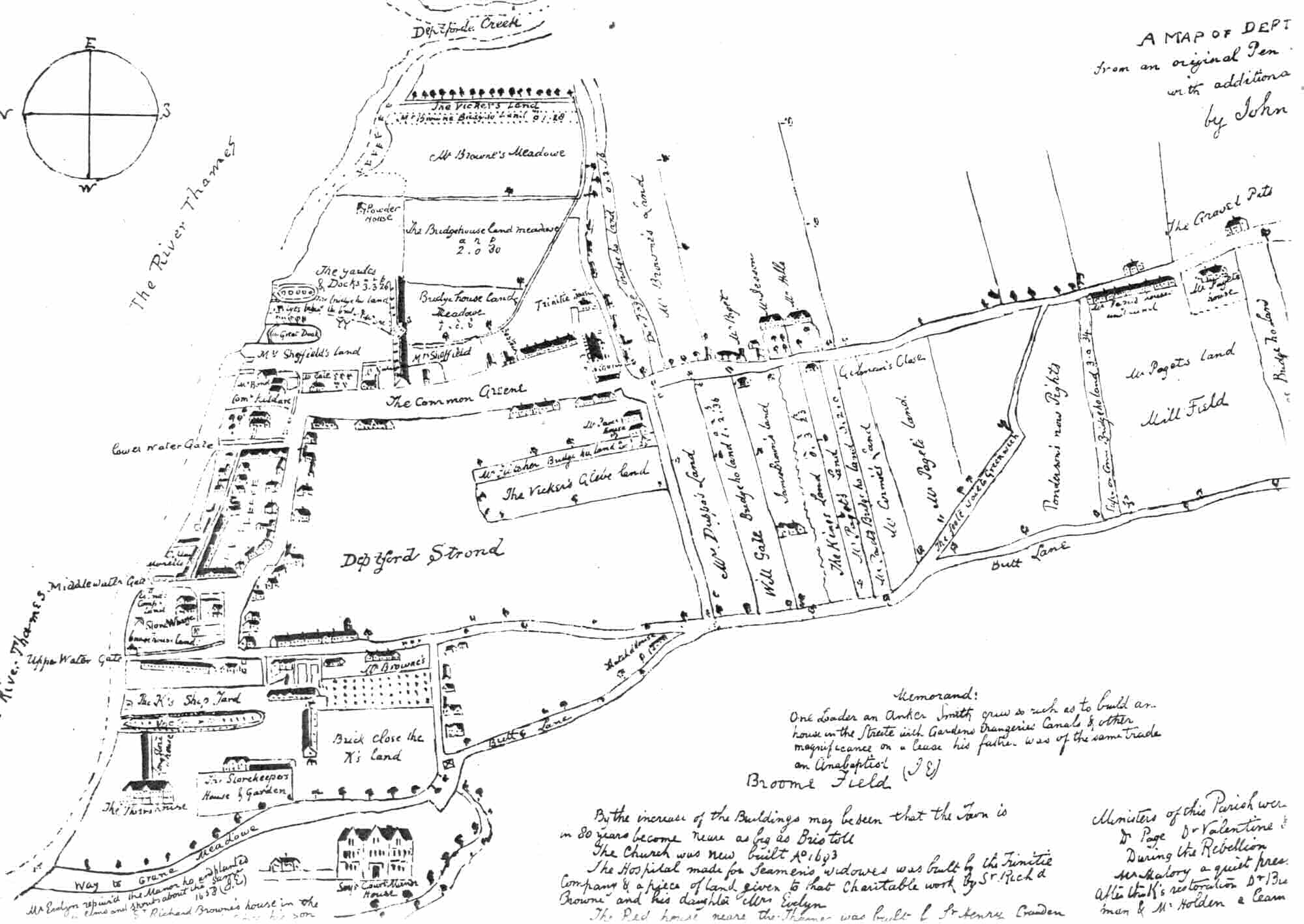
Hand-drawn map of Deptford. Creative Commons via http://www.ideal-homes.org.uk/lewisham/deptford/1623-map-01.htm
Map of Deptford, 1623, with John Evelyn's notes, late C17th
James was a Thames waterman, and lived in Grove Street, Deptford – then part of Kent, but now definitely in London. His father and he had both been born in that street, perhaps in the same house. So I thought it might be interesting to look at this small part of Deptford through maps.

Deptford is an interesting place from a worldwide perspective, too. In the Deptford dockyards ships were built and fitted up to sail to North America, Australia and many other far-off places.

It was from the wet dock in Deptford that Captain Cook set off in 1768 on board the Endeavour to ‘discover’ Australia. Convict hulks (prison ships) were moored in the Thames off Deptford. It was at Deptford that the prison reformer, Elizabeth Fry, waved goodbye to the Maria, a ship full of women convicts who she had helped. And two of Australia’s earliest convicts of African descent, Billy Blue and John Caesar, lived in Deptford before they, too, were transported to New South Wales.

Grove St, Deptford http://www.openstreetmap.org/copyright
I started my time-travelling with a map of modern London, because it’s easier to search. Of course, some streets have been re-named and others no longer exist, but I was lucky with Grove St. There it was, a longish street going almost north to south, close to the Thames. I wondered where James and his family might have lived. Had it always been this shape and length? Were there any old houses left?

A quick virtual trip via Google Street View squashed my dreams. Two Victorian pubs, a car breaker’s yard and a lot of post-war housing.

I wasn't really surprised. I hadn’t expected much to be there, thanks to the Blitz, which targeted London’s docks with great dedication . To give you some idea, have a look at this map, from the excellent Bomb Sight project. Some 650 people were killed in crowded Deptford during the Second World War, including 168 in Britain’s worst single V2 rocket attack on 25 December, 1944. Also killed that year were 13 US naval officers and ratings at an amphibious base supporting the D-Day landings. Such was the war in London’s East End.

It was time to look at old maps. My great-great grandfather, James the till-nicking waterman, was born in 1815 and convicted 20 years later. I wanted to find Grove St as it was in his lifetime.

Grove St in 1827. Website © Mark Annand
Now I'm not asking for much, am I? Only a 200-year-old map with enough detail to be able to make sense. And which reaches beyond the edges of what was then London.

Luckily, there is one. Greenwood's 1827 map, which can be seen online at the brilliant Motco and also at Bath Spa University's site.

So here it is - Grove St when my 2x great grandfather lived there. It looks very different. In fact I only recognised it because it starts at a T-junction just south of the larger dockyards.

It's much shorter, too. Only the northern part is called Grove St. To the south it's Victualling Office Row and skirts the huge warehouses where ships' stores were stocked, ready for the voyage.

Deptford in Mogg's map, http://www.geographicus.com/mm5/cartographers/
1806. Image via http://www.geographicus.com
What thrilled me was seeing that there are only a few houses in the 1820s Grove St, right at the top end. So my Richards ancestors will have lived in one of those. Now that's a bit better than the long snaky road in the modern map!
And there are open fields to the east side of the street. 

It's surprising to see just how much it was still in the countryside. I went to another favourite map to get a better idea of how rural Upper Deptford was. 

Mogg's Pocket Map of London was published in 1806. Here's a view of the area just before James was born. It's hard to square that country  with the overcrowded slums of 1944.

It doesn't look as if it had changed much even in the years since the 'Evelyn' map, right at the top, was drawn. Incidentally, if you'd like a proper look at that one,try here. And yes, it does look upside down.


http://www.mernick.org.uk/elhs/mapgallery.htm
1861. Thanks to the The East London History Society
In fact not a lot happened to the Grove St area for a while. Cross's New Plan of London, published in 1861, shows the new railway line terminating in Mr Dudman's Yard, just to the right of the street.

The dockyard closed in 1869. Sailing ships were superceded by steam, the same steam which drove the other new, fast form of transport - the train.

And with the docks no longer employing people, Deptford lost its purpose and began to slide into
poverty, and the grand shipbuilders' houses became overcrowded. There were hard times on the way.

Irritatingly, I haven't found any maps from the middle of the century which are detailed enough to show buildings apart from Cross's.


Charles Booth Online Archive http://booth.lse.ac.uk
So I'll have to shift my time machine up a gear and zoom forwards to 1889 and Charles Booth's famous 'poverty maps'. The Descriptive Map of London Poverty concentrated on the East End - the poorest part of London, it was generally agreed.

Booth based his classification of Londoners' economic status on visiting each area and talking to local people as well as looking around.

This snippet of his map shows how Upper Deptford was then, with better-off streets (in red or pink) to the south-west, poverty (dark blue) in the south-east and Grove St (a muddy-looking purple) described as 'Mixed. Some comfortable, others poor.'

You'll see that Grove St is now the same length as it is today, stretching all the way from the Wet Dock down to Evelyn St, where the red shading begins. It's built up along its entire length. And there are terraces of houses where the fields had been.

I've learned a lot writing this blog post, and I've enjoyed it, too. I'd add a lot of links, but this post is long enough anyway. So I'll be coming back to old maps on my own genealogy blog, A Rebel Hand, before too long.

And I'd love to hear what old maps you like, and if they've helped you in your genealogy journeys.

Unfortunately I am unable to respond to comments at the moment. I have attempted to credit all illustrations correctly and to use only images which are out of copyright when possible. If you would like to make any amendments, please email me and I will correct them.

Saturday, 22 February 2014

Global Reach of the Old Bailey Online, thanks to the Collaboration of Academic Historians

Academic historians have done genealogists a huge favour by making the records of London’s central criminal court, the Old Bailey, available online free of charge for non-commercial use.

The website is a product of many years of collaboration between the Universities of Hertfordshire and Sheffield and the Open University, funded by the Arts and Humanities Research Council and the Big Lottery Fund. The Proceedings of the Old Bailey, 1674-1913, published shortly after the court sessions contain accounts of trials, are the core resource. In addition to images of the Proceedings with full transcripts, there is extensive background information and useful search and statistical tools.


Transportation

Transportation of criminals is one reason that the Old Bailey Proceedings Online (OBPO) has global relevance to family history research. Are you thinking Aussie convicts?

The relevant information page on OBPO tells me that transportation to America started in 1718 and ended in 1776 at the commencement of the American War of Independence. For a while there wasn’t anywhere to send convicts sentenced to transportation, so prisons and prison ships (hulks) served as destinations. In 1787 transportation to Australia started, and in 1857 all transportation ceased.

That got me wondering how many people were sentenced to transportation to America and Australia and how it varied over time. Using the statistics tool I extracted the annual transportation sentences and present the information as a graph.

Annual number of transportation sentences at the Old Bailey
Source: Old Bailey Proceedings Online (www.oldbaileyonline.org, version 7.1, 15 February 2014), Tabulating year where punishment category is transportation, between 1718 and 1857. Counting by punishment.

The Proceedings only tells us what punishment was imposed, not whether it was actually carried out. Appeals, commutation of sentence, and death are reasons why a prisoner might not have boarded a ship.

The trail accounts include everything from highway robbery to pick-pocketing. A couple of convicts sharing my surname, but sadly probably not related to me, were Thomas Adams and Catherine Adams.


Thomas Adams, highway robbery, transported to America

Two cases, tried on 3 July 1772, involved Thomas Adams:

On the 17 May 1772, three men robbed John Grant, who gave evidence that
“one of them presented a pistol to me, and demanded my money, another took my silver buckles”. 
One of the robbers, Richard Burton gave evidence against his fellows, Thomas Adams alias Stanley and John Waters. He told the court that Waters took the money and Adams took the buckles, which were afterwards sold by one Jones. His presence was corroborated by him being able to relate a conversation between other witnesses about a nervous horse.

On the evening of 16 May 1772 Hannah Sherman accompanied her mistress, Mrs. Abigail Harper walking home from Chelsea. Three men, Thomas Adams, Edward Jones and Richard Burton, stopped the two women. Adams held a pistol to Hannah’s head and said, “Your money, your money, madam! or I will blow out your brains”. The men took Abigail’s distinctive watch, black mode cloak and linen cap. The following evening the three men dined at Elizabeth Siday’s room. She heard them talking about the robbery, and the watch chain was left in her room. On 18 May Jones pawned the watch. The pawnbroker recognized the watch from a newspaper advertisement and reported it to the magistrate Sir John Fielding.  The cloak was found in the possession of Frances Palmer who claimed a young man who she laid with gave it to her, and she was acquitted. In this case, Burton again testified against the other two robbers. Thomas’ defense was that Burton had held up the women. Six people gave evidence of Thomas Adams’ good character.

In both cases Thomas Adams was found guilty and sentenced to death, as were Edward Jones and John Waters. Richard Burton was not tried, which begs a few questions!

The 8 July 1772 issue of Ordinary of Newgate's Account, a publication for popular consumption, tells us that the King respited the death sentences for Thomas and his fellows on 1 July.

All three are named in a contract, dated 22 July 1772, between the justices and shipping merchants. The contract obliges the shipping merchant to transport the convicts
“to some of his Majesty’s colonies and plantations in America as soon as conveniently may be and do and shall procure from the Governor or Chief Custom House Officer of the place whereunto they shall be sent an authentic certificate of their landing there”. 
The term of transportation was 14 years.


Catherine Adams, larceny, transported to Australia

On 24 November 1851 Catherine Adams was convicted of pick-pocketing a watch worth £5 from John Oxenford on 10 November. The theft was witnessed by John Oxenford’s companion Alice M’Keller. Catherine’s accomplice, an unknown woman to whom she passed the watch, escaped capture. The trial account contains a fair bit of information on the victim and witness, but only records Catherine’s name, age of 21, and her sentence of 7 years transportation.

By this time, the penal system was rather keen on keeping track of prisoners, so there are a number of other records of Catherine Adams. Both the Home Office (some digital downloads available from The National Archives and indexed by Ancestry) and colonial authorities kept records. In addition to her name, the date and location of her trial, and the name of the transport ship after arrival in the penal colony, unequivocally identify her.

The Convict Transportation Register records that Catherine embarked the ship “Sir Robert Seppings” on 17 March 1852 as one of 220 female convicts bound for Van Diemen’s Land, now known as Tasmania. The ‘Indents of Female Convicts’, recorded on arrival in Tasmania on 8 July 1852, tells us Catherine was a plain laundress, but also notes “2 years on the Town”, and names her relations as Michael, parents John and Sarah, and siblings John, Eliza, Harriet, Emma and Sophia, all resident at Kentish Town (Middlesex, England). Although her marital status is given as married, the ‘on the Town’ comment often alluded to prostitution. On 18 October 1852 Catherine applied for permission to marry fellow convict John Asbury, which was recommended on 6 April 1853. The marriage took place on 2 May 1853 at St George’s church, Hobart. In contrast to the earlier indents record, Catherine’s status is given as a spinster. The Conduct Register lists the services or employment of convicts, and other events. The latest entry, dated 10 October 1854, notes a recommendation for a conditional pardon, granted by the Home Office on 23 November 1854.

Old Bailey Trails:
Old Bailey Proceedings Online (www.oldbaileyonline.org, version 7.0, 18 February 2014), June 1772, trial of THOMAS ADAMS, alias STANLEY JOHN WATERS (t17720603-17).
Old Bailey Proceedings Online (www.oldbaileyonline.org, version 7.0, 18 February 2014), June 1772, trial of THOMAS ADAMS EDWARD JONES FRANCES PALMER (t17720603-10).
Old Bailey Proceedings Online (www.oldbaileyonline.org, version 7.0, 16 February 2014), November 1851, trial of CATHERINE ADAMS (t18511124-32).


Copyright 2014 Sue Adams

Saturday, 1 February 2014

Who, What, When, Where and Why

For this month I am swapping days with Julie Goucher so here is the post for February 1.

Pondering on what to post next on this blog I thought of the 5 Ws: Who, What, When, Where and Why which will guide me in this and subsequent posts.

I told you a little about Who in my first post when I talked about myself. In this link ridden post I will talk about my ancestors and refer you to my family site and blog posts I have previously written about them.

My maternal grandparents were Ethel Jane Pusell and Frank Duncan  who met and married in Cobar NSW. Ethel's first ancestors to arrive in Australia were all convicts and Frank had quite a few as well as an Irish Famine Orphan.

Frank and Ethel 1948


My paternal grandparents Mary Tierney and Thomas William Curry whose ancestry was 100% Irish met and married in Canowindra NSW. My first Curry ancestor to arrive in Australia, Patrick Curry, was also a convict as was his wife Ellen/Eleanor Moore, the remainder came as free settlers under assisted passage schemes.

Mary and Tom 1948


There were no jumbo jets around when my ancestors came from England, Ireland and Scotland so they all had to endure long and challenging journeys by sea to reach the colonies. I have found reading the journals from the surgeons on of some of my ancestors' journeys most illuminating. I read about Patrick Curry's bouts of scurvy on his voyage on the Hooghley and of another ancestor's flogging. Holding these precious resources in my hands and reading their yellowed pages at the National Archives in the UK has been a highlight of my research.

Patrick Curry outlined in 1846 The Advantages of Immigration:
ADVANTAGES OF EMIGRATION. — StatementNo. 33. — Paddy CurryLimerick- — NewSouth Wales, January 6, 1846.— I left mynative home in 1823, arrived in this country in1825. I was assigned to Messrs. James andWilliam Macarthur, and was five years beforeI got my liberty, then I married ; and whenthe youngsters gathered about me, Mr. Macar-thur gave me to cultivate 30 acres of land. Henever charged me any rent ; he made a sort ofa memorandum, but he never took a shillingfrom me. I take a load to Sydney now andthen— shear for him — job now and again ;well, when I was getting on well, my wifetakes sick, and really the Macarthurs behavedlike Christians to me. Mrs. Macarthur usedto come in her carriage to her, and eased hermind by telling her that it was nothing thechildren should want, and it's a true-wordedwoman she proved. Well, my wife died ofher fifth child, and after three years I marriedagain, and then Mr. Macarthur gave me a se-cond farm, and so I hold two, and it's not abetter farm he has on his estate. I get 30bushels of wheat to the acre— the weight isfrom 60 to 64 lbs. the bushel. I get about 50bushels of Indian corn to the acre— have had60. I have now in my barn 400 bushels ofwheat— plenty of corn— have above about 60head of cattle, 3 horses, 2 mares, 2 drays, acart, 1 plough, a new house, 36 feet by 16 ; se-veral out-buildings as you see — poultry inabundance. We consume one chest and a halfof tea in the year, 4 lbs. of sugar a day— nostint; I kill four bullocks in the year at thevery least, mostly five, besides pigs. I keeptwo men, pay them £18 a year, and theirboard, lodging, and tobacco. In the harvesttime I pay 5s. a day. I have reared a largefamily in comfort, want for nothing. Now,what I have say of the Macarthurs is this—there is no gentleman at home or abroad thatcould behave better: for twenty years I canspeak of them as masters and landlords— therecannot be better found ; their words are to betaken—you need not touch paper with them ;they seem to like me to get on; they ridethrough my farm, and are always willing toaccommodate me with a bullock or grain. Forthe two farms I pay 15s. an acre, on a 21 years'lease; it's five years getting to the 15s., atwhich it keeps. I had to clear it; but it is acheap farm, because the land is good—it is,you see, upon the banks of the river. Theyare Protestant gentlemen, but they are kind totheir Catholic servants and tenants. Indeed,when they had a good lot of government men,they kept a clerk that they allowed to readprayers for us ; indeed, I could not describe toyou the goodness of these gentlemen." —Douglas Jerrold's Paper.1848 'Advertising.', The Sydney Morning Herald (NSW : 1842 - 1954), 8 June, p. 3, viewed 1 February, 2014, http://nla.gov.au/nla.news-article12902254

As far as I can ascertain I am the first in my direct family lines to have left Australian shores since my ancestors arrived between 1812 and 1877. I think that they were pleased with conditions in The Lucky Country.

When I look at the charts above it seems as though I haven't done much work on my family tree but over the past 25 years or so I have connected with many distant cousins and discovered lots of stories about my ancestors and their families. And yet I have miles to go before I sleep as I continue to hunt for the Who, What, When, Where and Why of my family history.