Showing posts with label Trove. Show all posts

Monday, 10 November 2014

Researching the Forgotten Side of Your Family Tree

My Grandmothers Edna Palin and Christina Lee
Firstly, please let me apologise for not posting last month.  Family commitments fully occupied my time last month and my blogging was unfortunately, put on the back burner.

As some of you may know, one of my blogging sites, “The other half of my tree – stories of my female ancestors” is an attempt to record the stories of the women in my family.  I thought I would share how I approach gathering all the little tit bits that can be pieced together to build an understanding of your grandmother, great grandmothers or great aunt’s story. As we all know, due to many social and financial circumstances, piecing together their history is much more difficult to that of their male counterparts. Often our family tree is traced back through the male branches and the female branches are neglected or put aside as being too difficult.

How do you unravel the history of the females in your family tree?  I think the key to discovering the stories related to your female ancestors is to rethink your approach to researching, using clues in different ways.  It helps to expand your area of research by looking outside her immediate family and start to develop a knowledge of her community. This month, I plan to follow on from my previous post on using Excel Time line as a tool, and expand some of the research methods that can be useful to fill in the gaps on your female ancestors time line. 

1. Birth, Death and Marraige Records - The first and most important place to start with are birth, marriage and death records.  Examine these thoroughly for all details.  These can provide, information on her parents, where they lived, and their occupation. Carefully check the witnesses signatures, as these can also provide clues to close relations or friends, and by researching these names you can come across more information about your female ancestor.  An example of this is: my great great grandmother Emma Weston.  One of the witnesses on her marriage certificate was Mary Ann Weston, after a little research I found that Mary Ann was Emma's sister.  Then after obtaining Mary Ann's wedding certificate I found that one of the signatures was Alfred Weston, this clue led me to discover that Alfred Weston was Emma and Mary Ann's uncle and that he had sponsored their trip from London on the "Kate" in 1856.

2. Immigration Records - These can provide details of parents, where they lived before immigrating, and their age.  In the case of Mary Ann and Emma Weston their immigration record also provides information about their occupation, their religion and that their passage of ten shillings was paid by their Uncle Alfred Weston.


3. Census Record - These will give provide details of their address, other family members, occupation, if she attended school and parent's occupation. If your female ancestor has a name that is difficult to search for eg Mary or Anne, you can search for one of her siblings with a more unusual name to  trace family movements and events. Also when searching census records, it is a good idea to check the pages before and after your ancestors record, as quite often you will find the records of other members of the family who live nearby. The census record will also give you an indication of the your ancestors social circumstances, ie, parents and neighbour's occupations, if there are servants listed on the record, and sometimes there is an indication of land ownership and if there any workers under their employ.

4.  Naming patterns - The names of children often will provide clues to parents names. It is common for the first child is names after one of her grandmothers and often a child’s middle name is the mother’s maiden name. I often wondered why my Nanna was called Christina Sterland Lee, as I couldn't find any link to the name Sterland.  Then when I was researching her mothers branch of the family tree I discovered that her aunt Christina Sterland (nee McGregor) passed away a couple of months before she was born, and obviously she had been named after her Aunt.

Headstones can be a valuable source of information
5. Cemeteries - These can provide proof of burial, and often also provide the date of birth.  Family members buried nearby may provide details of her maiden name, names of children and links to other members of her family. It is quite likely that if she was buried in a church yard or denominational section of the cemetery that she was a member of that church's congregation.  Further searching of the church records may provide you with more information on her marriage and baptism. For example in the picture of the gravestone here, the maiden names for David McNair's wife Marion Taylor and his mother Annie Simpson are listed on the tombstone, as well as information about other members of the family.

6. Wills and Probate Records - can provide information on widows, daughters and grandchildren, including names, addresses and inherited property.

7. Newspapers - can be a valuable source of information when researching women, especially articles in smaller local papers.  Looking for obituaries or your ancestor, or her husband, parents and children can also provide more information about the person you are researching.  By searching the names of the ships that your ancestor immigrated on in the newpapers, can also be rewarding.  In the case of Emma and Mary Ann Weston, I searched for the ship on their immigration record, the "Kate"  in Trove and was able to find a couple of references to the arrival of the "Kate" into Sydney Harbour just before Christmas in 1856.

8.  Stories from family members - Take the time to listen and take notes of family stories, these can often provide a valuable clue that can link you to more information. If you have old photos, consult with older family members, often a picture can trigger a memory.  A few years ago I met my great Aunt in Adelaide, and took down a couple of pages of notes detailing some of the stories that she had told me.  Earlier this year, when reading through my notes again I noticed I had written down that my great grandmother  Caroline Hornhardt had downed.  Using this clue, I searched for a drowning in Adelaide around the time of her death, and was rewarded with a number of articles outlining the circumstances of her death.

Family Bible and Letters
9. Family Bibles,Diaries, Postcards and Letters -  If you are lucky enough to be able to source family bibles, diaries/journals and or letters, they can be a valuable source of social and genealogical history. Families often recorded important family dates in their bibles.  Diaries and letters can provide an insight into the feelings, emotions, and relationships of your female family members. They can provide you with important information on dates, places visited, addresses, how they feel about events and an insight into their culture and social history.  Postcards, and letters can give you a sense of how your ancestors feel at the time of deaths, births or war, perhaps they may provide you with a clue to an admirer or close family friend.

10. Military Service - if you female ancestor served as a nurse you can search the military records for information on where she served.  Also, by searching the military records of your ancestors husband or son you can find in their record details of mother or widow, with copies of telegrams/letters notifying of death and pension records.

Family picture taken after a funeral
11. Photos - These not only give us a visual image of our ancestor, but can also tell us so much more.By carefully examining the picture, you can read the body language between those in the picture. How are your ancestors are dressed can indicate the importance of the occasion, their economic circumstances, their occupation etc. Buildings in the picture can provide clues to where they lived, worshipped, worked or their leisure activities. Always remember to check anything written on the back of the photo as well.

Putting together the story of your female ancestor's provides an interesting challenge and involves using combination of the traditional genealogical records such as birth, death and marriage records along with their social history which can be sourced from a myriad of resources such as those outlined in this blog.  By collecting all this data into a timeline, you will be able to put together a clearer picture of your grandmother, great grandmother or great aunt's life.

Sunday, 29 June 2014

One hundred years ago

I was alerted by a blog post at Dr. Bill Tells Ancestor Stories that one hundred years ago was the assassination of Archduke Franz Ferdinand of Austria, heir presumptive to the Austro-Hungarian throne, and his wife, Sophie. The assassination is widely acknowledged to be a trigger for World War I. Bill Smith states
What seemed as a minor event in Central Europe, 100 years ago today, was not even reported in many American newspapers in the US until two days later. An assassination in what is now Bosnia and Herzegovina was the event.

DC-1914-27-d-Sarajevo
The assassination as illustrated by Achille Beltrame of the Italian newspaper Domenica del Corriere, 12 July 1914.


The news made page 3 of the Ballarat Courier on 30 June and was widely reported throughout Australia.
CABLEGRAMS. (1914, June 30). The Ballarat Courier (Vic. : 1914 - 1918), p. 3 Edition: DAILY.. Retrieved June 29, 2014, from http://nla.gov.au/nla.news-article73308399
 Some Australian newspapers, such as Perth's Daily News, reported the assassination on Monday 29 June.

From now for the next five years there will be a significant focus on World War I.

Many families, including both mine and my husband's, had young men who served in the war who were killed, and others who were injured.

As a family historian, if I come across a young man born in the 1890s, the first thing I do is check for a military record.

While the military records are useful for family historians it seems worthwhile to pause and remember the suffering represented by those records.

I am sure that as our forebears read the newspapers on 29 and 30 June 1914 they would have no idea of what that assassination might mean for them and their families.


Saturday, 15 February 2014

I Trove you, my Valentine

It's St Valentine's Day!* The perfect day to talk about love. But where to start?


Valentine card 1860s - 1880s, Creative Commons via Wikimedia. Details: http://commons.wikimedia.org/wiki/File:Card;_valentine_card_-_Google_Art_Project_%28540150%29.jpg
A light-hearted post about Valentines in the past seems like a good idea. So I've been looking at Trove Australia, the National Library of Australia's wonderful searchable database of historical newspapers and much more.


1825 Valentine poem, from Trove Australia: http://trove.nla.gov.au/ndp/del/page/123513?zoomLevel=1
I wondered when the earliest mention of a Valentine was published in an Australian newspaper. It turned out to be on Friday 18 February 1825, four days late, and it's not a very cheerful message.

The poem, in the Hobart Town Gazette and Van Diemen’s Land Advertiser, states that

It calls itself a Valentine,
But call it what you will.

It goes on:

With me thy love's a wither'd joy,
And vain thy beauty now!

And the ex-lover finishes:

And friendship take the place of love,
To send a Valentine.

I don't know about you, but I wouldn't be thrilled to get a poem about withered joy and vain beauty.

And I'm not convinced that it's a very friendly message, either.

But then again, this wasn't a Valentine sent to anyone in particular, just (it seems) an editorial whim.

In those days Valentine cards were hugely popular, it seems, looking at the tongue-in-cheek reports in the Aussie newspapers.

The Sydney Monitor and Commercial Advertiser of Friday 15 February 1839 says: 


Sydney Monitor report about Valentine card deliveries, 15.2.1839
Yesterday being Valentine's Day, the Sydney lads and lasses were interchanging "hearts and darts, and true lover's knots," from daylight to dark.

I'm guessing that the people who got the Valentines still had to pay the postie tuppence, since the prepaid, stamped (that's where the word comes from) sheets which were introduced the year before might not have been as well received as romantic cards. It must have cost the popular 'Sydney lads and lasses' quite a bit.

On Saturday 9 February 1867, the Australasian writes a long 'Ladies' Column' about Valentine cards in Melbourne:

Once again the day approaches when custom sanctions style and manner of epistolary communication between the sexes which, at any other period of the year, would scarcely be tolerated. Our stationers' windows teem with specimens, of orthodox applicability to every conceivable case of love-sickness, from the incipient flutter of dawning preference to that over-head-and-heels condition into which the wisest of men and women-are prone to tumble.

The article's too long to reproduce in this post, but you can see it all here.

1976 Valentine small ads, Canberra Times
Valentine messages in the personal columns of newspapers didn't start until 1976, when the Canberra Times published a modest How Sweet It Is A Valentine Greeting section among its other small ads on 14 February. There's a typical message, pet names and all: 

SWEETIE all my love as always, today and forever. Chicken.

(Cute!) And a more, um, unusual one:
 
SHAME Lizzie is not for borrowing. Slim. Hmm.


When was the last Valentine message printed in the Aussie small ads? I wondered. It was 1995, in the Canberra Times, which seems to have had a monopoly on them.

By this date it took me a while to weed out all the adverts for Valentine's gifts (and, ahem, an 'adult' shop), but there's a half-page of messages of love.


Some of them are very moving, like one from Clare to Stephen: "I love you. Your eternal love, best friend, and wife forever."

Some are funny: "Gomez - keep the slab cold for me. Morticia."

There are plenty of pet names - Huckles, Honey Bear, Grunt, Snort ands Snuggle Bunny.

But how to pick the 'last ever' Valentine in the newspapers? I've gone for the one in the picture. It's near the end, it mentions being someone's Valentine, and it's lovely.

I wonder why Valentine messages in newspapers stopped after 1995. It's not as if people had Facebook, Twitter, Google+, text messages and so on like we have now. Maybe they just didn't bring in enough money to the paper? What do you think?


The Farmer's Valentine, South Australian Weekly Chronicle,19.5.1866
To finish my Trove Valentines, here's an unusual one. Unusual not just because of the words, but because of when it was published - on Saturday 19 May 1866.

Here it is, from the South Australian Weekly Chronicle, and you can find his sweetheart's answer to the farmer printed underneath if you click on the link.

What do you think she said?

Well, a wooing with milking cows, swine, pudding, beef and up-the-chimney bacon - who could resist?


Methodology:
I searched Trove for 'Valentine', which brought up a lot of first names and surnames, so I searched for 'my Valentine'. You can see a QueryPic graph (a wonderful tool developed by Tim Sherratt of WraggeLabs) showing the number or proportion of mentions here. 'My Valentine' peaks in 1918.

Then I searched for 'Valentine's Day' and based this post on the results of this search and the one for 'my Valentine'. Here's a comparison of 'My Valentine' and 'Valentines Day' (QueryPic doesn't allow apostrophes). The number of uses of both phrases dropped during both World Wars, though they both had all-time peaks in 1918.

I then searched for some phrases I thought people might use: 'I love you', 'my darling' and 'my love'. On the QueryPic you'll see a big peak at the time of the First World War, which is an interesting contrast with the use of 'Valentine'. Perhaps the day mattered less, during those terrible times, than the message. The data for the Second World War are much less clear.


Valentine card, Creative Commons - details here: http://commons.wikimedia.org/wiki/File:Card;_valentine_card_-_Google_Art_Project.jpg


* I was all set to post this on the 14th, my usual day. Then - oh no! My laptop went loopy. So it's a day late - sorry!

For images of vintage Valentines, try History of the Valentine and Wikimedia Commons.

Tuesday, 14 January 2014

Hello from London!

Hi, I’m Frances Owen. We might have met when I’ve been blogging, tweeting, Facebooking or Google+ing under my online name, (A) Rebel Hand.

It’s exciting to be part of this new worldwide genealogy collaboration, and I’m very honoured to have been asked by the wonderful Julie Goucher to contribute. A big thank you for organising it to Julie and everyone involved.

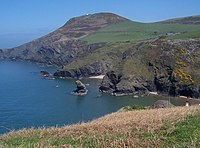
Welsh coast: Llangranog, Ceredigion, by Jayne Toyne, geograph.org.uk (Creative Commons)
Llangranog, Ceredigion (Jayne Toyne, geograph.org.uk)
I first became aware of family history as a child, when my father drove us around his native West Wales talking about who used to live in this place, or how we’re related to that distant aunt. It sounded like storytelling, wonderful tales about semi-legendary characters. I wish I’d asked him to write it all down. Still, a spark had been lit.

In 1994, my mother came back from a visit to her relatives in Australia with the thrilling news that we were descended from an Irish rebel and transported convict. Zap! That spark turned into a blazing flame and I was hooked on genealogy. She and I went to Ireland to do more research and started swapping emails with helpful Aussie rellies. Eventually we had so much family information that we published it as a book, A Rebel Hand: Nicholas Delaney of 1798.

Most of my research until late in 2011 was into Australian and Irish genealogy, history and local history. Then I found out that one Aussie 3x great grandmother was supposed to be a famous New South Wales ghost. Well, I had to know more. She and her husband/partner were both convicts, too, and I was inspired to look at other branches of my family tree.

Another convict ancestor came from Deptford, on the Thames, and my research broadened into London history and genealogy. And now I’m starting to look at the Welsh side of my family. Dad would have been pleased.

A side effect of my genealogy sleuthing has been learning about the history of the late eighteenth and early nineteenth centuries in the UK, Ireland and Australia, and of the places my ancestors came from. I’m fascinated by the social history, the day-to-day lives of people, the conventions of those times.

It was in November 2010 that I started blogging as a way to share my family history interests and discoveries. I soon found that there was a big world of geneabloggers out there, commenting, helping, sharing joys and sorrows and joining in challenges and memes. It was a wonderful discovery. There’s so much collaboration in the history, local history and genealogy and this new blog is a great example. If you’re not taking part already, why not join in? Here’s how.

I’ll finish by sharing some of my favourite blogs and websites for research, all free to view:
  • Claire Santry’s Irish Genealogy News is just what it says, all the latest information about genealogy for Ireland north and south.
  • Old Bailey Online, a collaboration between historians, has not only digitised the proceedings of London’s Central Criminal Court but gives lots of information about London life from 1674 to 1913.
  • Trove, where you can search Australian newspapers, books, manuscripts, images and much more dating from 1803. A lot of people using the digitised newspapers also collaborate by correcting the optical character recognition (OCR) transcriptions.
  • Welsh Newspapers Online, a new project from the National Library of Wales (Llyfrgell Genedlaethol Cymru).

Working together is so rewarding. Please join us in this new worldwide adventure by commenting, asking questions or even writing a post!

Thursday, 9 January 2014

Hi from Another Aussie Blogger

Hi all, firstly I would like to thank Julie Goucher and  Jill Ball for drawing my attention to, and inviting me to join the Worldwide Genealogy collaboration. I don't know about you, but I continue to be amazed at how the world of genealogy and family history research is advancing. Every day, new and innovative programs, social media  and access to more and more records and information becomes available. One of the keys to this advancement is the collaboration and sharing of information and ideas, so I am really thrilled to be involved in this new venture.

A little about me. I live in Sydney, NSW, Australia and work at The University of Technology, Sydney. Yes, another Aussie! I think I have been interested in our family history ever since I was a little girl! when my father used to entertain me with colourful stories of our family history as passed down from older generations. Stories of life on the gold fields, working in the timber industry, driving bullock trains and bushrangers! A collection of elements made to ignite the curiosity of a young girl.
 
 In my early twenties (such a long time ago) I began to seriously research our family history, collecting photos, stories, old letters, newspaper clippings, writing to extended family, searching cemeteries and visiting elderly relatives. The luxury of Internet research wasn't even thought of at this time.

For me the fascination of family research is more than the dates of significant events in family member's lives. I want to know what they thought, if they went to school, what work did they do, what significant social events affected their lives, why did they immigrate, how did they contribute to their community and so on! I believe it is this approach to family history that has led me to take up blogging. It provides me with a platform to share stories, discover connections and in my small way preserve some of our family history.
 
I started my first blog, Family Stories:Photographs and Memories, about two years ago, not really knowing where it would take me. It has been an interesting journey, with my interests, experiences and connections expanding continually. The realisation that most of the family stories that had been passed on to me were about my great grandfathers and great uncles led me to start a second blog, The Other Half of My Tree - stories of my female ancestors. I view both these blogs as a learning process and an opportunity to connect and share with those who are researching similar themes. I also have to admit that I often procrastinate, have so many stories to tell but as yet haven't put pen to paper.

As others have mentioned access to family research and genealogy is accelerating with amazing developments in new programs, social media and the opportunity to share and collaborate with others.  Let me share a couple of sites and tools that I have found useful. 

Evernote: I have found Evernote to be an extremely helpful tool for collecting all my family tree bits and pieces. You are able to tag and file articles, pictures and websites with appropriate family connections for further use and reference. On my recent trip to the UK I used Evernote to tag and file photos (taken with my IPad) of gravestones, church and street signs, family homes as well as interesting articles, maps and pages of books discovered while researching in the local library.

Pinterest: Besides being lots of fun, this visual tool is a great way to collect photos and links to articles and blogs on "boards". I have found Pinterest a rewarding method to share blogs and to link with other people interested in genealogy and family tree research.

Two web sites that are definitely among my favourite are TROVE and The British News Paper Archives. These web sites which are being continually updated, hold collections of newspapers from Australia  (TROVE) and the United Kingdom (British Newspaper Archives). Both of these sites have not only provided me with many clues in solving family tree links, but also allowed me to learn more about the times and events surrounding the lives of my ancestors.

Though I am an amateur genealogist come family tree researcher I am only too happy to share or assist others with their family tree discoveries if I am able. Looking forward to future interaction and collaboration!