Showing posts with label family stories. Show all posts

Wednesday, 19 July 2017

There Is a Story Behind that picture...

My first inclination over the last month was to write a pet peeve of mine...well others too, but my daughter asked for some copies of her wedding pictures, and so many memories came flooding in.
Thus, you get to be treated to the story behind the pictures in her wedding photos.

Not everyone would have wedding pictures such as these, but we did not use a professional photographer. It was her grandmother would loved, loved to take pictures. The decorations for the reception were done as a newly joined family effort. The groom's parents and the bride's parents met in the cultural hall of the church (LDS terms) and combined their thoughts and work to make it a beautiful reception. It meant stringing twine back and forth across the room at about 10 feet and hanging individually blown balloons from it to drop the ceiling. It turned out wonderful.
The bride's aunt, the groom's sister and the ceiling of balloons. 

That is just one story behind the pictures.

I will start with her dress. She had sewed each pearl on to the lace, that I added to the dress I made for her according to her specifications. There wasn't a pattern for the dress...the mom created it. In fact I was sewing the covered buttons on the sleeves as we drove from Houston to Dallas the night before the Wedding. They were sealed at the Dallas Temple.
Here is her dress.

There was another dress story that still is brought to remind me I forget things. Her sister's dress I discovered when getting ready to go to the temple had not had all the covered buttons done in the back. I had to sew her into the dress ... yeah there was a lot of teasing around that. Yes, I also made all the bridesmaid dresses.
The back of the dress that was sewn on. The little sister had asked to see the big sister's shoes.


They were both jokers and it showed through out their reception. They had both been threatening each other with a food fight regarding the cake cutting. The picture shows the end results.


They decided it was their place to entertain the attendees of the reception... They sang a family favorite "You Can't Roller Skate in a Buffalo Herd" by Roger Miller. It was a funny event, and fitted both so well. 

I am waiting on the groom to tell me what the grandmother said to him... may not be able to share. 

This was a memory lane for me, I hope you enjoyed it. My point is when going through those pictures, write the memory down that goes with it if you have it. Don't just write the name of the people in the picture on the back. 
I love the stories.

Friday, 19 August 2016

Being The Bridge.

I have considered this before back in 2014, but due to circumstances of age, losing loved ones, and time, it has come to the forefront of my mind again.  My mom and her twin sister who are the last of their core family of 13 children are nearing 90 and in ill health.

My mother on the left. 
My mother had been the bridge for years in her family reaching out to her nieces and nephews as well as siblings. Now she can't communicate because of health; this caused me to look around and realize that a fractionated family would soon to lose all connection if intervention didn't happen. My first cousins, I was not so much worried about, but the future generations, yes, that concerned me.
Part of the awareness was, I had been pulling my father's family back together reaching back to descendants of my great great great grandfather because they had all lost contact up to the present generation. I started with one cousin and built upon that.
One of the ways I have taken action,was to begin by making private family groups on Facebook and adding the cousins to the family group as I found and collected them.  By sharing pictures and stories, I have been able to reach down to 3rd and 4th cousins that have felt the call to learn of their origins. Below is examples of my journey. I have shared before, but I am sharing it again in the hopes to see others find inspiration to reach out and be the bridge to hold their families together.
When I first began my genealogy blog Branching Out Through The Years, my purpose was to preserve the memories of my husband known on the blog as "The Hero"for our grandchildren.  He really wanted to know them and wanted them to know him.  His choice was taken from him by cancer.
The Hero and I with oldest daughter's first son.

After that, I decided to write the stories of my associations with my relatives, aunts, uncles, grandparents for my children and grandchildren because for the most part they never met or really knew any of them.  This grew to posts about ancestors I wanted to know about and sharing findings with those who were also interested.
Old letters scrapbooked are loved by future generation seeking to know about an individual
When I started on my mother-in-law's family, it was very exciting for her.  She shared her personal stories.  Many times I sat on the floor at her feet and wrote down as she told me.  My sister-in-law also had her write down her personal history so now we have it in her writing.  There is something special about seeing their story in their handwriting as opposed to a transcription or memory by someone else.

Every time I find a book, story, document about an ancestor, I will connect it to the FamilySearch Family Tree , which is a collaborative effort, as a source for others and myself to go back and read to learn more about that ancestor. Their stories make them real, not just a name.
I have used my blog and memes to writing some of my stories. I know, if you don't tell the stories, they are lost and if you find a story you need to share. I can't tell you how many times I look at at family name and wish I knew something of their story.  I have envy that I have to fuss at myself about, when others talk about their family journals.  My dad's family was closed mouth, and now I am recreating their stories.
A great grandfather and one of his sons belonged to the Anti Horse Thief Association. At least they weren't horse thieves. 
There has been research and studies done that shows how sharing your family history and stories shores up your family members when they have challenges, or even national trauma. It is called The Stories That Bind Us.
 I ask you to join in saving the stories for future generations, Be the catalyst in your extended families for sharing, caring, and reaching out to pull cousins together.

as a footnote: I apologize for missing a couple of months. I have an excuse, we had our first core family reunion, first time some of the family had met new members, and first time some had seen each other in 8 years. It was an awesome happening... The other excuse was my mother was sick. Hope that things are back on an even keel again and I will see you next month. Blessings wished for all ya'all from Texas, United States of America.

Tuesday, 12 July 2016

Researching Family Stories

 Did Aunt Ruth work for the grandson of William Ewart Gladstone Prime Minister ?


Family Photograph in possession of Gary Gadsby, digital copy supplied to Hilary Gadsby


I have wanted to prove this Family Story ever since I was told about it in a letter from her nephew.

Gary Gadsby Mr ([STREET ADDRESS FOR PRIVATE USE]; Wantage, England) to Hilary Gadsby, letter, not dated circa 2003/2004; privately held by Gadsby, [STREET ADDRESS FOR PRIVATE USE]. Cit. Date: 10 Jul 2016.  


So with the launch of the 1939 Register at Find My Past I started looking for her. I had her exact date of birth from the death registration and knew she had never married.

Ancestry.com., England & Wales, Death Index, 1916-2007; digital images, Ancestry.com Operations Inc, Ancestry.com (http://.ancestry.co.uk/). Rec. Date: 10 Jul 2016.

Despite various research strategies I had been unable to find her or anyone faintly resembling her in the indexes.
Even when I was able to view the images I could find no trace so I decided to leave it and come back later.

On 9th July The Surname Society held the first of their hangouts for July and I joined in as Colin Spencer presented on the 1939 register. He pointed out that some of the redacted images had been altered and that due to poor transcribing we may have to do a wider search.
Whilst he was presenting I decided to try and find some of those that had been elusive previously and by using a wildcard I managed to find an entry which could be Aunt Ruth, I also found her missing brother, and both were counties away from their birthplace. But importantly the residence matched what I had been told by her nephew. The birth year had been transcribed as 1910 instead of 1901.


Now to prove that the Stephen (P should have been a D) Gladstone was in fact a grandson of William Ewart Gladstone.
Searching at Find My Past I was able to find several documents to prove my assertion.

He was born too late to have appeared on the 1891 census so I needed to find a birth registration and a 1901 census entry that showed him living with his parents.

 FindMyPast.co.uk, England & Wales births 1837-2006; digital images, FindMyPast, FindMyPast.co.uk (http://.findmypast.co.uk/). Rec. Date: 10 Jul 2016.


FindMyPast.co.uk, 1901 England, Wales & Scotland Census; digital images, FindMyPast, FindMyPast.co.uk (http://.findmypast.co.uk/). Rec. Date: 10 Jul 2016. 

Find My Past also has scanned images of the registers for Hawarden, Flint and I found an entry for Stephen Deiniol Gladstone on 29th December 1891 with a birth date recorded as 9 December 1891.


FindMyPast.co.uk, Flint Baptisms; digital images, FindMyPast, FindMyPast.co.uk (http://.findmypast.co.uk/). Rec. Date: 10 Jul 2016. 

His father was the Parish - Priest and was recording much more than was required. If you look in the margin he has recorded, what appears to be, the maiden name of the mother. This is great news for anyone looking for those common surnames.

So what about the 1911 census, was Stephen who would have been 19, still living with his parents?

I can find no trace of Stephen Deiniol Gladstone in 1911 census for England and Wales. I have however found other records which may add to my knowledge of his life but are not relevant to this research question.

Where was Stephen Edward Gladstone the father? 
He is shown here in 1911 living in Barrowby with numerous servants. 

Here is the 1911 census for Stephen Edward Gladstone,


FindMyPast.co.uk, 1911 Census for England & Wales; digital images, FindMyPast, FindMyPast.co.uk (http://.findmypast.co.uk/). Rec. Date: 10 Jul 2016. 

and below is his burial in Hawarden, Flint.


FindMyPast.co.uk, Flint Burials; digital images, FindMyPast, FindMyPast.co.uk (http://.findmypast.co.uk/). Rec. Date: 10 Jul 2016. 

Did Ruth work for him before his death in 1920?
Barrowby and Gunby, where Ruth was born, are not far apart.


So we know who the parents were the next stage is to find a link to the parents of Stephen Edward Gladstone.
I looked at several census records and found that in 1861 he was a scholar at Eton and not with his family. 


FindMyPast.co.uk, 1861 England, Wales & Scotland Census; digital images, FindMyPast, FindMyPast.co.uk (http://.findmypast.co.uk/). Rec. Date: 10 Jul 2016. 

and on the 1851 census he is listed as nephew of the head of household.

FindMyPast.co.uk, 1851 England, Wales & Scotland Census; digital images, FindMyPast, FindMyPast.co.uk (http://.findmypast.co.uk/). Rec. Date: 10 Jul 2016. 

Can I find anything more to help my search?
How about a marriage record.


Ancestry.com., Liverpool, England, Church of England Marriages and Banns, 1813-1921; digital images, Ancestry.com Operations Inc, Ancestry.com (http://.ancestry.co.uk/). Rec. Date: 10 Jul 2016.


and to complete the puzzle a christening record would be great.


FindMyPast.co.uk, Westminster Baptisms; digital images, FindMyPast, FindMyPast.co.uk (http://.findmypast.co.uk/). Rec. Date: 10 Jul 2016.

We can prove those stories even when they were relatively recent but I would say I am extremely lucky here.
Most, if not all, of these records were not available online when I started my research and many areas have little available on the major websites. 
Even proving a connection to the famous can be difficult.

For anyone who is interested here are a couple of Wikipedia pages about the Gladstone Family.
Gladstone Baronets
William Ewart Gladstone

Tuesday, 11 August 2015

Keeping Family History Stories Alive through Fiction - Part K - "Dr. Bill" Smith


Keeping Family History Stories Alive through Fiction
Part K - "Dr. Bill" Smith
Romance in Family Saga Stories

Almost by definition, there are some romance elements in family saga stories. Agreed? Hard to get to the second, third and fourth generation without a little romance. And, admit it, we all enjoy a little romance, now and then.

Do you have a favorite family tradition story about a romantic experience of your ancestors? Most of us do. But, do you want to tell that story for the world to know? Perhaps. Perhaps not. One way, of course, to share a great story is to incorporate it in a fictional family saga tale. I’d like to demonstrate with an example… two actually.

My first novel focused on a short few months in the life of a family in turmoil. Getting through that turmoil filled that novel. I followed up with a novella that was a mystery story set immediately following the first novel, using many of the same characters, and adding a couple of key new ones.

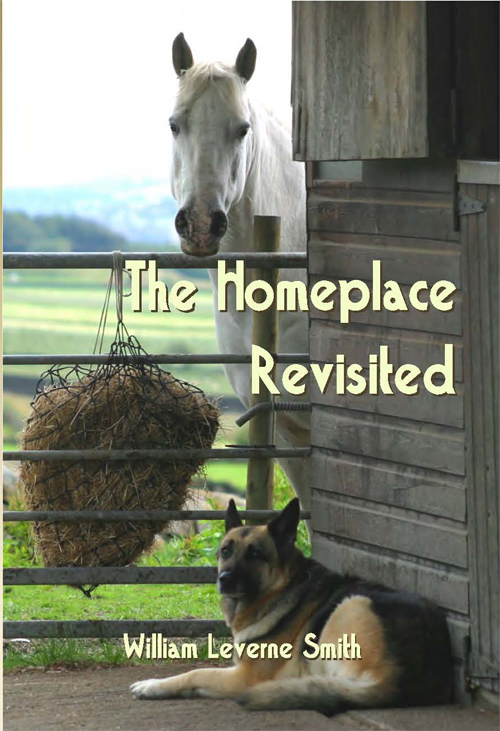
For a change in pace, in the second novel, “The Homeplace Revisited,” I focused on two teenagers from the “Back to the Homeplace” novel. They went off to college, and graduate school, and returned to their hometown as an attorney and a veterinarian. Of course I am talk about half-siblings, Christopher Ogden, the attorney, and Jennifer Bevins, the veterinarian.


Christopher concentrated on his undergraduate degree, then law school, then joined his ‘father’ in the small town law practice. Dating and girl-friends were the farthest thing from his focused mind. Until he met Amy one summer day. Suddenly, he had feelings arise in him that he had not experienced in a very long time, if ever. Then, within a week, he also re-met Nicole. They had been in high school together, a year apart, but had never really been close friends. He again had a similar reaction. His head was spinning, to say the least. He began dating each girl. The path he followed is an interesting one. I hope you’ll read “The Homeplace Revisited,” to learn more. He proposed at the end of this novel. We know he married Nicole, in “Christmas at the Homeplace,” but why and how make worthwhile reading. Does it remind you of anyone you know?

Jennifer’s story fits this blog well, of course. As she set up her large animal veterinary practice in her home town, she also began to spend time with her Aunt Karen doing genealogy research on their family. She visited libraries, set up a new computer program (remember PAF?) she just learned of (this was 1996), and is happy to talk about her findings with anyone interested in listening.

At a family gathering, she met the son of a law partner of Christopher and his father. He is a young attorney, and was just beginning to consider the possibility of joining the small town law firm himself. His mother had recently died of breast cancer, and he wanted to know more about her family. This subject came up in their conversation. They now had a connecting common interest, that became a passion for each of them. They traveled to libraries together doing genealogy research, and more, of course. She helped him. He supported her efforts. Did I mention that a romance developed? She got her ring on Christmas Day of 1996 as the third novel,  “Christmas at the Homeplace” concluded.


So, now you know, “Christmas at the Homeplace” is about creating families and homes as well as people “coming home” which is the general theme of the novel. A soldier coming home from a war zone to his family (wife and two young children) certainly has romantic overtones, as well, sticking with our theme for today. His youngest was born after he shipped out nearly a year before. He had not seen her in person yet. It makes a very happy Homecoming, as “Christmas at the Homeplace” concluded. And other story lines, for another time. You may want to read it, as well, as the holidays approach.

P.S. For an independent reader's opinion, see:  http://jaquo.com/william-leverne-smith/


See you next month! I love to read comments, so please leave one or more, including questions. 

Dr. Bill


**********

"Dr. Bill" (Wm. L.) Smith can be found regularly at his genealogy blog, "Dr. Bill Tells Ancestor Stories" <http://drbilltellsancestorstories.blogspot.com/> or his family saga blog, "The Homeplace Saga," <http://thehomeplaceseries.blogspot.com/>. He is an original contributor, as The Heritage Tourist, to the "In-Depth Genealogy" blog with a monthly column in the "Going In-Depth" digi-mag. He also writes a monthly post for the Worldwide Genealogy Blog.


Saturday, 11 July 2015

Keeping Family History Stories Alive through Fiction - Part J


Keeping Family History Stories Alive through Fiction
Part J
"Dr. Bill" Smith

 Do you read short fiction, or just fiction in books?


When most of us think about reading fiction, we normally think about reading books, right? Romance novels, mystery novels, suspense and thrillers - all come mostly in ‘full’ novel length. How about family sagas? Assuming a few of us are still actually reading family saga stories, of course. Dune, The Godfather, The Thorn Birds, … each bring to mind the novel length… sometimes very long novels.

I’ve mentioned before that although I started out writing novels in my “The Homeplace Saga” series of family saga, historical fiction stories, I’ve gone exclusively to writing shorter ‘episodes.’  And now, in recent weeks, I’ve begun to compile those episodes, about 20 at a time, into very readable ‘eBooks’ that I hope will meet the needs of many readers. Your feedback would be valuable to me on this, if you can.

The latest release is actually from the “Weston Wagons West” suite of stories, that actually also tell the story of my mother’s Kinnick surname ancestors. You may recall, in the Weston Wagons West stories, I use the fictional Weston family descendants who ‘live near and interact with’ my ancestors, used fictitiously. It is a fun approach to writing. The original stories were written as the ‘Jx’ episodes at HubPages, online, at:
http://drbill-wml-smith.hubpages.com/

Now, I have created an eBook of those 20 episodes:


The eBook is available at: http://www.lulu.com/spotlight/drbillshares

Would you rather have all the 20 episodes together, to read straight through, on your reader of choice? Or, is reading them one by one, online more useful? I like having both options. I hope it is helpful, and not confusing to my readers. Again, your feedback is valuable. I hope it also makes you think about how you might like to tell your stories.

Certainly, I do believe that writing the small, shorter episodes/chapters (about 1,250 words each) is easier than having to put together a 20, 30, or 40,000-word work before you see a ‘final product.’ Maybe my attention span has just gotten shorter. Is it just me, or do you feel somewhat similar?

I hope a few of you will get the eBook, read it, and let me know how you feel about it. That would be very interesting! Thanks, in advance.

From the family saga story-telling point of view, especially for the very early years (1600 through 1800, for example), each episode can focus on ‘one family’ - defined as a married couple and their children, perhaps. Of course, there will be overlap, from episode to episode, as there always is in family stories. Whether or not you include the death of the grandparents in an episode, for instance, can make quite a difference in how you tell your story, and, what you include in each episode. Does that make sense? I think it does. The number of children, and how far they are spread apart, is also an important consideration. Do older children get married before the younger children are born? [My mother once told me she might have had another child (a sixth), until I went and got married - she didn’t want to be a grandmother having a baby. Not a big deal, but an interesting thought, and story.]

If you hadn’t guessed already, I’m trying to get you to thinking about stories you know in your own families, from your research, that you might write as a short story - 1,250 words or so. Are you ready to give it a try? Perhaps you have, already. Did you post it on your blog, or keep it on your computer to ‘think about’ for a while? I think we are making progress here. Be sure to let me know, in the comments.


See you next month! I love to read comments, so please leave one or more, including questions. 

Dr. Bill ;-)


**********

"Dr. Bill" (Wm. L.) Smith can be found regularly at his genealogy blog, "Dr. Bill Tells Ancestor Stories" <http://drbilltellsancestorstories.blogspot.com/> or his family saga blog, "The Homeplace Saga," <http://thehomeplaceseries.blogspot.com/>. He is an original contributor, as The Heritage Tourist, to the "In-Depth Genealogy" blog with a monthly column in the "Going In-Depth" digi-mag. He also writes a monthly post for the Worldwide Genealogy Blog.


Thursday, 11 June 2015

Keeping Family History Stories Alive through Fiction - Part I


Keeping Family History Stories Alive through Fiction
Part I
"Dr. Bill" Smith

Historical Fiction can work as a “cousin-finder”

I funny thing happened when I used some real family names in my historical fiction stories…

I found a cousin… several cousins, actually… well, some of them are “cousins-by-marriage” - but, that is beside the point. The point is: IT WORKED!! ;-)


I have written a number of series of historical fiction stories here:
http://drbill-wml-smith.hubpages.com/ - 64 total stories, as I write this…

Source: http://www.freeimages.com/photo/927442

This “Weston Wagons West” set of stories follows three brothers (and their descendants), who came to America from England, in the 1600s, and settled in Virginia, Maryland, and Massachusetts, much as many of my actual ancestors did. The ‘twist’ to these stories is that they lived near and interacted regularly with my actual ancestors. By weaving the fictional stories of these Weston descendants with what I know from research of my real ancestors, I am able to tell their stories in fuller ways, and interesting ways, than just writing about the ancestors. This is especially true of these very early ones where only a few, barebones facts, are actually known and verified. It is fun, and now, also fruitful.

Some XXXXX (a family surname) cousins apparently “Googled” their surname and got one of my stories. The sharing on their Facebook group page was fascinating for me to read, as the author of the stories, before they actually contacted me and discovered this is my family as well as theirs. One cousin said: “Interesting historical fiction. What connection does the author have with the XXXXX?” Another replies: “Sorry, I didn't get that far. But I did find them in Illinois. I'll be checking on that.” Next, she posts a link to my author Facebook page (William Leverne Smith). Then adds, “..how in the world did he choose this actual family????” followed by: “How did he know of them?” The first one adds: “That's what I want to know. I will probably contact the author and find out what he knows.” The other replies: “It seems as though he must be in the family somehow. He has names and places....of course you can get all that easily but why them? I'm anxious to know.”

She then posts my “Dr Bill Tells Ancestor Stories” blog with XXXXX stories in it, followed by the Google Books link to my “Kinnick Early US Family History” book, that has XXXXX family in it.  …

Later that day, I got both an IM on Facebook and an email note. We introduced ourselves, and now I am part of the XXXXX Facebook group, and we are enjoying sharing family stories.

This experience was just too much fun not to share with you all. I’m sure most of you have had similar experiences, but this was so interesting to be able to go back and actually see the process they used to find me, based only on my historical fiction stories using the XXXXX family name. P.S. There are literally hundreds of family surnames in my writing, so I simply used the XXXXX here to keep it simple, and, I hope, not distracting.

Have you had similar experiences? Have you written about them? I’d love to hear them!


How many new cousins might you find if you used historical fiction to keep alive your family history research?

See you next month! I love to read comments, so please leave one or more, including questions. 

Dr. Bill


**********

"Dr. Bill" (Wm. L.) Smith can be found regularly at his genealogy blog, "Dr. Bill Tells Ancestor Stories" <http://drbilltellsancestorstories.blogspot.com/> or his family saga blog, "The Homeplace Saga," <http://thehomeplaceseries.blogspot.com/>. He is an original contributor, as The Heritage Tourist, to the "In-Depth Genealogy" blog with a monthly column in the "Going In-Depth" digi-mag. He also writes a monthly post for the Worldwide Genealogy Blog.


Saturday, 6 June 2015

A Marker and a Memory~ When Did Her Father Die?

 My maternal Great Grandfather, Manning David Daughrity, Jr. was born and died in Sumter County, South Carolina. David, as he was known to his family, is buried in the Sumter City Cemetery.


 Finding David's headstone at the cemetery was exciting. I had discovered his birth and death dates.
 Or had I? Nagging at the back of my mind was my Grandmother,  Azile Juanita Daughrity Roberts Sullivan (1921-2009) telling me that the stone was not the original. She told me that she and her sisters put new markers on their parents graves, and the one for their father was wrong. Her memory was that he died around Christmas because she remembered being so sad that holiday season.
     A search of Manning David Daughrity's death certificate has been unsuccessful. Many attempts have been made by myself and other Daughrity family researchers over the years.


  The Memorial Record from David's funeral has the following information


Memorial Record
Manning David Daughrity
9th June  1931

 But who filled out the Memorial? Was it done at the time of his death or years later? What about the information, is it correct?
  The family Bible also has Manning David Daughrity's death as 9 June 1931, but the same questions arise. Who filled it out and when?

 A search for an obituary for David Daughrity produced the following from The State newspaper in Columbia, South Carolina. It is dated 10 June 1931.  The report is of the death of M.D. Daughrity on 9 June 1931.


M.D. Daughrity Obituary
The State, Columbia, South Carolina
10 June 1931.pg. 6


 Pretty convincing evidence that Manning David Daughrity, Jr. died on 9 June 1931.

One more piece of evidence convinced me of his death date. 

 A day of research at the  Sumter County Genealogical Society in Sumter, South Carolina provided me with the funeral home record for the death and burial of M.D. Daughrity.

Shelley-Brunson Funeral Home Record
M. D. Daughrity, 9 June 1931, pg. 240

The record from Shelley-Brunson Funeral Home, Sumter, South Carolina is consistent with the newspaper report of death.
 Also, a deed was found for Cemetery Plot  No. S506 bought by Mrs. M. D. Daughrity with the date 13 June 1931.  

 With these pieces of information, it is clear that M.D Daughrity died on 9 June 1931 and was buried on 10 June 1931 in the Sumter City Cemetery. 

    So Grandmom was right. Her father's marker was wrong.
 He didn't die at Christmas as she remembered, but the death date was not correct.
 What caused her to think her father died in December?  

I think I may have found out the answer to that question.


Shelley-Brunson Funeral Home Record
Mary E. Dority, 18 Dec. 1930, pg. 256
  
   While searching through the Funeral Home records for David Daughrity, I came across the entry for Mary E. Daughrity (1843-1930), David's mother and Grandmom's Grandmother. The date of her death and burial may provide the reason for the memories of an unhappy holiday season. Grandmom was remembering the death of her Grandmother, who died on 18 December 1930 and buried the next day.
 Family stories and memories usually have some truth to them. Grandmom's memory of sadness due to a loved one's death at a time that should have been a season for celebration was correct.  The family member mourned at Christmas in 1930 was her beloved Grandmother. Following six months later was the death of her father. Surely, the Christmas Holidays of 1931 was a hard one for the family as well.
   A marker and a memory. Proving that more than one source is needed to verify information and that family stories, while not always correct, can lead us to our ancestors. 

What family stories have aided you in finding your people?
Thanks so much for stopping by!

Cheri


Monday, 11 May 2015

Keeping Family History Stories Alive through Fiction - Part H


Keeping Family History Stories Alive through Fiction
Part H
"Dr. Bill" Smith

Do you recognize the Abigail Adams quote, “Remember the Ladies”?


Abigail Adams, from a painting by Gilbert Stuart

As her husband, John Adams, one of the Founding Fathers of the USA, was heading off to meet with the Continental Congress, Abigail Adams famously admonished him, “Remember the Ladies.” The men who served as Founding Fathers, and many of their male counterparts since, had made a habit of ignoring the ladies, as many of you will attest, I’m sure. I mention this for two reasons.

First, in doing our family history research, from our first days of getting serious about it, in the mid-1990s, my wife and I each pledged to ourselves and each other that we would faithfully research the female lines of ancestor couples as thoroughly, or more thoroughly, than the male surname line. At that time, many of the male lines had historically been done already in much more detail. It was harder to research the ladies’ side, by far, because marriage information was not always readily available. Often, only the given name of the female marriage partner was know, if that. Regardless, we were well rewarded for our efforts. Many a brick-wall on the male line, as perceived by others, was overcome by carefully examining the maternal line. Mothers, Grandmothers, and Aunts are crucial to family history research. How is that for stating the obvious!! ;-)

Second, when writing fiction to keep family history stories alive, not surprisingly, telling the ‘ladies’ stories’ is critical to being complete… as well as very interesting. So much so that many, if not most, of the stories I now write focus on the point of view of the women in the family saga, historical fiction series that is my creation.

My first novel, that began the family saga, “Back to the Homeplace,” was based on the concerns of a woman, a widow, of keeping her Century Farm, intact and in the family, on her passing. Her family had originally settled the land in 1833 while the story was taking place in 1987. She had strong feelings for her family and her land. She wanted to be sure her four children carried those same feelings forward to future generations as well. Her unorthodox ‘video will’ set that plan in motion. She was a strong-willed woman at the core of the story.

You may recall that last time, when we were talking about theme, I said the following:
In my “The Homeplace Saga” series of family saga, historical fiction stories, the theme is: “it is critically important to retain the family farm, in one piece, in the family.” It was the theme of the original novel, and that theme runs through all four novels, two other books, and hundreds of short stories that have been written in the series of stories (see: <http://thehomeplaceseries.blogspot.com/>).

As the family saga has developed, as I’ve mentioned previously, I went back and reconstructed (created, actually, of course) that 1833 to 1987 time period for the saga. The first part of that period, 1833 to 1876, including the Civil War period, was told in a series of short stories. These were collected into book form as: “The American Centennial at the Homeplace: The Founding (1833-1876).” From the original settlers to the reconstruction of the town and surrounding rural community following the war, the women played key roles as told in the stories collected there. These roles reflect the research my wife and I have discovered as we have done our family history research. The women served not only as mothers and wives, but took on just about every role that men had, but perhaps not as often then as many do now. These are reflected in my family saga stories. You can do the same with your family stories, to keep them alive.

[Each book mentioned is available at amazon.com]

During the second half of the 1800s, in the stories, it first appeared that a man, William McDonald, the grandfather of the widow in 1987, was primarily responsible for gathering additional lands around the original homestead to create the Century Farm of 1987. However, on closer examination, the story really was that he was strongly influenced by, even guided by, his mother in the entire process. In fact, she had been ‘planning’ this from the time of his birth, along with her husband. But, she was the guiding force. How she did it, and why, represents the core theme of the current set of short stores being created for “The Homeplace Saga” as it is now continuing to develop.

[These short stories are available, at no charge, at: http://homeplaceseries.hubpages.com/]

What will your family saga look like to keep alive your family history research?

See you next month! I love to read comments, so please leave one or more, including questions. 

Dr. Bill


**********

"Dr. Bill" (Wm. L.) Smith can be found regularly at his genealogy blog, "Dr. Bill Tells Ancestor Stories" <http://drbilltellsancestorstories.blogspot.com/> or his family saga blog, "The Homeplace Saga," <http://thehomeplaceseries.blogspot.com/>. He is an original contributor, as The Heritage Tourist, to the "In-DepthGenealogy" blog with a monthly column in the "Going In-Depth" digi-mag. He also writes a monthly post for the Worldwide Genealogy Blog.


Saturday, 11 April 2015

Keeping Family History Stories Alive through Fiction - Part G - "Dr. Bill" Smith


Keeping Family History Stories Alive through Fiction
Part G
"Dr. Bill" Smith


Have you identified a theme that would be useful if you wrote a family story?

For this discussion I am going to assume that you have gathered a considerable amount of family history information, including social context material such as obituaries, wedding notices, newspaper clippings, family letter or journals, and so forth; not just the bare bones vital statistics. You may have even written sketches of some of your ancestors, perhaps even other family members and friends… these would be nonfiction writing, of course, assuming you ‘stayed with the facts’ in writing them.

If you now had a desire to save some of these family stories in fiction form, one approach would be to look for themes running through one or more of the stories. [Actually, you would also want to do this if you wanted to write a good nonfiction family history, as well!]

Theme is defined as a main idea or an underlying meaning of a literary work that may be stated directly or indirectly. [Source: http://literarydevices.net/theme/]

For example, in my “The Homeplace Saga” series of family saga, historical fiction stories, the theme is: “it is critically important to retain the family farm, in one piece, in the family.” It was the theme of the original novel, and the theme runs through all four novels, two other books, and hundreds of short stories that have been written in the series of stories (see: <http://thehomeplaceseries.blogspot.com/>).

In looking at the stories, and specifically at the stories of individuals and of families, can you identify an overarching theme or idea that binds certain of the stories together? Are there perhaps two or three? You may want to choose one that you can identify and then limit your first fiction story to tell to the people and families that best share that particular story/theme. Perhaps follow-up stories can be developed from the others.

Once you have identified that first story arch/theme to work with you will want to begin to identify the main character or characters that best tell that specific story. Honestly, this is where the fun of writing fiction really begins, to me. Just writing this gets my creative juices flowing wanting to stop writing this and DO IT! … Sorry, I digress. Part of the ‘fun’ here is that you can pick and choose who is included in the story and who is not. You can take a main protagonist, perhaps, who is a man in real life, and create a female in your fictional story to play that role. You can have three interesting characters in a family rather than the four or five ‘not so interesting’ members in an actual family. You can make a composite of the characteristics of three actual people into one really complex person perhaps. I have done each of these, from time to time. Other fiction writers have done each of these. A few examples come to mind, that might be instructive. 

Laura Ingalls Wilder c. 1894


We all know Laura Ingalls Wilder, of the Little House on the Prairie series of books, and of course, the television series adaptation of her stories. Her original writings have gotten much detailed review in recent months, and some interesting examples come out of that. For example, her stories have Ma and Pa and their three girls, in the early stories (books). There was actually a young brother, but Laura intentionally left him out because he didn’t really fit in with the story she wanted to tell. Her work ‘feels like’ nonfiction (autobiographic, even, but it is not entirely that, of course), but it is really fiction, of course. For another example, Nellie (that we all love to hate, as portrayed in the television series, especially) was actually a composite person, in Laura’s books, of three actual friends from her youth. Laura’s biographers have learned these facts about her fiction writing from examining Laura’s manuscript, an actual autobiographic story, which was never published until recently, “Prairie Girl.” Comparing that story with her fiction books has become a ‘cottage industry’ in itself, in many ways.

How do you feel now about creating a fictional story to tell about some of your family history research? Does this get you excited to go DO IT, or does it turn you off at the whole idea? I’m sure there are some of each, among my readers out there. Each of us must make our own individual decisions, of course. What I am trying to do is provide some very interesting options that you may not have even considered before. If I have made you think about the process, even just a little bit, I will feel pleased that I did my job.

See you next month! I love to read comments, so please leave one or more, including questions. 

Dr. Bill


**********

"Dr. Bill" (Wm. L.) Smith can be found regularly at his genealogy blog, "Dr. Bill Tells Ancestor Stories" <http://drbilltellsancestorstories.blogspot.com/> or his family saga blog, "The Homeplace Saga," <http://thehomeplaceseries.blogspot.com/>. He is an original contributor, as The Heritage Tourist, to the "In-DepthGenealogy" blog with a monthly column in the "Going In-Depth" digi-mag. He also writes a monthly post for the Worldwide Genealogy Blog.