Showing posts with label Julie Goucher. Show all posts

Thursday, 1 January 2015

New Year - New Opportunity?

The New Year is always full of optimism and a chance for a change. For those of you who journal it has for me that same fuzzy feeling when you start a new journal. Always in the clearest and nicest of handwriting only to become a mess within a few days.


There has been much debate and excitement in the blogging world of the Genealogy Do Over planned by Thomas McEntee.

I have spent time reflecting on will I start from scratch or simply tweak the opportunity to suit me?

I turned to my journals. My very first note about my family history was made in July 1986. Yes, almost 30 years ago. I started early, what can I say!

Do I want to really start again? I therefore spent the Christmas period reflecting and re-evaluating what material I already had. My system is not perfect, but then neither am I! but Genealogy Do-Over is an opportunity to assess your genealogical state of play.

Three out of four of my maternal Great Grandparents were born in Surrey, Sussex and Hampshire. In particular that small area where the three Counties meet. So it was probably no surprise that I eventually discovered that my maternal Grandparents were sixth cousins. My family history in these three Counties spans the best part of 300 years, with some surnames appearing twice.

My genealogical program of choice is Roots Magic, although suitably inspired by +Tessa Keough I have started to dabble with Legacy and in particular hone in on the knowledge of the Legacy Virtual Users Group on Google+. My Genealogy file is called Main File and as you might expect it starts with me, expands to include my husband and his family which is more problematic than mine for several reasons. The file then goes back through my maternal line and includes collateral lines because that can give information that on it's own appears unconnected, yet when pieced together provides other clues and angles for research. I also have a set of folders called Main File. In those folders are copies of the documents, that relate to the details in the electronic version and I have a set of electronic folders containing the same.

My Genealogy Do-Over is going to be a chance to reassess what information I have, starting with me. Checking everything is referenced and cited.  As I leave no descendants could a descendant of a collateral line take my research and follow my documentation? As I explore what I already have I will of course identify what I do not have. That is an opportunity to explore my family peers, my late Mum's Cousins and so forth. Building my Genealogical to do list.

Over the course of the last year or so I have added biographical information on various ancestors to my website and I plan to wove that into the 52 Ancestors in 52 weeks program.

This blog continues to go from strength to strength. We see a slight change in the structure with the writer's & author's from 2014 in the main moving to every other month. We say cheerio to several writer's who want to get on with various domestic things, but who may join us in the future and some of our writer's are in for the long haul and writing every month. We also have some really great writer's joining.

Would you though like to join us? The only stipulations are
  1. You write on your scheduled day (or make arrangements to swap!)
  2. The post must be related in some way to local or family history or history in general.
To see the available slots and current authors please CLICK HERE and if you are interested then please do leave a comment.

That's it from me until next month.

Happy New Year!
Julie

Sunday, 12 October 2014

Memories - How do we keep them?

Are you a Memory Keeper?

This photograph is a group of nurses? who worked at a military hospital near Southampton, Hampshire 
Who knows who they were?


As we get older and we start to lose the older members of the family we realise that much of what we want to know about our ancestors has been lost. The official documents may survive but what happened to those individual memories have they survived. In most cases the sad truth is that much of our oral history dies with each generation.

Whilst today's generations may be more literate than their ancestors with the advent of computers are we changing the way in which we record our memories and if so how do we capture them for the generations to come.
This blog post by author Steve Robinson illustrates what I am trying to say Technology, and its impact on genealogical research.

Many genealogists own or have created scrapbooks containing pictures and mementos from their family, others have albums of photos and cuttings and other documents in paper or digital format. 
The organised amongst us have them carefully catalogued, but for many this is a project in progress. 
Most genealogists will be like me and have a pile of unidentified photographs that we will probably never identify.


So we already have plenty to keep us occupied surely just getting on top of the photos and documents is enough. 

Is this really all that we want to pass on to the next generation? 

Will they be interested in a bunch of photos and papers?

We can interview the family we are in close contact with but what about the more distant family?

Devon Lee in her blog post from the 10th October discusses about how we might inspire the younger family members to preserve the stories of today which is part of what I am trying to do with a project I am trying to set up.

If you have not been involved with Julie Goucher's Book of Me then I suggest you take a look at it, and ask as many members of the family as possible to participate with as many of the prompts as possible.
Don't forget to ask them to either send you a copy or let you know where they have recorded their memories and thoughts. This way you can provide your descendants with the opportunity to connect with other members of the family and their reflections. 

As many of the younger members of my family are on facebook, I am going to set up a secret group there, so that our family can share photos and memories and post anything they want to about their memories of the family. I will provide links to the Book of Me and any other sites that may help with ideas, and also provide suggestions on where and how to record anything they want to leave as a record, but not share with the group.

If I am in contact with family not on facebook I will create a pdf file that I can email to them to let them know what I am doing and request that they send me anything they want to add to the group.

The ultimate goal is to get as many of the family as possible involved so the whole thing needs to be flexible and hopefully the technology will work for us.

We all have our own memories and see events in our lives from our own perspective. Knowing more about siblings and cousins and their memories of the family will leave much more of a legacy for everyone.

Wednesday, 1 October 2014

Worldwide Genealogy - One Lovely Blog!


In the last month I have been awarded over at Anglers Rest, and then here, twice along with my fellow writers the One Lovely Blog Award.

Some other blogging buddies know that I feel about awards, and I wrote about it HERE back in January 2013 when I stated that I would accept gratefully in the spirit they were given, but would not pass along. Instead I would contribute to the Kiva Project via the Genealogists for Families Team. I still do support the Kiva Project and will be making a loan via the site today.

The One Lovely Blog Award is quite an honour for this blog. It represents the knowledge, friendship, expertise and collaboration of a group of like minded people separated by various expanses of water, land masses and time zones. As I type this on Wednesday afternoon it is already Thursday for several collaborators and the middle of the night for others. 

What was a random suggestion about a year ago was taken and supported by a group of genealogists and historians. Overall, we deliver each day of the month, a different view or aspect of history. We share an abundance of knowledge that is different to each other. That knowledge is respected and welcomed. 

As we head into 2015 the current writers are going to shuffle backwards, writing every two months. That means we now have twelve spaces for new writers to join us. There are no rules, well not many. Simply write on your given day and deliver a blog post that represents the historical, genealogical or local history arena. That is pretty simple eh?

There is no financial reward, what there is though, that will yield more than money is the spirit of friendship, cast across the globe ignoring all the prejudices that there are in the world. So, if you are in the market to spread your writing wings, to deliver a blog post every other month, just six a year, and want to make some new friends or perhaps join some existing ones then this lovely blog, the Worldwide Genealogy Blog is the place to be! 

Please leave a comment ensuring I can email you back, or feel free to email me using the subject line of Worldwide Genealogy Blog.

Thursday, 1 May 2014

History is all around....

Is it me, or does the time seem to fly past? My Grandmother always said that was a sign of ageing and perhaps she was right.

At the start of this blog I had planned to share an galaxy of historical information with you all each month. Sadly, my domestics and the loosing my Mum stopped my organic flow of writing. I became somewhat absorbed in a variety of things linked in some way to Mum. We all have our own way of dealing with death and the aftermath of something that is inevitable and yet has the power to know you so out of kilter.

A few months ago I was talking to +Tessa Keough who used the expression of "tooting your own horn".The UK equivalent is blowing your own trumpet and I much prefer the US version. Anyway, I am not one to blow my own trumpet, that involved too much breath and tooting my own horn is well, simply not done, or at least I don't feel comfortable with that. BUT, I am going to, just this month and hopefully you will see why in a paragraph or so.

Then earlier this week, I wrote the phrase, "Yesterday is already history" and indeed it is. The hardest thing I have ever done was to add my Mum's death date to my genealogy program. I can not even express how hard that was. The realisation that Mum, my Mum, had passed from being a loving living soul to an ancestor in the blink of an eye. The good genealogist in me, wrote the obituary with all the genealogical loveliness I could manage.

I then was thinking that so much of what we each do, demonstrates our character, our interests. All those little bits of randomness that take an individual with their dates, in various stages - what I call hatched, matched and dispatched (I read that somewhere, can't recall where), and turn a name and dates into an individual. A person who does all the things that we do, that unless captured are simply cast aside with the test of time.

So having set the scene, I am ready to toot my own horn.  I do hope you all ready to read, share and toot that horn with me and for yourself.

photo 1
One of two quilts made by Christine Butcher
in the ownership of Julie Goucher
Anyone who has read my blog posts of late, or seen my Google+ stream will already have seen mention of this. Mum was a very keen seamstress. It took me heading into adulthood to realise just what a skill it was for Mum to make some of my dresses, knit some of my woollen clothing and create a quilt that I had on my childhood bed. I didn't see the wonder, didn't express the gratitude and didn't appreciate it for the skill and love Mum exhibited. Mum on her demise left more fabric, sewing equipment and knitting than I can shake a stick at. If you are not familiar with that saying, it means way to much!

I absolutely could not give it away. That was out of the question. It felt disloyal. So I had to keep it all. I thought I could make a quilt. Mum is I hope, looking down on me, smiling and I am sure saying you will never in a million years get those two sewing machines to work. (Mum had two, why was only known to Mum). I cast my mind back to the support, love and friendship I received whilst Mum was unwell and in the days following. Social media is phenomenal.

I thought further and realised that if we take one of life's certainties and the fact that we have all lost someone, we can each commemorate that individual. To create something that brings "alive" the wonder and love we felt for someone in a here and now concept whilst sharing an historical moment, some details of their life and contribution.

So in the spirit of "tooting my own horn" I am sharing this, that I launched last week, on the 19th anniversary of my Grandmother's death.

The In Memory of .....Quilt

All the details are on the page, the background, the idea, the how to take part and the Facebook page.
I even wrote a small presentation for those that like video's!


Please share and consider taking part. Help us to create a piece of history.

A little earlier this week, I read a post on a genealogical friend's Facebook wall about the demise of letter writing. Her late Mum was a prolific letter writer and therefore she has launched a project which is called Snail Mail Day. Then a day later I came across another project, commemorating another lost and fragile life, The Primrose Project.

These projects, enable us to give comfort to friends that are dealing with loss, they enable a legacy of a loved one to go forth into the future and most of all they commemorate an individual who meant so much to their families.

As I said, History is all around.

Until next times folks!

Tuesday, 1 April 2014

The A - Z Blogging Challenge


Those of us that have been around the blogging world for a while will be familiar to the A-Z April Blogging Challenge.

It really is quite simple - in order to take part you simply blog from 1st April until the 30th April each day apart from Sundays and each day is covered by a letter from the alphabet. Today, 1st April is A, 2nd April is B and so forth.

I have entered by Anglers Rest blog in again, I think this is my fourth year. I do rather enjoy it and find I do stumble across some interesting blogs that otherwise I would never have come across.

The sign up list is available HERE and by the time you read this there will be about 12 hours in which add your name to the list of participants. There are several genealogical and history blogs taking part and they are represented by the suffix of (HI).

Pne_Place-Studies
Image courtesy of the Society for
One-Place Studies
This year the Society of One-Place Studies is taking part, giving a whistle stop tour of the studies registered with the Society for each corresponding letter. As always there is a degree of creativity for letters that are not covered by a study. The Society blog is located HERE.

This is a pretty short and sweet post from me this month.
The domestics have caught up with me a bit and I need a little bit of ME time, to adapt, adjust and come to terms with a few things. Needless to say I am very much my Mother's daughter and thus there is work to be done, which will eventually be attended to in the next few weeks. I shall be back reinvigorated (I hope) next month with an interesting post!

Until next time,
Julie

Saturday, 1 March 2014

Becoming an Ancestor - Understanding Social & Historical Context.

The year for me so far has been dismal on the private and domestic front. My husband and I have had a series of emotional upheavals that we expected one day, but not just yet. As February drew to a close the post that I had decided to write for Worldwide Genealogy was bumped to next month because today's post was created on the back of something that I did yesterday.

Yesterday I did several things. Firstly I entered my Mum's death details into my family history program along with a copy of her death certificate. I then spent several hours writing a presentation made up of several readings and the music that will be delivered and heard at her funeral. The presentation will be shared with members of my family and friends who can not attend. It will also be a lasting tribute to my Mum.

I became acutely aware that in the space of a few moments the transition from life to death happened, and in a longer time frame the existence of my Mum within my genealogical material from a living individual to an ancestor occurred. I can not tell you the series of emotions that I felt as I sat at my desk yesterday. Sadly, I know that some of you will know exactly how I felt because you have done something similar.

The point of this post is not be weepy and depressed. Far from it. I am absolutely my Mother's daughter. Things I write, say and do. We all exhibit things from our parents and those we interact with on a daily basis. Those things are what keeps our relatives alive in our memories.

How did though our ancestors deal with bereavement, death, dying and grief? They would have felt the absolute emotions that I have felt over recent weeks, but we are not the only people who have lost a loved one. Sadly death is a fact of life and yet over hundreds of years how we deal with the emotions and the physical process has changed, probably I suspect beyond recognition.

The Victorians dealt with death with a great deal of pomp and ceremony. Sometime ago I came across this video, which is from a lecture held at Gresham College in 2010. You can view the Power Point presentation with other details at the Gresham College website. This lecture forms part of the The Victorians: Culture and Experience in Britain, Europe and the World 1815-1914


Therefore, from the saddest of events we can learn and reflect on the past and truly understand how our ancestors dealt with the natural order of things.

Sunday, 2 February 2014

Bravery, Curious or Necessity?

Many thanks to Jill for swapping days with me. The post you are about to read is not in fact the post I had planned and written. The reasons for writing this one will become apparent as you read on!

When I first started being curious about my heritage I was in my early teens and my curiosity was about my paternal side of my family history. I know marginally more now than I knew then, more than thirty years on. I recall asking a few questions, getting nowhere. According to my journal this is what I thought

"12th October It appears there is a mystery here, although I do not understand why. Mum and Gran are saying nothing and neither are the Aunts. Curious and one day I will find out. Whatever it is, it surely can not be that bad. Frustrated. Signed for the hockey team and managed to break my glasses."

That curiosity never went away. It bubbled under the surface until I was in my late teens when I began visiting my Great Aunts (referred to as the Aunts above) on my own. Back then though I wrote up the notes after the visits, so it was as I recalled the details. In the mid 1980's I started being more obvious about my note taking and the Aunts loved it.You can read more about that at my Where it all started post. I would arrive with notebook, a few pens, a treat for us to consume and a treat or request from the Aunt I was visiting.

Rose Marshall (nee Butcher) 1900 - 1994
The best visit was in 1993 when I managed to get two of my Great Aunts in the same room; my Grandfather's oldest sister Rose and his youngest sister Doll. I also invited along their first cousin Ivy. We had a brilliant time. I loved it, they joked, laughed and turned the afternoon into a journey of their early years. Rose teasing Doll, all that sisterly affection of yesteryear flooding back.

It was a magical afternoon and we all had a great time. Now, none of them are here. They are missed daily and are often in my thoughts as they spent many hours with me telling me information and listening to my hypothesis and my discoveries. Nothing was more frustrating when I told the eldest of the sisters, Rose a major discovery to me, for her to respond, " yes that is right." When I asked why she had never said, she responded with the wise retort of "you would have not discovered it for yourself and that is the point of your journey is it not?"

Do you ever wish you could have bottled the wise, support and knowledge of your relatives? I do. Yesterday I sat with my Mum in hospital. She is fairly poorly but on the long, windy and uphill path to recovery. I looked at her hands. Aged with the trace of arthritis and commented that she had Aunt Rose's hands. Mum looked down and said yes and then we started thinking about the family members, those we knew and know and who looks like and has the traits of others. It was a fascinating conversation and one that exhausted Mum.

I came home and wrote eight pages in my journal, the comments I could recall and the comparisons we made. So many of the family genes are repeated because I have a rather large amount of safe intermarrying. On researching, my Grandparents were sixth cousins although they did not know that in their lifetimes.

I then reflected on the travelling my early ancestors did. How did they feel when a member of the family decided to move on? It is no doubt that I have that traveling bug, (I am acutely aware that I should be in warmer climes right now.) What was the catalyst for that move? Was it curiosity? Were they brave? Necessity even or perhaps a bit of all three.

I firmly believe we need to understand the social, political and economic standing of the Country and community that our ancestors lived in.

A branch of my Ellis family migrated from Elstead Surrey to Geelong Victoria Australia in 1854. I have, over the years traced various descendants. We have corresponded, stayed with each other and bridged those gaps that separated our ages and locations in order to share the facts of our common ancestors. That is such a marvellous feeling. I wonder what John Ellis who migrated in 1854 would have thought of that? The reality is that the actual concept of returning home was financially out of the grasp of the family. The fact that over time we have invented planes to enable us to reach those destinations in about a day rather than the months it took them by boat in cramped conditions is a testament to the curiosity of mankind.

Wall of John Ellis' farm building
Copyright J Goucher October 2012
When I was in Geelong in October 2012, I stood by this old wall. To the average person it means nothing. It is quite simply an old wall.

To me and the Ellis family descendants it is the last remaining evidence of the farm and house that was lived in by my ancestor John Ellis and his family.

The wall represents John's desire to provide for his family. His bravery, curiosity and a lifetime of hard work.

Until next time.

Monday, 27 January 2014

An Interview with Gillian Mawson

From 27th February the Worldwide Genealogy team is being joined by the knowledgeable Gillian Mawson. As I hosted an interview with Gillian about 18 months ago, I thought I would share Gillian's interview on what will be her regular spot, the 27th of each month.

The subject of Guernsey Evacuees is a fascinating one and here is what Gillian had to say -

What was it that inspired you to research the topic of Guernsey Evacuees?

In early 2008 I was researching the Manchester Blitz of December 1940, when I discovered a June 1940 newspaper which described the arrival of thousands of Guernsey evacuees in England. 2,000 of them arrived in my home town of Stockport, Cheshire and I knew nothing at all about these evacuees. I tried to find out more but could discover very little, and I realised that this was an untold story of the Second World War Home Front which needed to be captured. This prompted me to trace surviving evacuees, when I discovered that many had not returned to Guernsey after the war, but had remained in England. As I began my interviews in England and in Guernsey, I was gripped by these previously untold stories and, due to the advanced age of the evacuees, I decided to record as many stories as I could before it was too late. I left my full time job as a university administrator/researcher to pursue this Guernsey research more fully, and I have now interviewed almost 200 evacuees. 

At what point did you realise that your research could become a book?

Between 2008 and 2010 I began to put together the various pieces of the Guernsey evacuation story and it was similar to putting together the pieces of a jigsaw puzzle. I realised quite early on that these emotional and untold stories would make a great book, but I was intent on continuing to collect as many personal stories as possible. Last year I was delighted to be approached by the History Press who asked me to write a book for them. I chose to write a book aimed at the general public rather than to write an academic book. I want to bring out the very human element of these evacuee experiences – the joy, the sadness, the family separation, the courage and determination, and the bonds that were formed between many of the evacuees and their neighbours in England. Many of these bonds continue today.

What was the most surprising thing you learnt from your research?

Guernsey evacuees arriving in Cheshire, Summer 1940
I was surprised by the way that these evacuee experiences gripped me, due to the emotional issues contained in each unique evacuee's story. The research practically took over my life. I was not only drawn into the history of the island of Guernsey, but also drawn in to the story of the English Second World War Home Front in a way that I had not previously been. Five thousand school children were evacuated from Guernsey with their teachers and some of these schools were re-established in England for the duration of the war.  Thousands of Guernsey mothers left home with their infants in their arms and little else, and created new lives for themselves in England. In addition, the Guernsey evacuees' contribution to the British war effort during the Second World War was amazing!

I have formed friendships with many of the evacuees I have interviewed. I attended an evacuee reunion in Guernsey in May 2010, and in June 2010 I organised an evacuee reunion in England which was attended by evacuees, their friends and many local people. After this event I set up a community group for the evacuees who remained in northern England after the war, to enable them to share their wartime experiences with the local community. I also produced a short documentary film about 'Guernsey Evacuees in Lancashire, England', with my colleagues from Bury Archive Service. I sell copies of the DVD via my website to raise funds for our evacuee community group.

We also speak to school children and museum audiences to bring home the story of the Guernsey evacuation, and this brings the younger and older generations together in a unique way. I also organise 'Guernsey evacuation' events in museums and galleries. 300 people attended our event in Stockport in October last year, which was filmed by the BBC. You can watch an online clip of the event at http://www.bbc.co.uk/news/world-europe-guernsey-15536660 

How easy was it to conduct the research & interviews?

I prefer to interview evacuees in person, but I sometimes have to conduct interviews over the telephone as I cannot always afford to travel to their homes. I have travelled around England interviewing evacuees who did not return to Guernsey after the war.

I have visited Guernsey six times and spent most of that time interviewing people. A typical day includes interviewing an evacuee in the morning, another at lunch time, another in the afternoon and sometimes one more in the evening! The cost of travelling from England to Guernsey is prohibitive, so I have to do as much as I can each time I make the journey. I also try to squeeze in a trip to a Guernsey archive during these visits. Sadly, this leaves little time for me to undertake any sightseeing on that beautiful island!

I have used the internet recently too, contacting evacuees via email to ask if they could email their story to me. I have also been approached by evacuees through my website, and also through Twitter where I can be found as @Guernseyevacuee

What's next?
I hope that my book is successfully received by the public, and I hope to write another. I have a number of ideas for books, all relating to the British Second World War Home Front. However, I will continue to capture Guernsey evacuation stories for as long as there are evacuees around to share them with me. There are so many aspects of the evacuation that are still a mystery to me. I will also continue to work with my Guernsey evacuee community group for as long as they are fit and able to share their stories with the public.

My book “Guernsey Evacuees: The Forgotten Evacuees of the Second World War” is available for pre order now, via amazon.co.uk, and amazon.com - published on 1 November.

My website and blog can be found at:
and you can read my diary of an evacuated Guernsey Mother at:
Gillian, Very many thanks for such a great interview, and I am really looking forward to reading and reviewing Guernsey Evacuees. 

Images courtesy of Gillian Mawson and published here with permission.

Be sure to stop by on the 27th of each month, starting with February to catch up with Gillian.

Tuesday, 14 January 2014

Hello from London!

Hi, I’m Frances Owen. We might have met when I’ve been blogging, tweeting, Facebooking or Google+ing under my online name, (A) Rebel Hand.

It’s exciting to be part of this new worldwide genealogy collaboration, and I’m very honoured to have been asked by the wonderful Julie Goucher to contribute. A big thank you for organising it to Julie and everyone involved.

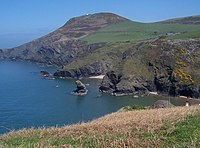
Welsh coast: Llangranog, Ceredigion, by Jayne Toyne, geograph.org.uk (Creative Commons)
Llangranog, Ceredigion (Jayne Toyne, geograph.org.uk)
I first became aware of family history as a child, when my father drove us around his native West Wales talking about who used to live in this place, or how we’re related to that distant aunt. It sounded like storytelling, wonderful tales about semi-legendary characters. I wish I’d asked him to write it all down. Still, a spark had been lit.

In 1994, my mother came back from a visit to her relatives in Australia with the thrilling news that we were descended from an Irish rebel and transported convict. Zap! That spark turned into a blazing flame and I was hooked on genealogy. She and I went to Ireland to do more research and started swapping emails with helpful Aussie rellies. Eventually we had so much family information that we published it as a book, A Rebel Hand: Nicholas Delaney of 1798.

Most of my research until late in 2011 was into Australian and Irish genealogy, history and local history. Then I found out that one Aussie 3x great grandmother was supposed to be a famous New South Wales ghost. Well, I had to know more. She and her husband/partner were both convicts, too, and I was inspired to look at other branches of my family tree.

Another convict ancestor came from Deptford, on the Thames, and my research broadened into London history and genealogy. And now I’m starting to look at the Welsh side of my family. Dad would have been pleased.

A side effect of my genealogy sleuthing has been learning about the history of the late eighteenth and early nineteenth centuries in the UK, Ireland and Australia, and of the places my ancestors came from. I’m fascinated by the social history, the day-to-day lives of people, the conventions of those times.

It was in November 2010 that I started blogging as a way to share my family history interests and discoveries. I soon found that there was a big world of geneabloggers out there, commenting, helping, sharing joys and sorrows and joining in challenges and memes. It was a wonderful discovery. There’s so much collaboration in the history, local history and genealogy and this new blog is a great example. If you’re not taking part already, why not join in? Here’s how.

I’ll finish by sharing some of my favourite blogs and websites for research, all free to view:
  • Claire Santry’s Irish Genealogy News is just what it says, all the latest information about genealogy for Ireland north and south.
  • Old Bailey Online, a collaboration between historians, has not only digitised the proceedings of London’s Central Criminal Court but gives lots of information about London life from 1674 to 1913.
  • Trove, where you can search Australian newspapers, books, manuscripts, images and much more dating from 1803. A lot of people using the digitised newspapers also collaborate by correcting the optical character recognition (OCR) transcriptions.
  • Welsh Newspapers Online, a new project from the National Library of Wales (Llyfrgell Genedlaethol Cymru).

Working together is so rewarding. Please join us in this new worldwide adventure by commenting, asking questions or even writing a post!

Sunday, 5 January 2014

We Want YOU!


As I write this there is a huge amount of gale force winds and heavy rain here in the UK. Some parts of the Country are flooded. The weather has been relentless since before Christmas. Just last Friday I experienced heavy winds, torrential downpours, sleet, hailstones and even a small patch of sun. Or perhaps I was dreaming!

Meanwhile, my Worldwide Genealogy friends and colleagues, scattered across the globe are experiencing everything from very heavy snow storms in the United States and Canada whereas those in much warmer climes are experiencing heat, fire and drought.

If only the weather could as we do, collaborate!

There are still some openings to write a monthly post here at Worldwide Genealogy.  Can you answer these questions?

  • Do you want to take part?
  • Do you have a genealogy or history blog?
  • Do you have a genealogy or history passion?
  • Can you commit to a regular monthly post?
    • even if you can not, get in touch!

If you answered yes to any of those questions,  then have a look at the Author Page and pick a date where there is currently a gap. Then email me giving the subject of Worldwide Genealogy so I don't miss it. In the email tell me your name, your blog address, the preferred date (if any) and your email address.

So go on, what are you waiting for?

Wednesday, 1 January 2014

Happy New Year!

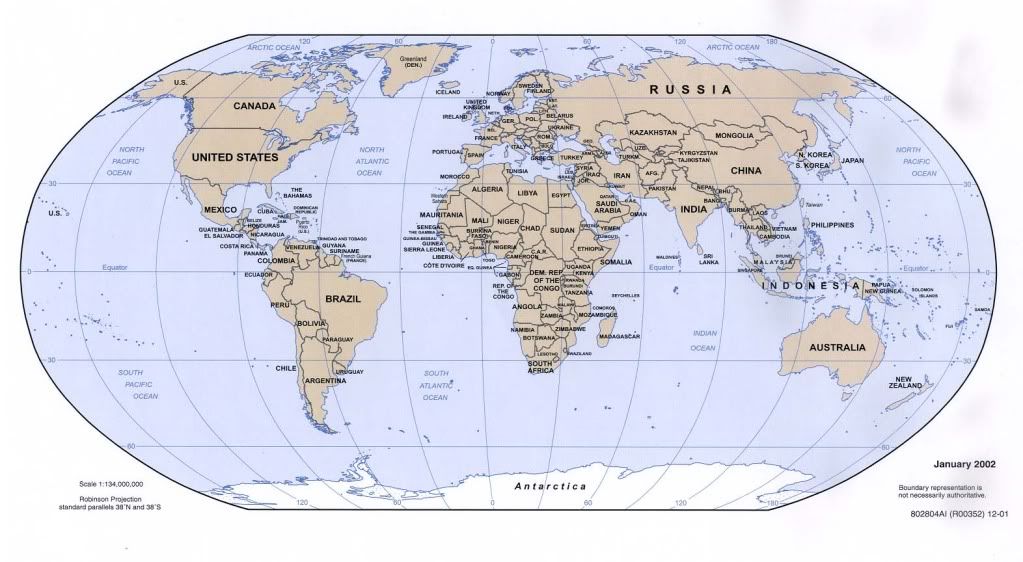
Image from Globe Photo
One of the things that I love about social media is that sheer fact that it shrinks the world to the size of a matchbox.

I love the options it gives us, to embrace our hobbies, obsessions from where ever we are in the world using whatever social media tools that appeal to us as individuals.

By embracing the different forms of social media we can integrate with others, sharing ideas, knowledge and friendship with people that we have never met.

Social media, in whatever form it takes has revolutionised the way we interact with others, the way we conduct our genealogical and historical research and more importantly it has revolutionised Society in general, in pretty much all areas - banking, learning and shopping to name a few.  Is this how our ancestors felt when the concept of rail travel was first introduced I wonder?

I like various social media tools for different reasons. I can typically be found either by my own name or Anglers Rest

Twitter is always a challenge. I struggle to share details in 140 characters or less, but I can be found at @juliegoucher

Facebook - I like the fact that I share share the incidentals of peoples lives, especially my family who live down under. I have a personal page and I have a page that is linked to my blog and Twitter and I plan to share more general genealogical material to that page. I rarely share genealogy to my personal page.

Google+ - This was a big learning curve for 2013 and I love it! Once I got my head around the point of circles and the interaction is by topic rather than individual I was hooked and I love the way that Google+ enables hangouts and links to YouTube

  • Do you have a favourite social media tool or tip you can share? 
  • Does your Society use social media really well, spreading the word to the genealogy community and members far and wide?
  • Do you want to learn to use a social media tool that you perhaps do not use, or want to expand your use of particular one?

If you want to respond and share please get interactive and leave a comment!

Monday, 30 December 2013

A New Project is Dawning

Today sees the final touches being added to this project - Worldwide Genealogy ~ A Genealogical Collaboration.

Whilst our individual genealogy, research and blogging is fairly solitary they are also a collaboration. I know that is a contradiction, but think about it. We all research our own ancestry alone. If we are lucky, we connect with someone who somewhere and somehow connects to our family. Yet when we have a problem or query, we turn to the many options available to us to discuss the said issue. The mailing lists, forums, groups on Facebook. Perhaps we tweet our query or perhaps we write a query or hypothesis on our blog and share into the ether.

However we share that query or success, we are spurred on by thousands of genealogists across the globe all of whom are delighted to share our joy, keen to help solve a problem or produce an alternative view.

That is collaboration.

Of course, we have in many instances taken that collaboration a step further. We have formed friendships. Friendships that span the globe and time zones, all made easier with modern technology and social media. Through those friendships we share and develop and our genealogical world is made a little brighter and more informative.

So, we are a day or so away from the launch of this collaboration project. Our launch is 1st January 2014. Each day a geneablogger will share an idea, website, thought or post that is genealogical, or historical in its nature.

We hope you will enjoy reading the posts and perhaps want to get involved. Maybe you belong to a historical or family history society and you want to share the details of them? Perhaps you have a query, or a missing ancestor and you would like to write about them and share it as part of this collaboration project?

If you want to get involved please leave a comment here or send an email to the address below.
juliegoucher@GMail.com
Created using E-Mail Icon Generator