Showing posts with label Homeplace. Show all posts

Tuesday, 11 August 2015

Keeping Family History Stories Alive through Fiction - Part K - "Dr. Bill" Smith


Keeping Family History Stories Alive through Fiction
Part K - "Dr. Bill" Smith
Romance in Family Saga Stories

Almost by definition, there are some romance elements in family saga stories. Agreed? Hard to get to the second, third and fourth generation without a little romance. And, admit it, we all enjoy a little romance, now and then.

Do you have a favorite family tradition story about a romantic experience of your ancestors? Most of us do. But, do you want to tell that story for the world to know? Perhaps. Perhaps not. One way, of course, to share a great story is to incorporate it in a fictional family saga tale. I’d like to demonstrate with an example… two actually.

My first novel focused on a short few months in the life of a family in turmoil. Getting through that turmoil filled that novel. I followed up with a novella that was a mystery story set immediately following the first novel, using many of the same characters, and adding a couple of key new ones.

For a change in pace, in the second novel, “The Homeplace Revisited,” I focused on two teenagers from the “Back to the Homeplace” novel. They went off to college, and graduate school, and returned to their hometown as an attorney and a veterinarian. Of course I am talk about half-siblings, Christopher Ogden, the attorney, and Jennifer Bevins, the veterinarian.
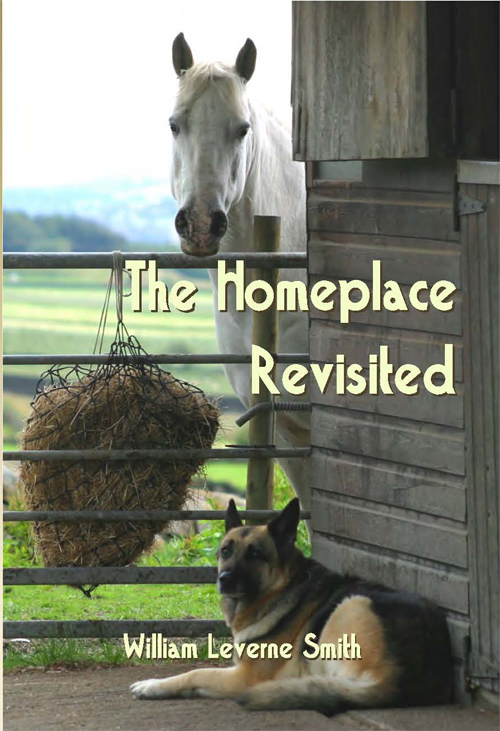

Christopher concentrated on his undergraduate degree, then law school, then joined his ‘father’ in the small town law practice. Dating and girl-friends were the farthest thing from his focused mind. Until he met Amy one summer day. Suddenly, he had feelings arise in him that he had not experienced in a very long time, if ever. Then, within a week, he also re-met Nicole. They had been in high school together, a year apart, but had never really been close friends. He again had a similar reaction. His head was spinning, to say the least. He began dating each girl. The path he followed is an interesting one. I hope you’ll read “The Homeplace Revisited,” to learn more. He proposed at the end of this novel. We know he married Nicole, in “Christmas at the Homeplace,” but why and how make worthwhile reading. Does it remind you of anyone you know?

Jennifer’s story fits this blog well, of course. As she set up her large animal veterinary practice in her home town, she also began to spend time with her Aunt Karen doing genealogy research on their family. She visited libraries, set up a new computer program (remember PAF?) she just learned of (this was 1996), and is happy to talk about her findings with anyone interested in listening.

At a family gathering, she met the son of a law partner of Christopher and his father. He is a young attorney, and was just beginning to consider the possibility of joining the small town law firm himself. His mother had recently died of breast cancer, and he wanted to know more about her family. This subject came up in their conversation. They now had a connecting common interest, that became a passion for each of them. They traveled to libraries together doing genealogy research, and more, of course. She helped him. He supported her efforts. Did I mention that a romance developed? She got her ring on Christmas Day of 1996 as the third novel,  “Christmas at the Homeplace” concluded.


So, now you know, “Christmas at the Homeplace” is about creating families and homes as well as people “coming home” which is the general theme of the novel. A soldier coming home from a war zone to his family (wife and two young children) certainly has romantic overtones, as well, sticking with our theme for today. His youngest was born after he shipped out nearly a year before. He had not seen her in person yet. It makes a very happy Homecoming, as “Christmas at the Homeplace” concluded. And other story lines, for another time. You may want to read it, as well, as the holidays approach.

P.S. For an independent reader's opinion, see:  http://jaquo.com/william-leverne-smith/


See you next month! I love to read comments, so please leave one or more, including questions. 

Dr. Bill


**********

"Dr. Bill" (Wm. L.) Smith can be found regularly at his genealogy blog, "Dr. Bill Tells Ancestor Stories" <http://drbilltellsancestorstories.blogspot.com/> or his family saga blog, "The Homeplace Saga," <http://thehomeplaceseries.blogspot.com/>. He is an original contributor, as The Heritage Tourist, to the "In-Depth Genealogy" blog with a monthly column in the "Going In-Depth" digi-mag. He also writes a monthly post for the Worldwide Genealogy Blog.


Saturday, 11 July 2015

Keeping Family History Stories Alive through Fiction - Part J


Keeping Family History Stories Alive through Fiction
Part J
"Dr. Bill" Smith

 Do you read short fiction, or just fiction in books?


When most of us think about reading fiction, we normally think about reading books, right? Romance novels, mystery novels, suspense and thrillers - all come mostly in ‘full’ novel length. How about family sagas? Assuming a few of us are still actually reading family saga stories, of course. Dune, The Godfather, The Thorn Birds, … each bring to mind the novel length… sometimes very long novels.

I’ve mentioned before that although I started out writing novels in my “The Homeplace Saga” series of family saga, historical fiction stories, I’ve gone exclusively to writing shorter ‘episodes.’  And now, in recent weeks, I’ve begun to compile those episodes, about 20 at a time, into very readable ‘eBooks’ that I hope will meet the needs of many readers. Your feedback would be valuable to me on this, if you can.

The latest release is actually from the “Weston Wagons West” suite of stories, that actually also tell the story of my mother’s Kinnick surname ancestors. You may recall, in the Weston Wagons West stories, I use the fictional Weston family descendants who ‘live near and interact with’ my ancestors, used fictitiously. It is a fun approach to writing. The original stories were written as the ‘Jx’ episodes at HubPages, online, at:
http://drbill-wml-smith.hubpages.com/

Now, I have created an eBook of those 20 episodes:


The eBook is available at: http://www.lulu.com/spotlight/drbillshares

Would you rather have all the 20 episodes together, to read straight through, on your reader of choice? Or, is reading them one by one, online more useful? I like having both options. I hope it is helpful, and not confusing to my readers. Again, your feedback is valuable. I hope it also makes you think about how you might like to tell your stories.

Certainly, I do believe that writing the small, shorter episodes/chapters (about 1,250 words each) is easier than having to put together a 20, 30, or 40,000-word work before you see a ‘final product.’ Maybe my attention span has just gotten shorter. Is it just me, or do you feel somewhat similar?

I hope a few of you will get the eBook, read it, and let me know how you feel about it. That would be very interesting! Thanks, in advance.

From the family saga story-telling point of view, especially for the very early years (1600 through 1800, for example), each episode can focus on ‘one family’ - defined as a married couple and their children, perhaps. Of course, there will be overlap, from episode to episode, as there always is in family stories. Whether or not you include the death of the grandparents in an episode, for instance, can make quite a difference in how you tell your story, and, what you include in each episode. Does that make sense? I think it does. The number of children, and how far they are spread apart, is also an important consideration. Do older children get married before the younger children are born? [My mother once told me she might have had another child (a sixth), until I went and got married - she didn’t want to be a grandmother having a baby. Not a big deal, but an interesting thought, and story.]

If you hadn’t guessed already, I’m trying to get you to thinking about stories you know in your own families, from your research, that you might write as a short story - 1,250 words or so. Are you ready to give it a try? Perhaps you have, already. Did you post it on your blog, or keep it on your computer to ‘think about’ for a while? I think we are making progress here. Be sure to let me know, in the comments.


See you next month! I love to read comments, so please leave one or more, including questions. 

Dr. Bill ;-)


**********

"Dr. Bill" (Wm. L.) Smith can be found regularly at his genealogy blog, "Dr. Bill Tells Ancestor Stories" <http://drbilltellsancestorstories.blogspot.com/> or his family saga blog, "The Homeplace Saga," <http://thehomeplaceseries.blogspot.com/>. He is an original contributor, as The Heritage Tourist, to the "In-Depth Genealogy" blog with a monthly column in the "Going In-Depth" digi-mag. He also writes a monthly post for the Worldwide Genealogy Blog.


Thursday, 11 June 2015

Keeping Family History Stories Alive through Fiction - Part I


Keeping Family History Stories Alive through Fiction
Part I
"Dr. Bill" Smith

Historical Fiction can work as a “cousin-finder”

I funny thing happened when I used some real family names in my historical fiction stories…

I found a cousin… several cousins, actually… well, some of them are “cousins-by-marriage” - but, that is beside the point. The point is: IT WORKED!! ;-)


I have written a number of series of historical fiction stories here:
http://drbill-wml-smith.hubpages.com/ - 64 total stories, as I write this…

Source: http://www.freeimages.com/photo/927442

This “Weston Wagons West” set of stories follows three brothers (and their descendants), who came to America from England, in the 1600s, and settled in Virginia, Maryland, and Massachusetts, much as many of my actual ancestors did. The ‘twist’ to these stories is that they lived near and interacted regularly with my actual ancestors. By weaving the fictional stories of these Weston descendants with what I know from research of my real ancestors, I am able to tell their stories in fuller ways, and interesting ways, than just writing about the ancestors. This is especially true of these very early ones where only a few, barebones facts, are actually known and verified. It is fun, and now, also fruitful.

Some XXXXX (a family surname) cousins apparently “Googled” their surname and got one of my stories. The sharing on their Facebook group page was fascinating for me to read, as the author of the stories, before they actually contacted me and discovered this is my family as well as theirs. One cousin said: “Interesting historical fiction. What connection does the author have with the XXXXX?” Another replies: “Sorry, I didn't get that far. But I did find them in Illinois. I'll be checking on that.” Next, she posts a link to my author Facebook page (William Leverne Smith). Then adds, “..how in the world did he choose this actual family????” followed by: “How did he know of them?” The first one adds: “That's what I want to know. I will probably contact the author and find out what he knows.” The other replies: “It seems as though he must be in the family somehow. He has names and places....of course you can get all that easily but why them? I'm anxious to know.”

She then posts my “Dr Bill Tells Ancestor Stories” blog with XXXXX stories in it, followed by the Google Books link to my “Kinnick Early US Family History” book, that has XXXXX family in it.  …

Later that day, I got both an IM on Facebook and an email note. We introduced ourselves, and now I am part of the XXXXX Facebook group, and we are enjoying sharing family stories.

This experience was just too much fun not to share with you all. I’m sure most of you have had similar experiences, but this was so interesting to be able to go back and actually see the process they used to find me, based only on my historical fiction stories using the XXXXX family name. P.S. There are literally hundreds of family surnames in my writing, so I simply used the XXXXX here to keep it simple, and, I hope, not distracting.

Have you had similar experiences? Have you written about them? I’d love to hear them!


How many new cousins might you find if you used historical fiction to keep alive your family history research?

See you next month! I love to read comments, so please leave one or more, including questions. 

Dr. Bill


**********

"Dr. Bill" (Wm. L.) Smith can be found regularly at his genealogy blog, "Dr. Bill Tells Ancestor Stories" <http://drbilltellsancestorstories.blogspot.com/> or his family saga blog, "The Homeplace Saga," <http://thehomeplaceseries.blogspot.com/>. He is an original contributor, as The Heritage Tourist, to the "In-Depth Genealogy" blog with a monthly column in the "Going In-Depth" digi-mag. He also writes a monthly post for the Worldwide Genealogy Blog.


Monday, 11 May 2015

Keeping Family History Stories Alive through Fiction - Part H


Keeping Family History Stories Alive through Fiction
Part H
"Dr. Bill" Smith

Do you recognize the Abigail Adams quote, “Remember the Ladies”?


Abigail Adams, from a painting by Gilbert Stuart

As her husband, John Adams, one of the Founding Fathers of the USA, was heading off to meet with the Continental Congress, Abigail Adams famously admonished him, “Remember the Ladies.” The men who served as Founding Fathers, and many of their male counterparts since, had made a habit of ignoring the ladies, as many of you will attest, I’m sure. I mention this for two reasons.

First, in doing our family history research, from our first days of getting serious about it, in the mid-1990s, my wife and I each pledged to ourselves and each other that we would faithfully research the female lines of ancestor couples as thoroughly, or more thoroughly, than the male surname line. At that time, many of the male lines had historically been done already in much more detail. It was harder to research the ladies’ side, by far, because marriage information was not always readily available. Often, only the given name of the female marriage partner was know, if that. Regardless, we were well rewarded for our efforts. Many a brick-wall on the male line, as perceived by others, was overcome by carefully examining the maternal line. Mothers, Grandmothers, and Aunts are crucial to family history research. How is that for stating the obvious!! ;-)

Second, when writing fiction to keep family history stories alive, not surprisingly, telling the ‘ladies’ stories’ is critical to being complete… as well as very interesting. So much so that many, if not most, of the stories I now write focus on the point of view of the women in the family saga, historical fiction series that is my creation.

My first novel, that began the family saga, “Back to the Homeplace,” was based on the concerns of a woman, a widow, of keeping her Century Farm, intact and in the family, on her passing. Her family had originally settled the land in 1833 while the story was taking place in 1987. She had strong feelings for her family and her land. She wanted to be sure her four children carried those same feelings forward to future generations as well. Her unorthodox ‘video will’ set that plan in motion. She was a strong-willed woman at the core of the story.

You may recall that last time, when we were talking about theme, I said the following:
In my “The Homeplace Saga” series of family saga, historical fiction stories, the theme is: “it is critically important to retain the family farm, in one piece, in the family.” It was the theme of the original novel, and that theme runs through all four novels, two other books, and hundreds of short stories that have been written in the series of stories (see: <http://thehomeplaceseries.blogspot.com/>).

As the family saga has developed, as I’ve mentioned previously, I went back and reconstructed (created, actually, of course) that 1833 to 1987 time period for the saga. The first part of that period, 1833 to 1876, including the Civil War period, was told in a series of short stories. These were collected into book form as: “The American Centennial at the Homeplace: The Founding (1833-1876).” From the original settlers to the reconstruction of the town and surrounding rural community following the war, the women played key roles as told in the stories collected there. These roles reflect the research my wife and I have discovered as we have done our family history research. The women served not only as mothers and wives, but took on just about every role that men had, but perhaps not as often then as many do now. These are reflected in my family saga stories. You can do the same with your family stories, to keep them alive.

[Each book mentioned is available at amazon.com]

During the second half of the 1800s, in the stories, it first appeared that a man, William McDonald, the grandfather of the widow in 1987, was primarily responsible for gathering additional lands around the original homestead to create the Century Farm of 1987. However, on closer examination, the story really was that he was strongly influenced by, even guided by, his mother in the entire process. In fact, she had been ‘planning’ this from the time of his birth, along with her husband. But, she was the guiding force. How she did it, and why, represents the core theme of the current set of short stores being created for “The Homeplace Saga” as it is now continuing to develop.

[These short stories are available, at no charge, at: http://homeplaceseries.hubpages.com/]

What will your family saga look like to keep alive your family history research?

See you next month! I love to read comments, so please leave one or more, including questions. 

Dr. Bill


**********

"Dr. Bill" (Wm. L.) Smith can be found regularly at his genealogy blog, "Dr. Bill Tells Ancestor Stories" <http://drbilltellsancestorstories.blogspot.com/> or his family saga blog, "The Homeplace Saga," <http://thehomeplaceseries.blogspot.com/>. He is an original contributor, as The Heritage Tourist, to the "In-DepthGenealogy" blog with a monthly column in the "Going In-Depth" digi-mag. He also writes a monthly post for the Worldwide Genealogy Blog.


Saturday, 11 April 2015

Keeping Family History Stories Alive through Fiction - Part G - "Dr. Bill" Smith


Keeping Family History Stories Alive through Fiction
Part G
"Dr. Bill" Smith


Have you identified a theme that would be useful if you wrote a family story?

For this discussion I am going to assume that you have gathered a considerable amount of family history information, including social context material such as obituaries, wedding notices, newspaper clippings, family letter or journals, and so forth; not just the bare bones vital statistics. You may have even written sketches of some of your ancestors, perhaps even other family members and friends… these would be nonfiction writing, of course, assuming you ‘stayed with the facts’ in writing them.

If you now had a desire to save some of these family stories in fiction form, one approach would be to look for themes running through one or more of the stories. [Actually, you would also want to do this if you wanted to write a good nonfiction family history, as well!]

Theme is defined as a main idea or an underlying meaning of a literary work that may be stated directly or indirectly. [Source: http://literarydevices.net/theme/]

For example, in my “The Homeplace Saga” series of family saga, historical fiction stories, the theme is: “it is critically important to retain the family farm, in one piece, in the family.” It was the theme of the original novel, and the theme runs through all four novels, two other books, and hundreds of short stories that have been written in the series of stories (see: <http://thehomeplaceseries.blogspot.com/>).

In looking at the stories, and specifically at the stories of individuals and of families, can you identify an overarching theme or idea that binds certain of the stories together? Are there perhaps two or three? You may want to choose one that you can identify and then limit your first fiction story to tell to the people and families that best share that particular story/theme. Perhaps follow-up stories can be developed from the others.

Once you have identified that first story arch/theme to work with you will want to begin to identify the main character or characters that best tell that specific story. Honestly, this is where the fun of writing fiction really begins, to me. Just writing this gets my creative juices flowing wanting to stop writing this and DO IT! … Sorry, I digress. Part of the ‘fun’ here is that you can pick and choose who is included in the story and who is not. You can take a main protagonist, perhaps, who is a man in real life, and create a female in your fictional story to play that role. You can have three interesting characters in a family rather than the four or five ‘not so interesting’ members in an actual family. You can make a composite of the characteristics of three actual people into one really complex person perhaps. I have done each of these, from time to time. Other fiction writers have done each of these. A few examples come to mind, that might be instructive. 

Laura Ingalls Wilder c. 1894


We all know Laura Ingalls Wilder, of the Little House on the Prairie series of books, and of course, the television series adaptation of her stories. Her original writings have gotten much detailed review in recent months, and some interesting examples come out of that. For example, her stories have Ma and Pa and their three girls, in the early stories (books). There was actually a young brother, but Laura intentionally left him out because he didn’t really fit in with the story she wanted to tell. Her work ‘feels like’ nonfiction (autobiographic, even, but it is not entirely that, of course), but it is really fiction, of course. For another example, Nellie (that we all love to hate, as portrayed in the television series, especially) was actually a composite person, in Laura’s books, of three actual friends from her youth. Laura’s biographers have learned these facts about her fiction writing from examining Laura’s manuscript, an actual autobiographic story, which was never published until recently, “Prairie Girl.” Comparing that story with her fiction books has become a ‘cottage industry’ in itself, in many ways.

How do you feel now about creating a fictional story to tell about some of your family history research? Does this get you excited to go DO IT, or does it turn you off at the whole idea? I’m sure there are some of each, among my readers out there. Each of us must make our own individual decisions, of course. What I am trying to do is provide some very interesting options that you may not have even considered before. If I have made you think about the process, even just a little bit, I will feel pleased that I did my job.

See you next month! I love to read comments, so please leave one or more, including questions. 

Dr. Bill


**********

"Dr. Bill" (Wm. L.) Smith can be found regularly at his genealogy blog, "Dr. Bill Tells Ancestor Stories" <http://drbilltellsancestorstories.blogspot.com/> or his family saga blog, "The Homeplace Saga," <http://thehomeplaceseries.blogspot.com/>. He is an original contributor, as The Heritage Tourist, to the "In-DepthGenealogy" blog with a monthly column in the "Going In-Depth" digi-mag. He also writes a monthly post for the Worldwide Genealogy Blog.


Wednesday, 11 March 2015

Keeping Family History Stories Alive through Fiction - Part F - "Dr. Bill" Smith


Keeping Family History Stories Alive through Fiction
Part F
"Dr. Bill" Smith


Is it possible to use a fiction story to get to know an ancestor better?

Yes, I believe it is. As a fiction writer of family saga-type stories, let me share a few thoughts on this. See what you think. I recently shared with my writing colleagues an experience with trying to write another novel in my series. One of the key elements of that discussion was that I had one ‘over-arching theme’ story I wanted to tell in that novel. When I actually started writing the novel, I realized that my characters were essentially “refusing to go along with that story.”


What does this have to do with our question? Some of you are asking…


Let’s take one step back, and I think I can explain. When I write, I first create characters, in a setting, and write backgrounds on each of them, including how they think, what their motivations are, how they relate to others around them, and so forth. I think this is critical to good storytelling. Much of this material never appears in published works, of course, but it is very useful to me to get to know each character, each family member, in my case, so I know how they will react to meeting new people and approaching new subjects. And, how they will act when faced with totally unexpected situations, of course.

When I started to write about how my main characters would respond to this new set of circumstance in the ‘over-arching theme’ I had chosen for the novel, I quickly became aware that they were taking my story in different directions than what I had ‘intended.’ What to do? This took some time for me to figure out, but I did come up with a solution.

My respond was to scrap the novel concept and get back to writing short stories about my characters, in their natural settings, and let them tell my/their stories.

Are you still with me?

When you research a family, in your ancestral line, you generally will gather more information than simply vital statistics (I hope, at least!). You may have an obituary. You may have news clippings about a wedding, an organizational honor, or family gatherings. Each of these tidbits of information can, and do, provide you with a little more/better understanding about how each family member reacted to certain situations in their actual lives. [We understand, of course, that these are not necessarily accurate portrayals of their behavior - but that is another story for another time!]

You can use these (understandings) like I use the ‘background’ materials I create for each of my characters. The more of this you have, the better your chances are of ‘getting to know’ that ancestor, as an individual. Agree?

Therefore, what I am suggesting, then, is that you can now, possibly, use fiction techniques to help you determine how that person would react to a situation you may know that they actually faced… but, you do not actually know how they handled it. My suggestion is that if you learn how to think like that person thought, you have a pretty good chance of writing a story about them in that new situation that would have a high probability of being pretty close to how they would actually have responded.

Let me use an example, from one of my favorite Revolutionary War ancestors. He went off and served in the Continental army at age 56, leaving behind a young nephew/son-in-law with new children (his grandchildren) to farm rather than go to war. The older man went so the younger man could stay with his family. This explanation fits the known circumstance and also seems to fit well with the kind of person he was (based on other things we knew about him). He was abandoned by his own parents as a child, and in later life, always sacrificed himself rather than placing burdens on his other, younger, family members. This may not be the best example, but I hope it helps you see my perspective.

You do need to remember it is fiction, of course, and not record it anywhere as actual fact. We must keep the two separate, no doubt. But, I hope you can see that this is my answer, one answer, to the question we began with ‘up above!’

What do you think? Does this make any sense to you? Will you try it, and see how it works, for you? Let me know. I love to get feedback on my articles, here, and to all my written stories and comments.
If you totally disagree, or find this ludicrous, I’d also like to hear that. I learn from both positive and negative feedback. I hope you do, as well.


See you next month! I love to read comments, so please leave one or more, including questions. 

Dr. Bill


**********

"Dr. Bill" (Wm. L.) Smith can be found regularly at his genealogy blog, "Dr. Bill Tells Ancestor Stories" <http://drbilltellsancestorstories.blogspot.com/> or his family saga blog, "The Homeplace Saga," <http://thehomeplaceseries.blogspot.com/>. He is an original contributor, as The Heritage Tourist, to the "In-Depth Genealogy" blog with a monthly column in the "Going In-Depth" digi-mag. He also writes a monthly post for the Worldwide Genealogy Blog.


Wednesday, 11 February 2015

Keeping Family History Stories Alive through Fiction - Part E


Keeping Family History Stories Alive through Fiction
Part E
"Dr. Bill" Smith


This series of posts began in October 2014 (See Part A) sharing the idea that we each should consider preserving the family stories we find as we do our family history and genealogy research, whether for ourselves, or for others, by using fiction as a tool to do that.

Then, in Part B, I shared my love of family saga literature and hopefully I got you to thinking about how your own stories could possibly be effectively told this way, using some of my own fiction stories as examples, and recommending some to you, for your review.

In December (See Part C), we looked at using a theme as the basis for good fiction stories. Since this was December, we discussed the “coming home for Christmas” theme. That was one of the stories at the heart of my “Christmas at the Homeplace” novel last year, and we examined ways to make that theme work in the novel.


[I get no commission from this link, it is just a direct link for your convenience]


In Part D, in January, I shared a couple of specific fiction writing techniques, with examples, that allow you to adapt your fine stories to fiction without getting bogged down in too much actual history details. You want historical detail, but too much may very well be too much for a good story.


Today, in Part E, we want to share another totally different perspective that you might consider for turning the stories you have found in your family history research into meaningful, and enjoyable, fiction stories to share. This can be especially useful where there are significant gaps in the historical facts you have available upon which to base the stories.

As a point of reference, I’ve use this approach, to-date, to share 64 stories in my series, “Weston Wagons West.” I created the fictional Weston family beginning in the 1600s with three brothers moving from England to America, one to Virginia, one to Maryland, and one to Massachusetts. Not only do I tell their stories (based on related research of the context of the place and times), but I portray them as neighbors and friends of my actual ancestors and relatives in those times and places. I am very careful to only tell stories within the historical facts, events, and places, based on research. This framework is then “filled-in” with fictional elements. I use every historical fact of which I am aware, and weave my stories around those facts.

Let’s use one more recent, and one very early, example to illustrate how this can be done. The most recent story I published, tells of my great-grandfather, James P. Preston, as a 17-year-old, making his way to catch a wagon train to California as part of the Gold Rush, in 1852. That part is factual. I even have identified a news article of his departure from Council Bluffs, Iowa, in the spring, as well as one documenting his arrival in Sacramento, California in the fall.

The story I told in this particular episode was the journey across southern Iowa, from Illinois, of James,  J.P., along with his friend, Martie Weston, earlier in the spring. The details of this journey (none of which were available from my research on him - just that he did it) were derived first from a diary of a person who actually made the trip a year or so later. I then looked up the history of each of the towns and activities mentioned in the diary, on Wikipedia, and other sources, to fill in interesting events and activities that they would have encountered in 1852. One river crossing would have been made only a few months after a tornado had ravaged the town and the ferry. The ferry they used (presumably) was one of the first things re-constructed after the tornado, of course.

The prior episode in the series of stories (about J.P. and Martie) is linked at the end of this story.


A very early story began in the spring of 1640, when 24-year-old James Weston arrive in Maryland from England. My wife and I actually visited St. Mary’s City, that has been reconstructed there. We loved interacting with the re-enactors, each of whom stayed in character of the time and place. It was the only city port in the state at that time, just a few years after the first European arrivals. This and the following episodes set up stories that involve my earliest Brightwell and Kinnick family ancestors. Because the actual recorded facts are so few and far between (though clear and detailed), creating a fictional family for continuity of story was essential. Within that family story, then, the interactions of my actual ancestors became relatively easy to weave in and through their story. This is the specific technique I used in all 64 episodes, to date. 


Reconstructed ship similar to Ark II
Source: Wikimedia Commons

Each of the members of the Weston families, of course, are created so as to have persons who “show up” in the places and times my different ancestor families actually appeared in history. I used Weston occupations as farriers, blacksmiths, and wagon-builders so that they would fit in appropriately where ever their travels took them. There are still many stories to tell in this series, of course. I try to share sets of stories, in some sequence. However, the families are also set up so that a new branch can be added at any time, to pick up a new storyline, as they come available, and I choose to write them. One day, I hope to add my wife’s ancestors - who are really even more interesting than mine!

I hope you will read some of the stories and give me your reactions.

See you next month! I love to read comments, so please leave one or more, including questions. 

Dr. Bill


**********

"Dr. Bill" (Wm. L.) Smith can be found regularly at his genealogy blog, "Dr. Bill Tells Ancestor Stories" <http://drbilltellsancestorstories.blogspot.com/> or his family saga blog, "The Homeplace Saga," <http://thehomeplaceseries.blogspot.com/>. He is an original contributor, as The Heritage Tourist, to the "In-Depth Genealogy" blog with a monthly column in the "Going In-Depth" digi-mag. He also writes a monthly post for the Worldwide Genealogy Blog.


Sunday, 11 January 2015

Keeping Family History Stories Alive through Fiction - Part D


Keeping Family History Stories Alive through Fiction
Part D
"Dr. Bill" Smith

With the start of the new year, 2015, you may have already pledged to try writing some fiction stories based on the family research you have been doing. I’d like to take this opportunity to suggest some techniques you might want to keep in mind as you begin to write your stories.

Many of us enjoy reading about, and writing about, stories of our American pioneer families, especially in the second half of the 19th century… so let’s use that as our point of reference. I’ll focus on my favorite genre of fiction, the family saga <http://thehomeplaceseries.blogspot.com/>. I’ve recently been writing a series of short stories set in a rural, Missouri, community in the 1870s, “The Kings of Oak Springs,” <http://homeplaceseries.hubpages.com/>. It doesn’t take a lot of research on families of this period to recognize that many, perhaps most, rural families of this era had 8, 10, even 12 or more children. Are you prepared to tell stories about a family that large? Probably not. And, especially not if you want to involved some neighbors and friends in the community as well. Those relationships generate the best stories. The answer? Recognize that children came along about every two years, but, they didn’t all always survive. Infant mortality was high, accidents and disease were common, there were various reasons. For my King family in 1876-77, I used children aged 14, 12, 10 and 5… boy, girl, boy, girl. It worked well for my stories, as long as others in the neighborhood had other variations.


But, how many families can you handle in your family saga stories? Whereas most novela, including historical fiction, focus on a single protagonist, a single person, male or female, a family saga story would normally focus on one family. I did that with the King family, with their four children, plus Pa and Ma. As we move from one short story, in this case, to the next, I slowly introduced their neighboring families in one story at a time. These other families became ‘secondary characters’ although, once introduced, they could be brought into future stories in supporting roles, as well. Towns people were often introduced in occupational roles: the blacksmith, the store keeper, the telegraph operator, the school teacher, etc. Perhaps their families would be brought in, in later stories, perhaps not. This sequence soon become fairly natural, as you tell your stories and show what the family and family members are doing within their relationships in the community.

So as to demonstrate my proper understanding of the place and time about which I was writing, I used one other very important technique that I want to share with you now. I used census records of the place and time (nearby region) to choose both surnames and given names of each person in my family saga stories. I feel it is very important for my readers to really feel they are ‘living in’ that time and place. The names often provide a sense of ethnic origin and immigration issues, as well, of course. When I went back to 1833, shortly after statehood, for my recent short story collection book: “American Centennial at the Homeplace: The Founding 1833-1876,” I made sure that the four family names used as the first settlers were names that appeared in the 1840 federal census for the counties involved, as well as the given names of those first eleven people, of varying ages. This is one way to add authenticity to the stories, based on family history and genealogy research.


Finally for today, and more on this later, use the social history of the time and place of your family saga story to add context to your stories. You will almost surely, as I did, use a time and place with which you are familiar because of the research you have already done, the books you already have, and resources you don’t mind obtaining or reviewing again, especially for this purpose. I found this especially valuable when I realized that my time and place issues involved the Civil War. The towns in this area were totally devastated by competing raiding parties. What happened to my families, the town, the countryside, in this time and place? For the King family moving in, a decade or so after the war, what were the affects of the war that they still needed to face, more than ten years later? There are some good stories there, of course. Which will choose to write about? Start today.

See you next month! I love to read comments, so please leave one or more, including questions. 

Dr. Bill


**********

"Dr. Bill" (Wm. L.) Smith can be found regularly at his genealogy blog, "Dr. Bill Tells Ancestor Stories" <http://drbilltellsancestorstories.blogspot.com/> or his family saga blog, "The Homeplace Saga," <http://thehomeplaceseries.blogspot.com/>. He is an original contributor, as The Heritage Tourist, to the "In-Depth Genealogy" blog with a monthly column in the "Going In-Depth" digi-mag. He also writes a monthly post for the Worldwide Genealogy Blog.

Thursday, 11 December 2014

Keeping Family History Stories Alive through Fiction - Part C - "Dr. Bill" Smith


Keeping Family History Stories Alive through Fiction
Part C
"Dr. Bill" Smith

I began this series of posts in October 2014 suggesting we each consider preserving the family stories we find as we do our family history and genealogy research, whether for ourselves, or for others, by using fiction as a tool (See Part A).

In November, in Part B, I shared my love of family saga literature and hopefully I got you to thinking about how your own stories could possibly add to this fiction literature genre, using some of my own fiction stories as examples, and recommending some to you, for your review.

Today, in December, I want to be a little more specific and recommend some types of stories you might watch for in your research that would make the basis for good fiction stories. Since this is December, let me start with the “coming home for Christmas” theme. Do you have a member of the armed services you hope will make it home to be with family to celebrate Christmas? That was one of the stories at the heart of my “Christmas at the Homeplace” novel last year. It was 1996, and Travis Inman had left, as a National Guardsman, to serve a tour in Bosnia. He had to leave the winter before prior to his youngest daughter’s birth. Her getting to meet her daddie for the first time at Christmas would be an even greater reunion. Do you have a story like this that you could incorporate into your own story?


Sometimes, I have found, story ideas come from very different sources to create a new storyline for a novel. In the years surrounding when the ideas for my first novel was created, I was doing accounting work, among many clients, for a number of artists who happened to be what today we call gay. They were not family, but I was personally very close to them because I appreciated their devotion to their craft, and wanted to help them on the business side of their lives. This group, of nearly a dozen young men, was hard-hit by the arrival of AIDS to the community. I was particularly close to one, one of my earliest clients. He flew into Washington, D.C., so many times, to get the best treatments then available. He, and most of the others, eventually died. As a tribute to them, I suppose, I included a character in my fictional family in my ongoing family saga who faced these particular challenges. He first appeared in the first novel, “Back to the Homeplace,” and has continued to be a key character. His development, based on the ravages of the HIV infection, through the years, has been a very gratifying part of my continuing stories, as a survivor.


Finally, sometimes it is just a particular “trait” that you can bring into one of your characters. How about the middle-aged aunt that is very active in your small church, but… wants to sing in the choir, but sings far too loud, and cannot carry a tune in a breadbasket? How about the uncle that always wears the same “awful” sweater to every family gathering? How about the young “romeo” who only seems to be interested in “hitting on” his young cousins? These “traits” won’t carry a story, but they can make your stories/characters more interesting, more real. Watch for them as you do your research. What useful “traits” for stories have you come across lately?

See you next month! I love to read comments, so please leave one or more, including questions. 

Dr. Bill


**********

"Dr. Bill" (Wm. L.) Smith can be found regularly at his genealogy blog, "Dr. Bill Tells Ancestor Stories" <http://drbilltellsancestorstories.blogspot.com/> or his family saga blog, "The Homeplace Saga," <http://thehomeplaceseries.blogspot.com/>. He is an original contributor, as The Heritage Tourist, to the "In-Depth Genealogy" blog with a monthly column in the "Going In-Depth" digi-mag. He also writes a monthly post for the Worldwide Genealogy Blog.

Tuesday, 11 November 2014

Keeping Family History Stories Alive through Fiction - Part B - "Dr. Bill" Smith


Keeping Family History Stories Alive through Fiction
Part B
"Dr. Bill" Smith

My favorite readings are biographies and family sagas… and many, if not most, biographies read much like family sagas. Or, is it the other way around? In any event, I enjoy reading family stories though out our history. Little House on the Prairie, Centennial, How the West was Won, Godfather… books, movies and television series focused on family life, much as we each see as we gather our family history and genealogy family stories, over the centuries., around the world. I like to see these stories preserved. Saving them through fiction is one approach, as I began to speak of here, last month, in Part A.

Today I would like to draw your attention to the "family saga" story in the history of literature (and as adapted to film and other media). If you have not given much thought to this subject, feel free to spend a few minutes looking at a list of the stories in this genre: http://en.wikipedia.org/wiki/Family_saga. Which of these are among your favorite stories? A few, I imagine. Roots, Dune, The Thorn Birds, perhaps, or Star Wars or Brideshead Revisited? They are set around the world, and throughout time: past, present and future. I noted that few, if any, have been set, in one place, in the Heartland of America. Therefore, I have created "The Homeplace Saga" set of stories to fill this need. I hope you enjoy them, as well. In addition, I hope you will be inspired, perhaps, to create your own family saga. That is, write your family history stories as a series of fictional stories, adding your own creative touches, to bring them alive for you and your readers.


Family saga stories are not always labeled as such. I just finished reading the new Jane Smiley novel, “Some Luck,” for example, that is clearly a family saga. However, it is presented as mainline literary fiction. Each chapter, a year, from 1920 to 1953, follows the stories of the lives of a farm family, from newly-weds to the death of the husband, and each of their children, and their children, and some assorted grandparents and aunts and uncle and cousins. That sure seemed like a family saga, to me, from a Pulitzer Prize-winning author. This is also the first of a trilogy of books/stories.

What will your family story look like, in fiction? Which parts will you include, which parts will you omit? Which parts will you include from your own creative mind? Give it some thought! ;-)

If you have an active interest in what I have suggested, I would recommend that you consider reading the novel, "Back to the Homeplace," see below. It is how I got started. All the rest of “The Homeplace Saga” family saga is built around it. For shorter reads, check out one or more of the several recent episodes of "The Kings of Oak Springs," <http://homeplaceseries.hubpages.com/>.


See you next month! I love to read comments, so please leave one or more, including questions. 

Dr. Bill


**********

"Dr. Bill" (Wm. L.) Smith can be found regularly at his genealogy blog, "Dr. Bill Tells Ancestor Stories" <http://drbilltellsancestorstories.blogspot.com/> or his family saga blog, "The Homeplace Saga," <http://thehomeplaceseries.blogspot.com/>. He is an original contributor, as The Heritage Tourist, to the "In-Depth Genealogy" blog with a monthly column in the "Going In-Depth" digi-mag. He also writes a monthly post for the Worldwide Genealogy Blog.

Saturday, 11 October 2014

Keeping Family History Stories Alive through Fiction - Part A


Keeping Family History Stories Alive through Fiction
Part A
"Dr. Bill" Smith


Each of us come across great stories as we pursue our family history research, for ourselves, or for others. Sometimes we are able to share these stories in satisfying ways through our reports, our blog posts, or our family newsletters of various forms, perhaps. But, I have found that often my favorite stories of relationships among people turn out to be ones I find I cannot share in these traditional ways for one reason or another - often for privacy reasons, or other personal conflict or disclosure issue reasons.

As a story-teller, I do not want to lose these stories. I feel strongly that others can benefit from hearing about them, and perhaps understanding better, what is going on around them, in their families, among their friends, and in their neighborhood, village, or community. Fiction is one outlet for this perceived need. This is especially true when it is really the story, the relationships, that are of interest - and not just that it is your family. There is a difference here that is important. Do you agree?

Gossip is one thing, story-telling is another. Are you able to make the distinction? Do you want to? I hope so, and let's think about it a little bit more. We might be talking about romance, about criminal activity, or relationships among siblings, as possibilities. There are a very wide variety of situations that make great stories. If the story, and the elements of the story, are compelling enough, it will be the story of the relationships that will prevail, and not just the fact that it may have happened in your family. In that case, it can be the basis for good fiction that can be shared and enjoyed by many people, without harming relationships or putting the spotlight on any real individuals or groups of people.


Free with Kindle Unlimited


I got started writing my "The Homeplace Saga" stories, as an example, because of the stories I recognized from my own family history research and observations of family and friends in the small, rural community where I grew up. I wanted to write about my hometown and my community, my family and friends, but I feared what their reactions might be were they to read my stories. And, of course, I would want them to read my stories. Have you had that feeling? Many writers just go ahead and write and not concern themselves about that issue. I am not one of those. I do care, and I honestly don't want to upset anyone. Therefore, I turned to fiction.

In my case, and there are many other equally useful approaches, I created a fictional community in an adjoining state, where some things were different, but enough were the same that I could tell my stories and not have people draw one-to-one parallels with real folks they knew. There are a number of techniques for doing this, and I'll share a number of these in future posts here. This approach will work equally well anywhere in the world, so I felt this series of posts would be appropriate for this blog.

After five years of creative energy expended, this writing project now covers five books with a sixth upcoming, an in-depth website, collaborative wikis, and three separate but related online writing platform accounts where I am now sharing short stories of my several family saga, historical fiction story lines weekly. As we look at other aspects of keeping family history stories alive through fiction, in coming months, here, I will draw on these stories, and those of others, for examples to illustrate the several useful techniques I have discovered, borrowed, created and used.

If you have an active interest in what I have suggested, I would recommend that you consider reading the novel, "Back to the Homeplace," mentioned above. It is how I got started. All the rest of this family saga is built around it. For shorter reads, check out one or more of the several recent episodes of "The Kings of Oak Springs," <http://homeplaceseries.hubpages.com/>.

See you next month! I love to read comments, so please leave one or more.  Dr. Bill


**********

"Dr. Bill" (Wm. L.) Smith can be found regularly at his genealogy blog, "Dr. Bill Tells Ancestor Stories" <http://drbilltellsancestorstories.blogspot.com/> or his family saga blog, "The Homeplace Saga," <http://thehomeplaceseries.blogspot.com/>. He is an original contributor, as The Heritage Tourist, to the "The In-Depth Genealogist" blog with a monthly column in the "Going In-Depth" digi-mag. He also writes a monthly post for the Worldwide Genealogy Blog.