Showing posts with label Nicholas Delaney. Show all posts

Sunday, 15 May 2016

Genealogy centenaries

Isn't it always the way? You wait years for a significant genealogy anniversary and then three come along at once. That's how it is in 2016 for my ancestors - three significant bicentenaries for three of my convict forbears, Nicholas Delaney, Sarah Marshall and John Simpson.

So I thought I'd share a bit of information about them. A lot of Australians are descended from this trio of law-breakers and maybe one of them will find this post and get in touch. We genealogists love hearing from cousins...

The first genealogy centenary is 13 June, 2016, the 200th anniversary of the official founding of the Royal Botanic Garden in Sydney.

Drawing of the Domain and Mrs Macquarie's Point, Sydney, Australia1830
The Domain and Mrs Macquarie's Point, 1830, Creative Commons by Paul K

On 13 June, 1816, Nicholas Delaney, my 3x great grandfather, and his gang of convict workers finished building Mrs Macquarie's Drive, the road that runs round what was then the Government Domain. It's now part of the Botanic Garden.
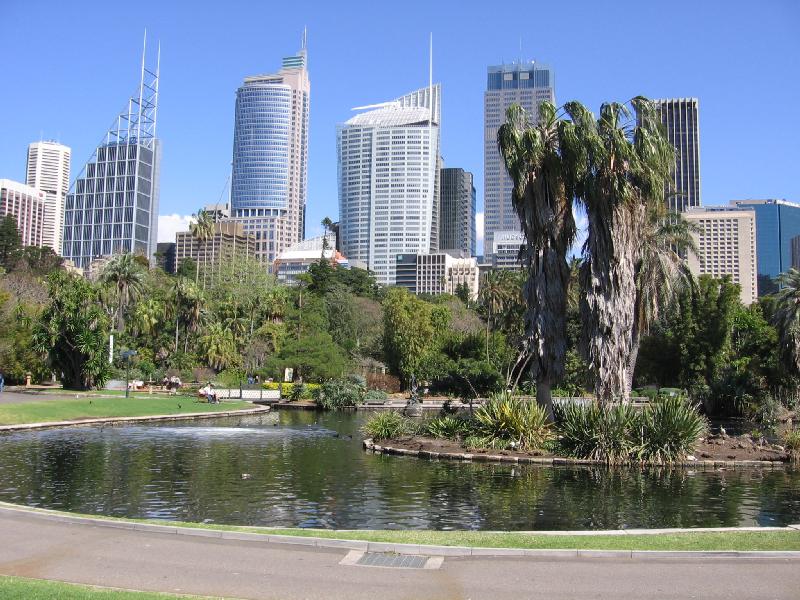
Photo of the Botanic Gardens, Sydney, with skyscrapers in the distance
The Botanic Gardens in the 21st century CC via Wikipedia

Cleverly, Nicholas arranged to finish the work on the birthday of Governor Lachlan Macquarie's wife, Elizabeth. The delighted Governor awarded Nicholas and his 10-man gang five gallons of spirits as a reward. There would have been sore heads as well as muscles the next morning.

Inscription on Mrs Macquarie's Chair, also called Mrs Macquarie's Seat, Royal Botanic Gardens.
Inscription on Mrs Macquarie's Chair, celebrating the day Nicholas finished the road CC by Graeme Churchyard

I've already written about building Mrs Macquarie's Drive as well as the only part of the original road which now survives, the Macquarie Culvert. As the 200th anniversary comes even nearer I hope to post more over on the A Rebel Hand blog.

Update: here's the first of those posts on Nicholas Delaney, Mrs Macquarie's Drive and the Botanic Garden's 200th anniversary.

The oldest bridge in Australia, built by Nicholas Delaney: the Macquarie Culvert, Mrs Macquarie's Drive, Royal Botanic Gardens, Sydney
The Macquarie Culvert, Mrs Macquarie's Drive, Royal Botanic Gardens, Sydney CC via Wikipedia

There's going to be a big party in the Botanic Gardens on the 13th and I've heard from some fellow Delaney descendants that they'll be going. If only I weren't half the world away I'd be there celebrating my ancestor's achievement. But I can't get to Australia this year. You can bet I'll be keeping up via social media and other channels, though.

The next bicentenary of this year is of the trial and sentencing of Sarah Marshall, my 3x great grandmother, on 24 July, 1816, at the Lancaster Assizes. 

Written record of Sarah Marshall's sentence at the Lancaster Assizes, July 1816
Sarah Marshall's sentence via Ancestry

Sarah was convicted of 'stealing a petticoat valued at one penny, a bed gown valued at one penny, two caps valued at one penny, a pair of silk stockings valued at one penny and a sheet valued at one penny, being of the Goods and Chattels of John Oldham.'

And for fivepence-worth of clothes, she was to be 'transported to some part beyond the seas.' To New South Wales, in fact, like all my convict ancestors.

Australian Convict Transportation Records for Friendship II via Ancestry

Sarah's story - or what I can find out about it, because there are plenty of strong Lancashire brick walls surrounding her life before she half-inched the goods and chattels - includes two particularly dramatic episodes after her trial. She was sent out on a notorious convict ship, the Friendship, famous for the licentious behaviour on board during the voyage. Again, I'm planning to write more about that.

And she's popularly believed to be the 'Sarah's Ghost' who is said to haunt Castlereagh General Cemetery, having been murdered by a group of  lust-driven men. But the story's inaccurate. I'm glad about that. Poor Sarah, as if she hadn't suffered enough.

Sarah went on to marry, or live as if married to, John Simpson, a tailor, and his is the last of my trio of bicentenaries.

John was born in Yarm, in the North Riding of Yorkshire. On 8 November, 1816, he was charged with 'feloniously taking and carrying away two bales of goods, consisting of muslin and shawls' at Hope in the Derbyshire Peak District and committed to Derby county gaol. The Derby Mercury reported the facts on 21 November.

Derby Mercury newspaper masthead, 21 November 1816
 
John Simpson charged with theft and imprisoned in Derby County Gaol: newspaper report in the Derby Mercury
Derby Mercury report via FindMyPast

He was to stay in Derby Gaol until the Lent Assizes in March, 1817, when he was tried and sentenced to seven years' transportation.

John and Sarah's daughter Lucy Simpson married Thomas Delaney, the son of Nicholas and his wife Elizabeth Bayly, which ties up my three bicentenary ancestors neatly.

Sunday, 14 December 2014

Cousins, calculations and Christmas

I've been spending the day adding people to my Lost Cousins Ancestors page. If you haven't heard of this genealogy tool, do have a look at the link. I subscribe to the newsletter, which editor and founder Peter Calver fills with useful genealogy tips and the occasional offer or competition.

This month's contest involves entering as many ancestors or blood relatives as you can, based on selected England and Wales, Scotland, Ireland, US and Canada censuses. The earliest is the 1841 England & Wales census, which is too late for most of my Aussie ancestors, and finding my early emigrants' and convicts' families is a tough job, full of brick walls.

Still, I'm a genealogist, and we're a stubborn persistent lot, so I keep chipping at those ancient walls. No-one ever said family history was easy, did they? Or if they did... well, don't listen.

And fossicking out direct ancestors' brothers and sisters often gives surprisingly useful clues, as well as filling up my Lost Cousins list and increasing my chances of contacting my living rellies. It hasn't happened yet, but I'm hopeful (another genealogists' characteristic).

I was pleased to find my 4xgreat grandmother, Margaret Richardson (born around 1789 in Hamsterley, Co Durham), in the 1841 census. Off I hurried to add her to my ancestors' list, when I came up  against a problem. I had to enter her Ahnentafel number. You know, those numbers you see on family tree charts and other genea-tools.

When I've needed an Ahnentafel number before, I've gone to my trusty battered paper family tree chart, which goes back to my 3xgreats. I know, not very tech, but it weighs nothing and I can slip in my bag when there's even a slight chance of fitting in some genealogy action that day.

But Margaret's off the scale. She's a 4xgreat. And I know it's a shocking thing to say, but I had no idea how to calculate the numbers, short of counting all the way up from 63 (my Irish 3xg, Julia Harrington).

A quick search came up with the answer, which is so simple that I had to share it, in case there are any other Ahnen-newbies in the Worldwide Genealogy community.

Here's how: to find out the number for someone's parents, take their number and multiply it by 2. That gives the father. Add 1 and you have their mother.

It really works! Though if you're going back a few centuries you may need a calculator.

For example:my parents. I'm the person I'm calculating from on my family tree, so my number's 1. 1x2+2. So my father's number is 2. 2+1=3. So my mother's is 3.

Oh, no! Margaret's off the chart.
Getting more complicated, to calculate 4xgreat granny Margaret, I take her daughter Elizabeth Bell (1810-1876). Elizabeth has Ahnentafel number 59, which will always mean the number 1 person's mother's mother's father's mother's mother. On any Ahnentafel you see. Clever, eh?

59x2=118. And I'm looking for the mother, so add 1. 118+1=119. And that's Margaret's number.

You can also work out Ahnentafel numbers using the binary system, but I'm going to stick to what I know.

And there's a clever site that does all the work for you, set up by Stephen P Morse.

But that's enough hard work, it's nearly Christmas! I've got two weeks off work so I'm going to get down to searching for my earliest female Australian, Elizabeth Bayly, wife of Nicholas Delaney. Anhentafel 49, in case you wondered. Ohh, but, she's hard work. And over on my A Rebel Hand blog there's a scary Christmas story to write for later in the month.

Have you got any genea-projects for the holiday season?

Wishing you a very merry Christmas, a happy Yuletide, Nadolig Llawen, Nollaig Shona dhaoibh, Nollaig Chridheil, Joyeux Noel, Feliz Navidad und Fröhliche Weihnachten!

Monday, 14 April 2014

Ancestral April Fool


Laughing fool, c 1500 (via Wikimedia)
This April, I've been fooled by a name.

I've started researching my father's grandmother's family, who lived in the same area of West Wales for - well, if you believe old family stories, many centuries. I've been looking for great-grandmother Sarah Davies, born in Llandyssilio[gogo], Cardiganshire, between 1853 - 56. And I thought I'd found her in the 1861, 1871 and 1881 Wales censuses. In 1881 this Sarah was living in an old farmhouse that's been in the family for generations. Right name, right age, right birthplace, right-looking address.

Wrong Sarah. I found her in the same house in 1891, but with the married surname James. 'My' Sarah had married Rhys Lloyd of Llandyssil/Llandysul before then.

We can all follow false trails. It's so easy to be fooled by the 'right' details. The fact that my ancestors were unadventurous in their naming doesn't help. Half my foremothers were called Sarah or Elizabeth, and a lot of the men were Thomases. And of course finding a married woman's maiden name can just complicate things even more. Poor Sarah has gone back into my 'to do' file, and I'm picking myself up, dusting my research off, and starting all over again.

There's an up-side, though, with names and false trails. I'm guessing that if you've looked at online family trees which have your own ancestors in them, you'll have found some cuckoos in the nest. A John Jones married 10 years after he was buried, perhaps, or a Jane Smith who emigrated in 1865 when records show she never moved from her Scottish birthplace. They're in your family's tree, but they don't belong there - and you have the documentary proof.

I've got my own cuckoos in the family nests. For instance, my 3xgreat-grandfather, Nicholas Delaney - the one who got me interested in genealogy - was transported from Ireland to Australia in 1802, and married Elizabeth Bayly (Bayley, Bailey) in 1808.

Reed warbler feeding cuckoo (Wikimedia)
A look at some family trees have him married before, in Ireland, to a woman with a very 'modern' looking name. Now fair enough, a name could be spelled in plenty of different ways, like Elizabeth's surname in the last paragraph. But when it looks extremely 20th century, like Kathryn, Debra or Barbra, you have to go 'hmm'. And if her second name is also not what you'd expect in rural Ireland in the 18th century - Jay, Kay or Dee, for instance - well, it's time for a pinch of salt.

It turns out that this cuckoo wife was born in the US (and would have had to cross the Atlantic as a young woman to live in deepest County Wicklow in order to meet and marry Nicholas). Digging a little deeper into her history, I find she was born in the mid-20th century. How she ended up in Nicholas's tree in the 1790s, I do not know.

So in this case the name is a hint that you need to look very closely at the proof for this claimed 'relative' - which Worldwide Genealogists would do anyway, of course!

When I start searching for great-grandmother Sarah Davies again, I plan to use names as clues. I've said that my lot were all very traditional in the forenames they chose, so maybe they followed traditional naming patterns, at least for the first few children (many of them had traditional large families, too).

In many parts of the UK, couples would use this pattern, strictly or loosely, until the later 19th century:

1st son - named after the father's father
2nd son - mother's father
3rd son - father
4th son - father's eldest brother


1st daughter -
named after the mother's mother
2nd daughter - father's mother
3rd daughter - mother
4th daughter - mother's eldest sister


Of course, it's never that simple in real life. Some people used variations on this pattern. Some only followed it for the first few children. Some didn't use it at all. Parents who were firstborns could choose another sibling's name for baby number four. Children could be named after other relatives, a powerful local family, royals, role models or political figures. And if someone had fallen out with a parent or sibling they might well not want to name their baby after its spiteful granny or criminal uncle.

Still, I'm glad of any clues which might help me track down those elusive ancestors hiding away in the records.

I'm looking at you, Sarah.


Apologies to all my fellow Worldwide Genealogy bloggers - in its wisdom Blogger/Blogspot has decided not to let me make comments once again. I thought I'd sorted out the glitches! (Sigh...) So I just wanted to let you know that I'm enjoying your writing and all the inspiring ideas and information. And please do comment on this post. I'd love to hear from you - I just won't be able to chat!