Friday, 22 August 2014

Snappers and Shutterbugs – Who Took Your Family Photos?

I have inherited 3 collections of family photographs.  The collections were assembled by Mary Fleming, nee Lamb (1812-1901), my maternal 3 x great-grand-aunt; Raymond Walter Coulson (1922-1997), a paternal 1st cousin twice removed; and Mabel Adams, nee Coulson (1910-1991), my paternal grandmother.

Mary’s is the oldest collection, which dates to between the late 1850s to the 1870s.  It consists of an album of pictures measuring about 9cm X 6cm mounted on card, a format called carte de visite.   Examples from this collection have been the subject of my Family Folklore Blog series on the identities of people portrayed, inspired by Diane Hewson’s post Genealogy CSI Style - Facial Recognition. These photos were all taken by professional photographers in formal studios at a time when photography was in its infancy. Cameras were little more than a light-tight box with a lens. Negative images were captured by a wet film of light sensitive chemicals (silver nitrate) that adhered to sheet of glass coated with collodion.  Glass negatives had to be processed immediately. Prints, the positive images, were made on albumen (egg white) coated paper sensitized to light with a solution of silver nitrate. The negative was placed in direct contact with the paper producing a print the same size as the negative, known as a contact print. This video demonstrates the processes:


Albumen prints characteristically gain a yellow cast with age. The degree of yellowing may be influenced by the quality of the chemical processing and conditions of storage. This example, taken by leading London photographer, Camille Silvy, is the least yellowed in Mary’s collection.
Silvy, Camille (photographer). 13 July 1862. Portrait of B & A Lambert taken at 38 Porchester Terrace, Bayswater W. Carte-de-visite album compiled by Mary Fleming, nee Lamb (1812-1901). Personal collection of Sue Adams.

Raymond’s collection includes the World War I photo collection he inherited from his father, photos that mark his progression through childhood, and an eclectic selection from unknown family and friends. His cousin Percy Peckett, the family snapper, took a substantial proportion of the collection. Photos taken while Raymond served in India in World War II went missing from the collection around the time his estate was settled in 1997. Only 1 roll of film can be attributed to Raymond himself.
Coulson, Raymond (photographer). 23 May 1959. Interior scene of 322 Aston Hall Road featuring a radio. Negative, contact print and annotated reverse of contact print.  Negative image size 59 mm x 84 mm.  Kodak Wallet containing 7 prints and 8 negatives. Photograph collection of Raymond Walter Coulson (1922-1997). Personal collection of Sue Adams.

Verichrome nearly 3 yrs
outdated
1/25th 12 secs
fr ladder by french window
3pm May 23rd 1959
at 322 Aston Hall Rd

The detailed annotation on the reverse is a treasure, as it reveals much about the equipment at Raymond’s disposal, and reminds me of the data now automatically collected by digital cameras. Verichrome was a type of roll film. The sensitivity film to light, called film speed, is now measured by the ISO standard. ‘Slow’ film is less sensitive, so it needs either a longer time exposed to light or more light allowed to enter through the lens through a larger aperture.  Verichrome equates to 125 ISO, which is slow by today’s standards. In Raymond’s annotation, the numbers “1/25th 12 secs” relate to the camera’s exposure settings. The manual exposure time, 12 seconds, is a long time to hold a camera still, so the note “fr [om] ladder by French window” suggests Raymond used a portable free-standing ladder as a makeshift tripod.  1/25th is a shutter speed, a pre-determined exposure time, which is still too long a time to hold a camera still. For any shutter speed 1/30th of a second or greater, use of a flash is recommended for hand held shooting.  My guess is that Raymond recorded both possible shutter settings.  As Raymond recorded no aperture setting, denoted by “f” numbers, I think his camera lens may have had only one size of hole that let the light into the camera, a fixed aperture. As I have the negative for this photo, I know the format of the film was 120 or 620, which was very commonly used in box cameras.

Mabel’s collection, the largest numbering over 1000 photographs, includes photos from the 1920s up to the early 1990s. The main family shutterbug was Mabel’s daughter, Barbara.

Adams, Barbara (photographer). ca. 1957-1960s. Self portrait. Photograph collection of Mabel Adams, nee Coulson (1910-1991). Personal collection of Sue Adams.

This ‘selfie’ reveals a camera that Barbara used.  I can tell that it is a Kodak Brownie Model 1 or one of the Kodak Brownie Flash models, by comparing it to examples at Kodak Box Brownie.  These camera models were produced from 1957 and took 620 roll film, so we can be confident that the photo was taken in or after that year and know the size of the negatives. The size of the images produced were 2 ¼ in x 3 ¼ in or 57 mm x 82 mm. This print image measures 80 mm x 117 mm, so it is an enlargement, likely of the whole image as it maintains the same aspect ratio. Other photos in the collection from the same batch, identified by the stamped no 23 on the reverse, were taken in the garden of the family home in Olton Road, Birmingham. Barbara took advantage of outdoor light and a mirror to achieve this thoughtful image. She later progressed to a single lens reflex (SLR), but has not made the transition to digital.

Mabel’s negatives are the tiny (13 mm x 17 mm) 110 cartridge format used in Pocket Instamatic cameras. Such small negatives are always enlarged to produce a usable print. Despite owing a simple point-and-shoot camera, Mabel often blamed it for the classic snapper’s errors: cut-off heads, out-of-focus and under exposed (too dark) or over exposed (too bright) images.

An Interview with a Family Shutterbug

My brother, Stephen, was the family shutterbug from my teenage years onwards.

This photo, published in the school magazine is very apt.
"The Snapper snapped". Candid Camera. Alberton High School magazine 1979. p. 11. [Photograph depicts Stephen Adams at Alberton High School, 35 Phantom Street, Randhart, Alberton, Transvaal, South Africa]

I asked him about the cameras he has owned.

What was your first camera and when did you get it?
My first camera was a Halina 200.  It was a birthday present in the year I went to Germiston High School before we moved to Raceview [1977]. It had no light meter so you had to guess exposure; and shutter speed, aperture and focus were all manual so you had to remember to pay attention to all three!

What camera were you using in 'The Snapper snapped'? Was your first SLR and when
did you get it?
I think the camera in the picture of me was a Praktica Super TL or just maybe Praktica Super TL-2 or  "TL-1". Dad bought the SLR when he went back to England for granddad's funeral [Thomas Adams, husband to Mabel, died 1979] so it was second-hand then.

This was my first SLR. I had a standard lens and a third-party zoom. The standard lens was the better of the two; the zoom had poor contrast and slowly fell apart. A manual SLR at least makes you pay attention to focus.
[This camera had a built-in light meter, making shutter speed and aperture setting easier.]

As an avid birdwatcher I vividly remember the theft of my first binoculars and Stephen’s camera. My bird watching notes pin the date down to 3 January 1985 and the location to the beach car park near at Imhoff Caravan Park. After confirming that the Praktica was stolen, Stephen described its replacement and a subsequent film camera:

I bought an Olympus OM30 after moving to Southampton.  I still have the OM30. I also have my last film camera, a Ricoh GR1. It is about as small as you can make a 35mm camera, something you could carry discretely and with a 28mm lens was great indoors.

When did you go digital?
I bought a Canon G3 just after my trip to Brazil, 2004. I have had several digital cameras, including a Panasonic Lumix LX3 and a waterproof camera, but I use my phone more, since I always have it with me.

Of course the instant feedback of digital makes it easier and inexpensive to learn. But I don't take good pictures because I'm not paying attention.

This has been quite a romp through photographic history with a fair bit of technical detail. Although almost everyone now takes digital photographs, it is possible to explore the limitations of older cameras.  If your camera has manual settings, try using the same settings as Raymond did. Turn off light meter facilities and auto focus and see what using Stephen’s first camera was like.

Ask your family snapper or shutterbug about their cameras. Even those disinterested I family history like to talk about their tech toys. You may turn up snippets of information useful to genealogy. Did you notice Stephen’s references to places and events, and the interaction between our memories?

The more I organise and catalogue the photo collections in my custody, the more I discover. Can you identify which photos were taken with the same film, the same type of camera, or by the same person? The collection level information is often overlooked, but can be very revealing.

Thursday, 21 August 2014

World War I and the Wellington Quarries

The town of Arras was on the Front Line.
Large areas were destroyed including this historic square.
It was rebuilt after the war.
On our recent travels we visited Arras and did a tour of the Western Front battlefields in northern France and Belgium, a very moving experience. We based ourselves in Arras and one of the completely unexpected places we visited was the Wellington Quarry Museum, or Carriere Wellington, in the town of Arras, a place that was massively affected during World War I, with many areas destroyed. It was also "home" to many of the British and Dominion troops. 

We had known nothing at all about the Wellington Quarries before our visit so were all the more surprised by what we learned. They were pre-existing tunnels under Arras which had once been used to excavate chalk. The British army took advantage of this opportunity to use them in the lead-up to the Battle of Arras. Over a few months they were progressively expanded by the New Zealand Tunnelling Company and the Royal Engineers Tunnelling Companies.  Many of the tunnellers had prior experience in quarries or as miners. 

The tunnels were intended to quarter over 20,000 men under the town of Arras, in a labyrinth which required street names and, I imagine, a good sense of direction. We were the only people on our tour with the Museum's English-speaking guide and it was hard to imagine the noise and busyness of a small town-beneath-a-town.
From a tracing, map of the Western Front showing the German advance.
Arras is circled.
http://www.awm.gov.au/collection/J00147/
Copyright expired.


The in situ memorial retains many of the artefacts that the men left behind including touching drawings by some long-gone soldier, and the usual detritus like rusty cans. At one place, near Junction 5E, the priest said Mass before the men went into battle. As the time for engagement drew near, and the tunnels crept closer to the German lines above, it would have been necessary for the men to be pretty quiet in that vicinity.


Another astonishing thing is that when the allies went into battle they erupted from the ground en masse just metres from the German lines…they must have hardly believed their eyes. Mines had also been laid under the German trenches and exploded near the commencement of the battle. What a shock too, for the troops who emerged at 5:30am from the relative quiet and darkness into the noise and pre-dawn light of the battlefield. 


We were surprised to learn, too, that the very existence of the tunnels disappeared from the public memory between the wars, and then for a long time after World War II. We also learned one frivolous thing we’d not known before….the New Zealander hats were called Lemon Squeezers because that’s what they looked like.

During a chat with the staff after the tour I mentioned I’d be writing about it on my blog and so they asked if I could also bring to your attention, their proposed activities for the centenary of the Battle of Arras in April 1917.  The Museum is preparing an exhibition about the soldiers who were in Arras, and especially any of the New Zealand tunnellers who were in the Quarries.

In particular they are looking for:
  • Photos of the soldiers -not necessarily of the men in uniform – they could be of them before or after the war. 
  • Letters to/from the soldiers while they were overseas or stories of their lives.
  • Relatives of the men who may wish/be able to attend the dawn service on 9th April 2017, the centenary of the Battle of Arras.

If your family had any involvement with the Battle of Arras they would love to hear from you.

Please contact
The contact information for the Museum is wellington@explorearras.com or isabelle@explorearras.com. They have fluent English speakers working there so you can happily write in English if you don’t speak French.


Of course, it would be great to hear from relatives on this website as well. I’ve found this news story from the Waikato Times and will also email the contact to bring the Museum’s request to their attention. There’s also a Facebook page for the Kiwi Tunnellers. There is an excellent site on the NZ Tunnellers and more pictures on this website

The Australian Divisions remembered on the wall outside the Museum.

Tuesday, 19 August 2014

Are We Losing The Art of Written Communication?

What do you prize the most of an ancestor's that you never met?  For me, it is letters. It is like reaching across time and having a portion of their thoughts and their handwriting, which is a physical portion of them. Many I don't have pictures for, but I have little a bit of their personality.  For that reason, I treasure letters I have saved of aunts who wrote me when I first married.  Books written by two ancestors, Lemuel Roberts and William Bradford have been wonderful too.
What brought this to mind was some events that occured the last week with some grandchildren.  The oldest is always on the go, so I will text her and she can text me back later.  Hmmm... not a lasting communication and usually is generic conversation.  The next to the oldest, I called.  Conversation went like this... "Hi! How are you doing?"  "Good." (Now I have to start digging to get past good...)  Once again, not great communication nor lasting.
My sweet aunt never called, although there were telephones. This is an example of a letter from her.

My great great grandfather wrote a letter to his nephew that was saved and has been passed around to countless descendants.  It tells what he thought about, and what was happening with his family for us to read, savor, and glean information from. 
You notice he put the place and date at the heading. Forgotten art of letter writing? 

The Hero wrote a letter to his daughter when he arrived home after visiting with her. She still loves it now that he is gone.

After contemplating today's texty and techy world, I have decided I am going back to writing letters to my granchildren, especially those that live over a day's ride from me. I will start putting a special message in Christmas cards for family that I communicate with in my handwriting not a computer generated message.  
What do you think?
See you next month. 
Hummer.


Saturday, 16 August 2014

The Lazy Hazy Days of Summer, Perfect for Remembering and Headstones

.
Summer here in the USA is mostly a done deal.  Soon our youngsters will be headed back to school (actually some have already started).

So between shopping for school supplies, some last minute vacation getaways and our upcoming National holiday of Labor Day, we are all busy people.

How have you spent your summer days?  Researching in libraries, visiting cemeteries, laying on the beach?

Well, there was no beach time, cemeteries or research trips for Man and I this summer.  We have been sticking close to the stick built, but, believe me, we have not been idle.  We have had quite a few visitors, including my Mother and the grandtwins.  We have been doing lots of yard work, the yard was ignored for a few summers, the flower beds were and parts still are, rather overgrown and full of weeds.  We have spread over 8 cubic yards of cedar mulch so far, here and there, and we still have another 3 left in the utility trailer to spread.

During breaks from all this great exercise and family time I work on the data base, reviewing, linking photos and documents.  All good things.

With the sale of Man’s childhood home last month, we are going to do something else that needs to be done.  It has been over 50 years waiting to be done.  We are going to invest in something marble or bronze - - 

We are ordering headstones for his grandparents and his great grandparents.  One of the great-grandparents died in 1923, no stone.  His wife, died in 1939, no stone.  The grandparents we will be memorializing died in 1952 and 1954, again, no stones.

We have been asked, why do this, when there are very few that will visit the graves?  Stones are not cheap.  Simple, everyone deserves to be remembered.   

Calls are being made, information gathered, brochures requested.  The hope is that before these Rvers head south for the cold months we will have stones in place for those who have waited far too long.  

RIP, Charlotte Gehrke, Carl Gehrke, Arthur N Stevens (aka Archibald Lashbrook) and Edna Stevens.  You have not been forgotten.


* Photo courtesy of Kaz, subscriber at Pixabay.  Permission was requested for use of her Public Domain photo, permission was granted.  Thanks Karen.
.

Tuesday, 12 August 2014

The Changing Face of Genealogy Collaboration

We talk about collaboration and telling the stories of our family almost as though it is something new. Surely this is the real reason why so many of us get interested in genealogy in the first instance. Whatever our age we all like to hear about things that have happened be it last week or last century.

This month I have decided to write about collaboration and how the perception of genealogy has changed due to the internet and our increasing use of what is available to connect with others.

When I first started researching our family history (I am also researching my husband's family) the internet was in its infancy and we were on dial up. This was expensive and you would go online pick up your emails and read them later.
Collaborating with others was difficult but not impossible and like many others I used some of the Rootsweb mailing lists of relevance to my research interests.
The only other way of communicating with fellow researchers was to belong to a family history society to find other researchers and contact them by post.

Research in those early days, even just finding a reference to order a certificate, meant heading off to record offices or local archives where you had to trawl through microfiche or film to find what you wanted. There were some indexes available mainly through local family history societies which did help you find the right roll of film.

Programmes like WDYTYA http://www.bbc.co.uk/programmes/b007t575 which is showing its 11th series in the UK have changed public perception and sparked interest in the hobby. Despite only a small proportion of the resources available being online, what is there has made a difference to the way we both conduct and record our research.


These changes have taken place over a relatively short space of time and it is true that there are those who have not truly embraced the changes.

There has been discussion on social networks about how family history societies may need to change to connect with the needs of their members. Some have been forward thinking and have reached out to researchers across the world by providing access to online education but this may not be an avenue that every society can or should copy.

The societies I belong to in England have changed some of the things they do but we must not forget that they rely upon volunteers. The direction that each society takes will depend upon who has the time and inclination to commit to the development of that society. This can lead to a society stagnating because none of its members has the inclination or time to commit to change. If you belong to a society which may be stuck in the past don’t forget to make suggestions, they may get ignored, but any society is only as good as its members are willing to make it.
What do you want from your society? Don’t forget to tell those who help run the society, you may find that others think the same.

I have mentioned discussion on social networks and these have become the equivalent of the mailing lists of the past but more. Facebook has groups for genealogy and Google+ has its communities. There are also others such as Twitter and Pintrest. Whereas we communicated by email and text in the past we now have a much more visual way of sharing. This has enhanced our ability to share our experiences but opened up more challenges when we publish online what might be copyrighted. Will these copyright challenges limit our experience?

We also interact using our blogs such as this one and many other individual blogs see Geneabloggers http://www.geneabloggers.com/genealogy-blogs/  maintained by Thomas MacEntee.

Whilst webinars http://blog.geneawebinars.com/ are an educational resource they can help provide pointers to things you may not be aware of and they are a great way to get information to those who may not be able to get to conferences or other genealogy events.

Video blogging using the Hangouts on Air on Google+ is becoming increasingly popular and allows genealogists from across the world to communicate by live discussion. They can also be used as a tool similar to webinars and a way to share how you do things.

To finish I would like to tell you about a Google+ community I am setting up to discuss how we get our genealogy software to work for us.

I will post on my blog http://masteringgenealogysoftware.blogspot.co.uk/ when I launch. I want this to be a discussion forum so that we can learn from each other, we all need to collaborate.


Sunday, 10 August 2014

World War I Relic of Some Significance

As always the 9th of the month has caught me by surprise again, where has that month gone.  I was wondering what I should write about when I saw Yvettes wonderful pictures of WWI on her post "World War I Photos". Such powerful photos!! 

I was reminded of an amazing WWI family relic that I was privileged to see earlier this year.  One of my second cousins contacted me last May, after he had read a post I had written about my grandfather Malcolm Michael Shepherd.  His grandfather, Angus Shepherd, was my grandfather's older brother and they both enlisted in the Army and fought in Africa and Europe during the first world war. The following week, I met with my cousin at the 175 year celebration of the small town of Braidwood, the town that our great grandfathers had grown up in and was delighted that he had bought with him a wonderful collection of family photos and memorabilia to share with me.

Angus John Shepherd


Malcolm Michael Shepherd (Angus's brother)

Among my cousins collection of photos, cards and memorabilia, there was one item that really caught my attention. It was a menu hand drawn by Angus Shepherd for the 7th platoon, 33 Battalion's Christmas Celebration in France. The menu is drawn up on a target practice card, and the back the men from the 7 platoon have all signed across the target.  I was very excited that he let me take a copy of this  valuable piece of Australian World I history.

Christmas Menu - Celebration of the 7th Platoon of the 33 Battalion  25.12. 1918

Back of Menu and Target Practice - Signtures of the men of the 7th Platoon, 33 Battalion

I can't begin to imagine how these men felt at this time.  They had fought and survived through some of the most horrific battles and living conditions.  They had seen unimaginable horrors, witnessed the death and wounding of their comrades in a country so far from their home and families.  You would think that their first Christmas celebration after the end of WWI would have been very bittersweet. 

Friday, 8 August 2014

The "WHY'S" of Family History,


Jill of GeniAus in her  World Genealogy posts has posed the perennial questions of family history research  - Who,  What, Where, How and Why. 

Here I am focusing solely  on the "WHY"

For we can find out:
  • When our ancestors were born, married, died.
  • Where the events took place  
  • What they did for a living
  • How they  (or at least their contemporaries)  lived their lives.

But "WHY" is much more problematical and we can only make a reasonable guess at what motivated people to take the actions they did. Here are some puzzles that I have come across in the course of my research. 

WHY was 6 year old John Robert Donaldson (my husband's great grandfather)  left behind when his parents moved 350 miles south from South Shields in north east England to Portsmouth on the south coast?

John was born in 1854, the son of Robert Donaldson, a shipwright,  and Isabella Walton of South Shields, a town  on the north east coast of England, dominated  by the sea and maritime activity.  An obvious next step in research  was to find the family in the 1861 Census, but frustratingly, in the days before online records, this proved impossible to trace.   Yet all the indications were that direct Donaldson descendants had remained in South Shields down the generations.

It was only much later  with the opportunity  to do national searches online that I discovered that in 1861 Robert and Isabella were at  Portsea in Portsmouth on the south coast of England. With them were two young sons Thomas, aged 4, born South Shields and one year old Frederick W. (Walton perhaps after Isabella's maiden name?) born at Portsea, indicating a move c.1857-1860.  But there was no mention of their eldest son, John  who would have been 6 years old. 

How had the family travelled 350 miles from South Shields to Portsea, by rail or more likely by sea?  Work presumably was the reason,  with Robert now employed at Her Majesty's Dockyard as a shipwright.   Why was John not with them? Was the journey regarded as too much for a young child?

Back in South Shields, I returned to the 1861 census and  found John's maternal grandparents, John and Hannah Walton, with the household also including their grandson John Robert Walton aged 6.  This must be "my" John Robert Donaldson, mistakenly recorded in the census with the wrong surname.     An entry in the 1871 census gave further confirmation - a John Donaldson, aged 16, born c.1855 was living at the home of his maternal uncle Robert Walton. Death records showed that John  must have lost his maternal grandparents (and his home)  in 1868.

Eight year later John married Jane Elizabeth Rushton. and they had five sons - John Robert, Henry, Thomas, Frederick and one daughter Isabella.  Interestingly these names echoed those of his siblings in Portsmouth.  For John's parents Robert and Isabella had more children, making a family of Thomas, Fredrick, Henry, Robert, Charles, Isabella and Alfred.   The fact that John retained the name of his father and mother  for his eldest son and daughter suggests that the split had been amicable.  One cannot help wonder did the two families ever meet?

But why John was left behind remains a mystery and we shall never know.


WHY did my great grandmother Maria Rawlicffe later adopt the name of her baby sister, Martha,  who had died in infancy? 

Family hearsay always gave my great grandmother's name as  Maria Rawcliffe of Hambleton, near Poulton-le-Fylde,  Lancashire.    There was just this single Christian  name on her birth certificate.  But there was a puzzle in that many official records, such as her 1877 marriage certificate, the 1881 census entry, burial record and my grandfather's  1907 birth certificate  gave her name as Martha Maria.   I sent away  for Maria's  birth certificate c.1859 and outlined my confusion over her Christian name.

To my great surprise the result was two certificates - for Maria, daughter of Robert Rawliffe and Jane Carr, born 15th January 1859 and another daughter Martha, born to Robert and Jane on  20th January 1863. 

Four months later Martha had died.  Maria would only have been four years old then, so could hardly have remembered  her youngest sister.

"Martha Septima Rawcliffe" was the full name I found on Family Search - one of  those titbits of family history research  which I find  so intriguing - 7th daughter after Anne, Jane,  Margaret, Alice, Jennet and Maria.   But how did her Ag. Lab. father and mother  who in 1846  only could make their marks on their marriage certificate, come to know this Latin tag?    The submitter was American (I suspect a descendant of Maria's sister Alice who emigrated to USA).  I did write to the address given, but the letter came back "unknown", so very frustrating.  Much later I traced the American connection, but no-one has come up with any clue to the "Septima" name and the IGI entry is the only record I have of it.  
 

The puzzle does not end there, as Lancashire Online Parish Clerk Project (OPC) and the IGI record a Peggy Rawliffe, born 1861 to Robert and Jane, which means Martha would not be the 7th child but the 8th.  Sadly Peggy only survived 16 days. 

The question "Why" besets the emigration of our  ancestors.

WHY did the Spowarts a mining family from Dunfermline, Fife in East Scotland travel 5000 mile across the Atlantic and the USA to settle in Utah?

Life expectancy at the end of the 19th century was only 50 for men, yet Thomas Spowart (c.1819-1899) must  have been in his early 50's   when he left Scotland with his wife Catherine.  Sons William and George chose to stay in Scotland.  

Their first destination was a mining community in Wyoming, with Thomas moving to adjacent Utah after the death of his wife. This pinpointed to the couple emigrating between 1871 (when there were in Scotland for the census) and 1874 (the death of  Catherine). 

In Scotland in 1871, Thomas and his two sons William (15)  and George (19) were all miners, whilst daughter Jean, aged 17  was described as a "coal labourer".  But tragedy struck the family of eight children -   youngest daughter Elizabeth died in 1869 at the age of only twelve; two years later in 1871 daughter Catherine died aged twenty one, with Margaret passing away in 1873 aged nineteen. 


A Spowart Internet contact noted that the Church of Latter Day Saints began its missionary work in Britain around 1837. By 1851 there were over 3000 members in Scotland, with the missionary work concentrated on the industrial areas. "The Perpetual Emigrating Fund" helped those who wanted to emigrate.  The online accounts of the Spowart family in America revealed that they had in fact joined the Church of Latter Day Saints as recorded in the Dunfermline Archives, with Thomas baptized 10 July 1848.

Am article in The  Scotsman"  newspaper  of 2 March 1868 reported:
Dunfermline - Emigration of Miners To America
On account of the great depression, which still exists in the mining and iron trade, a considerable number of miners in the Dunfermline district left last week for America acting on the suggestion of Mr McDonald, president of the Miners' Association. The mining trade is giving no evidence of improvement, and many men are still unemployed. The markets are dull, and coal continues to accumulate at the pitheads. One colliery in the district has a stock on hand of about 36,000 tons.”

Later research revealed that daughters Jean, Christina and Helen also emigrated, at different times, with a suggestion that some local organization was sending out brides or potential brides. 

Presumably Thomas left Scotland for what he hoped would be  a better life, though online accounts suggest that living and working conditions in Utah were very harsh. 


WHY did Alice Mason, nee Rawcliffe (my great grandmother's sister)  sail from Liverpool to New York in 1886 with six children under 11 years old (including a baby) - plus "two pieces of baggage":

Entry for Alice & family on the New York Passenger Lists 1820-1957 on Ancestry.co.uk
 The short answer was to join her husband John Mason who had sailed a year earlier. but what had prompted the decision to leave their home and extended family in the fishing town of Fleetwood, Lancashire to live in the  teeming tenements  of Brooklyn?  In the 1881 British census, John was described as a general labourer, but by the time of the 1900 USA Census he was an insurance agent.  Five more children were born to the family, but sadly three died in early infancy. 

A public tree on Ancestry.co.uk made me wonder if James had family connections in the USA, so more research is called for here to try to answer this particular "WHY".    

                    It is scenarios like this that make family history so absorbing a hobby.  

What ~"WHY" questions do you have in your family history? 

******

Copyright © 2014 · Susan Donaldson.  All Rights Reserved


Thursday, 7 August 2014

Genealogy Research in Spain

I’m a thirteenth generation American married to a first generation American.  My husband’s family is from Spain.  He was born in New York City while his father was working at the United Nations.  Not another member of his family was born in the USA, except for our daughter. Learning how to research his genealogy was something completely new to me! 

My husband grinning after finding an ancestor
in the church record books of Sinovas, Burgos, Spain
Working on my husband’s family tree doesn't necessarily mean that we have to physically be in Spain.  Here are several hints for working on Spanish genealogy. 

1.        All family research starts with YOU and then you work your way backwards.  Start with interviewing family members.  We’ve used snail mail (the US Postal service), email, and Skype to ask questions.  This can work with relatives in any foreign country.

A typical Libro de la Familia from Spain


2.     In Spain all families must register their births, marriages, and deaths in a “Libro de la Familia”.  Every family has a copy of this book.  These were started by the Ministerio de Justicia under Francisco Franco, and the practice continues today.  Each book shows the heads of households, marriages, children, etc. It is an invaluable resource.   There are additional pages for other civil registrations, orphans, widows, places of employment, residence changes.  It’s a treasure chest!

3.     From the oral history and the “Libro de la Familia” you will be able to discern where each family unit lived in order to search for church records.  The Catholic Church was the official church for most of Spain’s history, although you might find that some family members belonged to other religions.  Most churches have uninterrupted records back to the 1600s except in cases of wars, such as the Napoleonic Wars in Spain (The Peninsular War 1807 – 1814).  During this time period many church records were lost.

4.       In the case of lost records, don’t despair.  One of my husband’s paternal lines came from the village of Sinovas in the province of Burgos, where the records were destroyed during the Peninsular War.  The Catholic church records after 1814 name the parents and grandparents on the births, marriages and deaths so I was able to still go back another two or three generations to the mid-1700s with these families.

The marriage of Celestino Garcia and Joaquina Munoz, in the village of
Barba de Puerco, Salamanca, Spain 1 December 1877


5.   Many Spanish church records have been microfilmed by the LDS church.  You can find these films online at familysearch.org   If you are lucky these images have been digitized, such as the villages for my husband’s maternal grandmother’s side of the family in Salamanca province.  If not, you can view these films at your local LDS church’s family history library.

6.     After searching church records, other records to use include town histories, tax records, military records and other documents from Spain.  These are sometimes available through Family Search, and also online at the Spanish National Archives website  http://en.www.mcu.es/archivos/MC/AHN/   or the National Library of Spain http://www.bne.es/en/LaBNE/ArchivoWeb/    where you can search by surname, village or topic.


Good luck!  Buena Suerte!


Tuesday, 5 August 2014

World War I photographs

I live in the Netherlands, one of the few Western European countries that remained neutral during World War I. Still, the effects of the war were felt here too. Many refugees fled to the Netherlands and people were eager for news about what was going on at the front.

World War I was one of the first wars that was covered by newspapers that not only told stories, but also showed images. Some of these photos have found their way to the National Archives of the Netherlands. In this blog post, I would like to share some of the pictures that made the biggest impression on me.

All pictures are available on the National Archives Flickr account with 'No known copyrights.' Click the images for the description on Flickr.


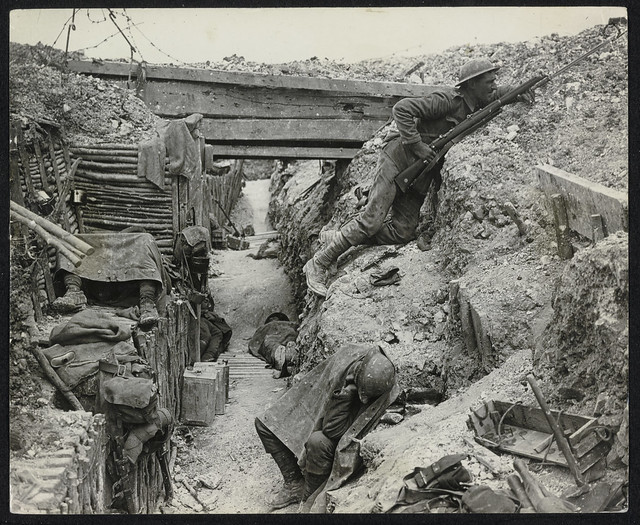
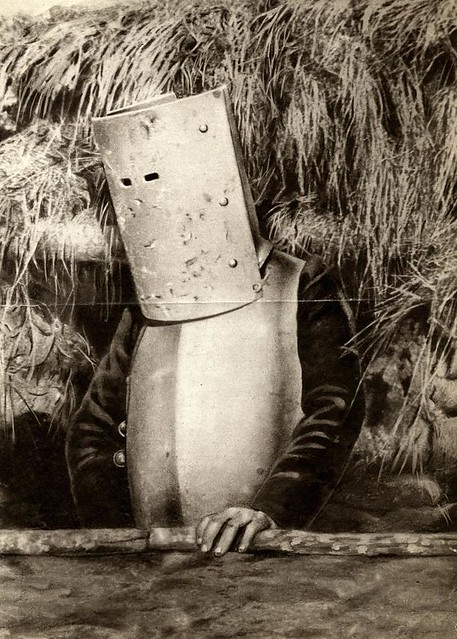
Leven in een loopgraaf
Life in the trenches

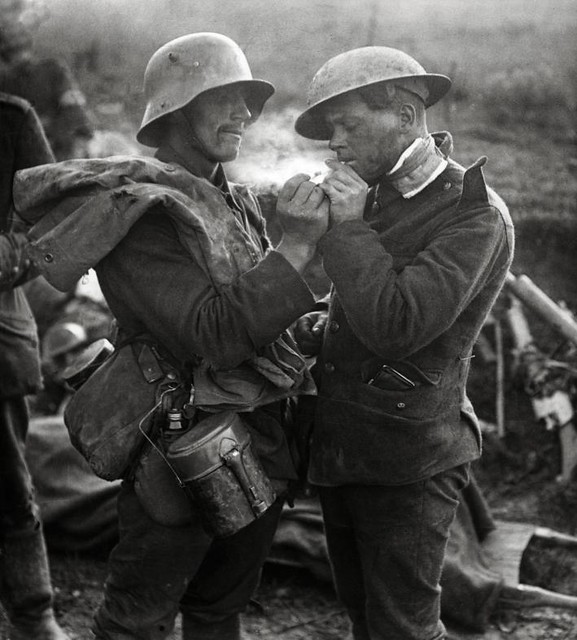
Eerste Wereldoorlog, krijgsgevangenen
Prisoner of war getting a light from his captor.

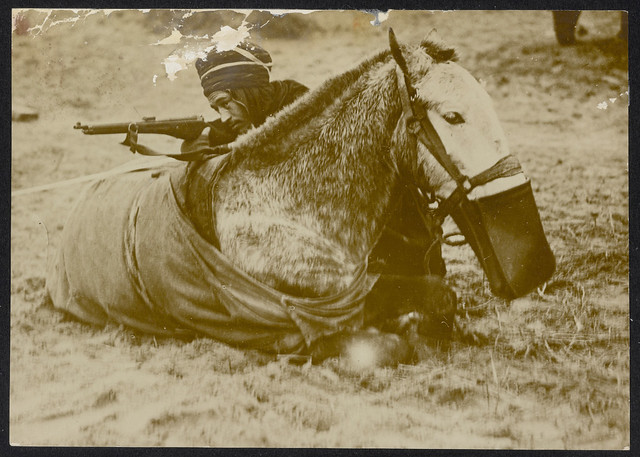
Soldaat met geweer die zich verschanst achter een liggend paard
Soldier using a horse as a shield

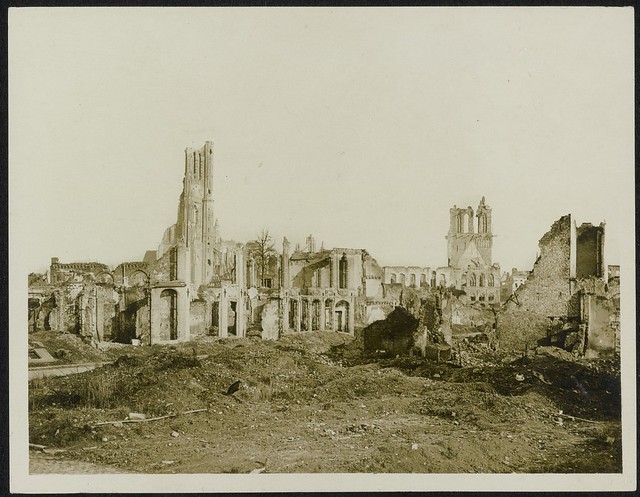
THE FRONT IN FRANCE. THE RESULTS OF GERMAN VANDALISM
Ruins at Ypres

Eerste Wereldoorlog, loopgraven
French soldier in improvised harness to protect himself from the bullets

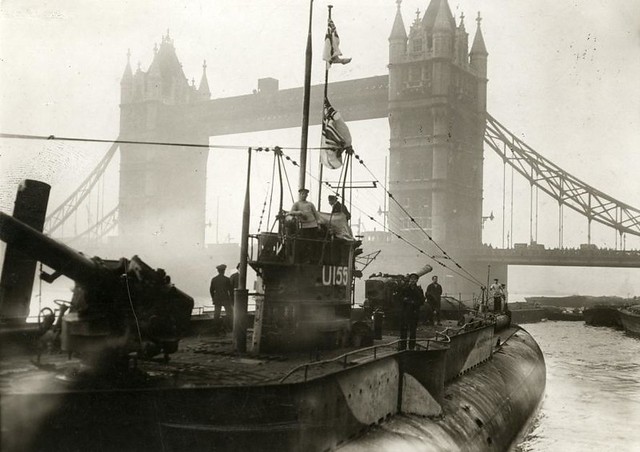
Eerste Wereldoorlog, zeeoorlog
Surrender of the German fleet to England

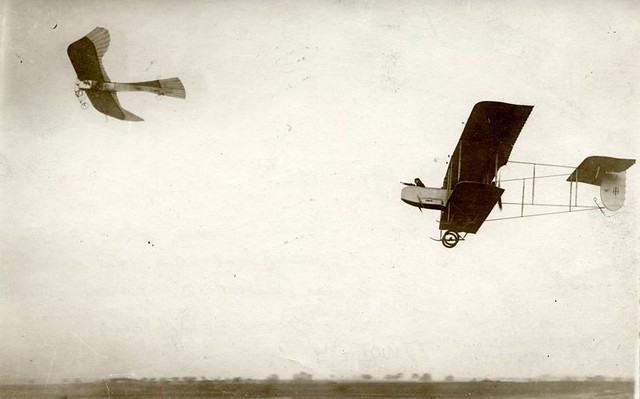
Eerste Wereldoorlog, luchtoorlog
Aerial combat

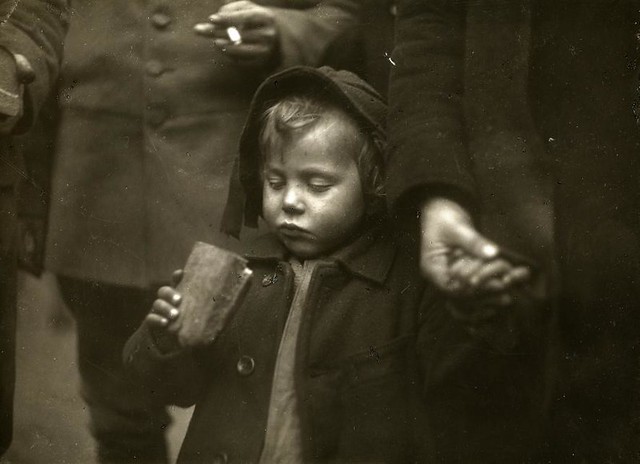
Eerste Wereldoorlog, vluchtelingen
Refugees

Monday, 4 August 2014

Lights Out - As The World Remembers


Lights Out - Remembering with a Candle in the Darkness
Image courtesy of FreeDigitalPhotos.net ID-100158085

At 11:00 pm on August 4, 1914 (100 years ago today) Britain declared war on Germany. Today from 10:00 - 11:00 pm the United Kingdom (and much of world) will remember the start of what is often called "the Great War"or "the war to end all wars." For those who had family members who served, who have read their history and understand what took place for four long years as battles stretched out over much of Europe, World War I was neither great nor unfortunately did it end all wars. It is fitting that we remember this terrible tragedy and realize that when countries overreach, when leaders refuse to talk, and when parties to a conflict choose to fight rather than attempt to resolve their issues, lives are lost, individuals are harmed, families are shattered, and communities and countries are decimated. War is sometimes necessary, but it should always be a last resort, not a first impulse.

The point of remembrance is to appreciate individual sacrifice and learn lessons from our shared history. Unfortunately, it seems that our world and many people in it refuse to learn these lessons. Today we will have a visual reminder with the Lights Out project, a cultural program taking place across the United Kingdom to mark the centenary of World War I. In addition, at the Tower of London, there is a display of a sea of poppies to honor the fallen. When completed, it will include 888,246 ceramic poppies.

Today the countries that were on opposing sides in World War I are allies and friends. Would that today's enemies and combatants learn those hard fought lessons of respect and tolerance. Would that we all hold life more dear than power, land, or being right and demand that our leaders are thoughtful and circumspect in international dealings.

Have you been to to the Tower of London to see the "sea of poppies?"
Did you participate in the Lights Out project?
Are you remembering the men and women who served in World War I through any of the special projects?
If you are engaged in a one-name study, have you included those who served in your study?
If you are engaged in a one-place study, have you found those who served from your place?

Take some time to remember how the world changed as a result of World War I and how those changes have affected your family and your family history (on the local and global scale).

Poppies for Remembrance - WWI
Image courtesy of FreeDigitalPhotos.net ID1006691

Tessa Keough

Sunday, 3 August 2014

Genealogy Conferencing, You have to do it!

Having just come off the 5th Unlock the Past Genealogy and History conference aboard the Marco Polo I am still living in buzzing world of things found out, new potential areas of research, lots of addresses of new friends and so much more. 

5th Unlock the Past cruisers aboard the Marco Polo 2014
Being with a whole group of people who enjoy researching family history, who talk about new resources, who get excited for you when you tell them about your record finds and who suggest ways of breaking down your brick walls is a fantastic experience. Being part of this atmosphere gives a lasting buzz better than any drug, even better than chocolate!

There are many conferences and seminars from the big conferences lasting four days to ones all the weekend to one day meetings to single lecture offerings.  Many family history societies have a talk at their monthly meetings, quite a lot of libraries now also have a seminar program (and if yours doesn't why not suggest it to them?) and the bigger conferences are often advertised in family history magazines such as the UK Family Tree magazine and online at GenEvA (Genealogical Events and activities).  In the USA there is Dick Eastman's calendar  among other.

In Australia there is the Unlock the Past site which lists events. August is Family History Month in Australia and New Zealand and there are many events listed there by state and an online category.

If you haven't attended a genealogy/family history conference because you feel a little unsure there is no reason for this as family historians are a friendly bunch but if you don't want to go on your own to an event why not bring a friend?

If you are on Facebook (and there are many, many genealogy groups there) ask about what conferences are occurring. Or once you have picked one ask if anyone else is going so you already have a friend there you can meet in person or even travel together.

It is one of my joys in going to conferences in meeting in person my online friends. Also for the big conferences such as RootsTech in Salt Lake City in the USA there is often a Facebook group of people and bloggers who go and we talk about our preparations for the conference, what we are packing and any new tech toys we have found, the best restaurants at which to eat and any tips we have found.

Joining your local society (even if none of your ancestors lived in the area) means you would always have friends interested in going and even more important interested in your genealogy wins throughout the year! Many societies go as a group sharing a car or coach.

Once you decide to go there is generally an Early Bird registration which will save you some money. Booking early for hotels can also be beneficial if you want to stay close to the venue. Sometimes the conference organisers can get special deals for the hotels but these do tend to book out quickly.

You will be able to get a program of what is on, with synopses of the presentations so you can plan your days. We are seeing more of the big conferences with apps so you able to have it on your phone or tablet and which can even give you reminders about the lecture starting in ten minutes with the synopsis and presenter bio information.

Exhibition Hall Who Do Think You Are? Live Feb 2014 London
Another great reason for going to conferences apart from the actual lectures and being with all the like-minded people is the exhibition hall. You will usually find genealogically related items for sale, family history group tables where they often have look-ups available in their databases (often free) and items such as indexes for sale. You will often also find experts in an area of research that may be able to help you break down that brick wall.


Unfortunately I have to go home before Who Do You Think You Are? Live in Glasgow in August but I will be at RootsTech and FGS in Salt Lake City in February 2015 and at the Australasian Congress in Canberra in March 2015 along with a range of other seminars.

I hope to see you at some of these events and do please say hello!


Saturday, 2 August 2014

International Collaboration


Last month I wrote of my intention to join the Familysearch Worldwide Indexing Eventthis is a followup post. 

“Alone we can do so little; together we can do so much” - Helen Keller. 


I am rather proud of the new badge (right) that my personal blog is wearing. Although I am pleased to have made a small contribution to the Familysearch Worldwide Indexing Event I am proud because the Worldwide event highlighted the benefits of collaboration in the genealogy and family history sphere. Just as our blog Worldwide Genealogy brings together genealogists from around the world whose individual contributions combine to produce this blog as a resource for the Worldwide genealogy community the Worldwide Indexing Event brought together genealogists from around the workd to index digital resources from Familysearch.


The Familysearch blog reports that 66,511 indexers collaborated in this event and "While the focus for this challenge was on the total number of participants, a tremendous amount of indexing and arbitration work was accomplished as well. Here are the results for the number of records indexed and arbitrated.

Indexed: 4,682,746
Arbitrated: 941,932
Total Records Processed: 5.7 million"
If you have ever trawled through pages of unindexed Familysearch digital images you will appreciate the value of having more than 5 million new records indexed.

What made this event even more special for me was another collaborative effort, a Google Hangout on Air - GeneaSleepOver: Worldwide Indexing Event,  spearheaded by DearMyrtle and her Cousin Russ Worthington. (I will add links to the four Youtube videos from this event to the bottom of this post.)
I listened to and chatted to the hosts Myrt and Russ and other panelists from the US and UK while I indexed my few batches, at one stage the camera was directed to my computer screen as I worked on indexing one of my batches. That was quite a challenge for a newbie indexer. Myrt had also asked me to join and talk aboout a topic of my choosing, I elected to chat about Australian Royalty - those people who have and are proud of their convict ancestry. 

I watched and listened to the Hangout for around 8 hours of the 24, I was on the panel at the beginning and rejoined for the end. I was thrilled to chat with fellow Worldwide Genealogy bloggers, young Australian genealogist and new indexing volunteer Caitlin Gow and Hilary Gadsby from Wales who has blogged about her indexing experience.


 In Australia we talk about the Tyranny of Distance, being able to participate in the Hangout while participating in the Worldwide Indexing Event broke down the barrier of isolation we sometimes feel in Australia. Thanks to Myrt and Russ for organising this event.