Showing posts with label Facebook. Show all posts

Saturday, 22 August 2015

With a Little Help from Friends and Strangers

Genealogist and family historians are a helpful bunch, but sometimes just asking for help does not have the desired result.  Advice about asking effective questions abounds, with specificity and respect as recurring themes.

In Asking For Help The Right Way Barb Henry recommends avoiding opinion based "Which is best?"questions and notes the short life span of Facebook posts.  Marion Pierre Louis advocates providing an overview of the problem and thanking everyone for their help in Ancestors please! How to ask for help online.  In Writing Directed Queries Helen V Smith masterfully demonstrates how to be succinct while providing enough  relevant information in the order that the recipient needs it.

Respecting the time of those who answer starts with not expecting someone else to do the work for you.  Trying to solve the problem by yourself first, and checking whether the answer has already been given may result in not having to ask the question.  Addressing the question to people who are most likely to know the answer increases the chance of success.

I recently found an excellent tip for downloading search results from FamilySearch to an excel file. First I targeted the Facebook group Excel-ling Genealogists, the I searched the group posts for 'FamilySearch'.  Once logged in to the website, a button appears that allows you to download each page of search results.

Extracts from Excel-ling Facebook group.  Arrows on the right point out the group description and search box. Use the group description to identify specialised groups, and the search box to find posts.  Discussion on the left.

Extract of the question posed on Evernote Genealogists

In another successful interaction on Facebook, I posted a question in the Evernote Genealogists group.  The first response wasn't very encouraging, but after a few more people contributed, I found what I was looking for, and posted a screenshot extract to show the button.

Although people can and do learn by asking questions on social media, the formats of Facebook, Google+, LinkedIn, Twitter and others were not specifically designed for the purpose.  The two examples above were straight forward questions.  Many genealogy questions are more complex, requiring more than Twitter's character limit or Facebook's limited attention window.  Some social media groups and communities are moderated and have rules, but there is no easy means of indicating the quality of answers.  The number of  'like' or '+1' might indicate popularity, but without a 'dislike' or '-1', it is not a balanced measure.

There is an under-used platform for questions and answers that addresses the short-comings of social media.

StackExchange Genealogy & Family History Q&A

Stack Exchange is a network or question and answer websites, which developed from the no-nonsense world of computer programming in response to the need for expert answers.   The StackExchange Genealogy & Family History Q&A was started in 2012.  It is run by the genealogy community with the aim of building a comprehensive library of answers to questions about genealogy and family history. 

Unlike social sites, the focus is on questions and answers rather than discussion or social contact.  Anyone can participate by asking or answering questions.  Moderators actively guide participants and suggest improvements to questions, which keeps them on topic and increases clarity.

Participants earn reputation points based on how others up or down vote their contributions.  Good quality contributions gain more points and are rise to the top of the list.  For more details on the how the system works, take the tour.

StackExchange question page. Arrow on the left points out the user rating.  Arrows at the top right point out the search box and tags, 2 ways of finding content.


Responsible Answers

Remember to be critical of answers you receive.  Evaluate it just like all the other information you use in your research.  If you disagree or find an answer wanting, don't berate the person who tried to help you.  Sometimes, there isn't an answer, or you have not reached the person who does know.

The flip side to asking for help is answering questions.  Helping others is not about your ego, so keep your opinions and speculations to yourself and be honest in admitting (to yourself) that you don't know.  Good answers address the question, and are reasoned and well researched, so typically contain some references.

Helping and being helped are part of collaboration.  Both sides gain from doing their homework, taking time to compose clear, relevant and succinct questions and answers, and appreciating the other's efforts. Such respectful collaboration is a powerful thing.


Monday, 29 December 2014

Genealogy new year resolutions

A lot of ideas are coming through for reinvigorating our genealogy research in 2015.

Thomas MacEntee has proposed a genealogy do-over starting 2 January. There is a schedule of topics taking us up to the end of March. There is a FaceBook community with 836 members already excitedly exchanging ideas. Many experienced genealogists have come on board and it will be interesting to learn from them.

It is hard to start again but I think it is definitely an opportunity to put into practice all we have learned and apply it to our own family. All of us know more about genealogy research than when we started and do not often revisit the very core of our family tree. There is no question we will make new discoveries. We will probably also be more organised. It is a great opportunity to follow up on Pauleen Cass's post on her three Rs of Genealogy Research : Revisit, Record and Revise.

Some of the ideas that are being shared on organisation:
I have found blogging to be a great way to revisit and record my family history. A couple of prompts I use to help me find inspiration are:
This year I plan to join in the 52 ancestors in 52 weeks challenge by Amy Johnson Crow.

My own family history blog reached 150 posts late last month. I can't quite remember what the prompt was but I decided to print my blog. I used blog2print. It works on various platforms. There are several other providers who also print from blogs. I found blog2print very easy. There are limited options to tweak though you can choose to print only part of your blog using tags or a date range. You can vary the size of the photographs, whether you have a page break between each post ... I am really pleased to have a print copy of my blog. Some of the formatting has not translated perfectly from the screen to the printed page but overall it is a marvellous souvenir and back-up. I look forward to printing volume 2 towards the end of 2015.

Happy researching in 2015

Regards
Anne


Sunday, 12 October 2014

Memories - How do we keep them?

Are you a Memory Keeper?

This photograph is a group of nurses? who worked at a military hospital near Southampton, Hampshire 
Who knows who they were?


As we get older and we start to lose the older members of the family we realise that much of what we want to know about our ancestors has been lost. The official documents may survive but what happened to those individual memories have they survived. In most cases the sad truth is that much of our oral history dies with each generation.

Whilst today's generations may be more literate than their ancestors with the advent of computers are we changing the way in which we record our memories and if so how do we capture them for the generations to come.
This blog post by author Steve Robinson illustrates what I am trying to say Technology, and its impact on genealogical research.

Many genealogists own or have created scrapbooks containing pictures and mementos from their family, others have albums of photos and cuttings and other documents in paper or digital format. 
The organised amongst us have them carefully catalogued, but for many this is a project in progress. 
Most genealogists will be like me and have a pile of unidentified photographs that we will probably never identify.


So we already have plenty to keep us occupied surely just getting on top of the photos and documents is enough. 

Is this really all that we want to pass on to the next generation? 

Will they be interested in a bunch of photos and papers?

We can interview the family we are in close contact with but what about the more distant family?

Devon Lee in her blog post from the 10th October discusses about how we might inspire the younger family members to preserve the stories of today which is part of what I am trying to do with a project I am trying to set up.

If you have not been involved with Julie Goucher's Book of Me then I suggest you take a look at it, and ask as many members of the family as possible to participate with as many of the prompts as possible.
Don't forget to ask them to either send you a copy or let you know where they have recorded their memories and thoughts. This way you can provide your descendants with the opportunity to connect with other members of the family and their reflections. 

As many of the younger members of my family are on facebook, I am going to set up a secret group there, so that our family can share photos and memories and post anything they want to about their memories of the family. I will provide links to the Book of Me and any other sites that may help with ideas, and also provide suggestions on where and how to record anything they want to leave as a record, but not share with the group.

If I am in contact with family not on facebook I will create a pdf file that I can email to them to let them know what I am doing and request that they send me anything they want to add to the group.

The ultimate goal is to get as many of the family as possible involved so the whole thing needs to be flexible and hopefully the technology will work for us.

We all have our own memories and see events in our lives from our own perspective. Knowing more about siblings and cousins and their memories of the family will leave much more of a legacy for everyone.

Tuesday, 12 August 2014

The Changing Face of Genealogy Collaboration

We talk about collaboration and telling the stories of our family almost as though it is something new. Surely this is the real reason why so many of us get interested in genealogy in the first instance. Whatever our age we all like to hear about things that have happened be it last week or last century.

This month I have decided to write about collaboration and how the perception of genealogy has changed due to the internet and our increasing use of what is available to connect with others.

When I first started researching our family history (I am also researching my husband's family) the internet was in its infancy and we were on dial up. This was expensive and you would go online pick up your emails and read them later.
Collaborating with others was difficult but not impossible and like many others I used some of the Rootsweb mailing lists of relevance to my research interests.
The only other way of communicating with fellow researchers was to belong to a family history society to find other researchers and contact them by post.

Research in those early days, even just finding a reference to order a certificate, meant heading off to record offices or local archives where you had to trawl through microfiche or film to find what you wanted. There were some indexes available mainly through local family history societies which did help you find the right roll of film.

Programmes like WDYTYA http://www.bbc.co.uk/programmes/b007t575 which is showing its 11th series in the UK have changed public perception and sparked interest in the hobby. Despite only a small proportion of the resources available being online, what is there has made a difference to the way we both conduct and record our research.


These changes have taken place over a relatively short space of time and it is true that there are those who have not truly embraced the changes.

There has been discussion on social networks about how family history societies may need to change to connect with the needs of their members. Some have been forward thinking and have reached out to researchers across the world by providing access to online education but this may not be an avenue that every society can or should copy.

The societies I belong to in England have changed some of the things they do but we must not forget that they rely upon volunteers. The direction that each society takes will depend upon who has the time and inclination to commit to the development of that society. This can lead to a society stagnating because none of its members has the inclination or time to commit to change. If you belong to a society which may be stuck in the past don’t forget to make suggestions, they may get ignored, but any society is only as good as its members are willing to make it.
What do you want from your society? Don’t forget to tell those who help run the society, you may find that others think the same.

I have mentioned discussion on social networks and these have become the equivalent of the mailing lists of the past but more. Facebook has groups for genealogy and Google+ has its communities. There are also others such as Twitter and Pintrest. Whereas we communicated by email and text in the past we now have a much more visual way of sharing. This has enhanced our ability to share our experiences but opened up more challenges when we publish online what might be copyrighted. Will these copyright challenges limit our experience?

We also interact using our blogs such as this one and many other individual blogs see Geneabloggers http://www.geneabloggers.com/genealogy-blogs/  maintained by Thomas MacEntee.

Whilst webinars http://blog.geneawebinars.com/ are an educational resource they can help provide pointers to things you may not be aware of and they are a great way to get information to those who may not be able to get to conferences or other genealogy events.

Video blogging using the Hangouts on Air on Google+ is becoming increasingly popular and allows genealogists from across the world to communicate by live discussion. They can also be used as a tool similar to webinars and a way to share how you do things.

To finish I would like to tell you about a Google+ community I am setting up to discuss how we get our genealogy software to work for us.

I will post on my blog http://masteringgenealogysoftware.blogspot.co.uk/ when I launch. I want this to be a discussion forum so that we can learn from each other, we all need to collaborate.


Wednesday, 12 February 2014

Why I am getting organized? and how features of Family Historian have helped.

At the Beginning of the Year I published a post on my blog about how I am trying to get organized see [http://genemeet.blogspot.co.uk/].

From the popularity of the Facebook group, The Organized Genealogist,  I am not the only genealogist who is trying to get organized, or become more organized.
If you are a professional genealogist then of course it makes financial sense to be organized.
If like me you are a hobbyist then you probably have much less time to spend doing genealogy, unless you are "retired" you will likely have at least a part time job and family commitments that can also take up much of your time.

So why should I get organized

  • I have limited time to research so I want to make the most of what time I have.
  • If I am organized I can find items I want easily and quickly.
  • When others ask about relatives I have in my online trees I can answer their queries in a more timely manner. 
    • I have a lot of people in my WikiTree [http://www.wikitree.com/] and most of them need updating or the sources need cleaning up. Not everyone is properly sourced.
  • I do not want to duplicate my research. 
    • How many of us have at some point wasted time researching something/someone we have done previously. Have you got duplicates in your files?
    • This is not to say we should not go back and repeat something where we had a negative result on an online database. Online databases are regularly adding new records and can be worth searching on a regular basis for those brickwalls.
  • I have a lot of paper records some are original records, others just copies or printouts. 
    • I need to get these onto my computer so that I do not overlook anything they contain.
  • I have numerous photographs. If I scan and add metadata to the digital files I will know who is in these photographs and when they were taken. 
    • As my older relatives may be the only ones to know who is in some of the older photographs I need to make this a priority before it is too late.
  • I have upgraded from Custodian 3 to Custodian 4 [http://www.custodian4.co.uk/] . I have spent money on this upgrade and should make sure I spent this money wisely. It now has links to the media which was why I upgraded. 
    • Whilst Family Historian [http://www.family-historian.co.uk/] links to media from individuals and sources Custodian is useful for those records you have not had chance to fully analyse or where you are not entirely sure where they fit in the tree.
    • Custodian is a useful program for anyone doing a One Name Study[www.one-name.org/] or a One Place Study[one-place-studies.org/].
  • I have also upgraded to Evidentia 2 [http://evidentiasoftware.com/] and as I am keen to make use of this program to analyse my sources I need to be able to find all my sources easily.
  • Finally starting later this month I will be involved with MGP Study Group 2 [http://blog.dearmyrtle.com/2013/11/call-for-panelists-dearmyrtles-mgp.html] I want to make the most of this opportunity and be ready to apply what I learn from sharing with others.
Let me tell you a bit more about how some of the feature of Family Historian have helped me with organization.
I have decide to go along the line of colour coding for the various lines of my tree which can be best illustrated by the fan chart below.


As a backup and for quick reference I have started, what some might consider a backward approach, by adopting a card index for basic family information using the same colour scheme (pink cards as no red available).
I have also used another facility available in Family Historian which is the named list.
Named lists can contain any record in the main record tabs of the program 


and notes can be added to each item in the list. The list report will show each of the notes added as illustrated below this report can be printed in various formats and allows the information to be sent to another device.


All the software programs I use have some powerful features many of which I have either not discovered or not used to any great extent. But as the volume of documents I have collected has expanded, I find that understanding what I am using,  and what features are available is becoming increasingly important. 
Do you use all the features of your software to assist your research? 
Could you benefit from understanding it better?
I attended a course on Family Historian for those with some knowledge and learnt that although I new a lot I was not an expert. If you get the chance to learn from others do so. It always helps to analyse why you are doing something and could you do things better.

A few ways in which you can learn from others from the comfort of your own home for free.
Google Hangouts or Hangouts on Air to view live, which may be available to view later on You Tube.
Genealogy Webinars see the calendar here http://blog.geneawebinars.com/
Geneablogs which you may not be aware of have a look here http://geneabloggers.com/

But you cannot beat the chance to speak to other like minded genealogists so if you can make it to a local fair, conference, jamboree or whatever they call it where you live then this will pay dividends.
Sharing and collaboration have always been part of being a family historian and even in these days of increasing online resources no one is an island. Make the most of others knowledge and above all enjoy yourself.

Next time I will discuss how I applied what I learnt at Hack Genealogy Boot Camp http://hackgenealogy.com/genealogy-groove-boot-camp-25-january-2014/

Tuesday, 14 January 2014

Hello from London!

Hi, I’m Frances Owen. We might have met when I’ve been blogging, tweeting, Facebooking or Google+ing under my online name, (A) Rebel Hand.

It’s exciting to be part of this new worldwide genealogy collaboration, and I’m very honoured to have been asked by the wonderful Julie Goucher to contribute. A big thank you for organising it to Julie and everyone involved.

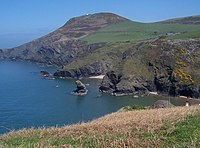
Welsh coast: Llangranog, Ceredigion, by Jayne Toyne, geograph.org.uk (Creative Commons)
Llangranog, Ceredigion (Jayne Toyne, geograph.org.uk)
I first became aware of family history as a child, when my father drove us around his native West Wales talking about who used to live in this place, or how we’re related to that distant aunt. It sounded like storytelling, wonderful tales about semi-legendary characters. I wish I’d asked him to write it all down. Still, a spark had been lit.

In 1994, my mother came back from a visit to her relatives in Australia with the thrilling news that we were descended from an Irish rebel and transported convict. Zap! That spark turned into a blazing flame and I was hooked on genealogy. She and I went to Ireland to do more research and started swapping emails with helpful Aussie rellies. Eventually we had so much family information that we published it as a book, A Rebel Hand: Nicholas Delaney of 1798.

Most of my research until late in 2011 was into Australian and Irish genealogy, history and local history. Then I found out that one Aussie 3x great grandmother was supposed to be a famous New South Wales ghost. Well, I had to know more. She and her husband/partner were both convicts, too, and I was inspired to look at other branches of my family tree.

Another convict ancestor came from Deptford, on the Thames, and my research broadened into London history and genealogy. And now I’m starting to look at the Welsh side of my family. Dad would have been pleased.

A side effect of my genealogy sleuthing has been learning about the history of the late eighteenth and early nineteenth centuries in the UK, Ireland and Australia, and of the places my ancestors came from. I’m fascinated by the social history, the day-to-day lives of people, the conventions of those times.

It was in November 2010 that I started blogging as a way to share my family history interests and discoveries. I soon found that there was a big world of geneabloggers out there, commenting, helping, sharing joys and sorrows and joining in challenges and memes. It was a wonderful discovery. There’s so much collaboration in the history, local history and genealogy and this new blog is a great example. If you’re not taking part already, why not join in? Here’s how.

I’ll finish by sharing some of my favourite blogs and websites for research, all free to view:
  • Claire Santry’s Irish Genealogy News is just what it says, all the latest information about genealogy for Ireland north and south.
  • Old Bailey Online, a collaboration between historians, has not only digitised the proceedings of London’s Central Criminal Court but gives lots of information about London life from 1674 to 1913.
  • Trove, where you can search Australian newspapers, books, manuscripts, images and much more dating from 1803. A lot of people using the digitised newspapers also collaborate by correcting the optical character recognition (OCR) transcriptions.
  • Welsh Newspapers Online, a new project from the National Library of Wales (Llyfrgell Genedlaethol Cymru).

Working together is so rewarding. Please join us in this new worldwide adventure by commenting, asking questions or even writing a post!

Sunday, 12 January 2014

Croeso i'r Blog Worldwide Achyddiaeth o Gymru


or Welcome to the Worldwide Genealogy Blog from Wales

Although I have lived in Wales for almost 21 years I do not speak the language. I used Google translate for the title phrase.
I know this is a tool that genealogists have used when researching in countries which do not use their native tongue. They have found it an asset as it is much cheaper than getting a translator for the records. It is not infallible but for most genealogists it has opened up the records they can use especially now more of them are becoming available online.

A bit more about me. My name is Hilary Gadsby and the title of my blog is The Edge of Snowdonia which pretty much describes where I live in North Wales. My research areas are all in England which is where I was born, Hampshire, Dorset and Wiltshire for my family and Lincolnshire, Rutland, Leicestershire and Norfolk for my husband's family. We have one or two people from other areas in our direct lines but the majority of the family have stayed in a small geographic area for centuries.
I started researching when the only internet we had available was using a dial up modem and you paid for each minute you were online, at this time or a little later I signed up for some rootsweb mailing lists in order to connect with other family historians, I also started with a free genealogy program which did little more than record basic details.
Over the years I have used various websites to connect to others with a shared interest  http://www.genesreunited.co.uk/http://home.ancestry.co.uk/http://www.lostcousins.comhttp://tribalpages.com and http://www.wikitree.com being the main ones. 
I also use social networking websites such as  www.facebook.com and plus.google.com to connect with friends family and fellow genealogists. These are great if you want to connect with other researchers but what if you want to share with your own family and in a way that they can get involved as much or as little as they want. Most of these have varying amounts of privacy but none are totally private.
Famberry is different from most family history sites in that in order to be able to access the tree and any accompanying images you must be invited and a member of the family. Access is granted by the tree owner and can be restricted, the owner may also choose to grant access to the entire tree. So here is a place where you can share and collaborate without everyone having access. This makes it an ideal place for photographs and announcements, including living members of the family. To access the website go to http://famberry.com/ 

We discussed this website with the developer on last week's Mondays with Myrt which can be viewed on YouTube at 
http://www.youtube.com/watch?v=RXTRg5UDeM8&list=UUZlX5znu6d7CCz6xobwMXOA&feature=c4-overview
you may have to subscribe in order to view the video.

There are many ways in which we genealogists or family historians (whichever term which wish to use) can share and collaborate you may have others which I have overlooked. Please feel free to share them with us as collaboration is what we aim to foster with this blog.