Tuesday, 11 August 2015

Keeping Family History Stories Alive through Fiction - Part K - "Dr. Bill" Smith


Keeping Family History Stories Alive through Fiction
Part K - "Dr. Bill" Smith
Romance in Family Saga Stories

Almost by definition, there are some romance elements in family saga stories. Agreed? Hard to get to the second, third and fourth generation without a little romance. And, admit it, we all enjoy a little romance, now and then.

Do you have a favorite family tradition story about a romantic experience of your ancestors? Most of us do. But, do you want to tell that story for the world to know? Perhaps. Perhaps not. One way, of course, to share a great story is to incorporate it in a fictional family saga tale. I’d like to demonstrate with an example… two actually.

My first novel focused on a short few months in the life of a family in turmoil. Getting through that turmoil filled that novel. I followed up with a novella that was a mystery story set immediately following the first novel, using many of the same characters, and adding a couple of key new ones.

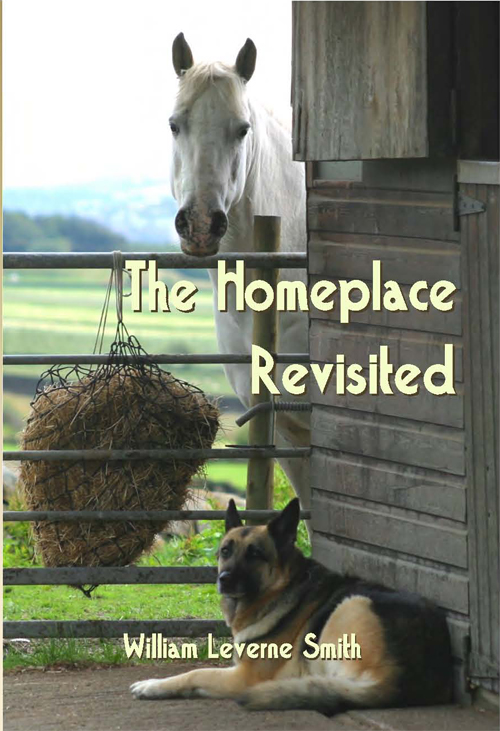
For a change in pace, in the second novel, “The Homeplace Revisited,” I focused on two teenagers from the “Back to the Homeplace” novel. They went off to college, and graduate school, and returned to their hometown as an attorney and a veterinarian. Of course I am talk about half-siblings, Christopher Ogden, the attorney, and Jennifer Bevins, the veterinarian.


Christopher concentrated on his undergraduate degree, then law school, then joined his ‘father’ in the small town law practice. Dating and girl-friends were the farthest thing from his focused mind. Until he met Amy one summer day. Suddenly, he had feelings arise in him that he had not experienced in a very long time, if ever. Then, within a week, he also re-met Nicole. They had been in high school together, a year apart, but had never really been close friends. He again had a similar reaction. His head was spinning, to say the least. He began dating each girl. The path he followed is an interesting one. I hope you’ll read “The Homeplace Revisited,” to learn more. He proposed at the end of this novel. We know he married Nicole, in “Christmas at the Homeplace,” but why and how make worthwhile reading. Does it remind you of anyone you know?

Jennifer’s story fits this blog well, of course. As she set up her large animal veterinary practice in her home town, she also began to spend time with her Aunt Karen doing genealogy research on their family. She visited libraries, set up a new computer program (remember PAF?) she just learned of (this was 1996), and is happy to talk about her findings with anyone interested in listening.

At a family gathering, she met the son of a law partner of Christopher and his father. He is a young attorney, and was just beginning to consider the possibility of joining the small town law firm himself. His mother had recently died of breast cancer, and he wanted to know more about her family. This subject came up in their conversation. They now had a connecting common interest, that became a passion for each of them. They traveled to libraries together doing genealogy research, and more, of course. She helped him. He supported her efforts. Did I mention that a romance developed? She got her ring on Christmas Day of 1996 as the third novel,  “Christmas at the Homeplace” concluded.


So, now you know, “Christmas at the Homeplace” is about creating families and homes as well as people “coming home” which is the general theme of the novel. A soldier coming home from a war zone to his family (wife and two young children) certainly has romantic overtones, as well, sticking with our theme for today. His youngest was born after he shipped out nearly a year before. He had not seen her in person yet. It makes a very happy Homecoming, as “Christmas at the Homeplace” concluded. And other story lines, for another time. You may want to read it, as well, as the holidays approach.

P.S. For an independent reader's opinion, see:  http://jaquo.com/william-leverne-smith/


See you next month! I love to read comments, so please leave one or more, including questions. 

Dr. Bill


**********

"Dr. Bill" (Wm. L.) Smith can be found regularly at his genealogy blog, "Dr. Bill Tells Ancestor Stories" <http://drbilltellsancestorstories.blogspot.com/> or his family saga blog, "The Homeplace Saga," <http://thehomeplaceseries.blogspot.com/>. He is an original contributor, as The Heritage Tourist, to the "In-Depth Genealogy" blog with a monthly column in the "Going In-Depth" digi-mag. He also writes a monthly post for the Worldwide Genealogy Blog.


Sunday, 9 August 2015

Internet Genealogy - is this progress?

Although I now have to be surgically removed from my laptop, I am someone who started my family history in the years B.C. (before computers). I thought therefore that I would just mention some of the pros and cons of the changes I have seen over 38 years of seriously pursuing my ancestors. By the way I did start very young!
In the old days, finding our family was a much slower process and involved travelling to various record repositories. Those of us in England went to London, ordered a birth certificate, waited for it to arrive and then waited again for your next trip to London in order to search for the marriage certificate of the parents of that individual. This can now all be done from home and the turn around time is much quicker, so a big tick for the internet on this one.

In order to find someone in a census return a visit to London or the relevant county record office was required. Then you peered at reels of microfilm as you spent two hours winding your way through the whole of Hackney in pursuit of your ancestors. Alternatively you could hope that there was a paper index for the area and decade that you were searching. These indexes were carefully and accurately compiled by family historians whose motivation was to assist their fellow researchers, with no hint of financial benefits. Today’s countrywide, online indexes are a huge bonus, especially if searches can be made using fields such as occupation and birthplace, instead of by name, thus opening up these records for use by social and local historians. The quality of these indexes is however mixed. Many of them have been created by those with no interest in the work, by those who have no knowledge of British place or personal names and by those whose prime motivation is financial. In Peter Christian’s The Genealogists’ Internet, he looks at transcription errors in the 1891 census indexes that appear on the main subscription websites. In 2009, when the survey was done, 43.5% of the surnames in the Ancestry transcription were incorrect. Hopefully many of these have been corrected in the intervening years but this is a very high error rate. Don’t get me wrong, these indexes are valuable and I know that if their production was left to philanthropic family historians, with the skills and motivation to get it right, we would still be waiting but it is not all good news.

I applaud and welcome the opportunity to download digital images of original documents from my arm chair. Sadly most of these images are accessed via a transcript and many internet genealogists rely on those transcriptions, never progressing to the originals. At a conference in 2013, lecturer and author John Titford coined the phrase ‘genealogy for grown-ups’. By this he meant the sort of genealogy where original sources are consulted and referenced. He was referring to research that encompasses recreating the lives of our ancestors, not just collecting names and dates and the use of more than just the mainstream sources that are available on subscription websites. The internet helps ‘grown-up’ genealogists beyond measure but to come of age in the genealogical world you do still need to leave your keyboard behind on occasions.

Now family trees can be downloaded at the press of a button (the result may not be an accurate family tree but a family tree emerges none the less) there is the opportunity to acquire a pedigree without foundations. More people can open a computer file labelled ‘family tree’ but they lack basic knowledge about the lives of those individuals or the sources that have been used to create that pedigree. Does this actually matter? It is surely a good thing that more people are beginning to engage with their past, particularly as this has resulted in a dramatic lowering of the average age of the family historian. Am I concerned that these people are barely scratching the surface and are not doing things ‘properly’? At the risk if being labelled a genealogy snob, well yes I am. Surely the satisfaction comes from ensuring that your pedigree is as accurate as possible. Trying to recreate the context for our ancestors’ lives is truly paying them the respect they deserve. Yes, everyone should be able to pursue their ancestry in their own way and with a degree of rigor of their choosing but I still lament the trend towards ‘grab it quick’ pedigree hunting. Along with the internet has come instant access genealogy but have we compromised thoroughness in the pursuit of speed?

We are now in thrall to the large subscription websites. Yes, there is a choice but currently it is a frying pan – fire choice. When the big-name genealogical data providers make their periodic  ‘improvements’ these are frequently followed by an avalanche of complaints. Frequently, these changes appear to lack any single benefit for the serious researcher. The impression is that changes have been motivated by profit and carried out by those who have no idea what researchers require. The provision of online resources is only progress if the system allows researchers to find the record that they need in a manner that is neither convoluted nor cumbersome.

The sad loss for the new generation of internet genealogists is the lack of interaction. True there are forums, chat rooms and opportunities for discussions via Hangouts on Air but are these really a substitute for a cosy chat over a genealogical brick wall with a group of fellow enthusiasts? I am not an unalleviated Luddite. I do appreciate that internet genealogy is not only here to stay but has a great deal to offer researchers. I am however aware that we maybe in danger of throwing out the proverbial baby with the bath water.

Janet Few

Friday, 7 August 2015

Slave Owners in the Family Tree

 This month my Progen homework was to transcribe and abstract a will. I chose the will of my maternal 3rd Great Grandmother Charity Stafford.
  Charity was the wife of Joshua Stafford and lived in Sumter District, South Carolina. Charity's parents and birth are unknown. Her will was written in February of 1839 and proved on 9 November 1840.

Last Will and Testament of Charity Stafford


    The following is the transcription of Charity's Will:

  In the name of God Amen. I Charity Stafford, of Sumter District, South Carolina, being in sound health and disposing mind, do make and publish this my last Will and testament.
Item, 1st it is my will that all my just debts be paid by the sale of my two negroes, Viz, Judia and her child, Bluford and the balance of the money arising from the sale of said negroes after my debts are paid together with my household furniture and all my stock to be equally divided between my two sons Lunsford C. Stafford and Hartwell Stafford.
Item 2nd I give and bequeath to my beloved Grand Daughter Barbary E Stafford my plantation whereon I now Live to be for the benefit of her father J Stafford till she my Granddaughter B E Stafford becomes of age, but not to be subject to any debts already or hereafter to be contracted either by her or any other person or persons.
Item 3rd I give and bequeath to my beloved Barbary Jones my three negroes, Viz, Robert, Molly, and Elmirah; during her lifetime, but not be subject to any debts already contracted, or that may hereafter be contracted by her or any other person, or persons.
And at her death, It is my wish that the three negroes (To wit) Robert, Molly, and Elmirah, together with their increase be given to her three children in the following manner Viz, I wish Hartwell E Jones to have Robert; and. Charity E Jones to have Molly with her increase; and Mary F Jones to have Elmyrah [sic] with her increase, and in case either of the children die before they become of age or marry their part of the negro is to go to the surviving one or ones, and neither the negroes nor their increase is to be liable for any debts now contracted or that may hereafter be contracted by any of the heirs or any other person or persons-(Turn over)

 In witnesses whereof I the Said Charity Stafford have to this my last Will and Testament set my hand and seal this the 16th day of Feby in the year of our Lord One Thousand Eight hundred and Thirty nine
her
Charity x Stafford (SEAL)
mark
Signed Sealed published and declared by the Said Charity Stafford as her last will and Testament in the presence of us who in her presents [sic] and at her request have here unto set our names as
witnesses
Noah Graham
Samuel P Hatfield
Alfred China

Recorded in Will Book D-2, Page 32
Sumter, South Carolina

 Judia and her child, Bluford to be sold to pay debts.
Robert, Molly and Elmirah and any children they may have to be given to her grandchildren. Human beings being sold and given away as property. So hard to comprehend.
Further in the probate package is a page listing some of Charity's "property" and the worth of each item. Listed just above the cattle and hogs are Judia, Buford, Robert, Molly and Elmirah.

Property List
Charity Stafford
Probate Package
Bundle 132, Pkge 2 pg.3
Sumter County, South Carolina


The 1840 Sumter County, South Carolina Federal Census shows 
Charity Stafford in a household most likely with the enslaved named in her will-
1 Female 70 & under 80,  2 male slaves under 10, 2 female slaves under 10, 1 female slave 24 & under 36.

Placing the names of those in the will with the ages from the census, it is probable that Judia was between 24 and 36. Her son Bluford was under 10 as were Robert, Molly and Elmirah.

 There is no record in the probate file for a sale of Judia and Bluford.

In 1842 there is an auction and it appears that even though the will of her mother Charity left her children the slaves Robert, Molly and Elmirah, Barbary Jones buys them when they are, according to the document, "sold to the highest bidder".
   
Charity Stafford
Probate Package 
Bundle 132, Pkge 2 pg.7
Sumter County, South Carolina

What became of Judia, Bluford, Robert, Mollie and Elmirah? Did the three 10 year olds stay with the Stafford and Jones families as Charity's will instructed? Were Judia and her son Bluford sold together or were they torn apart?
 Perhaps further research will locate them in family documents.
 Until then, adding the information contained in Charity Stafford's probate package to  The Slave Name Roll Project may be one way to discover what happened to them and reunite them with their families.
  We can't judge our ancestors for actions we don't understand or times we didn't live in. We can only gather and share the information we find.

Do you have slave owners in your family tree? How do you deal with this difficult subject while still honoring your ancestors?
  I would love to hear from you.

Cheri


Monday, 3 August 2015

Find out what life was like in the place your ancestors lived


One-place studies are a great way of finding out what life was like in the place your ancestors lived. Nearly 2,000 places worldwide have been registered so far. Could your special place be next?
So what is a One-Place Study?
Quite simply it’s a study of a particular place and the people who have lived there over the years. 

By ‘place’ we mean a defined geographical area. Most one-placers choose to study a village, or very small town, and the area immediately around it within its official boundaries.

By ‘people’, we generally mean everyone who lived in that place, not just those related to the one-placer’s ancestral family or people who were famous.

A one-place study brings together both the local history and family history dimensions to give a much fuller picture of what life was like in that place and why families came and went.

Have you got what it takes to become a One-Placer?
We affectionately refer to those carrying out one-place studies as ‘One-Placers’. 

They are the unsung heroes of one-place studies. They work voluntarily behind the scenes, either alone or collaboratively as a group, seeking out all kinds of historic documents and maps etc., extracting information on anyone who lived in the study place and then presenting information in a structured way for the benefit of all.

Every place is unique, every one-placer is unique and, consequently, so too is every one-place study! One-placers are free to take their studies in whichever direction they wish, working at a pace they are comfortable with. 
One-Placers on the One-Place Study Register are entitled to use the logo above.

What has been done before?
Be sure to read up on what has been written in the past on the local history of your study place. Have any books been published? Or articles in county magazines? Check out the archives for your study place as they often hold historic local books. If there is a local history group, you may be able to work collaboratively and avoid any duplication of effort. In the UK, check out the Local History Online and British Association for Local History websites.

Pacing your place
If you live within easy travelling distance of your study area, and assuming it covers a small area comprising just a village and a few surrounding hamlets, rather than a whole region, it’s great if you are able to ‘pace your place’. Essentially this means exploring each street, lane, alleyway etc. of your study place looking at the buildings etc. for clues of their age, past uses etc. Try and put yourself in the shoes of those who walked there a century or two before! Read more here.
If you can’t visit your study place in person, you may be able to take a look around courtesy of Google Streetview or equivalent.

Maps & mapping your study
Maps can prove invaluable for one-placers. Be sure to look at historic maps for your study place, not just present-day maps. Compare maps from one time period to the next to see what has changed. 
In the example above, the 1830 map shows the site of a factory - in 1926 the factory had gone and there was a cricket ground with a pavilion - just looking at present-day maps would not have revealed either feature. Some websites allow you to look at digitized historic maps side by side or to overlay them. In particular check out these historic digitised map resources for England, Wales & Scotland and the United States.  
Many one-placers find it helpful to map their study. Below is a wonderful hand-drawn map of Upton Lovell in Wiltshire prepared around 2008. 
The treasures of this one-place study are clearly marked for the benefit of all. It is annotated with lots of helpful information. It shows the old post office, the old rectory, the site of the former cloth factory and even the site of the old electricity station. It tells us Ash Walk was known as Queen Street in the 1871 census. It also reveals where the market was held and where the animal pound was.  

Local knowledge
Be sure to tap into local knowledge - talk to as many long-time residents as you are able - you'll be surprised what stories they'll come out with once prompted! 
Involving members of the local community and others researching their ancestors from your place with your study can pay dividends. One memory may jog another, a photo found by one person may prompt another to search through their old albums and so on. Latch on to little snippets of information about your study place. There's often much truth in those old rumours!

Buildings and house histories
Some one-placers build up histories for each property. For example, one-placers Winslow History Group have compiled the history of many of their buildings and for 6 High Street have got a complete history from 1664 to the present day!

In Britain, just under 500,000 buildings are on the Statutory List of Buildings of Special Architectural or Historic Interest. You can search for all such buildings in your study place on the British Listed Buildings site. The official listing entry shows further details about the construction of the building and its listing category. Alternatively search for English buildings through the Historic England site and Scottish buildings through the Historic Scotland site.

Population changes – pushes and pulls
At any point in time, a study place will have been populated by individuals - whether few or many in number. One-place studies consider all the people who have lived in the study place over the centuries. Families move into and out of the area for various reasons and there are periods when the total population increases and others when it falls.

A good starting point is to analyse the population statistics that are available for your place and to chart these. Histpop provides online access population reports for Britain and Ireland from 1801 to 1937 and allows you to ascertain the population of individual parishes etc. at ten year intervals from 1801 to 1931, to break this data down by gender, age etc. and to compare figures with county or national totals. Vision of Britain also holds some population data. 
The graphs pictured show the population changes for two adjacent Dorset villages, East Lulworth and West Lulworth. Although their populations were similar in the first half of the 19th century, subsequently one witnessed considerable growth and the other a steady decline. One-placers are keen to find out why individual families came and went and what were the major pushes and pulls.

Simple indexes, reconnection and reconstruction
Most one-placers, having researched their own family histories, will want to understand who is connected to who in their study place and to what extent families inter-married over successive generations.

Some one-placers find it helpful to create an index or database of all persons who lived in their place and to use this as the first step towards 'reconnecting' them to others on the list.

Some one-placers will go one-step further and 'reconstruct' trees for all families, sometimes as simple hand-drawn charts, or through providers like Ancestry or Findmypast where unrelated individuals can subsequently be linked as their relationships to one another are rediscovered.


Primary genealogical sources
Primary sources of family history information for one-placers are census returns that typically provide a ‘snapshot’ every ten years of everyone living in a defined geographical area and local registers that capture key events in their lives, in particular births/baptisms, marriages and deaths/burials. The earliest Church of England records date from 1538. 


Many one-placers use free sites such as FamilySearch or Mocavo or subscription sites such as Ancestry or Findmypast to view and save images of the original census schedules for all households in their one-place study area. This allows accurate transcripts to be prepared using local knowledge of surnames and place names and further analysis to be undertaken.

There are many secondary sources of information such as electoral rolls, gravestone inscriptions, land records, local directories, military records, newspaper obituaries, probate records, school records, wills, etc. We touch on just a few of these below.

Directories
Directories are a great source of information for one-place studies.  Most well- known among the directories are the Post Office Directories, Kelly’s Directories and Pigot Directories.

The 'street directory' sections, in particular, are a fantastic aid for one-placers as they show the householder or business at each street address in turn, as well as indicating where other roads joined, or features such as level crossings etc. existed. Check out the University of Leicester’s Historical Directories website for over 700 directories of England and Wales. And almost as many directories for Scotland can be accessed through the National Library of Scotland website.

Schools
Historic log books and admission registers for many schools are held at local record offices. The admission registers typically show birth date, admission year and name of a parent or guardian. Log books record some events in school life such as arrival of new teachers, low attendances due to illness or harvesting, and special commemorations. Findmypast currently offer access to over 4 million records from 28 counties in England and Wales covering the period 1870 to 1914, with further counties to be added in 2015.
Don't forget that class photographs were taken in many schools from around 1900 onwards, and coming across ones with names written on the reverse are a real boost! The photo shown was taken at Kingston School, Dorset in 1896.

Postcards and other images of your place
Do seek out old postcards of your study place. Some postcard views look much the same as another, but study them carefully and you may spot changes to buildings and uses, shop ownership and also fashions! Try online auction sites such as eBay and eBid and local postcard fairs. Storeslider is a handy tool for finding eBay auction items for your study place. TuckDB is a free online database of antique postcards published by Raphael Tuck & Sons.
Ancestry also offers access to postcards from Canada, France, Germany & Austria, Italy, the UK & Ireland and the United States. Also check for any Photochrom Prints of your study place on the PPLOC website.

Geograph is a freely accessible archive of much more recent photographs for every square kilometre of Great Britain and Ireland. All photographs are licensed for reuse under a Creative Commons Licence, so can be used for your website or blog. Great for one-placers who live a long way from their study place!

Newspapers
Never under-estimate the power of the newspapers! Historic newspapers can be a rich source of information for your study place. Before the days when celebrities and soaps dominated our daily tabloids, more everyday events often made their way into the local broadsheets. The detail included in some newspaper reports from the mid-19th century through to the early 20th century can be quite amazing. For example, some newspapers reported on the funerals of local people, and detailed everyone who attended, what hymns were sung, what messages of sympathy accompanied the floral tributes etc. Increasingly more and more newspapers are being digitized. Check out Chronicling America and Trove (Australia), or Elephind which searches both, plus the British Newspaper Archive (also available through Findmypast) and Welsh Newspapers Online. In the UK, many libraries offer free access to 19th century newspapers.

Funding

In the UK, the Heritage Lottery Fund want to support projects that help local people delve into the heritage of their community, bring people together, and increase their pride in the local area.  Grants from £3,000 upwards are available. A number of one-placers working collaboratively have been successful in securing funding, including Heaton History Group earlier this year for their "Heaton Beneath Our Feet" project.

Sharing
Sharing information about your study is a great way of encouraging others to contribute too. You can do this in a number of ways including local displays, talks to local groups, features in local magazines, through dedicated websites and blogs and via social media such as twitter and facebook.
We are happy to share the progress of individual studies too - on twitter and through the ‘Study Snippets’ section of Newsworld.

The One-Place Study Register
It's important to register your one-place study. The One-Place Study Register now has 1,995 study places registered worldwide. Not only does it allow people to easily see that you are carrying out the study and to make contact, but it also helps protect against others subsequently 'muscling in' on your 'territory'.

One-Placers give of their time freely - in return we'll give them the benefits of registering free too!

Registering a one-place study with us is FREE and EASY - click here to add your one-place study now. 

New look
We are rolling out new look pages for each country on the Register. An example from our United States Register is shown below.  

One-Place Studies EXTRA
We are committed to bringing you the latest news and information from the world of one-place studies FREE - no membership fees - no registration fees. 

Take a look at our One-Place Studies EXTRA site for links to lots of great Resources, Free Guides, our regular publication Newsworld, our special In Focus publication that shines the spotlight on individual studies, individual one-placers or aspects of one-place studies you may wish to explore further.

Sometimes we can get too focused on our own studies. By reading about other studies, we can look at our own from a different perspective, be inspired and inject new ideas.

Health warning: One study may lead to another!
One-place studies can be addictive! 17% of one-placers have two studies, 10% have three studies and 11% have four or more studies study on the go because they enjoy them so much!

Interested? Then email us now!

In this article we’ve only scratched the surface with some of the resources that are available. Be sure to visit our One-Place Studies EXTRA site for many more and check out our free One-Place Study guides such as ‘The basics’ and ‘Choosing a place‘.
Sunday, 2 August 2015

National Family History Month

Each August in Australia and New Zealand we celebrate National Family History Month.


My Genimate, Shauna Hicks is the voluntary coordinator for this event (in Australia) which is an initiative of AFFHO. All around Australia family history societies and groups, libraries, commercial organisations and individuals host events that promote our hobby/passion. Shauna enters these all these onto an online calendar so that we can see what is on offer in our local area.

In addition Shauna has created challenges for both individual and family history groups: 31 Activities for Researchers and 31 Activities for Genealogy/Family History Societies during NFHM. These are useful exercises not just for Australians but for all family historians.
And what about me?  I am attending a few events during the month and I have organised two events for my local family history group.

In addition I am hosting a Geneagala series of Google Hangouts on Air on Sunday 30th August. Because the Geneagala is an online activity it is open to genealogists all around the world. As a Worldwide Genealogist you are invited to join me and your friends downunder for this event.